
Factory-Direct Stainless Plain Sheets & Pipes
Direct supply from Wuxi manufacturing hub. Tested to ASTM A240, EN 10088-2, and JIS G4304 standards with full MTC certification.

Custom Perforated Stainless Steel Sheet from China Suppliers and Factory | Durable, Stylish, and Customizable Solutions Factory, Pricelist
Get Factory Quote

CE Certification Prime Quality 201 Stainless Steel Pipe from China Suppliers | Durable, Glossy Tubes for Stairs and Guardrails - Factory Direct Suppliers, Quotes
Get Factory Quote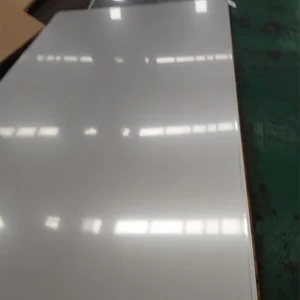
Wholesale 2507 Super Duplex Steel Plate - High Strength & Corrosion Resistance from China Suppliers and Factory Manufacturers, Manufacturer
Get Factory Quote
CE Certification High Cost-effectiveness 201 Cold Rolled Stainless Steel Sheet Supplier, Factories
Get Factory Quote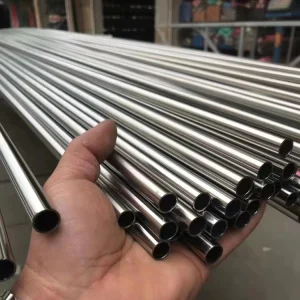
Wholesale China Stainless Steel Pipe Factory - Direct Supplies with Material Certification and Custom Processing Services Manufacturer, Pricelist
Get Factory Quote
Custom China SUS304 Stainless Steel Cold-Rolled Plate Suppliers - Corrosion-Resistant Food Grade Material from Factory Manufacturer, Pricelist
Get Factory Quote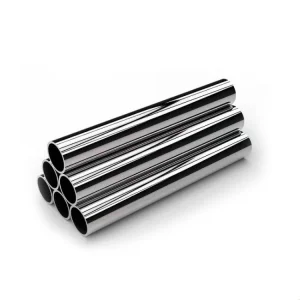
Custom High-Quality Stainless Steel Decorative Pipe from China Suppliers and Factory - Exquisite Designs and Finishes Factory, Quotes
Get Factory Quote1. Executive Summary & Wholesale Plain Sheet Market Dynamics
Analyzing global stainless plain sheet procurement factors: Alloy surcharges, cold-rolling production bottlenecks, and supply chain strategies for 2025–2026.
In the modern industrial materials matrix, wholesale plain stainless steel sheet—often designated as flat unpatterned sheet or smooth mill finished plate—serves as the indispensable foundation for global manufacturing, architectural cladding, automotive stamping, and food-grade equipment fabrication. Unlike decorative textured or perforated variations, plain stainless steel sheets demand absolute surface homogeneity, precise gauge consistency, and strict chemical purity to ensure flawless downstream bending, laser cutting, and deep drawing operations.
The global market for stainless plain sheet is heavily dictated by primary raw material fluctuations: namely Nickel (Ni), Chromium (Cr), and Molybdenum (Mo) pricing on the London Metal Exchange (LME) and Shanghai Futures Exchange (SHFE). For enterprise buyers navigating high-volume procurement, securing a transparent pricelist benchmark from direct Chinese manufacturing hubs (such as Wuxi and Foshan) is vital to mitigating margin risks. Chinese steelmaking infrastructure has evolved from mass volume output to high-precision cold-rolling and automated annealing-pickling lines (APL), placing domestic factories at the forefront of international cost-efficiency and metallurgical reliability.
SEO Information Gain Note: Plain Sheet vs. Strip & Plate Definitions
In standard metallurgical nomenclature (ASTM A480 / EN 10088-2), "Plain Stainless Steel Sheet" specifically refers to flat-rolled material under 6.0mm in thickness and wider than 600mm. Material equal to or exceeding 6.0mm transitions into the "Heavy Plate" classification, whereas slit widths under 600mm are designated as "Strip". Surface finishes for plain sheets are typically supplied in 2B (cold-rolled, skin-passed), BA (bright annealed), No.1 (hot-rolled, annealed & pickled), or mechanical polishes (No.4, Hairline, 8K Mirror).
2. Stainless Plain Sheet Grade Matrix & Chemical Performance
Comprehensive engineering comparison of austenitic, ferritic, and duplex grades for industrial specification buyers.
| Steel Grade | Structure & Family | Nominal Chemical Composition | PREN Value | Yield Strength (MPa) | Primary Industrial Use Case |
|---|---|---|---|---|---|
| AISI 201 | Austenitic (Cr-Mn-Ni) | 16-18% Cr, 3.5-5.5% Mn, 1.0-1.5% Ni | ~17.5 | ≥ 275 | Indoor decorative framing, kitchenware, non-corrosive structural trim |
| AISI 304 | Austenitic (Cr-Ni) | 18-20% Cr, 8-10.5% Ni, ≤ 0.07% C | ~19.0 | ≥ 205 | Food processing equipment, architectural panels, general machinery |
| AISI 304L | Austenitic (Low Carbon) | 18-20% Cr, 8-12% Ni, ≤ 0.03% C | ~19.0 | ≥ 175 | Heavy welded industrial tanks, chemical piping flanges, sanitary vessels |
| AISI 316L | Austenitic (Cr-Ni-Mo) | 16-18% Cr, 10-14% Ni, 2.0-3.0% Mo | ~23.0 - 25.0 | ≥ 220 | Marine hardware, pharmaceutical reactors, chloride-rich processing |
| AISI 310S | High-Temp Austenitic | 24-26% Cr, 19-22% Ni, ≤ 0.08% C | ~26.0 | ≥ 205 | Furnace liners, heat exchangers, kiln parts operating up to 1150°C |
| AISI 430 | Ferritic (Magnetic) | 16-18% Cr, ≤ 0.75% Ni, ≤ 0.12% C | ~16.5 | ≥ 245 | Domestic appliance panels, washing machine drums, elevator interiors |
| Duplex 2205 | Austenitic-Ferritic | 21-23% Cr, 4.5-6.5% Ni, 2.5-3.5% Mo, N | ~34.0 - 36.0 | ≥ 450 | Offshore oil & gas rigs, chemical tankers, high-stress structural members |
| Super Duplex 2507 | High Alloy Duplex | 24-26% Cr, 6-8% Ni, 3-5% Mo, 0.27% N | ≥ 42.0 | ≥ 550 | Desalination plants, aggressive acid piping, marine subsea equipment |
Understanding Pitting Resistance Equivalent Number (PREN) in Plain Sheet Selection
For B2B buyers selecting material for aggressive environments, calculating the PREN value via the standard formula PREN = %Cr + (3.3 × %Mo) + (16 × %N) provides a mathematical basis for evaluating pitting corrosion resistance. While standard 304 plain sheets (PREN ~19) suffice for urban architectural facades and ambient food handling, coastal installations or chemical processing lines require 316L (PREN ~24) or Duplex 2205 (PREN ~35) to guarantee a 30+ year operational lifespan without surface breakdown.
3. Strategic Advantages of Sourcing Plain Sheets from Chinese Factories
Why China's Wuxi and Foshan stainless steel ecosystems offer unmatched cost-performance, scale, and processing speed.
Integrated Mill Sourcing
Chinese direct suppliers maintain direct mill-agent contracts with Tier-1 steel producers such as TISCO, Tsingshan, POSCO ZPSS, Baosteel, and Yongjin. This raw slab and hot-coil integration guarantees traceable chemical composition and bulk material pricing advantages.
Advanced Processing Lines
Modern Chinese processing plants utilize 20-high Sendzimir cold-rolling mills, continuous tension-leveling lines, and automated flying-shear cut-to-length equipment, achieving ultra-tight thickness tolerances (±0.02mm) and pristine diagonal flatness.
Full Surface Protection
To prevent scratches during transoceanic shipping and sheet handling, factories apply specialized PE, PVC, or Novacel protective films (50μm to 100μm thick) along with sea-worthy wooden pallet packaging reinforced with steel banding.
4. Macro Industry Trends Shaping Stainless Plain Sheet Manufacturing
Key technical innovations driving sustainability, precision manufacturing, and digital supply chain integration.
The global stainless steel landscape is undergoing a structural evolution driven by strict carbon reduction mandates (CBAM in the EU), automated fabrication requirements, and rising demand for ultra-thin gauge precision plain sheets.
1. Green Steel & Decarbonized Melting: Leading Chinese manufacturers are transitioning from traditional blast furnace routes to Electric Arc Furnace (EAF) smelting integrated with high-percentage scrap recycling. Utilization of green hydrogen annealing lines is drastically reducing the embedded carbon footprint of 304 and 316L plain sheets, helping global OEMs satisfy Scope 3 emission targets.
2. AI Vision Surface Inspection: Modern cold-rolling plants have integrated high-resolution AI optical scanners that inspect 100% of the plain sheet surface at speeds exceeding 300 meters per minute. Pinholes, oil spots, roll marks, and micro-scratches are flagged automatically, guaranteeing zero-defect surface quality for high-end automotive trim and appliance panels.
3. Ultra-Thin & Precision Width Slitting: Industrial demand for precision plain sheets with gauges as thin as 0.15mm to 0.3mm (foil-grade sheets) has surged in hydrogen fuel cell bipolar plate manufacturing, battery enclosure shielding, and aerospace electronics.
5. Application Scenarios & Macro Industry Solutions
How plain stainless steel sheet specifications solve performance engineering challenges across major sectors.
Architectural Cladding & Elevators
Plain cold-rolled 304 and 430 sheets in 2B or BA finish are deep-drawn or brake-formed to produce seamless interior elevator panels, column covers, and exterior building curtain walls requiring consistent light reflectivity.
Sanitary & Food Processing
Smooth 304L plain sheets eliminate microscopic bacteria-trapping crevices. Used extensively in dairy pasteurization tanks, industrial brewing vats, and commercial kitchen countertops requiring rapid CIP (Clean-In-Place) sanitation.
Chemical & Marine Processing
Plain 316L and Duplex 2205 sheets prevent intergranular corrosion and stress-corrosion cracking in acid storage tanks, flue-gas desulfurization (FGD) scrubbers, and offshore seawater distillation modules.
6. Wholesale Pricelist Dynamics & B2B RFQ Framework
Understanding cost structures, minimum order quantities (MOQs), and how to request competitive factory quotes.
Wholesale pricing for stainless plain steel sheet is computed on a Base Price + Alloy Surcharge + Processing Premium formula. Below is an indicative price reference breakdown across common mill grades (FOB Shanghai/Ningbo, USD per Metric Ton):
| Grade | Standard Finish | Thickness Range | Indicative Factory Pricelist (USD/MT) | Typical MOQ |
|---|---|---|---|---|
| 201 Cold Rolled | 2B / BA | 0.3mm – 3.0mm | $1,150 – $1,350 / MT | 3 to 5 Metric Tons |
| 304 Cold Rolled | 2B / BA / No.4 | 0.4mm – 4.0mm | $2,100 – $2,400 / MT | 2 to 5 Metric Tons |
| 304 Hot Rolled | No.1 | 3.0mm – 12.0mm | $1,950 – $2,250 / MT | 5 Metric Tons |
| 316L Cold Rolled | 2B / No.4 | 0.5mm – 4.0mm | $3,200 – $3,650 / MT | 2 Metric Tons |
| 430 Cold Rolled | 2B / BA | 0.4mm – 2.0mm | $1,200 – $1,450 / MT | 5 Metric Tons |
| Duplex 2205 | No.1 / 2B | 1.0mm – 10.0mm | $3,800 – $4,400 / MT | 1 to 3 Metric Tons |
Key Procurement Checklist for B2B Purchasing Officers:
- Specify Exact Standards: Clearly mandate ASTM A240, EN 10088-2, or JIS G4304 to ensure chemical compliance.
- Define Edge Options: State whether Mill Edge (untrimmed coil edges) or Slit Edge (trimmed precision width) is required.
- Confirm Surface Film Type: Request laser-cutting compatible PVC film (e.g., Novacel 4228) if sheets will undergo automated laser fabrication.
- Require Mill Test Certificate: Ensure supplier provides EN 10204 3.1 certification covering heat numbers, chemical spectral analysis, and mechanical tensile/hardness test records.
7. Frequently Asked Questions (FAQ) for Wholesalers & Buyers
Direct answers from our metallurgical and export logistics engineering team.
What is the difference between 2B finish and Bright Annealed (BA) plain sheet?
A 2B finish is cold-rolled, heat-treated, pickled, and given a light skin-pass roll, resulting in a smooth, slightly reflective grey-metallic surface ideal for general industrial fabrication. A BA (Bright Annealed) finish is heat-treated in a furnace with a controlled atmosphere (hydrogen/nitrogen gas) that prevents oxidation, resulting in a mirror-like highly reflective surface without pickling.
How do Chinese factories handle plain sheet packaging for long-distance sea transport?
Plain sheets are layered with anti-friction paper or protective PE/PVC film, strapped to heavy-duty fumigated wooden pallets or steel frames, enclosed in waterproof plastic wrap, and desiccants are inserted into container shipments to eliminate condensation corrosion (white rust) during oceanic transit.
Can 201 stainless plain sheet replace 304 plain sheet to lower costs?
Grade 201 replaces nickel with manganese and nitrogen, reducing raw material cost by roughly 40-50%. However, 201 has lower pitting corrosion resistance and is strictly recommended for dry indoor applications, furniture, and decorative trim. For food contact, outdoor exposure, or humid environments, 304 remains mandatory.
What thickness tolerances can be expected on factory-direct plain sheets?
Standard cold-rolled plain sheets adhere to ASTM A480 / EN 10088-2 Class A or B tolerances (typically ±0.02mm to ±0.05mm depending on gauge). Precision re-rolled plain sheets can achieve micro-tolerances down to ±0.005mm upon request.
What testing documentation is included with a wholesale plain sheet order?
Every production batch includes an EN 10204 3.1 Mill Test Certificate detailing ladle chemical analysis, tensile strength, yield strength, elongation percentage, Rockwell/Vickers hardness numbers, and intergranular corrosion test results (ASTM A262 Practice E when specified).
Explore Additional Stainless Steel Coils, Sheets & Welded Pipes
Source directly from our certified mill lines with customized processing services and ocean freight shipping options.
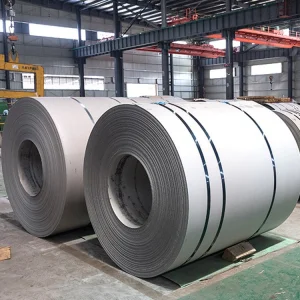
Wholesale China Hot Rolled Stainless Steel Coil Suppliers | Heavy-Duty Industrial Grade Factory Quality Products Manufacturers, Supplier
Get Factory Quote
Custom China 201 Stainless Steel Pipe Suppliers - Premium Quality Glossy Tubes for Stairs and Guardrails from Factory Manufacturer, Pricelist
Get Factory Quote
Wholesale High Cost-effective 201 Cold Rolled Stainless Steel Sheet from China Suppliers and Factory with Accurate Thickness Options Suppliers, Quotes
Get Factory Quote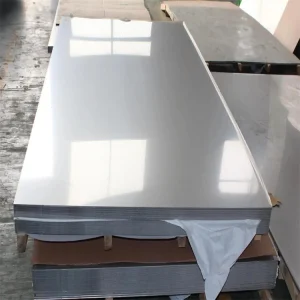
CE Certification Cold Rolled Stainless Steel Sheet from China Suppliers - High Strength and Corrosion Resistant with Custom Processing Factory Suppliers, Quotes
Get Factory Quote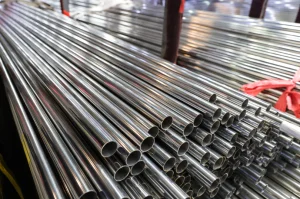
Custom Prime Quality 201 Stainless Steel Pipe from China Suppliers - Durable, Glossy & Ideal for Stairs and Handrails Factory, Quotes
Get Factory Quote