
High-Grade Stainless Steel Plates, Sheets, Coils & Pipes
Direct factory supply from our Wuxi processing hubs. Fully compliant with ASTM A240, ASTM A312, EN 10088-2, and JIS specifications with certified MTC EN 10204 3.1 traceability.
-
 Wholesale 2507 Super Duplex Stainless Steel Plate - High Corrosion Resistance | China Suppliers & Factory Manufacturers, SupplierView Product Specs
-
Custom 2507 Super Duplex Steel Plate - High Corrosion Resistance from China Suppliers & Factory Suppliers, FactoryRequest Mill Price
-
 CE Certification High Cost-Effective 201 Cold Rolled Stainless Steel Sheet from China Suppliers and Factory - Accurate Thickness Options Available Quotes, PricelistGet Instant Quote
-
 Wholesale High-Quality 201 Stainless Steel Strip/Coil from China Suppliers | Reliable Factory Direct Supply Supplier, FactoryExplore Details
-
Wholesale 316L Stainless Steel Sheet from China Suppliers - High-Quality Factory Direct Products Manufacturers, SuppliersView Datasheet
-
 Custom China SUS304 Stainless Steel Cold-Rolled Plate Suppliers - Corrosion-Resistant Food Grade Factory Products Suppliers, FactoryInquire Bulk Rates
-
 Wholesale China Hot Rolled Stainless Steel Coil Suppliers | Heavy-Duty Industrial Grade Factory Quality Products Manufacturers, SupplierCheck Specifications
-
China High-Quality Hot Rolled Stainless Steel Coils from China Suppliers | Durable Factory-Direct Industrial Solutions Factories, QuotesDownload Price List
1. Macroeconomic Landscape & Global Growth Trends in Large Stainless Piping
The global demand for large-diameter stainless steel pipes (typically defined as outer diameters exceeding 219.1 mm / 8 inches NPS up to 2600 mm) is experiencing a structural surge. Driven by energy transitions, mega-scale seawater desalination projects, green hydrogen infrastructure, and advanced chemical synthesis plants, modern industrial projects require piping networks that combine severe corrosion resistance with extreme mechanical yield strength.
LNG Infrastructure & Cryogenics
Liquefied Natural Gas (LNG) transport networks demand heavy-wall austenitic pipes (such as 304/304L and 316/316L) operating at cryogenic temperatures down to -196°C without phase instability or impact embrittlement.
Offshore Desalination & Marine
High-chloride seawater environments have forced a shift from standard austenitic alloys toward 2205 Duplex and 2507 Super Duplex stainless steels due to their superior Pitting Resistance Equivalent Number (PREN ≥ 42).
Green Hydrogen & Energy Transition
High-pressure hydrogen pipelines require continuous, defect-free Electric Fusion Welded (EFW) and Submerged Arc Welded (SAW) pipes engineered to mitigate hydrogen embrittlement under cyclic loading.
2. Global Enterprise Procurement Criteria & Engineering intent
B2B procurement executives, EPC (Engineering, Procurement, and Construction) contractors, and plant engineers face rigorous criteria when evaluating international stainless steel pipe manufacturers. A failure in a large industrial pipeline can trigger catastrophic plant downtime, environmental hazards, and severe financial losses. Consequently, procurement decisions extend beyond initial price-per-ton to encompass Total Cost of Ownership (TCO) and compliance validation.
Key B2B Decision Vectors:
- Chemical Composition Traceability & Melt Source: Tier-1 buyers require origin verification from prime steelmakers (such as Tsingshan, TISCO, Baosteel, and POSCO) to ensure zero tramp elements or sulfur segregation.
- Dimensional Tolerance Controls: Tight tolerances on wall thickness uniformity, ovality, and straightness (per ASTM A999 and EN ISO 1127) are critical to ensure automated orbital field welding on site.
- Non-Destructive Testing (NDT) Rigor: Comprehensive inspection schedules including Eddy Current Testing (ET), Ultrasonic Testing (UT), Hydrostatic Pressure Testing, and X-ray Radiography (RT) for EFW/SAW longitudinal seams.
- Solution Annealing Quality: Full heat treatment at 1050°C–1120°C followed by rapid forced water quenching to redissolve chromium carbides and eliminate intergranular corrosion susceptibility (ASTM A262 Practice E).
| Steel Grade Standard | Alloy Structure | PREN Value | Tensile Strength (MPa) | Primary Industrial Use Case |
|---|---|---|---|---|
| AISI 304 / 304L (UNS S30403) | Austenitic (18Cr-8Ni) | 18.0 - 20.0 | ≥ 485 | General fluid transfer, food & beverage processing, municipal water, indoor architecture. |
| AISI 316 / 316L (UNS S31603) | Austenitic (16Cr-10Ni-2Mo) | 23.0 - 25.0 | ≥ 485 | Chemical synthesis, pharmaceutical piping, coastal infrastructure, heat exchangers. |
| AISI 310S (UNS S31008) | High-Temp Austenitic (25Cr-20Ni) | 25.0 - 27.0 | ≥ 515 | Furnace gas exhaust lines, petrochemical thermal cracking, high-temp heat treatment systems. |
| Duplex 2205 (UNS S32205) | Austenitic-Ferritic (22Cr-5Ni-3Mo-N) | 32.0 - 35.0 | ≥ 655 | Oil & gas gathering, high-pressure desalination pumps, chemical tankers, chloride process lines. |
| Super Duplex 2507 (UNS S32750) | Austenitic-Ferritic (25Cr-7Ni-4Mo-N) | ≥ 42.0 | ≥ 750 | Offshore oil extraction, subsea manifolds, aggressive acid concentration, pollution control. |
3. China Industry 4.0: Supply Chain Resilience & Wuxi Manufacturing Clusters
The global stainless steel industry has undergone a technological transformation over the past decade. Jiangsu Renzhi Holding Group Co., Ltd., headquartered in the metallurgy hub of Wuxi, Jiangsu Province, represents the pinnacle of China’s Industry 4.0 transformation in stainless steel fabrication.
Vertical Integration & Raw Material Security
By securing direct slab and hot-rolled master coil allocations from world-leading stainless steel mills (Tsingshan, TISCO, Baosteel, POSCO), Renzhi eliminates raw material price volatile markups and ensures uncompromised chemical purity from the electric arc furnace (EAF/AOD) stage to the final pipe weld.
Automated Precision & Continuous Production
Renzhi operates over 80 automated welded pipe lines equipped with real-time Laser Seam Tracking, Plasma Automatic Welding (PAW), and Double-Sided Submerged Arc Welding (DSAW) units. This digital closed-loop manufacturing system guarantees full weld penetration and minimal heat-affected zone (HAZ) grain growth.
Export Logistics & Seaworthy Packaging
Located near Shanghai and Ningbo ports, our export logistics infrastructure includes automated coil slitting, custom end-beveling (37.5° weld prep), protective plastic end caps, and ISPM-15 compliant sea-freight wooden crates to guarantee pristine surface finishes upon jobsite delivery.
4. Technical Deep Dive: Large Pipe Forming, Metallurgical Control & NDT
Manufacturing heavy-wall large-diameter stainless steel pipes requires precise thermal and mechanical control. Depending on the outer diameter, wall thickness, and design pressure, three main manufacturing routes are utilized:
A. Longitudinal Submerged Arc Welding (LSAW / JCOE)
For extra-heavy wall industrial pressure pipes (wall thickness > 12mm, OD up to 1420mm), the JCOE forming process is applied. Plates are progressively formed into a 'J', 'C', 'O', and 'E' shape, followed by internal and external submerged arc welding using filler metals matching the parent chemistry. Post-weld mechanical expansion ensures precise circularity and stress relief.
B. Electric Fusion Welding (EFW / PAW + GTAW)
For standard to heavy wall corrosion pipes (ASTM A358), continuous strip-fed coil is formed into tubular shapes and welded using multi-pass Plasma Arc Welding (PAW) for root pass penetration, coupled with Gas Tungsten Arc Welding (GTAW) for cap passes. This produces high structural integrity without requiring consumable backing rings.
C. Solution Annealing & Passivation Protocol
During the high-temperature welding process, chromium carbides tend to precipitate along grain boundaries in the temperature range of 450°C–850°C, causing local chromium depletion (sensitization). Renzhi subjects all industrial pipes to continuous inline or offline solution heat treatment at 1050°C to 1120°C followed by high-velocity water quenching. This restores full corrosion resistance and maintains the optimal 50/50 ferrite-austenite phase balance in Duplex 2205 grades.
5. Engineering Case Studies & Field Application Matrix
Large stainless steel pipes and plates perform vital roles across mission-critical heavy industries worldwide:
Refinery Acid Distribution
Material: 316L & 317L Heavy-Wall EFW Pipes.
Condition: Concentrated sulfuric and organic acids at 140°C.
Result: Zero intergranular corrosion over 8 years of continuous operation, eliminating annual pipe replacement cycles.
Reverse Osmosis (RO) Desalination Plant
Material: Duplex 2205 & Super Duplex 2507 Large Pipes.
Condition: High-pressure raw seawater intake (Cl⁻ > 35,000 ppm, pressure 70 bar).
Result: High yield strength allowed thinner wall designs, reducing overall structural pipe rack weight by 28%.
Thermal Power Exhaust & Heat Recovery
Material: AISI 310S / UNS S31008 Large Welded Ducting.
Condition: Continuous cyclic flue gas exhaust temperatures reaching 950°C.
Result: Excellent thermal fatigue resistance and resistance to high-temperature oxidation and carburization.
Industrial Welded Pipes, Precision Strips & Decorative Tubing
Explore our custom manufacturing capacities for industrial fluid networks, architectural installations, precision slit coils, and decorative tubing.
-
Custom China SUS304 Cold-Rolled Stainless Steel Plate Suppliers - Corrosion-Resistant Food Grade Factory Quality Manufacturers, PricelistRequest Price List
-
 CE Certification Stainless Steel Decorative Pipe Supplier, QuotesGet Instant Quote
-
 Custom SUS304/304L Stainless Steel Strip from China Factory - Top Suppliers for Precision Machining and Fluid Pipelines Manufacturer, SuppliersView Technical Specs
-
 CE Certification China Perforated Stainless Steel Sheet Suppliers - High-Quality Factory Products for Industrial and Architectural Use Suppliers, FactoryInquire Custom Sizes
-
Wholesale SUS304/304L Stainless Steel Strip for pipe Suppliers, FactoriesContact Factory Direct
-
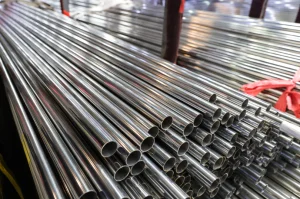 Custom 316L Stainless Steel Weld Pipe Suppliers, FactoriesOrder Custom Samples
-
China China Suppliers - High-Quality Stainless Steel Industrial Welded Pipes from Reliable Factory Quotes, PricelistDownload Catalog
-
CE Certification 316l Stainless Steel Sheet Factory, QuotesRequest Bulk Quotation
6. Frequently Asked Questions (FAQ) for Engineering & Procurement Teams
Below are detailed responses to the most critical technical and logistical inquiries raised by international procurement managers and project engineers when specifying large stainless steel pipes and plates.
How is the PREN (Pitting Resistance Equivalent Number) calculated, and why is it critical for marine pipe selection?
The Pitting Resistance Equivalent Number (PREN) quantifies a stainless steel alloy's resistance to localized pitting corrosion in chloride-rich environments. The standard mathematical formula is:
PREN = %Cr + (3.3 × %Mo) + (16 × %N)
For standard 304 stainless steel, the PREN is ~19. For 316L, it ranges from 23 to 25. For marine offshore and desalination environments, engineers specify Duplex 2205 (PREN 32–35) or Super Duplex 2507 (PREN ≥ 42) to guarantee immunity against pitting and crevice corrosion under high salinity.
What is the distinction between ASTM A312 and ASTM A358 specifications for welded pipes?
ASTM A312 covers seamless, straight-seam welded, and heavily cold worked austenitic stainless steel pipes intended for high-temperature and general corrosive service (typically small to medium diameters, Schedule 5S through 80S).
ASTM A358 covers Electric-Fusion-Welded (EFW) austenitic stainless steel pipe designed for high-pressure industrial process lines (typically larger outer diameters, NPS 8 through 60 inches). ASTM A358 mandates five distinct classes of pipe based on filler metal additions and radiographic examination (RT) requirements (e.g., Class 1 requires 100% radiography of all longitudinal welds).
How does Jiangsu Renzhi maintain a 50/50 phase balance in Duplex 2205 welded pipes?
Duplex stainless steels owe their combination of strength and stress-corrosion cracking resistance to a balanced microstructural ratio of roughly 50% ferrite and 50% austenite. During welding, rapid cooling can result in excess ferrite in the heat-affected zone (HAZ).
Renzhi prevents this by using nitrogen-enriched shielding gases (such as Ar + 2% N2) during automated welding and conducting mandatory post-weld solution annealing at 1020°C–1080°C followed by rapid water quenching. Metallographic examination per ASTM E562 confirms the phase balance on every production lot.
What non-destructive testing (NDT) documentation is provided with wholesale large pipe orders?
Every shipment is accompanied by a full Mill Test Certificate (MTC) according to EN 10204 3.1 (or 3.2 third-party inspection upon request by SGS, BV, or TÜV). Test reports include:
- Chemical analysis (PMI spectrographic test)
- Mechanical tensile, yield, and elongation tests
- Charpy V-Notch impact testing at low temperatures
- 100% Hydrostatic pressure testing or inline Eddy Current Testing
- Radiographic Test (RT) reports for longitudinal weld seams
- Intergranular Corrosion test per ASTM A262 Practice E
Can Renzhi supply custom end preparations and beveling for automatic site welding?
Yes. We offer in-factory mechanical end beveling per ASME B16.25 (e.g., 37.5° ± 2.5° with a 1.6mm root land) or compound beveling for heavy wall thicknesses exceeding 22mm. Beveled pipe ends are fitted with heavy-duty plastic end protectors to prevent edge deformation during maritime ocean transit.
What are the typical lead times and Minimum Order Quantities (MOQ) for wholesale orders?
For standard dimensions in 304/304L and 316/316L, our warehouse inventory in Wuxi holds over 15,000 tons of master coils and ready pipes, allowing delivery within 7 to 10 days. For custom large-diameter EFW or Duplex 2205/2507 orders requiring dedicated production runs, standard lead times range from 20 to 35 days. Minimum Order Quantities start from 1 ton for stocked sizes and 3–5 tons for custom alloy rollings.