Featured Flat Steel & Stainless Product Line (Top Tier)
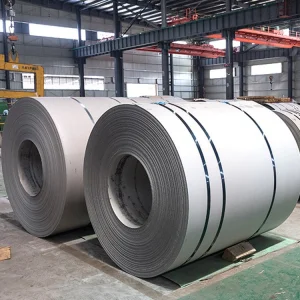
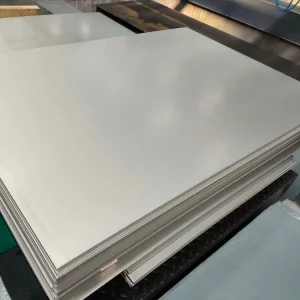
Mill-direct precision plates, strip coils, and custom fabricated steel components certified to international standards.
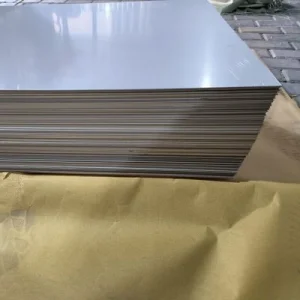
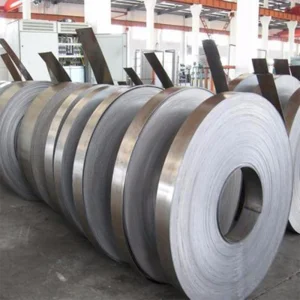
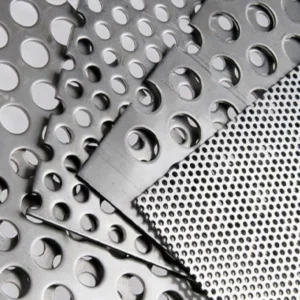
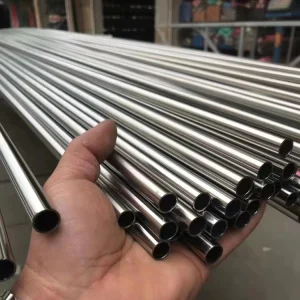
1. Executive Overview & Macro Industry Landscape
The global manufacturing ecosystem relies fundamentally on high-precision flat steel sheets. Whether serving as structural armor in heavy equipment, hygienic surfaces in pharmaceutical processing plants, or lightweight panels in modern electric vehicles (EVs), flat steel products represent the backbone of physical infrastructure. Navigating the global wholesale flat steel market requires procurement professionals and structural engineers to evaluate suppliers far beyond simple nominal per-ton pricing.
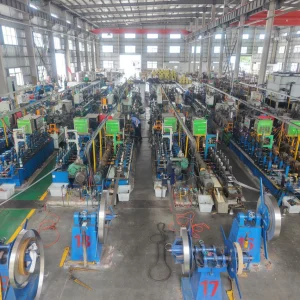
As global supply chains shift toward carbon-neutral footprint standards and digital traceabilities, flat steel sheet manufacturers are undergoing rapid technological transformations. Advanced rolling mills now deploy real-time radiometric thickness measuring equipment, automated surface defect inspection systems powered by machine vision, and continuous tension levelling lines. These innovations ensure that flat steel sheets remain perfectly planar, free of internal stresses, and ready for immediate precision stamping, laser cutting, or automated robot welding.
2. Unrivaled Structural Advantages of China’s Manufacturing Clusters
China produces over 55% of the world's crude steel and dominates high-value stainless and alloy flat sheet processing. Situated prominently in regional clusters like Jiangsu (specifically Wuxi) and Guangdong, Chinese manufacturers offer distinct operational and economic synergies that international buyers cannot easily replicate elsewhere.
Direct Upstream Integration
Leading manufacturers in Wuxi maintain direct strategic supply partnerships with primary mega-mills such as TISCO (Shanxi Taigang), Baosteel, Tsingshan Holding Group, and POSCO. This direct coil integration eliminates intermediate distributor markups and guarantees fully traceable master coil chemistry for every batch.
State-of-the-Art Processing Machinery
Equipped with 20-high Sendzimir cold rolling mills, continuous bright annealing furnaces, multi-roll tension levelers, and 12,000W fiber laser cutting stations, Chinese factories convert raw slabs into ultra-flat sheets with custom surface finishes ranging from No. 1 hot rolled to 8K mirror polish.
Logistical & Freight Synergies
Proximity to deep-water shipping terminals like Shanghai Port and Ningbo-Zhoushan Port enables seamless containerized and breakbulk logistics. Integrated export wrapping ensures ocean-freight protection against salt corrosion, humidity, and mechanical shock during transit.
3. Comprehensive Technical Breakdown: Grades, Finishes & Tolerances
Selecting the optimal flat steel sheet grade requires balancing corrosion resistance, mechanical strength, formability, and total project lifecycle cost. Below is an authoritative technical matrix across main stainless and carbon steel grades supplied by professional manufacturers.
| Alloy Grade | Microstructure | Key Chemistry Highlights | Corrosion Level (PREN) | Surface Finishes Available | Primary Industrial Use Cases |
|---|---|---|---|---|---|
| SUS 304 / 304L | Austenitic | 18% Cr / 8% Ni / Low Carbon (<0.03%) | PREN ~ 19.0 (Good) | 2B, BA, No.4 Satin, 8K Mirror, Hairline | Food equipment, architectural cladding, kitchenware, chemical tanks |
| SUS 316 / 316L | Austenitic | 16-18% Cr / 10-14% Ni / 2-3% Mo | PREN ~ 23.0 to 25.0 (Very High) | No.1 Hot Rolled, 2B, BA, Polished | Marine fittings, pharmaceutical vessels, coastal structures, acid tanks |
| Grade 201 | Austenitic (Mn-Ni) | 14-16% Cr / 1.5-3.5% Ni / 5.5-7.5% Mn | PREN ~ 15.0 (Moderate) | 2B, BA, Powder Coated, Patterned | Indoor structural decor, furniture frames, guardrails, door skins |
| Duplex 2205 | Austenitic-Ferritic | 22% Cr / 5% Ni / 3% Mo / 0.18% N | PREN ~ 34.0 to 36.0 (Superior) | No.1 Industrial, Pickled & Annealed | Offshore oil rigs, chemical processing pressure vessels, seawater desalination |
| SUS 310S | Austenitic (Heat Resisting) | 24-26% Cr / 19-22% Ni | High Temp Oxidation Resistant (<1150°C) | No. 1 HR, Sandblasted | Furnace liners, boiler baffles, heat exchanger tubesheets, combustion chambers |
| Ferritic 430 | Ferritic (Magnetic) | 16-18% Cr / Zero Nickel | PREN ~ 16.0 (Indoor Mild) | BA, 2B, Protective Film Coated | Home appliance panels, refrigerator trim, dishwasher liners, automotive trim |
4. Sector-Specific Application Scenarios & Engineering Solutions
Flat steel sheets serve diverse downstream processing industries. Understanding the operational stress and environmental exposure allows manufacturers to customize edge profiles, hardness levels, and protective coatings.
Hygienic & Food-Grade Equipment
For dairy tanks, brewery vats, and commercial food lines, SUS304 and SUS316L cold-rolled flat sheets are processed with 2B or No.4 brushed finishes ($Ra < 0.4\,\mu\text{m}$). This smooth topography prevents bacterial adhesion and simplifies Clean-In-Place (CIP) chemical washdowns.
Architectural Cladding & Elevator Skins
Modern skyscraper facades and luxury elevator interiors demand high visual uniformity. Manufacturers utilize physical vapor deposition (PVD) color coating, acid-etched custom patterns, and perforated 201 or 304 sheets lined with UV-resistant laser protective film (100 µm depth).
Heavy Industrial Pressure Vessels
In chemical plants and oil refineries, thick hot-rolled plates (No. 1 finish, 6mm to 50mm gauge) in 316L, 321, or Duplex 2205 are used. These undergo ultrasonic non-destructive testing (NDT) to eliminate internal laminations and inclusions before delivery.
5. Global OEM Procurement Framework & Quality Assurance Risk Mitigation
Procuring flat steel sheet in wholesale volumes requires strict quality assurance protocols to guarantee batch consistency and legal compliance across border jurisdictions.
1. Mill Test Certificate (MTC 3.1)
Every shipment must be accompanied by an EN 10204 3.1 certified Mill Test Certificate documenting verified heat numbers, chemical spectral analysis (C, Si, Mn, P, S, Cr, Ni, Mo), yield strength ($R_{p0.2}$), tensile strength ($R_m$), and percentage elongation ($A_5$).
2. Dimensional Gauge Verification
Leading factories deploy online micrometer monitoring and multi-point offline verification to ensure thickness variations do not exceed standard ASTM A480 / EN 10088-2 limits, safeguarding downstream stamping die lifespans.
3. Seaworthy Export Packaging
Flat sheets must be bundled with wooden skids, wrapped in anti-rust VCI paper, encased in galvanized steel edge protectors, and strapped securely to withstand dynamic ocean transport stresses without surface scratch or moisture ingress.
6. Industry Trends & Future Decarbonization Roadmap (2025–2030)
The global steel industry is experiencing a pivotal transformation driven by environmental regulations, carbon tariff mechanisms (such as Europe's CBAM), and automated smart manufacturing demands.
Simultaneously, digital passports for steel coils are emerging. By integrating QR codes etched directly onto edge margins, procurement teams can instantly audit the carbon footprint, scrap recycled ratio (often exceeding 70% in high-grade stainless steel), and heat history directly from their smartphones.
7. Frequently Asked Questions (Technical & Commercial FAQ)
Comprehensive Product Catalog (Extended Series)
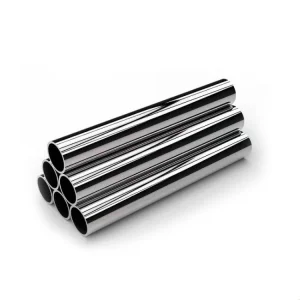
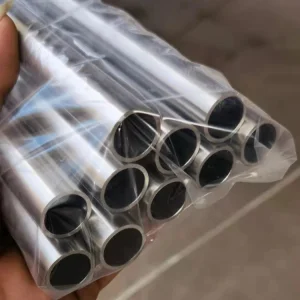
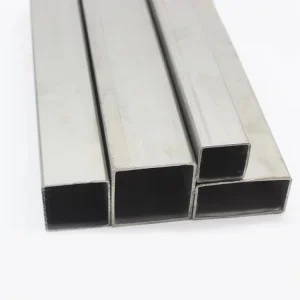
Explore additional stainless steel coils, hot-rolled heavy plates, and structural tubing options.