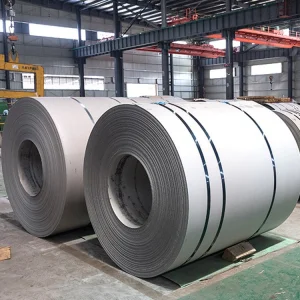
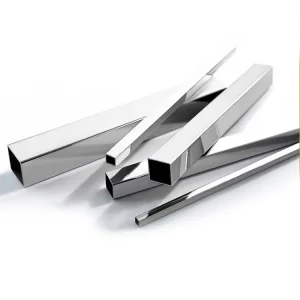
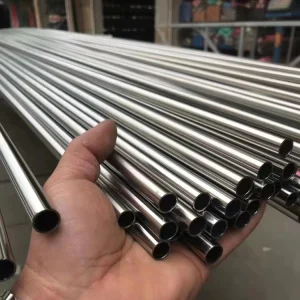
Featured Stainless Steel Mill Products & Factory Stock
Explore factory-direct wholesale pricing, precision processing options, and mill-certified stainless steel pipes, sheets, and coils supplied directly from our Wuxi manufacturing hub.


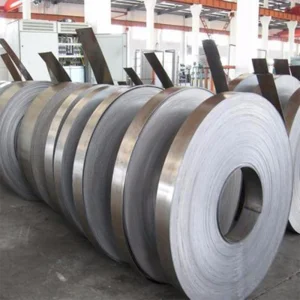
1. Technical Foundations of Precision Drilling Stainless Steel Tubes
Understanding metallurgical mechanics, deep-hole gun drilling processing, honing tolerances, and material integrity under extreme subsurface pressure.
Deep-Hole Drilling & Honing Capabilities
Drilling stainless steel tubes requires specialized machining processes beyond standard extrusion or seam-welding. Modern factories employ BTA (Boring and Trepanning Association) system drilling and Single-Tube Systems (STS) to achieve deep-hole depth-to-diameter ratios exceeding 100:1. Followed by multi-pass CNC honing, internal surface roughness is controlled to Ra < 0.2 µm, ensuring optimal fluid dynamics and minimizing scale accumulation during high-pressure downhole pumping.
Metallurgical Integrity & Alloy Selection
Drilling applications expose tubular goods to severe torsional fatigue, cyclic bending, and aggressive hydrogen sulfide ($H_2S$), carbon dioxide ($CO_2$), and chloride-rich brine solutions. Sourcing premium raw billets from top-tier steelmakers like Tsingshan, TISCO, POSCO, and Baosteel ensures optimal chemistry control. Key grades include Austenitic (316L, 317L, 310S), Duplex 2205, and Super Duplex 2507, providing high yield strength (up to 550 MPa) and superior Pitting Resistance Equivalent Numbers (PREN > 40).
Dimensional Precision & Wall Uniformity
Tolerances in deep drilling tubes directly govern downhole reliability. Wall eccentricity or ovality issues induce localized strain points under high hydrostatic loads, risking sudden tubular collapse or joint rupture. Advanced Chinese manufacturing lines utilize ultrasonic wall thickness monitoring throughout cold drawing and rotary honing stages, guaranteeing concentricity within $\pm 3\%$ and wall thickness variations tighter than $\pm 0.05 \text{ mm}$.
2. Unmatched Advantages of China Drilling Stainless Steel Tube Factories
Why leading global EPC contractors, oilfield service companies, and industrial OEMs choose China's integrated stainless steel supply chain.
End-to-End Vertical Integration
China's stainless steel manufacturing ecosystem in industrial centers like Wuxi and Jiangsu combines nickel smelting, billet casting, seamless tube rolling, deep-hole gun drilling, bright annealing, and precision machining within tight geographical clusters. This localized synergy eliminates supply chain latency, drastically reduces transshipment costs, and enables standard production lead times of just 15 to 25 days even for custom deep-drilled orders.
Cost Structure & Economies of Scale
Mass production capabilities combined with strategic raw material procurement contracts allow Chinese tube factories to offer pricing 20% to 35% lower than European or North American counterparts without sacrificing quality. Factory-direct wholesale pricing models eliminate intermediary distributor markups, allowing overseas buyers to optimize Total Cost of Ownership (TCO) across large-scale capital projects.
Stringent International Quality Systems
Modern Chinese mills strictly adhere to ISO 9001, ISO 14001, and PED 2014/68/EU standards. Downhole drilling tubes undergo rigorous non-destructive testing (NDT), including 100% Hydrostatic testing (pressures up to 100 MPa), Eddy Current Inspection (ET), and Ultrasonic Testing (UT) according to ASTM A213, ASTM A269, and EN 10216-5. Complete traceability is backed by Mill Test Certificates (MTC) conforming to EN 10204 3.1 and 3.2.
3. Global Drilling Industry Trends & Technical Innovations
How evolving energy exploration dynamics and advanced material science are reshaping the requirements for drilling tubular goods.
Shift Toward High-Temperature/High-Pressure (HP/HT) Wells
As conventional oil and gas reserves deplete, subsurface exploration is moving deeper into ultra-deep offshore wells and super-hot geothermal reservoirs (temperatures > 200°C, pressures > 15,000 psi). This trend demands a pivot from standard 304/316 austenitic grades toward high-alloy Super Duplex 2507 and Nickel-based Inconel 625/825 alloy tubes capable of maintaining yield strength without cracking under severe fatigue load cycles.
Smart Drilling & Telemetry Tool Integration
Modern Directional Drilling and Measurement While Drilling (MWD / LWD) systems utilize non-magnetic stainless steel collar tubes housed with embedded sensor arrays. Drilling tubes must exhibit zero magnetic permeability ($\mu_r < 1.005$) to avoid interfering with downhole magnetic directional navigation sensors, prompting mills to develop precision non-magnetic stainless steel alloys with strict cold-working protocols.
Green Energy Transition: Geothermal & Hydrogen Drilling
Stainless steel drilling tubes are rapidly transitioning into renewable energy sectors. Deep geothermal energy loop drilling and underground hydrogen storage ($UHS$) wells demand extreme resistance to hydrogen embrittlement and acidic geothermal brines. Low-carbon, high-molybdenum stainless alloys are establishing themselves as the global benchmark for sustainable subsurface infrastructure projects.
4. Specialized Application Scenarios & Operational Use-Cases
From subsea petroleum exploration to heavy hydraulic drilling machinery—how tailored tube specifications meet distinct field requirements.
Downhole Oil & Gas Control Lines & Core Barrels
Stainless steel drilling tubes are deployed as core barrels in geological sampling rigs, casing string lines, and hydraulic control lines operating chemical injection pumps. The smooth ID finish prevents wax and hydrate deposition, while high burst pressure ratings protect internal hydraulic fluid paths during continuous drilling operation.
Geothermal Deep Well Heat Exchanger Tubing
In geothermal power plants, closed-loop subsurface heat exchangers require corrosion-proof tubing capable of enduring hot, mineral-dense mineral scale deposits. Heavy-wall 316L and 2205 duplex drilled and honed tubes deliver continuous thermal efficiency without localized pitting or chloride stress corrosion cracking (SCC).
Hydraulic Drilling Rig Cylinders & Piston Sleeves
Beyond downhole deployment, drilling equipment manufacturers utilize precision honed stainless tubes to fabricate hydraulic cylinder barrels, telescoping masts, and mud pump liners. High wear resistance, exact roundness, and anti-galling surface treatments prevent hydraulic seal degradation under high cyclic frequency.
5. Quality Assurance Engineering & Standards Compliance
A rigorous quality control matrix engineered to eliminate non-conformance risks in high-stakes drilling projects.
| Standard / Specification | Material Grades Covered | Key Mechanical & Testing Criteria | Primary Industrial Field |
|---|---|---|---|
| ASTM A213 / A213M | TP304/304L, TP316/316L, TP321, TP347 | Flaring, Flange, Hardness, Hydrostatic, Eddy Current Testing | Heat Exchanger & Boiler Drilling Tubes |
| ASTM A269 / A269M | 304, 316L, 317L, 904L | Seamless/Welded, Nominal Wall, Reverse Flattening Test | General Downhole Control & Fluid Tubing |
| ASTM A789 / A790 | UNS S31803 (2205), UNS S32750 (2507) | High Yield Strength (>450 MPa), Microstructure Phase Balance | Offshore Sour Gas & Subsea Drilling Rigs |
| NACE MR0175 / ISO 15156 | 316L, Duplex 2205, Super Duplex 2507 | H2S Stress Corrosion Cracking Resistance, Hardness <28 HRC | Sour Crude Exploration & Downhole Sampling |
| EN 10216-5 TC1 / TC2 | 1.4301, 1.4404, 1.4462, 1.4410 | Intergranular Corrosion (IGC) Test according to ISO 3651-2 | European Energy Sector & Process Engineering |
6. Wholesale Pricelist Dynamics & Global Procurement Strategy
Transparent pricing metrics, cost variables breakdown, and procurement guidelines for industrial buyers optimizing material budgets.
Key Factors Shaping Wholesale Tube Pricing
- LME Raw Material Index: Nickel and Molybdenum spot market fluctuation directly influences base alloy surcharges.
- Honing & Deep Drilling Pass Count: Tight internal surface requirements (Ra < 0.2 µm) require additional tool passes, adding 10-15% to machining labor cost.
- Dimensional Aspect Ratio: Thin-wall heavy deep-drilled tubes demand precise feed rate control, increasing cycle time.
- Testing & Inspection Scope: Third-party witness testing (SGS, TUV, BV) and EN 10204 3.2 certifications.
Indicative Wholesale Price Reference Matrix
*Estimated FOB China factory baseline prices per metric ton for bulk wholesale orders (MOQ > 5 Metric Tons):
- Austenitic 304/304L Drilled Tube: $2,400 - $2,800 / Ton
- Austenitic 316/316L Drilled Tube: $3,400 - $3,900 / Ton
- Duplex 2205 Honed/Drilled Tube: $4,200 - $4,800 / Ton
- Super Duplex 2507 High-Pressure Tube: $6,100 - $7,200 / Ton
RFQ Best Practices for Procurement Officers
To obtain the most accurate wholesale quote, always provide your factory supplier with:
- Exact OD, ID, and Wall Thickness tolerances (e.g., OD 60mm ±0.1mm, ID 40mm H8).
- Surface finish specification (Ra value internal and external).
- Required delivery length (fixed random length or exact cut lengths with beveling).
- Operating medium details ($H_2S$ concentrations, design pressure, temperature).
7. Frequently Asked Questions (Technical & Wholesale Procurement)
Expert engineering answers addressing common technical queries, manufacturing lead times, and global shipping standards.
Q1: What differentiates a specialized drilling stainless steel tube from standard commercial stainless steel pipe?
Standard industrial pipes are manufactured for structural or low-pressure fluid transfer where minor wall eccentricity or surface roughness is acceptable. In contrast, drilling stainless steel tubes undergo specialized gun drilling or BTA deep-hole boring followed by CNC honing. This process guarantees extremely tight dimensional tolerances, high concentricity (eliminating rotational unbalance at high RPMs), smooth internal bore finish (Ra < 0.2 µm), and certified mechanical toughness required to resist severe downhole fatigue and burst pressures.
Q2: How do Chinese tube factories ensure straightness and concentricity over long drill tube lengths?
Leading Chinese factories utilize counter-rotating deep-hole drilling technology, where both the workpiece bar and the drill bit rotate in opposite directions simultaneously. This self-centering mechanical dynamic eliminates drill wander. Post-drilling, tubes undergo hydraulic multi-point automatic straightness calibration, achieving straightness tolerances down to 0.5 mm per meter (1:2000 ratio), verified by laser alignment measuring systems.
Q3: Why is 2205 Duplex stainless steel increasingly replacing 316L in downhole drilling applications?
Duplex 2205 (UNS S31803 / 1.4462) delivers nearly double the yield strength of 316L (approx. 450-550 MPa vs. 220 MPa). This higher strength allows drill string engineers to design thinner tube walls while maintaining equal or superior collapse pressure resistance, significantly reducing overall string weight. Furthermore, its balanced austenitic-ferritic dual-phase microstructure yields outstanding resistance to chloride pitting and stress corrosion cracking (SCC) in harsh downhole environments.
Q4: What non-destructive testing (NDT) procedures are performed before shipment?
Every batch of wholesale drilling stainless tubing undergoes 100% Non-Destructive Testing. Standard inspection protocols include Ultrasonic Testing (UT) for longitudinal and transverse internal flaw detection, Eddy Current Testing (ET) for surface defect evaluation, Positive Material Identification (PMI) alloy verification, and hydrostatic pressure testing up to design limit pressures. Full inspection reports are provided in the mill test dossier.
Q5: Can Chinese factories supply specialized end-connections or custom threads?
Yes. Beyond supplying raw drilled and honed tube lengths, integrated manufacturing plants possess multi-axis CNC lathe machining centers capable of cutting custom threads, including API spec casing and tubing threads, flush joint connections, premium gas-tight seals, and custom bevels or grooves according to engineering CAD drawings.
Q6: How are precision drilled tubes packaged to prevent ocean freight transit damage?
Precision honed ID bores and polished surfaces are highly sensitive to moisture and physical impact. Tubes are thoroughly cleaned, dried, and coated with rust-inhibiting oil or plastic sleeves. Plastic end caps are fitted to preserve threads and bevels. Tubes are then securely packed in seaworthy heavy-duty wooden crates or steel-framed bundles wrapped in waterproof woven plastic sheeting, fully prepped for containerized or breakbulk ocean vessel transport.
Certified Stainless Steel Pipes, Coils & Custom Fabrications
Explore additional CE-certified, factory-direct stainless steel materials manufactured to international ASTM, EN, and JIS standards.