
Precision Stainless Steel Venting & Structural Tubing Showcase
Explore our premium factory-direct stainless steel pipe, sheet, and customized exhaust components engineered to ISO 9001, CE, ASTM, EN, and JIS standards.

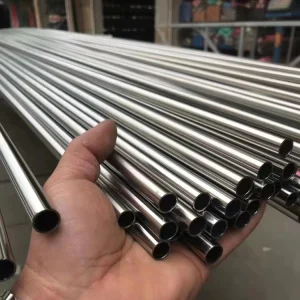



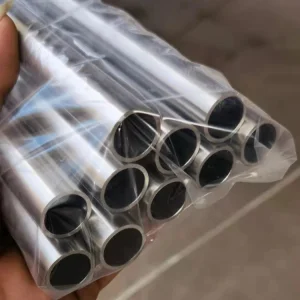
Global B2B Demand Analysis: The Strategic Shift to Custom Stainless Steel Vent Systems
A comprehensive examination of flue gas dynamics, thermal endurance, and anti-corrosive alloy selection across global commercial and industrial facilities.
1. The Evolution of Industrial Flue & Exhaust Ventilation
In modern industrial manufacturing, HVAC design, chemical synthesis, and commercial heating, flue exhaust venting systems represent a vital operational nexus. Historically, industrial facilities relied heavily on galvanized steel or heavy-gauge carbon steel ductwork for venting combustion gases and chemical fumes. However, accelerated degradation caused by acidic condensate (sulfurious, nitric, and hydrochloric acid derivatives), combined with strict global environmental regulations (such as EN 1856-1 and UL 103), has forced a worldwide procurement transition toward Custom Stainless Steel Vent Pipes.
Stainless steel vent pipes—specially fabricated from austenitic grades like SUS304, SUS316L, SUS310S, and duplex alloys such as UNS S31803 / 2205—provide unmatched structural resilience against thermal shock, cyclic thermal expansion, and aggressive chemical attack. As global EPC (Engineering, Procurement, and Construction) contractors build ultra-efficient condensing boilers, biomass energy units, hydrogen exhaust ducting, and industrial incinerators, the demand for custom-tailored stainless steel venting solutions with zero gas leakage has surged exponentially across North America, Europe, the Middle East, and Asia-Pacific.
2. Global Procurement Bottlenecks & Sourcing Pain Points
B2B buyers, plant engineers, and MEP contractors face persistent operational hurdles when procuring standard off-the-shelf ventilation piping:
- Non-Standard Geometry & Off-Axis Alignment: Existing industrial plants often require complex offset angles, custom tees, variable-diameter reducers, and integrated rain caps that standard stock distributors cannot supply.
- Condensate Leakage at Seams: Poorly welded longitudinal seams or weak mechanical locking mechanisms result in toxic flue gas leakage, breaching OSHA air quality limits and damaging roof structures.
- Material Traceability Deficits: Uncertified raw material feedstock often leads to premature pitting corrosion in chlorine- or sulfur-laden flue environments.
- Lead Time Instability: Sourcing custom-fabricated fittings from tier-3 suppliers often stalls massive infrastructure projects, incurring heavy delay penalties.
Technical Architecture & Engineering Innovations in Custom Vent Pipes
How advanced metallurgy, high-precision laser welding, and optimized thermal insulation solve complex industrial exhaust challenges.
Continuous Fiber Laser Welding
Utilizing full-penetration automated laser seam welding, our factory eliminates heat-affected zone (HAZ) oxidation, ensuring smooth internal duct walls, zero pressure drop, and absolute gas-tight integrity under positive pressure ventilation.
Dual-Wall Ceramic Fiber Insulation
For high-efficiency boilers and turbines, our double-wall stainless steel vent systems feature high-density mineral wool or ceramic fiber insulation (25mm to 100mm thickness), maintaining low outer skin temperatures for minimal clearance to combustibles.
Anti-Corrosive Acid Passivation
Every custom vent pipe section undergoes complete chemical pickling and passivation treatment to restore the chromium-oxide protective film (Cr2O3), protecting the vent interior against highly aggressive condensate containing H2SO4 and HCl.
Modular Fast-Click Joints & Flanges
Engineered with precision V-band clamps, silicone or viton sealing gaskets, and roll-formed flanged ends, our custom venting components accelerate field installation by up to 60% compared to traditional field-welded ducting.
Dynamic Pressure-Relief Engineering
Integrated draft regulators, explosion-relief doors, and automated condensate drain traps ensure safe, stable exhaust management in high-surge industrial combustion chambers and biomass gasifiers.
Custom CAD/CAM Off-Axis Fabrication
Our engineering team accepts 3D STEP/DWG models to cut, roll, and hydroform custom elbows (15°, 30°, 45°, 90°), manifold collectors, and stack terminals with millimeter precision for tight equipment rooms.
Technical Alloy Selection Guide for Custom Vent Pipes
Selecting the optimal stainless steel alloy is paramount for balancing capital expenditure with long-term corrosion resistance and thermal performance. Below is a engineering comparison of primary venting materials:
| Stainless Grade | Metallurgical Structure | Max Continuous Temp | Acid Condensate Resistance | Ideal Venting Applications |
|---|---|---|---|---|
| SUS 304 / 304L | Austenitic (18% Cr, 8% Ni) | 450°C (842°F) | Moderate (Dry flue gases) | Commercial kitchen hoods, residential gas fireplaces, standard HVAC exhaust, indoor decorative ducting. |
| SUS 316 / 316L | Austenitic (16% Cr, 10% Ni, 2% Mo) | 600°C (1112°F) | High (Resists H2SO4 / Chloride pitting) | Condensing gas boilers, oil-fired burners, diesel generator exhaust, chemical vapor venting, marine chimneys. |
| SUS 310S | High-Nickel Austenitic (25% Cr, 20% Ni) | 1050°C (1922°F) | Very High (Superior oxidation resistance) | Industrial heat-treatment furnaces, incinerators, biomass combustion flues, flare stack liners. |
| Duplex 2205 | Austenitic-Ferritic (22% Cr, 5% Ni, 3% Mo) | 300°C (572°F) | Exceptional (PREN ≥ 34, High yield strength) | Offshore oil platform gas vents, pulp & paper bleaching exhaust, heavy chemical processing vents. |
| SUS 430 | Ferritic (16-18% Cr, Nickel-free) | 400°C (752°F) | Low-Moderate (Dry indoor service) | Outer jacket sleeve for dual-wall insulated vents, cost-conscious non-condensing appliance casing. |
Technology Roadmap & Future Outlook for Industrial Venting Systems (2025–2035)
Navigating the next decade of decarbonization, smart monitoring, and additive manufacturing in fluid and gas exhaust ducting.
1. Next-Generation Hydrogen Exhaust & Ultra-Clean Energy Venting
As power generation transitions toward green hydrogen combustion and fuel-cell technology, exhaust venting systems must adapt to high hydrogen gas velocities, micro-molecular permeability, and elevated water vapor concentrations. Our R&D division is actively developing ultra-low roughness (Ra < 0.4µm) electropolished 316L vent pipes with zero-clearance metallic seal rings designed to handle pure hydrogen and ammonia combustion emissions without embrittlement.
2. Smart Venting Infrastructure with Integrated IoT Sensors
The industrial vent pipe of the future is no longer a passive static metal tube. Modern smart venting stacks incorporate embedded fiber-optic temperature sensors, differential pressure transmitters, and micro-electrochemical gas sensors directly into the double-wall cavity. This enables real-time predictive maintenance, alerting plant operators to flue gas condensation, soot buildup, or gasket degradation long before catastrophic system failure occurs.
3. Circular Economy & Carbon Neutral Manufacturing
In alignment with global ESG initiatives, Jiangsu Renzhi Holding Group Co., Ltd. utilizes 100% recyclable stainless steel raw feedstock sourced from environmentally certified green mills (Tsingshan, TISCO, POSCO, Baosteel). By implementing closed-loop scrap recycling, solar-powered laser cutting stations, and acid-free eco-pickling lines, our factory reduces the embodied carbon footprint of custom vent pipes by over 38% compared to traditional pipe mills.
Jiangsu Renzhi Holding Group Co., Ltd. - Manufacturing Expertise
Full-process processing from coil slitting, roll forming, continuous welding, to surface polishing and custom vent component engineering under one roof.
Jiangsu Renzhi Holding Group Co., Ltd. operates an expansive manufacturing and processing hub in Huishan District, Wuxi, Jiangsu, China. Equipped with over 80 automated welded pipe lines, 5 precision coil flattening/slitting lines, 6 automated surface polishing systems (8K mirror, No.4, hairline), and 2 embossing lines, we maintain complete operational control over chemical composition, dimensional tolerances, and surface integrity.
Whether you require standard ASTM A240 / EN 10088-2 / JIS G4304 stainless steel plates, or custom-engineered SUS304 / SUS316L / SUS310S vent ducting with specialized wall thicknesses, our engineering sales team delivers fast, accurate factory quotes and seamless export logistics worldwide.
Global Compliance, Quality Assurance & Localized Support
Ensuring full international regulatory alignment and zero-defect delivery for high-stakes industrial projects across 60+ countries.
EN 1856-1 & CE Certified
Our chimney liners and metal vent pipes meet European Standard EN 1856-1 (T600 pressure and temperature specifications), carrying full CE marking for European market installation.
UL 103 / UL 1777 Compliance
Engineered to withstand 1000°F continuous flue temperatures and 2100°F short-term thermal shock testing for North American industrial and commercial boiler code standards.
EN 10204 3.1 Material Test Reports (MTR)
Every shipment is delivered with comprehensive mill test certificates detailing chemical heat analysis, mechanical tensile strength, yield strength, elongation, and hydrostatic test results.
Seaworthy Moisture-Proof Export Packaging
Custom vent pipes and sheets are packed with heavy-duty plastic film wrap, wooden box framing, steel strap reinforcements, and end-cap protectors to prevent transit damage during ocean freight.
Specialized Stainless Steel Materials & Custom Pipe Solutions
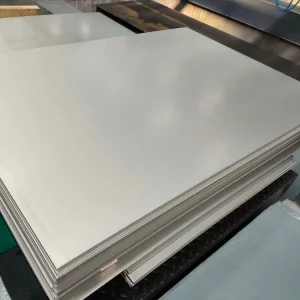
Explore our specialized range of corrosion-resistant low-carbon pipes, decorative tubes, cold-rolled sheets, and stainless steel strips.


Frequently Asked Questions: Sourcing Custom Stainless Steel Vent Pipes
Expert answers to critical engineering, metallurgical, custom RFQ workflow, and compliance questions from our senior technical director.
How do I determine whether my facility requires SUS304 or SUS316L for flue venting?
The primary decision factor is the presence of sulfur and chlorine in the fuel or process fumes, which dictate the likelihood of acidic condensate formation. For dry combustion (such as natural gas fireplaces or standard clean air exhaust below 200°C where moisture does not condense), SUS304 offers excellent structural performance and economy. However, for high-efficiency condensing boilers, diesel generators, or biomass combustion where flue gas temperatures drop below the dew point (creating wet acidic condensate), SUS316L is mandatory due to its 2–3% Molybdenum content, which prevents pitting and crevice corrosion.
What custom fabrication options are available for specialized vent pipe geometries?
As a direct manufacturer, Jiangsu Renzhi Holding Group Co., Ltd. provides full custom engineering services. We fabricate custom-diameter pipes ranging from 50mm up to 2000mm, variable wall thicknesses from 0.4mm to 12mm, off-axis offset elbows (15° to 90°), manifold transition pieces, explosion-relief tee caps, drain collars, stack terminals, and roof penetration flashing plates. You can submit CAD drawings (DWG/STEP/PDF) for exact line matching.
What is the advantage of double-wall insulated vent pipe over single-wall venting?
Double-wall insulated vent pipe consists of an inner stainless steel flue liner, a high-density mineral wool or ceramic fiber insulation core (typically 25mm to 100mm thick), and an outer stainless steel or aluminum-zinc jacket. The insulation maintains hot flue gas temperatures inside the flue, sustaining thermal draft velocity and preventing flue gas temperature drops that cause corrosive condensate accumulation. Furthermore, the double-wall construction reduces outer casing surface temperatures, dramatically decreasing required clearance distances to surrounding combustible building materials.
How does Renzhi guarantee weld seam quality and pressure tightness?
All of our vent pipe production lines utilize automated TIG, Plasma, or continuous Fiber Laser seam welding. Welds undergo 100% inline eddy-current testing or NDT non-destructive radiographic testing, followed by hydrostatic or pneumatic bubble pressure testing up to 2000 Pa (N1/P1 pressure rating class under EN 1856-1). This guarantees absolute gas-tight and liquid-tight performance under positive-pressure forced draft conditions.
What is the typical lead time and process for receiving a formal factory quote?
Our sales engineering team provides formal written quotes within 12 to 24 hours of receiving your RFQ specifications (material grade, diameter, wall thickness, line length, fitting quantities, and port destination). Standard production lead time ranges from 7 to 15 business days depending on volume, with expedited air-freight samples or sea-container scheduling available for major industrial shutdowns.