
Featured Industrial Stainless Steel Portfolio
Mill-Direct Solutions (1 - 8)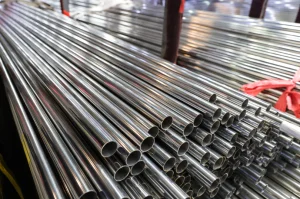
Custom 316L Stainless Steel Weld Pipe Suppliers, Factories
Request Factory Quote
Wholesale High Cost-Effective 201 Cold Rolled Stainless Steel Sheet
Request Factory Quote
Custom High-Quality Stainless Steel Decorative Pipe
Request Factory Quote
Wholesale Prime Quality 201 Stainless Steel Pipe
Request Factory Quote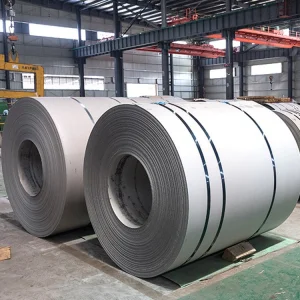
CE Certification Hot Rolled Stainless Steel Coils
Request Factory Quote
CE Certification Stainless Steel Industrial Welded Pipe
Request Factory Quote
China High-Quality 201 Stainless Steel Pipe Solutions
Request Factory Quote
CE Certification Cold Rolled Stainless Steel Sheet
Request Factory QuoteGlobal Procurement Demand for Custom Stainless Flat Plates
In the modern industrial landscape, custom stainless steel flat plates serve as the structural backbone for sectors ranging from chemical processing and marine engineering to heavy equipment fabrication and high-tech cleanroom infrastructure. As global engineering projects demand tighter dimensional tolerances, superior pitting resistance, and traceable metallurgical integrity, sourcing flat plates direct from certified manufacturers has shifted from a transactional purchase to a strategic supply chain decision.
Regional Demand Dynamics
North American and European buyers prioritize ASTM A240 and EN 10088-2 compliance with strict EN 10204 3.1 certification. APAC regions emphasize high-volume cost efficiency and rapid lead times for heavy structural machinery and shipbuilding grade plates.
Total Cost of Ownership (TCO)
Direct factory quotes mitigate intermediary markups by 15–28%. Procuring custom pre-cut flat plates reduces scrap generation, lowers internal machining hours, and eliminates secondary leveling costs at destination job sites.
Supply Chain Hedging
Fluctuations in LME Nickel and SHFE Ferrochrome directly influence flat plate pricing. Long-term supply agreements with primary mills allow procurement managers to lock in base metal alloy surcharges and secure predictable delivery schedules.
Metallurgical Grade Selection & Chemical Composition Matrix
Choosing the correct stainless steel grade for custom flat plate manufacturing requires balancing corrosion resistance, yield strength, thermal expansion, and weldability. Below is an engineering grade matrix comparing standard austenitic, ferritic, and high-performance duplex alloys.
| Grade Designation | Alloy Classification | Cr (%) | Ni (%) | Mo (%) | PREN Value | Yield Strength (MPa) | Primary Industrial Use Case |
|---|---|---|---|---|---|---|---|
| AISI 201 | Austenitic (Cr-Mn) | 16.0 – 18.0 | 3.5 – 5.5 | - | ~17 | ≥ 310 | Indoor structural plates, decorative trims, architectural panels |
| AISI 304 / 304L | Standard Austenitic | 17.5 – 19.5 | 8.0 – 10.5 | - | ~19 | ≥ 205 | Food processing machinery, general storage tanks, structural frames |
| AISI 316 / 316L | Marine/Chemical Austenitic | 16.0 – 18.5 | 10.0 – 14.0 | 2.0 – 3.0 | 23 – 25 | ≥ 220 | Chemical process vessels, marine deck plates, pharmaceutical skids |
| AISI 310S | High-Temp Heat Resistant | 24.0 – 26.0 | 19.0 – 22.0 | - | ~25 | ≥ 205 | Furnace liners, heat treatment boxes, high-temperature baffles |
| AISI 430 | Ferritic (Magnetic) | 16.0 – 18.0 | ≤ 0.75 | - | ~16 | ≥ 260 | Appliance backplates, elevator interiors, indoor dry enclosures |
| Duplex 2205 (UNS S32205) | Austenitic-Ferritic Duplex | 22.0 – 23.0 | 4.5 – 6.5 | 3.0 – 3.5 | 32 – 35 | ≥ 450 | Offshore oil & gas separators, pulp digesters, desalination plants |
| Super Duplex 2507 | Super Duplex Alloy | 24.0 – 26.0 | 6.0 – 8.0 | 3.0 – 5.0 | > 42 | ≥ 550 | Subsea manifolds, aggressive chloride systems, flue gas scrubbers |
Pitting Resistance Equivalent Number (PREN)
Calculated via PREN = %Cr + 3.3(%Mo + 0.5%W) + 16%N. Flat plates operating in marine atmospheres or acidic media require a minimum PREN of 23 (Grade 316L) or >40 (Super Duplex 2507) to eliminate pitting and crevice corrosion risk.
Dimensional & Flatness Tolerance Standards
Custom plates manufactured to ASTM A480 / EN 10088-2 guarantee strict thickness tolerances (e.g., ±0.15mm on cold-rolled sheets and ±0.3mm on hot-rolled plates) and ultra-flat laser-leveling within 3mm per meter length.
Custom Flat Plate Fabrication & Surface Engineering
Transforming continuous stainless steel coils and heavy hot-rolled slabs into precision flat plates involves strict thermomechanical rolling, solution annealing, and advanced surface finishing. Jiangsu Renzhi operates vertical integrated processing lines to meet custom buyer specifications.
Slab Rolling & Annealing
Hot rolling at 1150°C followed by water quenching solution heat treatment removes carbide precipitation and restores a fully austenitic crystal lattice structure.
Precision Leveling & Cut-to-Length
Heavy-duty 21-roll tension levelers flatten coil curvature, eliminating residual internal stress prior to precision hydraulic cut-to-length flat plate shearing.
Surface Finishing & Polishing
Automated grinding heads produce 2B, BA, No.4 Satin, Hairline, 8K Mirror, and Embossed anti-slip patterns, complete with PE/Laser protective film.
Non-Destructive Testing (NDT)
100% Ultrasonic Testing (UT) for internal lamination inspection, X-ray PMI chemical verification, and 3D coordinate laser dimension checking.
Surface Finish Options for Custom Flat Plates
Annealed and pickled; rough matte finish ideal for industrial structural members, pressure vessels, and unexposed welding assemblies.
Smooth, slightly reflective finish produced by light cold-rolling pass; standard baseline for deep drawing, stamping, and sheet metal fabrication.
Unidirectional linear grain produced with 150-240 grit abrasives; widely used in kitchenware, elevator cladding, and architectural facades.
Macro Engineering Solutions & Industrial Applications
Custom stainless flat plates engineered by top-tier manufacturers serve critical global infrastructure projects where structural failure is not an option.
Chemical Process Industry (CPI)
Thick 316L and Duplex 2205 flat plates specified for reactor walls, distillation column bases, and storage tanks handling nitric, organic, and dilute sulfuric acids.
Offshore Marine & Desalination
Super Duplex 2507 flat plates engineered to resist severe chloride pitting in subsea manifolds, reverse osmosis pressure vessel frames, and splash-zone structural platforms.
Clean energy & Green Hydrogen
Ultra-clean 316L cold-rolled plates utilized in PEM electrolyzer stack frames, cryogenic liquid hydrogen storage vessels, and advanced nuclear containment units.
Technology Roadmap & Green Steel Transition (2025–2035)
As carbon border adjustment mechanisms (CBAM) take effect across major industrial economies, stainless steel flat plate manufacturing is undergoing a paradigm shift toward low-emission electric arc furnace (EAF) smelting, recycled scrap utilization, and AI-driven quality assurance.
EAF & Hydrogen Smelting
Transitioning from blast furnace routes to Electric Arc Furnaces powered by renewable energy reduces Scope 1 and 2 carbon emissions by up to 70%, producing decarbonized "Green Stainless Flat Plates."
AI-Driven Automated Defect Detection
High-speed optical visual inspection combined with machine learning models detects sub-millimeter surface scratches, roll marks, and inclusion flaws during high-speed rolling at 15 meters per second.
Ultra-High Strength Lean Duplex
Development of nickel-lean duplex flat plates offering double the yield strength of traditional 304/316 grades, allowing engineers to down-gauge plate thickness and reduce total structure weight by 30%.
Localization Support, Compliance & Seaworthy Packaging
International logistics for heavy custom stainless flat plates demands rigorous packaging standards to prevent sea-salt atmosphere corrosion, edge deformation, and surface scratching during transoceanic transit.
Full Certification Compliance
Every shipment includes original Mill Test Certificates (MTC) conforming to EN 10204 3.1 or 3.2, verifying heat number traceability, full chemical analysis, yield/tensile testing, and Charpy V-notch impact test data.
Export Seaworthy Packaging
Plates are interleaved with anti-rust paper, wrapped in VCI plastic film, reinforced with steel corner protectors, and mounted on fumigated hardwood pallets or steel skids suitable for 20ft/40ft container loading.
Incoterms & Freight Support
Flexible delivery terms including FOB Shanghai/Ningbo, CIF major destination ports, and DDP (Delivered Duty Paid) door-to-door clearance for overseas fabricators and stockholders.
How to Request an Accurate Factory Quote for Custom Flat Plates
To obtain the most competitive mill-direct pricing and eliminate budget variances, your Request for Quote (RFQ) should incorporate precise metallurgical and dimensional parameters.
Essential RFQ Parameters Checklist
- Material Grade: Specify exact grade (e.g., AISI 316L, Duplex 2205, 310S).
- Dimensions: Thickness (mm) × Width (mm) × Length (mm) and required quantity (tonnage or pieces).
- Surface Finish: No.1, 2B, BA, No.4 Satin, Hairline, 8K Mirror, or Embossed.
- Tolerance Requirements: Standard ASTM A480 or custom precision cut tolerances (e.g., laser cut ±0.5mm).
- Protective Film: Single-sided PE film, dual-sided fiber laser protective film (100 micron).
- Testing & Quality Scope: MTC EN 10204 3.1, UT inspection, PMI test, or Third-Party Inspection (SGS/TÜV).
- Target Port & Incoterm: FOB, CIF, or DDP with target delivery timeline.
Flat Plate Price Structure Formula
Total Plate Price = (Base Metal Spot Index + Alloy Surcharge) + Processing Fee + Surface Treatment + Packaging + Ocean Freight
Primary mills price stainless plates based on daily raw material alloy surcharges (Nickel, Chromium, Molybdenum). Ordering full-container loads (FCL) of standardized width/length panels significantly reduces per-ton ocean freight and processing overhead.
Custom Stainless Flat Plate Technical & Sourcing FAQ
What is the difference between stainless steel sheet and stainless steel plate?
In international metal standards, stainless steel products under 4.75mm (0.1875 inches) in thickness are typically classified as "sheets," whereas material with a thickness of 4.75mm and above is categorized as "flat plate." Plates are generally hot-rolled (No.1 finish) for structural load-bearing use, while sheets are predominantly cold-rolled (2B/BA/No.4 finish) for decorative and light industrial applications.
Can you manufacture custom dimensions outside of standard mill sizes?
Yes. While standard mill sheet sizes are 1000x2000mm, 1219x2438mm (4x8 ft), 1500x3000mm, and 2000x6000mm, our factory utilizes high-precision hydraulic shears, waterjet cutters, and fiber laser cutting tables to supply custom flat plate dimensions tailored to your exact drawing tolerances up to 12 meters in length.
How do you guarantee flat plates do not warp during laser cutting?
Micro-warping occurs due to residual internal thermal stresses from original coil rolling. Jiangsu Renzhi subjected custom flat plates to tension roller leveling and solution annealing stress relief prior to cutting, ensuring minimal thermal distortion during high-energy plasma or fiber laser processing.
Which stainless grade is best for marine saltwater immersion?
For direct marine immersion or splash zones, Grade 316L (with 2-3% Molybdenum) is the baseline requirement. However, for high-salinity or warm seawater environments, Duplex 2205 (PREN 32-35) or Super Duplex 2507 (PREN >42) is strongly recommended to eliminate chloride stress corrosion cracking and pitting.
What is the typical lead time for custom stainless flat plate orders?
Standard inventory sizes in 304 and 316L can be processed and dispatched within 3 to 7 business days. Custom alloy grades (Duplex, 310S), special surface polishing, or cut-to-size drawing plates typically require 12 to 20 days production time depending on order volume and testing scope.
Complete Stainless Steel Product Catalog
Mill-Direct Solutions (9 - 16)
CE Certification 316L Stainless Steel Sheet
Request Factory Quote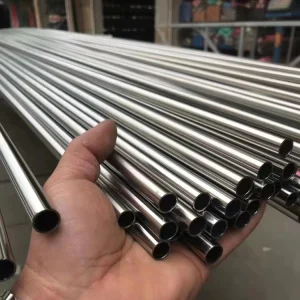
Wholesale China Stainless Steel Pipe Complete Specifications
Request Factory Quote
Custom China 201 Stainless Steel Pipe Glossy Tubes
Request Factory Quote
Custom High Cost-effective 201 Cold Rolled Stainless Sheet
Request Factory Quote
Wholesale Stainless Steel Decorative Pipe Diverse Designs
Request Factory Quote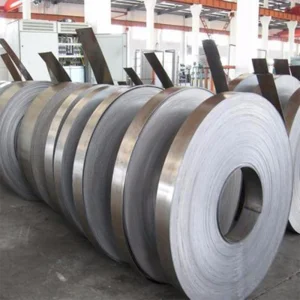
CE Certification High Quality 201 Stainless Steel Strip/Coil
Request Factory Quote
Custom 201 Cold Rolled Stainless Steel Sheet Factory Direct
Request Factory Quote