
Precision Engineered Stainless Steel Pipes & Materials
Direct factory supply of high-grade seamless, welded, structural, and sanitary pipes with transparent per-kilogram pricing structure.

Wholesale 2507 Super Duplex Steel Plate - High Strength & Corrosion Resistance
View Details
China 316L Stainless Steel Sheet - Quality Metal from Trusted Suppliers
View Details
Custom Hot Rolled Stainless Steel Coils - Heavy-Duty Solutions
View Details
CE Certification SUS304/304L Ultra-Low Carbon Stainless Steel Pipe
View Details
Custom High-Quality Cold Rolled Stainless Steel Sheet
View Details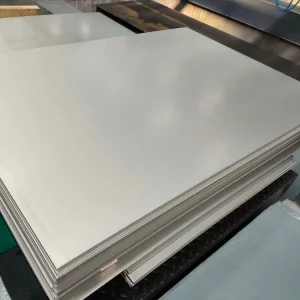
CE Certified Stainless Steel Hot Rolled Plate (No.1) - 304/316L/2205
View Details
CE Certification Premium 201 Stainless Steel Pipes
View Details
China High-Strength Cold Rolled Stainless Steel Sheets
View DetailsDecoding the Custom SS Pipe Per Kg Rate Structure
An engineering analysis of raw alloy surcharges, mill yield dynamics, and custom manufacturing variables affecting global B2B procurement cost models.
Raw Alloy Volatility & Surcharge Formula
The base SS pipe per kg rate is intrinsically connected to the London Metal Exchange (LME) and Shanghai Futures Exchange (SHFE) spot prices for Nickel (Ni), Chromium (Cr), and Molybdenum (Mo). In austenitic grades like 304 (18% Cr, 8% Ni) and 316L (16% Cr, 10% Ni, 2% Mo), the raw material value represents 70% to 82% of the total factory cost per kilogram.
When calculating custom pipe quotes, precision factories utilize alloy surcharge indexing to reflect real-time melt shop costs. Our mill integrates direct feedstock from top-tier stainless steel refiners like Tsingshan, TISCO, Baosteel, and POSCO to lock in bulk volume pricing, insulating international procurement officers from sudden market spikes.
Manufacturing Method: Seamless vs. Welded Cost Drivers
A critical factor in the per-kg rate comparison is the pipe fabrication methodology:
- Electric Fusion / High-Frequency Welded (EFW/HFW): Produced from slit cold-rolled or hot-rolled strip coil. Features lower processing costs per kg due to continuous high-speed roll forming and online bright annealing. Yields ideal per-kg pricing for structural and fluid transmission applications.
- Cold Drawn / Cold Rolled Seamless (SMLS): Involves solid billet piercing, multiple cold drawing passes, and intermediate stress-relief heat treatments. Processing losses and multi-stage quality testing elevate the per-kg labor and energy overhead by 25% to 45% compared to welded equivalents.
Engineering buyers can evaluate the accurate baseline cost per kilogram for custom stainless steel pipe orders using our transparent factory pricing algorithm:
*Note: The Yield Coefficient for welded pipes averages 0.96-0.98, whereas precision seamless cold drawing ranges from 0.88-0.92 depending on wall-thickness-to-diameter ratio tolerances.
China Industry 4.0: Modern Factory Infrastructure
How automated production lines, real-time laser gauging, and centralized logistics in Wuxi reduce manufacturing waste and optimize per-kg rates.
Automated Slitting & Continuous Tube Welding
Our Wuxi production complex utilizes state-of-the-art continuous tube mills equipped with auto-tracking TIG, Plasma, and Laser welding units. Fully integrated coil slitting prevents edge burrs and material oxidation, ensuring a 99.5% weld integrity rating.
Inline Non-Destructive Testing (NDT)
Every meter of welded or seamless pipe passes through real-time Eddy Current Testing (ECT) and inline ultrasonic wall thickness scanners. Flaws are auto-flagged and cut prior to bundling, eliminating non-conforming costs from final customer shipments.
Precision Surface Finishing Lines
Equipped with 6 automated mechanical polishing lines and internal grit blasting machinery, we achieve surface roughness levels down to Ra < 0.2µm (180 Grit, 320 Grit, 400 Grit, and 8K Mirror polish) at minimal operational incremental cost.
Stainless Steel Grade Performance & Price Benchmark
Compare mechanical properties, chemical composition, pitting resistance equivalence numbers (PREN), and target per-kg pricing brackets across key grades.
| Grade Category | UNS / EN Standard | Key Chemistry (Cr, Ni, Mo, N) | PREN Rating | Yield Strength (MPa) | Relative Per-Kg Cost Factor | Primary Industrial Use Case |
|---|---|---|---|---|---|---|
| Austenitic 201 | S20100 / 1.4372 | 16-18% Cr, 1-1.5% Ni, 5.5-7.5% Mn | ~17 | ≥ 275 | Baseline (Lowest) | Indoor decorative, handrails, light architectural trim |
| Austenitic 304 / 304L | S30400 / S30403 (1.4301 / 1.4307) | 18-20% Cr, 8-10.5% Ni, C ≤ 0.03% | ~19 | ≥ 205 | 1.35x Baseline | Food processing, municipal water lines, general fluid piping |
| Austenitic 316 / 316L | S31600 / S31603 (1.4401 / 1.4404) | 16-18% Cr, 10-14% Ni, 2-3% Mo | ~25 | ≥ 220 | 1.85x Baseline | Chemical equipment, marine environments, pharmaceutical lines |
| High Temp 310S | S31008 / 1.4845 | 24-26% Cr, 19-22% Ni | ~26 | ≥ 205 | 2.60x Baseline | Heat exchangers, furnace exhaust tubes, high-temp boilers |
| Duplex 2205 | S31803 / S32205 (1.4462) | 22% Cr, 5% Ni, 3% Mo, 0.17% N | 32-35 | ≥ 450 | 2.10x Baseline | Desalination plants, oil & gas flowlines, high-pressure vessels |
| Super Duplex 2507 | S32750 / 1.4410 | 25% Cr, 7% Ni, 4% Mo, 0.27% N | ≥ 42 | ≥ 550 | 3.20x Baseline | Offshore oil rigs, chemical tankers, aggressive chloride service |
*PREN Formula: $PREN = \%Cr + 3.3 \times \%Mo + 16 \times \%N$. Relative cost factor fluctuates based on daily spot nickel and molybdenum alloy surcharges.
Macro Industry Solutions & Project Execution
Supplying heavy industrial sectors with standardized and bespoke stainless steel piping solutions configured for extreme working pressures and corrosive media.
Chemical & Petrochemical Processing
Handling nitric acid, organic solvents, and caustic compounds requires low-carbon 316L or 321 pipes resistant to intergranular corrosion. Our factory supplies fully solution-annealed, pickled, and passivated pipes tested up to 200 bar hydrostatic pressure.
Marine & Offshore Desalination
High chloride seawater causes severe crevice corrosion in standard alloys. We supply Duplex 2205 and Super Duplex 2507 custom pipes engineered under ISO 15156 / NACE MR0175 standards to extend system operational lifespan beyond 30 years.
Sanitary Food, Beverage & Pharma
Ultra-hygienic processing lines demand seamless or TIG-welded ASTM A270 tubing featuring mechanically polished or Electro-Polished (EP) internal bores down to Ra < 0.38µm, eliminating bacterial trap zones.
Global Enterprise Sourcing & Quality Assurance
Navigating international steel trade standards, EN 10204 3.1 certification, carbon compliance (CBAM), and multi-modal logistics risk management.
Comprehensive Certification & Traceability
Every shipment from our manufacturing facility is accompanied by an authentic Mill Test Certificate (MTC) conforming to EN 10204 3.1 / 3.2. Detailed metrics record heat numbers, exact chemical ladles, tensile strength, yield stress, elongation percentage, hardness test, and 100% NDT inspection results.
Third-party inspection agencies such as SGS, Bureau Veritas, TÜV, and Lloyds Register are routinely engaged on-site for pre-shipment dimensional validation and hydrostatic verification.
Export Packaging & Trade Tariff Mitigation
To prevent ocean freight transit degradation, custom pipes are secured with plastic end caps, wrapped in waterproof woven plastic sheeting, and packed into steel-strapped wooden cases or ISPM-15 compliant fumigated crates.
Our legal compliance team assists international buyers in optimizing import tariffs, preparing Form E, Certificate of Origin (COO), and facilitating seamless customs clearance under local trade agreements.
Technological Roadmap & Next-Gen Pipe Manufacturing
Transitioning toward zero-carbon steelmaking, AI-powered predictive welding, and ultra-high-pressure thin-wall alloy developments.
Green Hydrogen Smelting & CBAM Compliance
To support Europe’s Carbon Border Adjustment Mechanism (CBAM), our partner mills are incorporating electric arc furnaces (EAF) powered by green hydrogen and renewable solar grids, reducing embedded carbon emissions per kilogram of stainless pipe by up to 40%.
AI Vision Inspection & Laser Bead Profiling
Integrating high-resolution optical AI sensors along the weld seam line allows real-time automated thermal correction during continuous TIG/Laser welding, preventing micro-porosity and ensuring zero-defect seam continuity.
Ultra-Thin Wall High-Strength Alloys
Advanced cold-pilgering technology enables the production of light-weight, high-strength structural tubing with wall thickness tolerances controlled down to micro-levels, yielding a lower weight per meter without compromising burst pressure capacity.
Frequently Asked Questions (FAQ)
Expert answers regarding custom SS pipe weight calculations, per-kg pricing factors, minimum order quantities, and international delivery timelines.
How is the total theoretical weight and per-kg rate calculated for custom stainless steel pipes?
The theoretical weight per meter (kg/m) of a round stainless steel pipe is calculated using the standard metallurgical formula:
Weight (kg/m) = (Outer Diameter [mm] - Wall Thickness [mm]) × Wall Thickness [mm] × 0.02491 (for 304/304L/316L austenitic grades, coefficient is adjusted to 0.02507 for 316L and 0.02500 for Duplex 2205).
Multiply the total calculated weight by the negotiated SS pipe per kg rate to determine your base product material cost before packaging and ocean freight.
Why does the per kg rate differ significantly between SS 304 and SS 316L welded pipes?
The key cost variance stems from raw element alloying. SS 316L contains 2.0% to 3.0% Molybdenum (Mo) and a higher concentration of Nickel (~10-14%) compared to SS 304 (~8-10.5% Ni, 0% Mo). Molybdenum substantially enhances pitting corrosion resistance in chloride environments, but its raw metal price surcharge directly increases the baseline melt cost per kilogram by approximately 35% to 50%.
What is the typical Minimum Order Quantity (MOQ) for custom size SS pipe manufacturing?
For standard stocked outer diameters (OD 6mm to 630mm) and schedule thicknesses (SCH 5S, SCH 10S, SCH 40S, SCH 80S), the MOQ can be as low as 500 kg to 1 metric ton per size. For non-standard custom outer diameters, wall thicknesses, or specialized alloys (e.g., 310S, Duplex 2205, 2507), the factory MOQ typically starts at 2 to 3 metric tons to align with coil slitting and mill line setup efficiency.
What international engineering standards do your custom SS pipes comply with?
Our manufacturing lines strictly follow global manufacturing standards including ASTM A312 (Austenitic Seamless/Welded), ASTM A213 (Seamless Heat Exchanger Tubes), ASTM A269 (General Tubing), ASTM A554 (Decorative Structural), EN 10217-7 (Welded Steel Tubes for Pressure Purposes), EN 10216-5 (Seamless Pressure Tubes), and JIS G3459 (Stainless Steel Pipes).
How do custom surface polishing finishes affect the ultimate rate per kg?
Mill finish (No.1 or 2B) represents the standard base cost per kg. Secondary mechanical polishing—such as Hairline, 180 Grit satin, 320 Grit satin, or 600 Grit 8K Mirror finish—adds an incremental surface processing cost ranging from $0.15/kg to $0.45/kg depending on the pipe's internal/external surface area and target micro-inch Ra requirement.
What lead time is required for an export order of 20 to 50 metric tons of custom SS pipes?
Standard production lead time ranges from 15 to 25 calendar days following formal drawing confirmation and receipt of deposit/LC. Emergency stock allocation or quick-turn coil slitting can shorten dispatch times to within 7 to 10 days for standard 304 and 316L welded pipe specifications.
Explore More Stainless Steel Products
Browse our extended product portfolio including stainless steel cold-rolled plates, strips, coils, and specialty industrial pipes.

China SUS304 (06Cr19Ni10) Stainless Steel Cold-Rolled Plate
View Details
Wholesale Stainless Steel Pipe Direct Factory Manufacturer
View Details
CE Certification 316L Stainless Steel Sheet Factory Quotes
View Details
Custom Cold Rolled Stainless Steel Sheet Manufacturers
View Details
CE Certified High Cost-Effectiveness 201 Cold Rolled SS Sheet
View Details
China SUS304 Cold-Rolled Corrosion Resistant Food Grade Plate
View Details
China SUS304 Cold-Rolled Food Grade Plate Manufacturer
View Details
China High Quality 201 Stainless Steel Strip/Coil Supplier
View DetailsRequest an Instant Custom SS Pipe Per Kg Quotation
Connect directly with our engineering sales office in Wuxi. Provide your target specifications, total tonnage, grade, and destination port to receive an itemized factory price breakdown within 2 hours.
Submit RFQ & Technical Inquiry