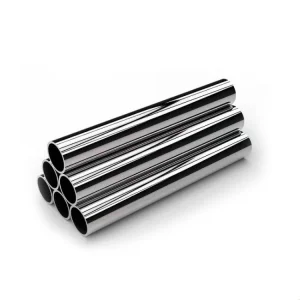
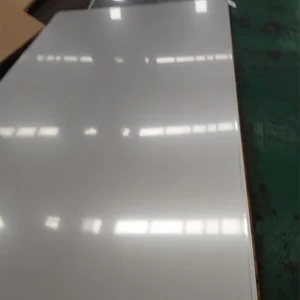
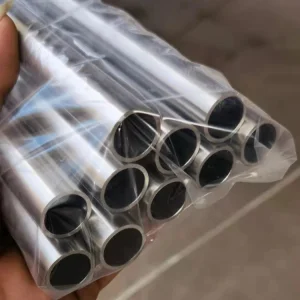
Direct Factory Steel Solutions & Export Products
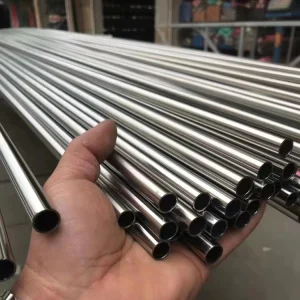
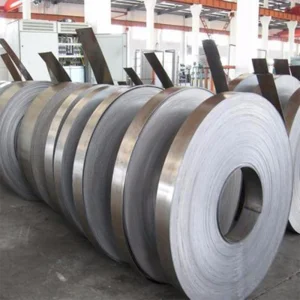
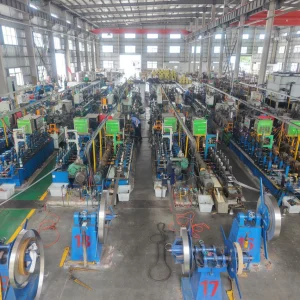
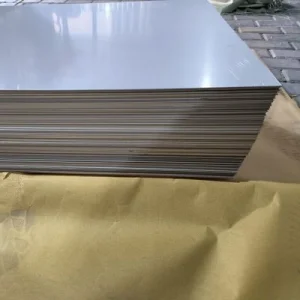
Explore our featured inventory of certified hot rolled and processed steel sheets, coils, pipes, and structural components directly supplied from our advanced production lines with worldwide shipping capabilities.
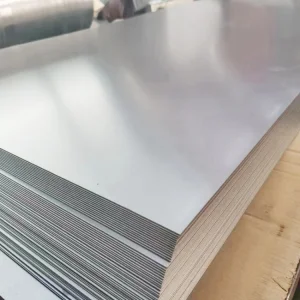
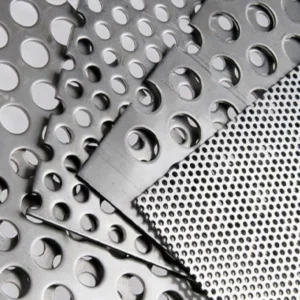
Executive Technical Overview: The Metallurgy of Custom Hot Rolled Steel
Hot rolled steel represents the backbone of modern heavy industry, structural engineering, and infrastructure development. Produced through a high-temperature thermomechanical process where steel slabs are rolled at temperatures exceeding its recrystallization point (typically above 1,100°C / 2,000°F), hot rolling alters the crystalline microstructure of the metal, resulting in superior workability, ductility, and notch toughness.
Unlike cold-rolled steel, which undergoes room-temperature strain hardening, hot rolled steel allows for the production of massive structural plates, heavy-walled pipes, structural beams, and thick coils without generating high internal residual stresses. For global procurement officers, project engineers, and industrial OEMs, selecting the right custom hot rolled steel supplier requires a granular understanding of metallurgical chemistry, rolling tolerances, phase transformation, and post-rolling thermal treatments.
China's Manufacturing Supremacy: Scale, Efficiency, and Cost Optimization
The global steel market has experienced a fundamental realignment over the past two decades, with China establishing itself as the epicenter of advanced steel production and fabrication technology. Chinese hot rolling mills—leveraging multi-billion dollar capital investments in ultra-wide strip rolling mills, digital continuous casting systems, and automated online inspection infrastructure—offer unmatched economies of scale.
Integrated Supply Chain Clusters
Chinese industrial hubs (such as Wuxi, Jiangsu, and Tangshan) concentrate raw material refining, continuous casting, hot rolling, slitting, and surface treatment within tight geographic radii. This eliminates inter-stage transport friction and reduces lead times by up to 35%.
Automated Quality Assurance
State-of-the-art Chinese mills utilize Automatic Gauge Control (AGC), hydraulic curvature correctors, and continuous surface laser scanners. This guarantees dimensional tolerances far stricter than standard ASTM A6 or EN 10029 requirements.
Unbeatable Cost-to-Performance Ratio
High yield rates, direct mill-to-port logistics networks, and optimized energy utilization enable Chinese manufacturers to deliver premium certified hot rolled steel at structural pricing levels that domestic Western mills cannot match.
Customization Capabilities, Material Grades & Standards
Global industrial procurement requires absolute material compliance. A professional custom hot rolled steel supplier must support an extensive array of international standards, chemical compositions, and custom edge/surface finishes tailored to individual project specifications.
| Steel Category | Common International Grades | Applicable Standards | Thickness / Size Range | Key Mechanical Properties |
|---|---|---|---|---|
| Commercial / Carbon Structural | Q235B, Q355B/D, SS400, A36, S235JR, S355JR | ASTM A36, EN 10025, JIS G3101, GB/T 700 | 1.2mm – 200mm (Plates/Coils) | Yield: 235 - 355 MPa; High Ductility & Formability |
| High-Strength Low-Alloy (HSLA) | Q460C/E, Q690D, S460QL, S700MC, A572 Gr 50 | ASTM A572, EN 10149-2, GB/T 1591 | 2.0mm – 100mm | Yield: 460 - 700 MPa; Lightweight Structural Strength |
| Boiler & Pressure Vessel | A516 Gr 60/70, P265GH, P355GH, Q345R | ASTM A516, EN 10028-2, GB 713 | 6.0mm – 150mm | Fine-Grain Normalized; Elevated Temp & Impact Tested |
| Austenitic & Duplex Stainless Steel | 201, 304/304L, 316/316L, 310S, 2205, 2507 | ASTM A240, EN 10088-2, JIS G4304 | 1.5mm – 80mm | PREN up to 43+; Extreme Chloride & Acid Resistance |
| Atmospheric Corrosion Resistant (Corten) | SPA-H, Q355NH, S355J2WP, Corten A/B | JIS G3125, EN 10025-5, GB/T 4171 | 1.5mm – 25mm | Self-Passivating Rust Layer; Weathering Durability |
Secondary Processing & Surface Customization Scope
Customization extends far beyond nominal chemical grading. Modern B2B buyers require mill-integrated value-added processing to reduce downstream manufacturing bottlenecks:
- Edge Preparation: Choice of Mill Edge (as-rolled natural edge) or Slit/Trimmed Edge (precision sheared to eliminate edge burrs and crown taper).
- Surface Finishes: Hot Rolled As-Rolled (Black), Pickled and Oiled (P&O) for smooth descaled surfaces ready for painting, or Shot-Blasted and Shop-Primed for long-term storage and immediate welding.
- Precision Decoiling & Levelling: Hydraulic roller levellers that eliminate coil set, crossbow, and camber, delivering stress-relieved flat sheets ideal for laser cutting.
- Custom Profiling & Beveling: CNC plasma, oxy-fuel, and fiber laser cutting for pre-shaped structural flanges, gusset plates, and pre-beveled weld joints.
Localized Industrial Applications & Sector Scenarios
Hot rolled steel products serve as foundational inputs across virtually every major engineering sector. Understanding localized operational stresses ensures proper material selection:
1. Heavy Machinery & Earthmoving Equipment
Excavator booms, crane jibs, chassis frames, and mining dump truck bodies demand ultra-high-yield HSLA hot rolled plates (e.g., S700MC, Q690D). These materials absorb high dynamic fatigue loads and low-temperature shock without structural fracture.
2. Energy Storage, Pipelines & Pressure Vessels
Petrochemical plants, LNG terminals, and boiler drums utilize normalized hot rolled heavy plates (ASTM A516 Gr 70 / P265GH). These plates exhibit high creep resistance, uniform elevated-temperature tensile strength, and sour-service resistance (HIC/SSCC testing).
3. Marine Engineering & Shipbuilding
Hull plating, deck structures, and offshore wind turbine jacket foundations require marine-certified hot rolled plates (ABS, DNV, LR, BV certified Grade A, AH36, DH36, or Super Duplex 2507 for aggressive splash zones).
4. Architectural Infrastructure & Bridges
Long-span highway bridges, stadium trusses, and high-rise structural columns rely on heavy welded H-beams and thick hot rolled steel plates engineered to withstand severe seismic and atmospheric exposure.
Global Procurement Strategy: Quality Control, MTC 3.1 & Sea-Worthy Logistics
Sourcing custom hot rolled steel across international borders involves stringent risk management protocol. International buyers must mandate comprehensive metallurgical validation and robust packaging to protect cargo integrity during transoceanic transit.
1. Mill Test Certificates (MTC EN 10204 3.1 / 3.2 Compliance)
Every shipment from a top-tier factory must be fully traceable to the original heat number. Certified inspection reports must verify:
- Chemical Heat Analysis: Exact percentages of Carbon (C), Manganese (Mn), Silicon (Si), Phosphorus (P), Sulfur (S), Chromium (Cr), Nickel (Ni), Molybdenum (Mo), and Carbon Equivalent Value (CEV / PCM) for weldability.
- Mechanical Testing: Yield Strength (ReH/Rp0.2), Ultimate Tensile Strength (Rm), Elongation (A%), and Charpy V-Notch Impact Energy (Joules at -20°C, -40°C, or -50°C).
- Non-Destructive Examination (NDE): Ultrasonic Testing (UT) to EN 10160 (Classes S1/E1 to S3/E3) or ASTM A578 to ensure zero internal laminations, inclusions, or void defects.
2. Seaworthy Packaging & Anti-Corrosion Protection
Hot rolled steel—especially descaled or P&O steel—is vulnerable to atmospheric oxidation when exposed to marine humidity. Premium export bundling includes VCI (Vapor Corrosion Inhibitor) paper wrapping, heavy-duty metallic edge protectors, steel strapping with hardwood skids, and container desiccants or bulk-vessel hold moisture control.
Industry Trends: Green Steel Decarbonization & AI-Driven Rolling Mills
The global steel industry is undergoing a dual transformation driven by environmental sustainability mandates and Industry 4.0 digitalization:
Green Hot Rolling & EAF Integration
Leading Chinese factories are transitioning from traditional Blast Furnace-Basic Oxygen Furnace (BF-BOF) routes to Electric Arc Furnaces (EAF) powered by green energy and Direct Reduced Iron (DRI). This significantly reduces the embodied carbon footprint per ton of hot rolled coil/plate, helping international buyers meet Scope 3 emissions targets.
AI & Digital Twin Thickness Control
Next-generation hot strip mills integrate real-time neural network feedback loops with hydraulic roll gaps. By simulating phase transformations in real-time, digital twin systems maintain longitudinal profile consistency across 2,000-meter coil lengths with sub-millimeter precision.
Advanced HSLA & Nanostructured Alloys
The demand for lightweight structural design is driving the adoption of nano-precipitation micro-alloyed steels (containing Titanium, Niobium, and Vanadium). These allow engineers to down-gauge plate thickness by up to 25% while maintaining structural safety factors.
Frequently Asked Questions (FAQ) & Procurement Intelligence
Hot rolled steel is processed at high temperatures (above 1,100°C), making it easier to shape and form in larger sizes with low internal stress. Cold rolled steel undergoes further processing at room temperature (annealing and cold reduction) to achieve tighter dimensional tolerances, higher tensile strength via strain hardening, and a smooth scale-free surface finish. Hot rolled steel is ideal for structural and heavy manufacturing, while cold rolled is preferred for aesthetic and high-precision applications.
China’s steel sector benefits from vertically integrated industrial clusters, massive capital investment in modern continuous hot-strip and heavy-plate mills, efficient supply chain logistics, and proximity to major sea ports. Furthermore, Chinese factories maintain extensive raw material reserves and flexible rolling schedules, allowing them to fulfill custom chemical and dimensional orders faster and more cost-effectively than smaller regional mills.
Custom processing capabilities include precision slitting (custom width coil strips), cut-to-length (sheets/plates), hydraulic roller leveling (flattening), edge trimming (milled or sheared edges), surface pickling and oiling (P&O), shot blasting, anti-rust priming, beveling for welding, CNC plasma/laser cutting, and non-destructive ultrasonic testing.
All export shipments are accompanied by an official Mill Test Certificate (MTC) in accordance with EN 10204 3.1 (or 3.2 upon request for third-party verified orders). The MTC details heat numbers, chemical composition, mechanical test results (yield, tensile, elongation, impact toughness), surface inspection results, and compliance with standards such as ASTM, EN, JIS, or GB.
Standard stock specifications (e.g., standard width coils or standard structural plates) can have MOQs as low as 1 to 5 metric tons. Custom metallurgical heats or non-standard rolling dimensions typically require an MOQ of 25 to 50 metric tons (one full container/rolling heat). Production lead times generally range from 15 to 30 days depending on processing requirements.
For Pickled & Oiled (P&O) steel, a protective rust-inhibiting oil film is applied. Products are wrapped in waterproof VCI paper, sealed in heavy-duty plastic film, reinforced with steel corner protectors, and bound with heavy steel strapping onto seaworthy skids. Container hold desiccants are also used to control ambient moisture.
Complete Steel Product Showcase & Custom Piping Catalog
Browse our extended product lines, including decorative tubing, duplex alloy plates, precision slit strips, and ultra-low carbon stainless steel piping for specialized fluid transmission applications.