
Precision Stainless Steel Pipe, Plate & Sheet Solutions
Direct mill supply with certified chemical traceability, custom slit widths, controlled tolerances, and comprehensive surface finish options for industrial applications.




Executive Overview: The Evolution of Hot Rolled Coil Procurement
Hot Rolled Coil (HRC) serves as the foundational backbone of the modern industrial world. From heavy infrastructure and automotive chassis to corrosion-resistant fluid transport systems, selecting qualified custom hot rolled coil suppliers and direct manufacturing partners determines final structural integrity, fabrication yield, and operational efficiency.
Metallurgical Integrity
Thermo-Mechanical Controlled Processing (TMCP) optimizes fine-grain microstructures, providing superior yield strength and notch toughness across carbon steel and stainless steel grades.
Smart Gauge Control
Real-time laser feedback and Hydraulic Automatic Gauge Control (AGC) eliminate edge-to-center crown variations, maintaining flawless dimensional uniformity during continuous rolling.
Optimized Sourcing TCO
Direct factory slitting, pickling, oiling, and decoiling eliminate secondary handling costs, offering global B2B procurement officers substantial landed-cost advantages.
Global Market Dynamics & Mega-Trends in Hot Rolled Coil Manufacturing
The global Hot Rolled Coil (HRC) sector is undergoing a profound structural transition driven by decarbonization mandates, the rise of High-Strength Low-Alloy (HSLA) materials, and digitalized supply chain requirements. As engineers and supply chain directors evaluate custom hot rolled coil suppliers and factories, understanding these industrial macro-shifts is crucial for long-term project viability.
1. Decarbonization & Green Steel Transition (EAF vs. BF-BOF)
Traditionally produced via Blast Furnace-Basic Oxygen Furnace (BF-BOF) routes utilizing iron ore and coking coal, modern hot rolled coil manufacturing is shifting rapidly toward Electric Arc Furnace (EAF) processing using direct reduced iron (DRI) and high-grade scrap feedstock. Leading Asian and European mills are integrating hydrogen-enriched gas injection to reduce Scope 1 and Scope 2 carbon intensity. For global buyers, sourcing from factories equipped with low-emission EAF technology ensures compliance with impending carbon boundary tariffs such as the EU's Carbon Border Adjustment Mechanism (CBAM).
2. Demand Shift Toward Advanced High-Strength Alloys (AHSS & Duplex Stainless)
Industrial applications no longer accept standard structural carbon steel where high strain-rate performance, weight reduction, or aggressive chemical resistance is required. Automotive original equipment manufacturers (OEMs) demand Advanced High-Strength Steels (AHSS) like dual-phase (DP) and complex-phase (CP) hot-rolled coils for structural vehicle framing. Concurrently, chemical processing, marine energy, and desalination industries rely heavily on hot rolled stainless steel coils (ranging from classic 304/316L austenitic alloys to 2205 duplex and 2507 super duplex grades). The ability of a factory to custom-tailor alloy chemistry and coiling temperature profiles dictates the mechanical capability of the finished metal.
Technical Insight: Hot rolling occurs above the recrystallization temperature of the steel (typically between 1,100°C and 1,250°C). Precise cooling control on the run-out table (ROT) controls phase transformations—enabling custom grain refinement that balances ultimate tensile strength (UTS) with elongation percentages needed for downstream deep drawing and roll forming.
3. Supply Chain Regionalization & Reshoring Buffer Inventories
Volatile ocean freight rates, geopolitical realignments, and raw material supply shocks have forced purchasing executives to move away from single-source transactional buying. Today’s resilient procurement frameworks emphasize direct factory partnerships capable of offering flexible batch sizes, rapid slitting turnaround times, and guaranteed mill test report (MTC) traceability under EN 10204 3.1 standards.
China Industry 4.0: Supply Chain Resilience & Wuxi Manufacturing Hub Advantages
China continues to dominate global steelmaking and finished coil processing capacity, accounting for over 50% of world output. However, the modern Chinese steel industry is no longer defined merely by volume; it is characterized by hyper-automated Industry 4.0 smart factories, rigorous metallurgical quality control, and unparalleled cluster efficiencies.
The Wuxi & Jiangsu Stainless/Carbon Hub Ecosystem
Located in the heart of the Yangtze River Delta, the Wuxi and Jiangsu industrial ecosystem represents one of the world's most concentrated clusters for stainless steel, alloy steel, and structural hot-rolled coil manufacturing. Integrating primary refining mills—such as Tsingshan, TISCO, POSCO, and Baosteel—with specialized downstream continuous processing facilities, this industrial hub offers global buyers massive competitive advantages:
Automated Tandem Rolling
State-of-the-art continuous tandem hot rolling lines equipped with computer-controlled roll gap adjustments, laser thickness profile scanners, and automatic tension control ensure tight dimensional tolerances from head to tail.
Integrated Processing Facilities
In-house slitting, automatic flattening, pickling & oiling (P&O), polishing (No.1, 2B, BA, Hairline, 8K Mirror), and continuous pipe welding eliminate third-party logistics overhead and lead-time bottlenecks.
Strategic Deep-Water Port Access
Proximity to Shanghai and Ningbo-Zhoushan ports allows seamless containerized and break-bulk loading with custom ocean packaging designed to resist salt-fog oxidation during transit.
By leveraging China's comprehensive upstream raw material access and midstream processing efficiency, global buyers secure high-grade custom hot-rolled coils that meet strict ASTM, EN, JIS, and GB standards at highly competitive unit economics.
Technical Specification Matrix & Metallurgical Grade Framework
Selecting the correct material chemistry, thickness tolerance, and surface conditioning is paramount when issuing engineering RFQs for custom hot-rolled coils. Over-specifying results in unnecessary capital outlay, while under-specifying risks catastrophic structural failure under fatigue or corrosive exposure.
Below is a comparative breakdown of key carbon, alloy, and stainless steel hot-rolled coil families manufactured across certified Chinese production lines:
| Steel Grade Family | Applicable Standards | Yield Strength (MPa) | Tensile Strength (MPa) | Key Chemical Elements | Primary Application Areas |
|---|---|---|---|---|---|
| Q235 / Q355 (HSLA) | GB/T 1591, ASTM A36 / A572 | 235 - 355 | 370 - 630 | Fe, C (≤0.22%), Mn (≤1.60%), Si | Building frames, bridges, heavy machinery structures, cranes |
| 201 Stainless HRC | ASTM A240, EN 10088-2 | ≥ 275 | ≥ 520 | Cr (13-15%), Mn (5.5-7.5%), Ni (1-1.5%) | Indoor decorative tubing, furniture frames, cost-sensitive hardware |
| 304 / 304L Stainless HRC | ASTM A240, JIS G4304 | ≥ 205 / 170 | ≥ 515 / 485 | Cr (18-20%), Ni (8-10.5%), C (≤0.03% for L) | Food processing machinery, chemical tanks, architectural cladding |
| 316 / 316L Stainless HRC | ASTM A240, EN 10088-2 | ≥ 205 / 170 | ≥ 515 / 485 | Cr (16-18%), Ni (10-14%), Mo (2-3%) | Marine hardware, coastal piping systems, chemical heat exchangers |
| 310S High-Temp Alloy | ASTM A240, JIS G4304 | ≥ 205 | ≥ 515 | Cr (24-26%), Ni (19-22%) | Furnace structural parts, heat-treatment baskets, exhaust manifolds |
| 2205 Duplex Stainless | ASTM A240 (UNS S32205) | ≥ 450 | ≥ 620 | Cr (22-23%), Ni (4.5-6.5%), Mo (3-3.5%), N | Offshore oil & gas, pressure vessels, desalination plants |
| 2507 Super Duplex | ASTM A240 (UNS S32750) | ≥ 550 | ≥ 750 | Cr (24-26%), Ni (6-8%), Mo (3-5%), N (≥0.24%) | High-chloride chemical processing, subsea manifolds, scrubbers |
Surface Conditioning & Post-Processing Customization
Custom hot-rolled coil suppliers provide multiple downstream surface treatments depending on whether the coil will be directly welded, stamped, or further reduced:
- Black Hot Rolled (As-Rolled): Retains mill scale formed during cooling. Economical choice for heavy structural weldments where post-fabrication sandblasting or painting is performed.
- Pickled & Oiled (P&O): Acid-pickled to remove iron oxide scale, then coated with rust-inhibitive oil. Essential for stamping, roll-forming, or laser-cutting operations where scale would damage tooling.
- No.1 Finish (Stainless HRC): Hot rolled, annealed, and pickled surface. Non-reflective, matte texture ideal for industrial tanks, pressure vessels, and structural piping.
- Slit Edge vs. Mill Edge: Mill edges feature natural rounded borders from rolling. Slit edges are precision-trimmed with rotary shears to tight width tolerances (±0.2mm) for automated tube mill feeding.
Localized Application Scenarios across Global Industries
From automotive assembly plants in Europe to oil refineries in the Middle East and structural buildouts in Southeast Asia, examine how custom hot-rolled coils deliver critical performance across sector-specific environments.
Automotive Chassis & Structural Components
High-yield HSLA and dual-phase hot-rolled coils are stamp-formed into vehicle cross-members, wheel rims, suspension arms, and truck chassis frames requiring high energy absorption during impact.
Oil, Gas & Fluid Pipeline Feedstock
Slit hot-rolled coil strips serve as the primary raw feedstock for High-Frequency Welded (HFW) and Submerged Arc Welded (SAW) line pipe production, certified under API 5L and ASTM A53 standards.
Heavy Structural & Crane Manufacturing
Extra-thick hot-rolled steel plates decoiled from heavy-gauge master rolls provide high bending strength for telescoping crane booms, excavator arms, and mining equipment frames.
Chemical Vessels & Desalination Skids
Hot-rolled stainless coils (316L, 2205 duplex) are cold-formed and welded into pressure vessels, storage tanks, and evaporation chambers exposed to severe pitting and crevice corrosion environments.
Quality Assurance, Mill Test Certificates & Global Compliance
In B2B metal procurement, material failure is not an option. Trust is earned through total transparency, certified metallurgical testing, and multi-stage Quality Control (QC) inspection protocols. Tier-1 Chinese hot rolled coil suppliers enforce strict Quality Management Systems certified to ISO 9001:2015 and IATF 16949 automotive standards.
1. Optical Emission Spectrometry (OES) Chemistry Verification
Every melt heat undergoes real-time chemical composition analysis via laser optical emission spectrometers before tapping and continuous casting. Element thresholds for carbon, manganese, chromium, nickel, molybdenum, nitrogen, sulfur, and phosphorus are verified against target standard windows to guarantee weldability and prevent intergranular corrosion.
2. Mechanical & Destructive Metallurgical Testing
Samples are excised from coil heads and tails to undergo full mechanical testing inside certified laboratories:
- Tensile & Yield Strength Testing (ASTM E8 / EN ISO 6892-1): Verifies stress-strain curves, upper/lower yield points, and total percentage elongation.
- Charpy V-Notch Impact Testing (ASTM E23): Measures notch toughness and ductile-to-brittle transition temperatures at sub-zero temperatures (−20°C to −46°C) for arctic and cryogenic applications.
- Hardness Testing (Rockwell HRB/HRC, Vickers HV): Assesses surface strain hardening and cold-formability.
3. Non-Destructive Testing (NDT) & Dimensional Scanners
During high-speed coil rewinding and slitting, inline ultrasonic scanning detectors scan 100% of the strip surface to flag internal laminations, inclusions, or void pockets. Automated laser sensors continuously log gauge thickness across the edge, drive side, and center width profile—storing digital twin records tied directly to the coil's unique heat barcode.
Compliance Guarantee: All orders are dispatched with authentic EN 10204 3.1 Mill Test Certificates (MTC) detailing complete chemical ladle analysis, mechanical test results, heat numbers, and third-party inspection sign-offs (SGS, TÜV, Lloyd's Register available upon request).
High-Performance Coils, Sheets & Industrial Tubing
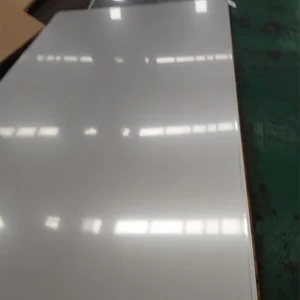
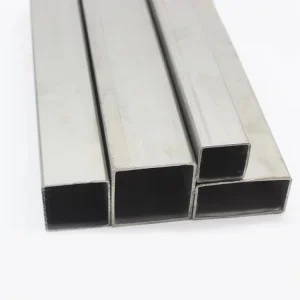
Explore our full line of CE-certified cold rolled sheets, prime quality 201 decorative tubes, low-carbon 304/316L welded pipes, and super duplex 2507 plates.

Frequently Asked Questions by Global B2B Buyers
Get authoritative engineering answers regarding custom tolerances, chemical grade matching, minimum order quantities (MOQ), and ocean export logistics.
What is the key structural difference between Hot Rolled Coil (HRC) and Cold Rolled Coil (CRC)?
Hot Rolled Coil is processed above the steel's recrystallization temperature (above 1,100°C), making it easier to shape and form in thick gauges with higher ductility at lower processing costs. Cold Rolled Coil undergoes further room-temperature strain processing after hot rolling, yielding smoother surface finishes (2B/BA), tighter gauge tolerances (±0.01mm), and higher yield strength due to strain hardening.
Why should buyers opt for Pickled & Oiled (P&O) Hot Rolled Coil over Black HRC?
Black Hot Rolled Coil carries a hard, brittle iron-oxide mill scale layer formed during ambient air cooling. Pickled & Oiled (P&O) HRC undergoes an acid bath bath treatment to completely dissolve this scale, followed by an oil film application. P&O coil extends laser-cutting lens life, protects stamping dies from premature abrasive wear, and provides an ideal surface for direct painting or powder coating.
What custom slitting and cut-to-length tolerances are achievable at your factory?
Our precision high-speed slitting lines accommodate master coil widths up to 2,000mm and strip down to narrow bands of 20mm width. Width tolerances are tightly controlled within ±0.15mm to ±0.3mm. Cut-to-length leveling lines yield flat sheet plates up to 12,000mm length with diagonal length tolerances under ±1.0mm.
How do you protect hot rolled coils against rust during long ocean transits?
We implement heavy-duty seaworthy export packaging: coils are wrapped in VCI (Vapor Corrosion Inhibitor) anti-rust film, shielded by galvanized outer steel edge protectors, secured with high-tensile radial and circumferential steel strapping, and mounted on heavy timber or steel skids suitable for containerized (FCL) or break-bulk vessel stowage.
Can you manufacture custom stainless steel grades like 2205 Duplex or 310S in hot-rolled finish?
Yes. We supply hot-rolled stainless steel coils in specialty austenitic (304, 304L, 316L, 310S, 321), ferritic (430, 409), and duplex/super duplex grades (2205, 2507). All stainless hot-rolled coils undergo continuous annealing and pickling (No.1 surface finish) to restore corrosion resistance following hot rolling.
Optimize Your Global Metal Supply Chain Today
Partner directly with China's leading smart mills for certified custom hot-rolled coils, precision-slit strip, and structural piping. Get technical support and mill-direct price quotes within 24 hours.
Contact Our Metallurgical Sales Engineers