
Featured 316 & Industrial Stainless Steel Solutions (Part I)
Explore our primary mill-certified stainless steel offerings including perforated sheets, heavy hot-rolled industrial coils, low-carbon corrosion-resistant pipes, and custom precision plates.

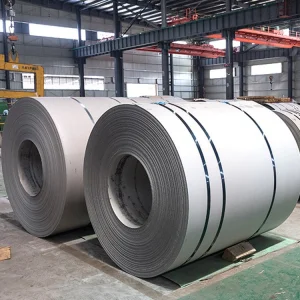
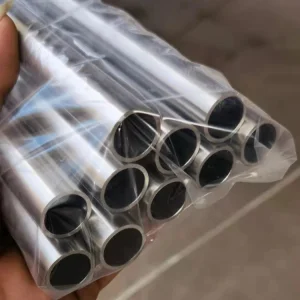
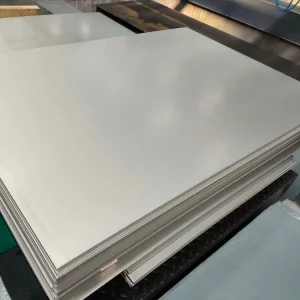


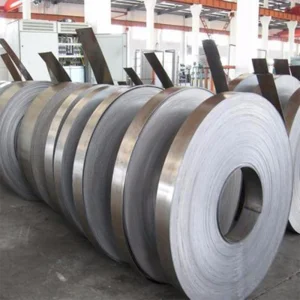
Global B2B Sourcing Dynamics for Custom 316/316L Stainless Steel
The global demand for molybdenum-bearing austenitic stainless steel—specifically Grade 316 (UNS S31600 / EN 1.4401) and its extra-low carbon derivative Grade 316L (UNS S31600 / EN 1.4404)—continues to expand rapidly across heavy processing industries. Chemical refining, offshore marine structures, pharmaceutical manufacturing, and coastal architectural installations mandate the unique mechanical and chemical properties inherent to 316 stainless steel.
Pitting & Crevice Corrosion Defenses
Unlike standard 304 austenitic steel, Grade 316 incorporates 2.0% to 3.0% elemental Molybdenum (Mo). Molybdenum dramatically enhances resistance to localized chloride pitting and crevice corrosion, rendering it indispensable for aggressive marine spray and halogenated chemical processing.
Sensitization Prevention via 316L
By maintaining maximum carbon limits below 0.030%, 316L eliminates chromium carbide precipitation ($\text{Cr}_{23}\text{C}_6$) along grain boundaries during heavy-section welding. This ensures maximum intergranular corrosion resistance without post-weld solution annealing.
Total Cost of Ownership (TCO)
Although the initial procurement price of 316 stainless steel carries an alloy surcharge premium over 304, its extended service lifespan, reduced maintenance shutdowns, and compliance with strict environmental safety regulations result in a lower lifecycle cost.
Technical Roadmap: Chemical Composition & Mechanical Integrity
Understanding the exact chemistry, grain structure, and phase transformation dynamics of 316 and 316L is essential for procurement managers, structural engineers, and quality assurance inspectors.
| Grade Designation | Carbon (C) | Chromium (Cr) | Nickel (Ni) | Molybdenum (Mo) | Nitrogen (N) | PREN Value |
|---|---|---|---|---|---|---|
| 304 (UNS S30400) | ≤ 0.08% | 17.5 - 19.5% | 8.0 - 10.5% | — | ≤ 0.10% | ~ 18.0 - 20.0 |
| 316 (UNS S31600) | ≤ 0.08% | 16.0 - 18.0% | 10.0 - 14.0% | 2.00 - 3.00% | ≤ 0.10% | ~ 23.0 - 25.0 |
| 316L (UNS S31603) | ≤ 0.030% | 16.0 - 18.0% | 10.0 - 14.0% | 2.00 - 3.00% | ≤ 0.10% | ~ 23.0 - 25.0 |
| 316Ti (UNS S31635) | ≤ 0.08% | 16.0 - 18.0% | 10.0 - 14.0% | 2.00 - 3.00% | Ti 5x(C+N) | ~ 23.0 - 25.5 |
| 2205 Duplex (UNS S31803) | ≤ 0.030% | 21.0 - 23.0% | 4.5 - 6.5% | 2.50 - 3.50% | 0.14 - 0.20% | ~ 32.0 - 35.0 |
The PREN Formula Explained
Pitting Resistance Equivalent Number (PREN) mathematically quantifies stainless steel's resistance to localized pitting in saline or acidic environments:
$\text{PREN} = \% \text{Cr} + 3.3(\% \text{Mo} + 0.5 \% \text{W}) + 16(\% \text{N})$
With a PREN baseline of 23.0–25.0, Grade 316 significantly outperforms Grade 304 (PREN ~19.0), eliminating microscopic pit formation where chloride ions accumulate.
Mechanical Strength & Ductility
In its solution-annealed state, 316L demonstrates an impressive minimum yield strength ($R_{p0.2}$) of 220 MPa, tensile strength ($R_m$) of 520 to 680 MPa, and elongation at break ($\delta_5$) exceeding 40%. This exceptional ductility enables deep drawing, tight tube bending, and complex stamping without micro-cracking.
International Standard Mapping
Our custom 316 stainless steel factory processes material compliant with global standards:
• USA: ASTM A240 (Plate/Sheet), ASTM A312 (Pipe)
• Europe: EN 10088-2, EN 10217-7 (1.4401 / 1.4404)
• Japan: JIS G4304, JIS G4305 (SUS316 / SUS316L)
Sector-Specific Custom Fabrication Capabilities
From heavy-wall industrial welded pipes to mirror-polished sanitary sheets, our manufacturing hub delivers tailored solutions optimized for stringent operating parameters.
Chemical & Petrochemical
Used in reaction vessels, organic acid distillation columns, heat exchanger tubes, and heavy-duty slurry pipelines resisting acetic, phosphoric, and dilute sulfuric acids.
Marine & Desalination
Desalination reverse osmosis (RO) high-pressure manifolds, boat fittings, offshore platform piping, and coastal splash-zone architectural cladding.
Bio-Pharm & Food Processing
Ultra-hygienic seamless and welded tubes with interior surface roughness ($R_a < 0.4 \mu m$), electropolished finishes for Clean-In-Place (CIP) and Sterilize-In-Place (SIP) systems.
Custom Architectural Mesh
Perforated and embossed 316 stainless steel sheets engineered for acoustic paneling, decorative facades, filtration meshes, and heavy structural flooring.
316 Stainless Steel Factory Pricing Models & Quotation Factors
Calculating direct factory quotes for custom 316/316L products involves transparent raw material indexing and specialized fabrication surcharges.
1. Raw Material Surcharge Index
Base steel cost fluctuates based on LME (London Metal Exchange) Nickel and Molybdenum spot prices. Our factory offers indexed transparent pricing updated weekly, ensuring buyers receive genuine mill-direct rates without middleman markup.
2. Processing & Surface Tolerances
Custom requests—such as bright annealing (BA), 8K mirror polishing, custom coil slitting widths down to 10mm, precision plasma/waterjet laser cutting, or specialized tube beveling—are computed with exact operational machining hours.
3. Logistics & Seaworthy Packaging
Quotes include professional seaworthy packaging: plastic film wrapping, wooden boxes, steel framing, end caps for pipes, and anti-corrosion VCI desiccant bags to prevent salt-air tarnishing during long ocean transit.
Full-Process Testing Protocol & Inspection Traceability
To guarantee 100% compliance with critical EPC, nuclear, and marine specifications, every order shipped from our factory passes rigorous non-destructive and destructive metallurgical testing.
Positive Material Identification (PMI)
100% XRF Spectrometer scanning prior to loading verifies that Nickel (≥10%) and Molybdenum (≥2.0%) meet ASTM A240 and EN 10088 standards, preventing grade mix-ups.
Intergranular Corrosion (ASTM A262)
Samples undergo ASTM A262 Practice E (Strauss Test) or Practice C (Huey Test) to prove complete immunity to intergranular sensitization in welded heat-affected zones (HAZ).
NDT & Hydrostatic Pressure Testing
100% Eddy Current Testing (ECT) for welded tubes, coupled with hydrostatic pressure testing up to 20 MPa and ultrasonic flaw detection (UT) for heavy structural plates.
Engineered Procurement Q&A: 316 Stainless Steel
Expert answers to technical, commercial, and metallurgical queries frequently raised by international engineering teams and purchasing directors.
Request Your Custom 316 Stainless Steel Quote Today
Get direct mill pricing, MTC documentation, and expert engineering assistance tailored to your exact project specifications.
Get Instant Factory QuoteFeatured 316 & Industrial Stainless Steel Solutions (Part II)
Explore additional products from our line including precision strips, decorative 201 tubes, ultra-low carbon SUS304/316 structural pipes, and premium hot-rolled mill coils.

