
Explore our certified mill-direct stainless steel stock available for global OEM integration, custom bending, and immediate export dispatch.
1. Technical Architecture of Custom 2.5 304 Stainless Steel Exhaust Tubing
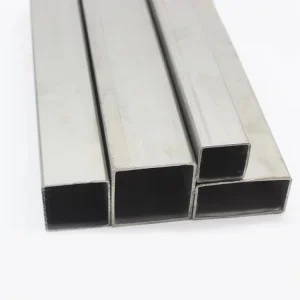
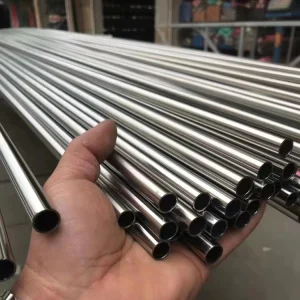
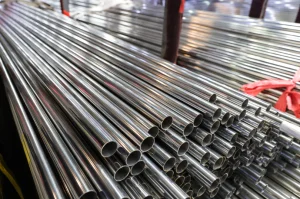
In the automotive engineering, aerospace propulsion, and industrial exhaust filtration sectors, the 2.5-inch Outer Diameter (OD) 304 stainless steel tubing serves as the universal golden standard for fluid dynamics, thermal endurance, and weight-to-strength ratios.
When specifying custom 2.5 304 stainless steel exhaust tubing for high-temperature automotive downpipes, cat-back systems, or industrial headers, metallurgical composition dictates structural survivability. Grade 304 (UNS S30400 / EN 1.4301) is an austenitic chromium-nickel alloy engineered to withstand extreme thermal cycling up to 870°C (1600°F) in continuous service without undergoing phase transformation or catastrophic oxidation scales.
Precision-drawn 2.5-inch tubing demands strict wall-thickness uniformities. We manufacture standard 16 Gauge (0.065" / 1.65mm) and 18 Gauge (0.049" / 1.24mm) walls with outer diameter tolerances held within ±0.005 inches (0.127mm) to guarantee effortless slip-fit assembly and flawless TIG welding orbital alignments.
Custom exhaust systems require tight-radius mandrel bends (1D to 1.5D centerline radius). Our fully annealed 304 tubing exhibits high elongation properties (>40%), preventing cross-sectional ovality, wall thinning, or inner-radius wrinking during computer-controlled CNC hydraulic bending processes.
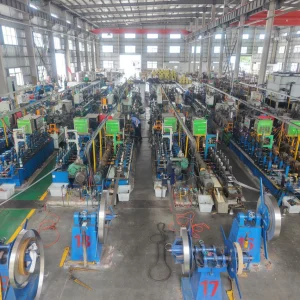
Utilizing high-frequency Induction (HFW) or automated TIG seam welding, inner bead conditioning removes internal flash. This creates a ultra-smooth internal bore, reducing turbulent gas boundary layers, optimizing exhaust scavenging velocity, and increasing engine volumetric efficiency.
Quantifiable benchmarks demonstrating our global production capacity, material performance integrity, and compliance standards.
2. Global Trends in 2.5 304 SS Exhaust Tubing Demand (2025–2030)
Analyzing the macro-economic and engineering shifts reshaping global automotive supply chains, aftermarket fabrication, and energy generation systems.
The global market for 2.5-inch 304 stainless steel exhaust tubing is experiencing structural evolutionary growth. While the automotive industry transitions toward electrification, internal combustion engines (ICE) and hybrid-electric vehicles (PHEV/HEV) are demanding drastically higher thermal efficiency and lighter structural weight. Hybrid powertrains, due to frequent engine start-stop cycles, generate aggressive internal moisture condensation, rendering low-grade carbon steels obsolete and accelerating the shift toward full 304/316L stainless steel exhaust architecture.
Simultaneously, the global automotive performance aftermarket, commercial fleet refurbishment, and heavy-duty transport industries are consolidating supply chains around direct-from-factory suppliers who offer custom lengths, pre-swaged expansion joints, and specialized surface polishes (such as 180-grit satin finish or 600-grit mirror polish for show-car aesthetics).
Frequent temperature fluctuations in hybrid engines require tubing with high fatigue resistance and superior intergranular corrosion immunity, making cold-worked 304 stainless steel the primary choice for global OEMs.
Global Tier-1 buyers are moving away from multi-tier intermediaries. By sourcing directly from integrated manufacturers in Wuxi, buyers secure traceable raw material chemistry and stable long-term pricing contracts.
Rising demand for prefabricated modular exhaust kits—including laser-cut notched ends, expanded slip joints, and pre-welded oxygen sensor bungs—requires suppliers to offer full value-added fabrication services.
3. End-to-End Macro Solutions for Enterprise Procurement
Customized metallurgical solutions resolving supply chain friction, structural failure, and fabrication bottlenecks for tier-1 automotive suppliers.
Engineers and procurement directors often face severe operational challenges: tube ovality causing fitment delays on robotic welding lines, batch-to-batch hardness variations leading to tool breakage during mandrel bending, or delayed delivery schedules disrupting line balancing. Our macro manufacturing framework addresses these failure modes at the source.
Every batch of custom 2.5 304 tubing undergoes bright annealing in a hydrogen-atmosphere furnace at 1040°C–1080°C followed by rapid quenching. This process removes residual stresses, homogenizes the austenitic grain structure, and locks in a Rockwell hardness level below HRB 80, guaranteeing maximum ductility for extreme custom bending.
We provide specialized mill finishes tailored to specific application requirements: Raw Mill Finish (2B) for internal OEM routing, 180-Grit Brushed Finish for industrial acoustic damping systems, and 600-Grit Polished Finish for visual aesthetic tailpipes. All finishes maintain uniform Ra roughness values.
Eliminate secondary shop labor with factory-direct end processing. We offer expand/reduce swaging, bead rolling for silicone hose retention, laser-cut slotting, flare fittings, and integrated V-band flange installations delivered ready for final line assembly.
4. Custom 2.5 304 Stainless Steel Exhaust Tubing B2B Pricelist Matrix
Transparent wholesale benchmark pricing per meter/foot based on volume, wall gauge, and surface specifications. (Prices updated Q1 2025 based on global LME Nickel index).
| Outer Diameter (OD) | Wall Thickness (Gauge / mm) | Surface Finish | MOQ (Meters) | Est. FOB Price (Per Meter USD) | Est. FOB Price (Per Foot USD) |
|---|---|---|---|---|---|
| 2.5 inch (63.5mm) | 18G (0.049" / 1.24mm) | Mill 2B Finish | 500 m | $4.20 - $5.10 | $1.28 - $1.55 |
| 2.5 inch (63.5mm) | 16G (0.065" / 1.65mm) | Mill 2B Finish | 500 m | $5.40 - $6.50 | $1.65 - $1.98 |
| 2.5 inch (63.5mm) | 16G (0.065" / 1.65mm) | 180-Grit Brushed | 300 m | $5.90 - $7.10 | $1.80 - $2.16 |
| 2.5 inch (63.5mm) | 16G (0.065" / 1.65mm) | 600-Grit Mirror Polished | 300 m | $6.50 - $7.80 | $1.98 - $2.38 |
| 2.5 inch (63.5mm) | 14G (0.083" / 2.11mm) Heavy Duty | Mill / Annealed | 200 m | $7.80 - $9.20 | $2.38 - $2.80 |
| 2.5 inch (63.5mm) | Custom Swaged / Pre-Bent 16G | Custom / Customer Specs | 100 Pcs | Custom Quote | Custom Quote |
*Note: Raw material surcharges apply according to real-time London Metal Exchange (LME) nickel and ferro-chrome market fluctuations. Volume tier discounts are available for full container loads (FCL 20ft / 40ft). Contact our sales engineering team for contract pricing guarantees.
5. Quality Compliance, Testing & Localized Logistics Framework
Full traceability, global certification adherence, and robust seaworthy packaging ensuring zero transit deterioration.
To ensure seamless customs clearance and compliance for tier-1 automotive manufacturing plants across North America, Europe, and the Asia-Pacific, all shipments from Jiangsu Renzhi Holding Group Co., Ltd. adhere strictly to international ASTM, EN, and JIS metal standards.
Every single tubing length undergoes non-destructive continuous Eddy Current Testing (ECT) alongside hydrostatic pressure validation. Mechanical flattened flare testing guarantees that the weld seam matches the base metal strength without cracking.
Shipments are accompanied by authentic Mill Test Certificates (MTC) detailing chemical heat analysis (Cr, Ni, C, Mn, P, S, Si contents), yield strength, tensile strength, elongation percentages, and hardness test metrics.
To prevent marine air corrosion during ocean transit, tubes are packed with VCI (Vapor Corrosion Inhibitor) plastic wrapping, end-capped with plastic protectors, and encased in reinforced wooden crates or heavy-duty steel-bound bundles.
6. Technical Roadmap & Innovations (2026–2032)
Pioneering tomorrow's lightweight, high-temperature exhaust technologies through advanced metallurgical alloy research.
As environmental emission regulations tighten globally (such as Euro 7 and EPA Tier 4 standards), exhaust system performance must evolve. Our R&D team in Wuxi is actively advancing several next-generation exhaust tubing technologies:
Developing modified 304L variants with micro-alloyed Titanium and Niobium additions, allowing wall thickness reductions to 1.0mm while maintaining high structural burst strength at elevated temperatures, reducing overall vehicle mass.
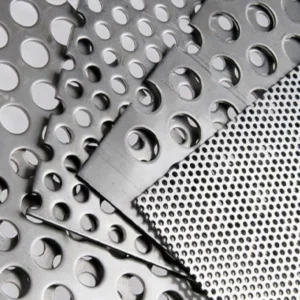
Integrating precision perforated internal sleeves directly into the 2.5-inch outer shell, optimizing sound frequency cancellation in sport exhaust systems without requiring bulky external resonator shells.
Implementing individual laser-etched QR codes on every meter of tubing, giving end-user engineers instant digital access to heat numbers, raw mill origin, dimensional scan logs, and weld inspection data via cloud API.
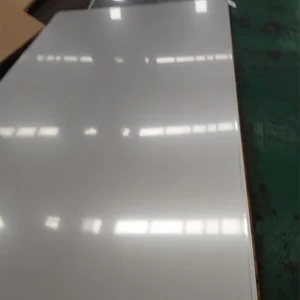
Comprehensive industrial pipe, plate, and strip inventory available for immediate global distribution and wholesale order fulfillment.
7. Frequently Asked Technical & Procurement Questions (FAQ)
Expert answers addressing critical metallurgical, fabrication, and purchasing inquiries from B2B buyers worldwide.