
Primary Steel Tube & Structural Products
Explore direct mill-sourced structural tubing, decorative profiles, and precision stainless steel components engineered for international architectural and industrial applications.
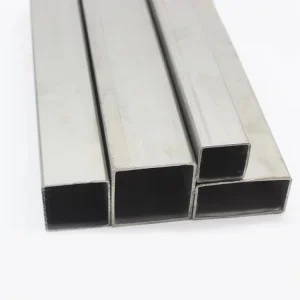
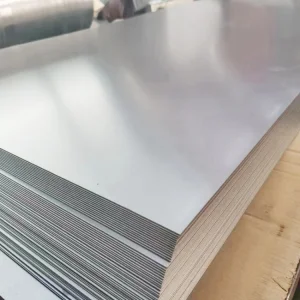
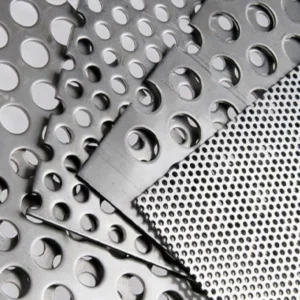
Empowering Global Infrastructure with Advanced Tubular Railing Engineering
A authoritative guide into structural steel tubing, alloy chemistry selection, surface topography control, and total cost of ownership (TCO) optimization for B2B procurement leaders.
Alloy Selection & Chemistry
Navigating austenitic (304, 316L), ferritic (430), and duplex (2205, 2507) steel grades. Matching Chromium-Nickel-Molybdenum ratios to environmental PREN (Pitting Resistance Equivalent Number) demands.
PREN Ratings from 18 to >40Dimensional Tolerances & ASTM Standards
Strict adherence to ASTM A554 (ornamental tubing), ASTM A312 (structural/fluid lines), EN 10217-7, and JIS G3459 standards, maintaining outer diameter (OD) precision within ±0.05mm.
Micrometer-Level PrecisionSurface Micro-Topography Control
Automated mechanical grinding, electropolishing, and multi-axis satin finishing yielding surface roughness Ra ≤ 0.2μm for zero bacterial retention and maximum passivation stability.
Mirror 8K & Ra ≤ 0.2μm SatinComparative Metallurgical & Mechanical Performance Matrix
| Steel Alloy Grade | Chemical Composition Key (%) | Yield Strength (MPa) | Tensile Strength (MPa) | PREN Score | Primary Application Environment |
|---|---|---|---|---|---|
| AISI 201 (Cr-Mn) | 16-18 Cr / 3.5-5.5 Ni / 5.5-7.5 Mn | ≥ 275 | ≥ 520 | ~ 17.5 | Architectural interior handrails, dry climate indoor fixtures |
| AISI 304 / SUS304 | 18-20 Cr / 8-10.5 Ni / ≤ 0.07 C | ≥ 205 | ≥ 515 | ~ 19.0 | Urban pedestrian barriers, commercial staircases, indoor balustrades |
| AISI 316L (Low Carbon) | 16-18 Cr / 10-14 Ni / 2-3 Mo | ≥ 220 | ≥ 520 | ~ 25.0 | Coastal marine walkways, chemical plants, high-humidity transportation hubs |
| Duplex 2205 (UNS S32205) | 22-23 Cr / 4.5-6.5 Ni / 3-3.5 Mo / 0.14-0.20 N | ≥ 450 | ≥ 620 | ~ 35.0 | Offshore oil platforms, heavy industrial safety perimeters, extreme loading bridge rails |
Global Enterprise Procurement Demands & Sourcing Economics
In modern mega-project procurement, selecting a steel tube railing supplier extends beyond baseline material cost per metric ton. It involves total lifecycle evaluation, risk mitigation, and international quality governance.
Total Cost of Ownership (TCO) Optimization
Direct sourcing from integrated Chinese manufacturing centers reduces tier-3 distributor markups by up to 28%. Factory-direct custom length slitting minimizes on-site structural scrap waste to under 1.5%.
Mill Test Certification & Traceability
Every shipment is supplied with EN 10204 3.1 or 3.2 Mill Test Certificates (MTC). Heat-number traceability from raw coil casting through final hydro-testing ensures zero material substitution risks.
Export Freight Packaging Resilience
Heavy-duty wooden framing, waterproof plastic vapor-barriers, inner fiber-tube protection, and non-woven fabric sleeves prevent transit scratching, deformation, and salt-air atmospheric tarnishing during ocean freight.
China Factory 4.0: Supply Chain Resilience & Manufacturing Efficiency
Combining raw material integration with state-of-the-art automated tube manufacturing, setting global benchmarks in capacity, yield consistency, and delivery timelines.
Tier-1 Raw Material Strategic Alliances
Direct primary-feedstock contracts with global stainless steel leaders including Tsingshan, TISCO, POSCO, and Baosteel guarantee consistent melt chemistry, minimal non-metallic inclusion content, and superior grain boundary structure.
Automated Laser & TIG Welding Precision
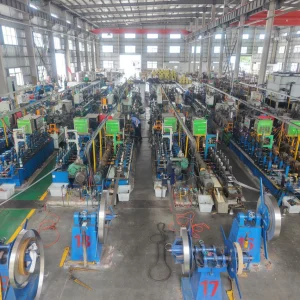
Multi-head high-frequency TIG and Fiber Laser automated welding stations equipped with online inert-gas internal back-purging ensure 100% weld penetration, eliminating heat-affected zone (HAZ) sensitization and chromium depletion.
Inline NDT Quality Control Systems
Continuous automated inline Eddy Current Flaw Detection (ET) running according to ASTM A1016 standards identifies sub-surface discontinuities, pinholes, and micro-cracks in real-time, enforcing zero-defect dispatch.
Macro-Industry Solutions & Engineered Architectural Systems
Steel tube railing systems are customized for diverse sector-specific requirements, ranging from heavy transit load-bearing capacity to hyper-hygienic processing environment compliance.
High-Transit Transportation Hubs
Challenge: Continuous high-impact pedestrian traffic, structural vibration, and localized wear in airports, subway lines, and train terminals.
Solution: Heavy-wall ASTM A554 316L round and elliptical structural tubes ($3.0\text{mm} - 4.0\text{mm}$ thickness) paired with internal expansion connectors, engineered to exceed $1.5\text{ kN/m}$ horizontal line load requirements.
Coastal & Marine Boardwalk Architecture
Challenge: Severe chloride aerosol exposure, marine salt fog, and pitting corrosion risks.
Solution: Ultra-corrosion-resistant Duplex 2205 or electropolished 316L stainless steel tubing with mirror-polished finish ($Ra < 0.1\mu m$), proving zero oxidation during 1500-hour Neutral Salt Spray (NSS) testing.
Pharmaceutical & Cleanroom Enclosures
Challenge: Prevention of particulate accumulation, resistance to aggressive chemical washdowns, and smooth seamless joints.
Solution: Flush-welded, fully ground 304/316L tubular systems with internal seamless elbows and anti-fingerprint nanometer coatings, complying with cGMP safety guidelines.
Localized Support & International Building Code Assurance
Ensuring full compliance with localized structural safety, handrail height, load resistance, and barrier regulations across North America, Europe, Asia-Pacific, and the Middle East.
IBC & OSHA Compliance (North America)
Fully compliant with International Building Code (IBC 2021) Section 1015 for 200 lb concentrated load resistance and OSHA 1910.29 walking-working surface safety requirements.
EN 1090 & CE Marking (European Union)
Factory Production Control (FPC) certified according to EN 1090-1 / EN 1090-2 execution class EXC2 for load-bearing steel components, permitting seamless CE distribution throughout Europe.
AS/NZS 1170 & GCC Regulations
Engineering verification for Australian Standard AS/NZS 1170.1 structural design actions and GCC Gulf standard high-temperature thermal expansion resistance.
Technical Roadmap & Future Outlook of Steel Tube Railings
Anticipating industry transformations through material science breakthroughs, green manufacturing initiatives, and smart structural integration.
PVD Physical Vapor Deposition & Nano-Coatings
Advancing eco-friendly PVD color deposition technology (Titanium Gold, Rose Gold, Black PVD) paired with hydrophobic anti-fingerprint surface layers for maintenance-free architectural facades.
Lean Green Steel & Decarbonization
Transitioning to Hydrogen-based Direct Reduced Iron (DRI) feedstock and Electric Arc Furnace (EAF) recycling, targeting a 45% reduction in Scope 1 and Scope 2 carbon intensity by 2030.
Smart Railings & IoT Structural Sensing
Embedded fiber-optic strain gauge sensors within primary load-bearing tube cores for real-time structural fatigue monitoring and automated crowd-density anomaly detection.
Comprehensive Stainless Steel Industrial Selection
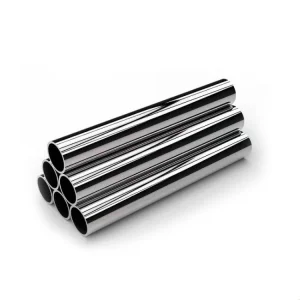
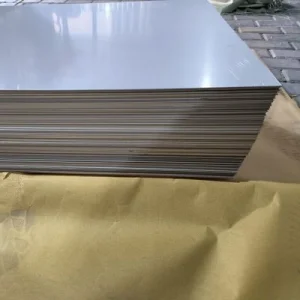
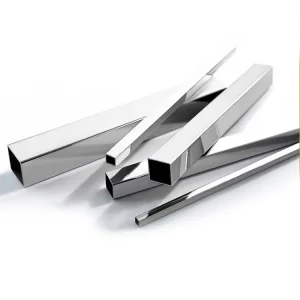
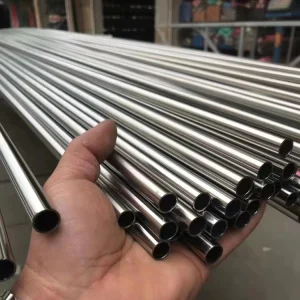
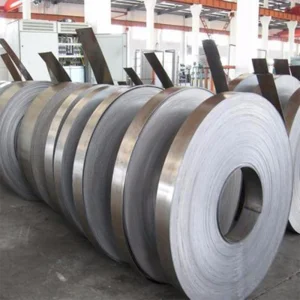
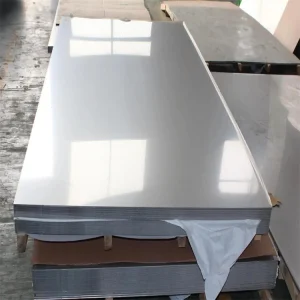
Explore heavy-duty hot-rolled coils, precision cold-rolled sheets, custom strips, and industrial-grade structural welded pipes available directly from our manufacturing facility.
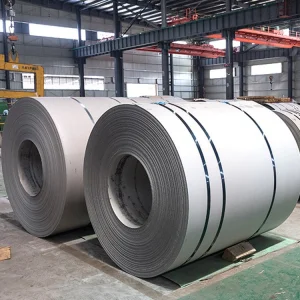
Frequently Asked Questions by Global Engineering & Procurement Teams
In-depth technical answers addressing material selection, structural load-bearing formulas, international certifications, and custom manufacturing capabilities.
What is the structural difference between ASTM A554 and ASTM A312 steel tubes in railing systems?
ASTM A554 specifies welded stainless steel tubing intended for ornamental, structural, and architectural handrail applications where precise exterior dimensions, tight wall tolerances, custom shapes (round, square, rectangular, oval), and high-grade aesthetic polishes (6K/8K mirror, 320-grit satin) are primary requirements. ASTM A312, conversely, covers seamless and heavily welded austenitic steel pipe designed for high-pressure fluid conveyance and elevated temperature corrosive environments, requiring hydrostatic testing and non-destructive electrical testing.
How do I choose between AISI 304 and AISI 316L for coastal steel tube railings?
For installations located within 5 kilometers (3 miles) of a marine coastline or in environments exposed to deicing salts, AISI 316L is strongly recommended over AISI 304. AISI 316L contains 2.0% to 3.0% Molybdenum (Mo), raising its PREN (Pitting Resistance Equivalent Number) to ~25, compared to 304’s PREN of ~19. The addition of Molybdenum forms a self-healing passive oxide film resistant to chloride-induced pitting and crevice corrosion.
What surface finishes are optimal for high-traffic architectural steel railings?
A 320-Grit Satin / Hairline Finish (Ra 0.2μm to 0.4μm) is the industry standard for high-foot-traffic public handrails due to its ability to diffuse light, mask minor contact scratches, and conceal fingerprints. For luxury residential balustrades or marine yachts, an 8K Mirror Finish provides a striking reflective aesthetic but requires periodic cleaning to maintain optical clarity.
What documentation and quality control verification accompanies OEM custom tube shipments?
Every industrial shipment from our facility includes a full quality control package: EN 10204 3.1 Mill Test Certificates detailing exact chemical ladle analysis and mechanical elongation/yield test results, Dimensional Inspection Reports, PMI (Positive Material Identification) spectrographic test records, Surface Roughness ($Ra$) measurement logs, and Non-Destructive Eddy Current Test certificates.
Can China steel tube factories support custom bending, laser cutting, and pre-assembly?
Yes. Beyond raw tube extrusion and welding, our Smart Factory 4.0 infrastructure offers end-to-end downstream processing, including 5-axis CNC laser pipe cutting, precise rotary tube bending without wall thinning, robotic TIG flange welding, flow-drilling, and modular pre-assembly for seamless on-site bolt-together installation.