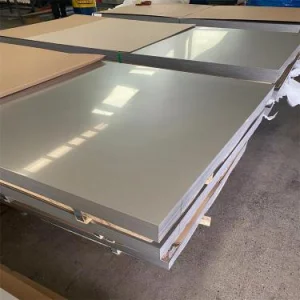
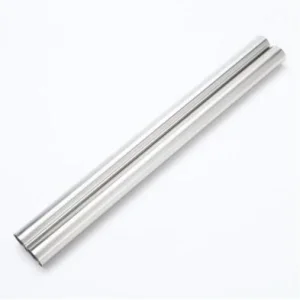
Featured Stainless Steel Sheet & Mill Products
Direct factory quotes, traceable mill test certifications (EN 10204 3.1), and customizable specifications from top-tier Chinese manufacturing facilities.


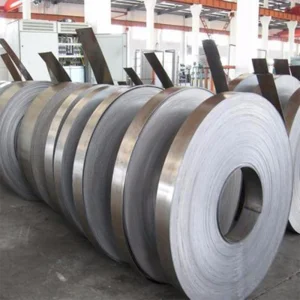

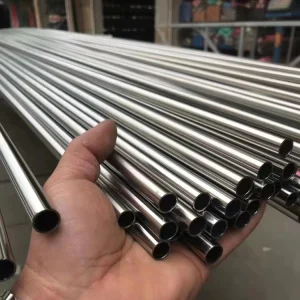
1. Strategic Overview: China's Role in Global Stainless Steel Manufacturing
Analyzing the cluster advantages of Wuxi, Jiangsu, integrated metallurgical supply chains, and pricing benchmarks for global B2B procurement directors.
The global stainless steel market relies heavily on Chinese industrial clusters, particularly centered in Wuxi, Jiangsu Province, and Foshan, Guangdong Province. China commands over 55% of global crude stainless steel production. This massive operational scale allows Chinese manufacturers to offer unmatchable cost efficiencies, sophisticated alloy developments, and rapid production turnaround for global OEMs, engineering contractors, and stockists.
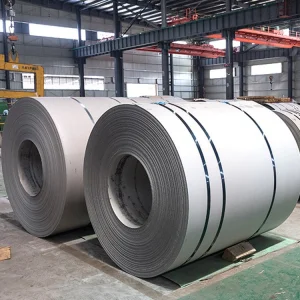
Companies like Jiangsu Renzhi Holding Group Co., Ltd. leverage deep integration with tier-one primary steel mills including Tsingshan Holding Group, TISCO (Taiyuan Iron & Steel), POSCO China, and Baosteel. This raw material security ensures accurate chemical composition control (low sulfur, controlled carbon, and verified nickel content) alongside predictable mechanical properties across cold-rolled sheet, hot-rolled plate, strip coils, and welded piping systems.
Information Gain: Upstream Metallurgical Sourcing Integrity
A critical risk in international metal procurement is "down-grading" or wide thickness tolerance variances (-10% to -15% under-nominal thickness). Premier Chinese suppliers enforce strict A240/A480 thickness tolerance control (typically within ±0.02mm for cold-rolled sheets) and provide positive material identification (PMI) report verification alongside EN 10204 3.1 Mill Test Certificates for every coil heat number.
2. Stainless Steel Sheet Pricelist & Technical Benchmark Matrix (2026 Index)
Engineering breakdown of chemical compositions, surface treatments, standard thickness ranges, and FOB market pricelist estimates.
Pricing for stainless steel sheets is intrinsically tied to global raw material benchmarks, primarily LME Nickel, Ferrochrome, and Molybdenum spot prices. Below is an engineering comparison matrix designed to help B2B buyers match project performance criteria with budgetary allocations.
| Grade Designation | Alloy Class & Chemistry | Surface Finishes Available | Standard Thickness (mm) | PREN Rating | Estimated FOB Price Range (USD / Ton)* |
|---|---|---|---|---|---|
| 201 (Austenitic) | 16-18% Cr, 1-1.5% Ni, 5.5-7.5% Mn | 2B, BA, No.4, Hairline, Mirror | 0.3 mm – 3.0 mm | ~16 | $1,150 – $1,450 |
| 304 / 304L (Austenitic) | 18-20% Cr, 8-10.5% Ni (Low C for 304L) | 2B, BA, No.1, No.4, 8K Mirror, Embossed | 0.3 mm – 80.0 mm | ~18.5 - 20 | $1,950 – $2,350 |
| 316 / 316L (Marine Grade) | 16-18% Cr, 10-14% Ni, 2-3% Mo | 2B, BA, No.1, No.4, Satin, Perforated | 0.4 mm – 100.0 mm | ~23 - 25 | $2,850 – $3,400 |
| 310S (High-Temp) | 24-26% Cr, 19-22% Ni (Heat Resistant) | No.1, 2B | 1.0 mm – 50.0 mm | ~26 - 28 | $4,100 – $4,800 |
| 430 (Ferritic) | 16-18% Cr, <0.75% Ni (Magnetic) | 2B, BA, 8K Mirror, PVC Coated | 0.4 mm – 6.0 mm | ~16.5 | $1,200 – $1,500 |
| Duplex 2205 (UNS S32205) | 22% Cr, 5% Ni, 3% Mo, 0.18% N | No.1 Hot Rolled, 2B Cold Rolled | 1.5 mm – 60.0 mm | ~34 - 36 | $3,300 – $3,900 |
| Super Duplex 2507 | 25% Cr, 7% Ni, 4% Mo, 0.28% N | No.1 Pickled & Annealed | 2.0 mm – 50.0 mm | > 42 | $4,600 – $5,400 |
*Note: Pricelist quotes fluctuate based on alloy surcharges, thickness tolerances, surface processing premiums (e.g., laser-cut masking, double-sided PVD coating), and order volume. Request formal quotation for exact CIF/FOB pricing.
3. Strategic Advantages of Sourcing Stainless Steel Sheets from Chinese Mills
Why Tier-1 Chinese manufacturers provide unmatched cost-to-performance metrics, advanced surface processing, and robust international compliance.
1. Vertical Integration & Economies of Scale
From continuous slab casting to high-speed cold-rolling mills (20-high Sendzimir mills), Chinese factories streamline production steps under one roof. Slitting, decoiling, surface grinding, and laser cutting are fully centralized to minimize material handling overhead.
2. Advanced Surface Treatment Ecosystem
Chinese processing hubs feature automated 8K mirror polishing lines, continuous PVD titanium color vacuum coating chambers, anti-fingerprint (AFP) nano-coating, and high-precision CNC perforation. Finishes remain consistent across thousands of square meters.
3. Stringent International Certification
Exporters comply with international standards such as ASTM A240, ASTM A480, EN 10088-2, JIS G4304, and ISO 9001:2015. Pressure vessel plates carry PED 2014/68/EU certification, backed by third-party testing (SGS, TUV, BV).
4. Seaworthy Packaging Integrity
Export packaging features heavy-duty wooden boxes or skids, interleave protective paper, 100μm PVC film protection, edge protectors, and moisture-proof plastic wrapping to eliminate transit rust or scratching during long ocean freight container shipping.
4. Global Industry Trends & Technological Breakthroughs
Decarbonization, high-strength lean duplex alloys, and smart automated processing reshape the global steel procurement landscape.
Green Metallurgy & Carbon Footprint Mitigation
With global green building regulations (CBAM in the EU) taking effect, Chinese stainless steel mills are transitioning towards Electric Arc Furnace (EAF) routes utilizing higher recycled scrap ratios and direct green hydrogen reduction technologies. Purchasing low-carbon stainless steel sheets empowers global OEMs to meet ESG goals without compromising corrosion performance.
Rapid Expansion of Duplex & Super Duplex Sheet Usage
Rising nickel price volatility has accelerated the adoption of Lean Duplex (UNS S32101) and Standard Duplex 2205. Duplex stainless steel offers nearly double the yield strength of standard austenitic 304/316 ($R_{p0.2} \ge 450 \text{ MPa}$ vs. $205 \text{ MPa}$), allowing structural engineers to reduce plate thickness, cut equipment weight by up to 30%, and drastically lower total project expenditure.
5. Macro Industry Solutions & Localized Application Scenarios
Matching material chemistry, mechanical strength, and surface roughness ($R_a$) to demanding industrial and architectural requirements.
Corrosion Defense in Aggressive Media
For chemical storage tanks, pressure vessels, heat exchangers, and flue-gas desulfurization (FGD) scrubbers. Grade 316L, 317L, and Duplex 2205 sheets prevent intergranular corrosion and stress corrosion cracking (SCC) caused by high chloride ions and organic acids.
Sanitary Hygiene & Cleanability
Dairies, breweries, pharmaceutical reactors, and commercial kitchens demand ultra-smooth surfaces. Cold-rolled 304 and 316L 2B/BA sheets polished to $R_a < 0.4 \mu m$ prevent bacterial adhesion and withstand CIP (Clean-In-Place) caustic sterilization regimes.
Aesthetic Durability & Facades
Modern skyscraper cladding, elevator cabs, luxury storefronts, and interior partitions utilize PVD colored, etched, hairline, or 8K mirror 304/201 decorative sheets. These surface treatments maintain vibrant aesthetic appeal while resisting weathering and urban pollution.
Severe Environment Resistance
Offshore oil platforms, seawater desalination plants, marine hardware, and harbor infrastructure mandate high Pitting Resistance Equivalent Numbers ($\text{PREN} = \%Cr + 3.3\%Mo + 16\%N$). Super Duplex 2507 and 316L plates survive continuous saltwater spray.
6. B2B Enterprise Procurement Strategy & Risk Mitigation Checklist
Essential quality assurance steps for overseas buyers when sourcing bulk stainless steel sheet shipments from China.
Sourcing Protocol for Procurement Officers
- Verify Chemical & Mechanical Traceability: Insist on heat-number specific Mill Test Certificates matching EN 10204 3.1. Audit key elemental compositions: Nickel (%Ni), Chromium (%Cr), and Molybdenum (%Mo) via Spectrometer testing.
- Specify Thickness & Width Tolerances: Clarify whether pricing is based on "Gross Weight" or "Theoretical Weight". Standard ASTM A480 dictates acceptable thickness tolerances; confirm whether standard (ST) or restricted precision tolerance applies.
- Determine Surface Protection Requirements: Specify PE film type, thickness (e.g., 70μm, 100μm laser fiber film), and single/double face coverage based on downstream laser-cutting or deep-drawing operations.
- Third-Party Pre-Shipment Inspection: Mandate independent inspection (SGS, TUV, Intertek) to verify dimension accuracy, flat surface flatness, diagonal squareness, and container seaworthy lashing prior to balance payment release.
7. Technical Q&A: Frequently Asked Sourcing Questions
Expert answers to critical engineering, pricing, certification, and shipping inquiries.
What is the difference between 2B, BA, No.4, and 8K Mirror finishes on stainless steel sheets? +
2B Finish: Cold-rolled, heat-treated, pickled, and given a light pinch pass through polished rolls. It has a smooth, slightly reflective light grey appearance and serves as the standard commercial mill finish.
BA (Bright Annealed): Cold-rolled and annealed in a controlled atmosphere furnace (hydrogen/nitrogen), resulting in a highly reflective, mirror-like smooth surface ideal for appliance trims.
No.4 / Hairline: Mechanically polished with fine abrasive belts (150-240 grit) to create uniform linear directional grain lines. Highly popular for architectural escalators and kitchen panels.
8K Mirror: Intensive multi-stage polishing with fine alumina/silica compounds producing a clear, distortion-free optical mirror reflection.
How does 304 stainless steel differ from 316L in chemical composition and performance? +
Grade 304 contains ~18% Chromium and 8% Nickel, providing excellent general corrosion resistance in ambient indoor/outdoor environments. Grade 316L adds 2-3% Molybdenum and reduces carbon content below 0.03%. The molybdenum addition drastically increases resistance to pitting and crevice corrosion in chloride-rich environments (seawater, de-icing salts, chemical processing).
What are the standard dimensions and weight calculation formulas for stainless steel sheets? +
Standard sheet sizes are 1000x2000mm, 1219x2438mm (4x8 ft), 1219x3048mm (4x10 ft), and 1500x3000mm/6000mm. Custom length decoiling is available.
Theoretical Weight Formula (kg):
Weight = Thickness (mm) × Width (m) × Length (m) × Density ($g/cm^3$)
Density Factors: 304 / 304L / 321 = 7.93 | 316L / 310S = 7.98 | 201 = 7.93 | 430 = 7.70 | 2205 = 7.80
Why is there a wide price variance between 201, 304, and 316L stainless steel sheets? +
The price discrepancy stems directly from raw alloy material costs. Grade 201 substitutes expensive Nickel with Manganese and Nitrogen. Grade 304 requires high-purity refined Nickel (~8-10%). Grade 316L requires both high Nickel content and Molybdenum, which commands a premium market price on international metal exchanges.
Can Chinese stainless steel manufacturers customize perforated or patterned sheets according to CAD drawings? +
Yes. Facilities equipped with CNC punch presses and fiber laser cutting tables produce custom hole patterns (round, square, hexagonal, slotted), open area ratios, unpunched margins, and custom decorative embossing directly from client DXF or DWG files.
Complete Stainless Steel Product Catalog
Explore our full range of cold-rolled sheets, perforated plates, welded pipes, decorative tubes, and precision strip coils.