
Featured Industrial Stainless Steel Stock & Raw Material Line
Direct factory mill supply forming the structural base for high-durability tags, label plates, and industrial piping.
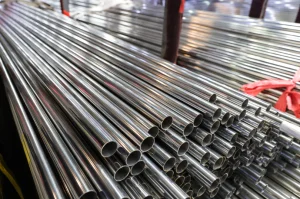

Custom China Suppliers Factory Stainless Steel Industrial Welded Pipe 201/304/316L
View Product Specs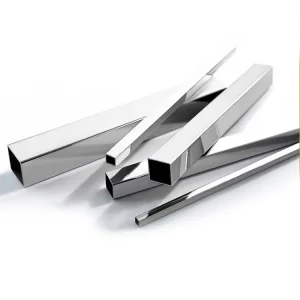

The Architecture of High-Durability Stainless Steel Identification Systems
In ultra-demanding industrial sectors—ranging from offshore petroleum rigs to sterile pharmaceutical cleanrooms—the structural integrity of machinery identification cannot be treated as an afterthought. Industrial stainless steel label plates, serial nameplates, and equipment ID tags provide critical operational safety data, regulatory compliance markings, and lifecycle tracking protocols.
Metallurgical Superiority
Leveraging high-grade austenitic (SS 304, SS 316L) and duplex (2205) alloys to prevent intergranular corrosion, chemical degradation, and mechanical erosion under extreme atmospheric stresses.
Lifecycle Longevity
Engineered to withstand 25+ years of severe operational exposure, resisting UV degradation, thermal cycling (-196°C to +800°C), and high-pressure chemical washdowns.
Compliance Verification
Fully compliant with ISO 9001:2015 manufacturing frameworks, RoHS 3 directives, REACH toxicological standards, and OSHA industrial safety marking requirements.
China Factory Supply Chain Ecosystem: Why Direct Sourcing Wins
China's stainless steel manufacturing infrastructure—concentrated in regional powerhouses like Wuxi (Jiangsu Province) and Foshan (Guangdong Province)—offers global enterprise procurement officers an unmatched balance of volume capacity, technical depth, and cost efficiency.
As direct manufacturers, Chinese industrial facilities eliminate intermediary markups while providing full vertical integration: from raw cold-rolled coil slitting to precision CNC stamping, automated chemical etching, fiber laser engraving, and custom surface passivation.
Direct Feedstock Integration
Raw stainless steel stock sourced straight from tier-1 primary mills such as Tsingshan, TISCO, POSCO, and Baosteel ensures verifiable alloy chemistry and zero structural inclusions.
Rapid Prototyping & Scale
High-speed automated etching lines deliver initial pre-production samples within 48 to 72 hours, scaling effortlessly to multi-million unit mass production runs.
Supply Chain Efficiency Matrix
- Raw Material Procurement Cost -18% to -25% vs Western Regional Stockists
- Custom Stamping Die Lead Time 3 - 5 Working Days
- Surface Etching Depth Control 0.03mm - 0.25mm (Calibrated)
- Quality Inspection Protocol Optical AOI + XRF Spectrometry
- Global Freight Readiness FOB, CIF, DDP to 120+ Countries
Global Enterprise Requirements: Technical Standards & Localized Execution
Navigating international regulatory frameworks requires strict adherence to material certification, environmental protection protocols, and localized graphic localization (multi-language, custom symbology, and localized safety icons).
Material Test Reports (MTR / EN 10204 3.1)
Every shipment of stainless steel label plates is backed by verifiable Mill Test Certificates detailing exact chemical compositions (C, Mn, Si, P, S, Cr, Ni, Mo) and mechanical yield tensile properties.
Hazardous Substance Restrictions (RoHS & REACH)
Our manufacturing processes utilize eco-certified chemical etching reagents, heavy-metal-free enamel infill paints, and compliant degreasing baths fully aligned with EU REACH and RoHS 3 directives.
Multilingual & Variable Data Engraving
Full support for localized script layouts (Arabic, Cyrillic, Chinese, Kanji, European character sets), continuous serial numbering, 2D Data Matrix codes, and high-density QR codes for localized asset management.
Selecting the Optimal Stainless Steel Grade for Label Plates
Choosing the correct alloy prevents catastrophic failures such as stress-corrosion cracking or pitting in harsh industrial operational environments. Review our comparative engineering matrix below.
| Alloy Grade | Key Chemical Elements | Pitting Resistance (PREN) | Corrosion & Thermal Tolerance | Recommended Industrial Applications |
|---|---|---|---|---|
| AISI 304 / 304L | 18% Cr, 8% Ni | ~18 - 20 | Good baseline indoor/outdoor resistance. Max temp ~870°C. | Commercial equipment, control panels, indoor machinery, HVAC units. |
| AISI 316 / 316L | 16% Cr, 10% Ni, 2.0-3.0% Mo | ~23 - 25 | Superior chloride pitting resistance, marine aerosol protection. | Offshore oil platforms, chemical processing, marine vessels, coastal infrastructure. |
| Duplex 2205 (UNS S31803) | 22% Cr, 5% Ni, 3% Mo, 0.16% N | ~35 - 38 | Ultra-high mechanical strength, extreme stress-corrosion cracking resistance. | Subsea valves, high-pressure chemical reactors, heavy mining equipment. |
| AISI 310S / 321 | 25% Cr, 20% Ni / Titanium Stabilized | ~22 - 26 | Extreme thermal resistance up to 1150°C without scaling. | Industrial furnaces, heat exchangers, exhaust manifolds, aerospace assemblies. |
| Anodized Aluminum (Comparative) | Al-Mg Alloy Base | N/A | Lightweight, vulnerable to strong acids/alkalis, lower melting point. | Consumer electronics, lightweight indoor enclosures, temporary asset tags. |
* PREN Formula: $PREN = \%Cr + 3.3 \times (\%Mo + 0.5 \times \%W) + 16 \times \%N$. Higher values indicate greater resistance to localized pitting corrosion in chloride environments.
Severe Environment Deployments & Industrial Scenarios
Stainless steel nameplates are field-proven components utilized in environments where synthetic film labels or aluminum badges quickly degrade or fail.
Chemical & Petrochemical Refineries
Subjected continuously to acid vapors, sulfur compounds, and volatile organic solvents. Deep-etched 316L plates with baked synthetic enamel infills guarantee tag readability during emergency maintenance shut-downs.
Marine Engineering & Shipbuilding
Salt spray, constant high humidity, and wave impact cause severe oxidation on standard metals. Passivated SS 316 plates engineered to ASTM A967 standards resist marine biofilm growth and salt crusting.
Sanitary Food & Pharmaceutical Processing
High-pressure steam washdowns and aggressive alkaline caustics are standard. Smooth, burr-free 304/316 plates with electropolished surfaces prevent bacterial trap zones, complying with 3-A Sanitary Standards.
Heavy Machinery & Power Generation
Vibration-resistant tags affixed via solid rivets or heavy-duty spot welds. Machine serial numbers, hydraulic pressure limits, and wiring schematics remain clear despite mechanical abrasion and grease accumulation.
Emerging Trends in Industrial Metal Label Engineering
The manufacturing landscape is undergoing a digital and environmental transformation. China's leading label plate manufacturers are actively incorporating modern technology into traditional metalworking.
Smart RFID/NFC SS Hybrid Tags
Encapsulating high-frequency RFID chips directly within protective stainless steel housings, enabling contactless asset tracking, automated warehouse inventory, and anti-tamper security logging in harsh industrial environments.
Ultra-Precision Fiber Laser Etching
Replacing traditional chemical baths with high-power MOPA fiber lasers. Allows micro-scale 2D barcodes, sub-surface anneal marking (without removing surface chromium), and zero chemical waste generation.
Sustainable Eco-Passivation
Transitioning from hazardous nitric acid passivation solutions to non-toxic citric acid formulations. This preserves chromium oxide layer formation while adhering to global ISO 14001 environmental directives.
Structured OEM/ODM Manufacturing Workflow
A seamless, step-by-step engineering roadmap designed to take enterprise client concepts from technical drawings to bulk export delivery with zero quality deviations.
Engineering Review
Evaluation of client CAD vector files (AI, DXF, DWG, PDF). Verification of text font sizing, stroke width for chemical etching, mounting hole tolerances, and corner radii.
Alloy & Finish Selection
Determining material grade (304, 316, 2205) and surface finish (2B, BA, No. 4 brushed, 8K mirror, matte frosted) based on operating temperature and chemical exposure.
Precision Etching / Stamping
Executing photo-chemical etching for deep graphic recession or high-speed CNC stamping/laser cutting for complex mechanical outer geometry.
Color Infill & Curing
Applying high-solids polyurethane, acrylic enamel, or epoxy-based paints into etched recessed zones, followed by thermal oven baking for maximum chemical bond.
Passivation & QC Testing
Submerging finished plates in citric/nitric passivation tanks to rebuild passive chromium oxide layers. 100% optical inspection and XRF thickness verification.
Export Protective Packing
Applying protective PE film on individual plates, vacuum sealed with desiccant in wooden crates, ensuring moisture-free ocean/air transportation.
Additional High-Performance Stainless Steel Coils, Sheets & Tubes
Supplementary mill inventory available for global B2B procurement and customized industrial fabrication.







Frequently Asked Questions by Industrial Procurement Managers
Expert answers addressing material selection, manufacturing tolerances, chemical resistance, and international shipping protocols.
Q1 What is the main difference between chemical etching and laser engraving for stainless steel label plates?
Chemical etching uses photoresist maskants and acid solutions (such as ferric chloride) to etch away exposed metal to a controlled depth (typically 0.05mm to 0.2mm). The recessed areas are subsequently filled with enamel or epoxy paints. This process is highly durable and ideal for high-volume orders. Fiber laser engraving, on the other hand, utilizes concentrated light energy to ablate or darken the surface. Laser marking is faster for variable data (such as serial numbers or barcodes) and smaller batch sizes, but may not yield the deep physical recesses achievable via chemical etching.
Q2 When should I choose SS 316L over SS 304 for equipment identification plates?
SS 304 is suitable for general industrial, indoor, and mild outdoor environments. However, SS 316L must be specified if the label plates are exposed to marine salt air, chloride solutions, industrial solvents, or chemical processing vapors. SS 316L contains 2.0% to 3.0% Molybdenum, which dramatically enhances its resistance to pitting and crevice corrosion (increasing the PREN from ~19 to ~24). The 'L' grade designates low carbon content (<0.03%), which prevents carbide precipitation during any auxiliary welding process.
Q3 How do Chinese factories guarantee color retention in etched painted label plates under intense UV exposure?
Leading manufacturers utilize industrial-grade automotive polyurethane or baked epoxy enamel paints infused with UV-stabilizing pigments. After paint infill into the etched stainless steel recesses, the plates undergo high-temperature thermal curing in specialized baking ovens at temperatures ranging from 150°C to 200°C. This chemical cross-linking prevents chalking, fading, or peeling, even after prolonged exposure to intense sunlight and harsh outdoor weather conditions.
Q4 What mounting methods are available for heavy-duty industrial stainless steel nameplates?
Mounting options depend entirely on the host machinery surface and environmental vibration levels. Standard methods include: 1) Pre-punched corner or side mounting holes for mechanical rivets, drive screws, or bolts; 2) High-tack 3M acrylic foam tapes (e.g., 3M 468MP or VHB series) for smooth, non-porous surfaces; 3) Welded studs attached to the back of the plate for invisible front-mounting; or 4) Curved profiles matching pipe diameters for strapping via stainless steel cable ties.
Q5 What lead time can global buyers expect when sourcing custom label plates from China?
Standard production timelines typically follow this breakdown: Engineering drawing approval and film tooling take 24 to 48 hours. Pre-production physical samples take 3 to 5 business days. Full mass production (for quantities ranging from 5,000 to 50,000 units) requires approximately 10 to 14 business days. Expedited air freight delivery requires an additional 3 to 7 days worldwide, while ocean freight shipping takes between 18 to 35 days depending on the destination port.
Q6 Can China manufacturers handle high-density 2D Data Matrix and QR codes on etched metal plates?
Yes. Utilizing high-resolution vector film tooling or precision fiber lasers, Chinese manufacturers routinely produce 2D Data Matrix codes, 1D Barcodes (Code 128/39), and QR codes calibrated to ISO/IEC 15415 verification standards. Contrast is optimized by pairing deep chemical etching or dark laser annealing with matte silver or white background fills, ensuring high readability for industrial handheld optical scanners.
Q7 What passivating treatments are applied to stainless steel plates post-processing?
After mechanical stamping, cutting, and chemical etching, stainless steel surfaces can become contaminated with free iron particles from steel tooling. Manufacturers submerge completed plates in citric acid or nitric acid passivation baths according to ASTM A967 or AMS 2700 standards. This process dissolves surface contaminants and accelerates the formation of a continuous, self-healing chromium-oxide passive film that maximizes corrosion resistance.
Q8 How does direct sourcing from a China factory compare with purchasing from local stockists?
Direct sourcing from established Chinese factories eliminates distributor markups, reducing overall procurement costs by 20% to 40%. Additionally, direct factory sourcing gives enterprise buyers complete engineering control over alloy chemistry, custom plate dimensions, specialized mounting geometries, and custom packaging. Chinese manufacturers also provide full Mill Test Certificates (MTC) and quality inspection logs direct from the production line.