
Engineered Stainless Steel Portfolio — Factory Supply (Part I)
Explore mill-sourced cold-rolled and hot-rolled stainless steel sheets, coils, and precision tubes manufactured under rigorous ASTM A240, EN 10088-2, and JIS G4304 quality assurance frameworks.
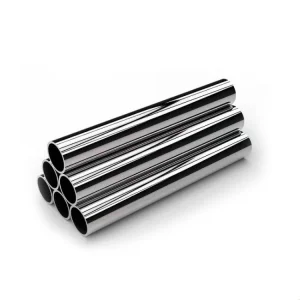
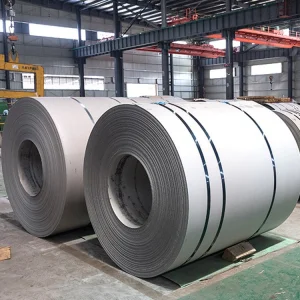
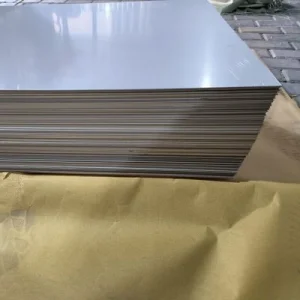
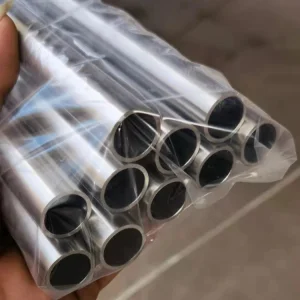
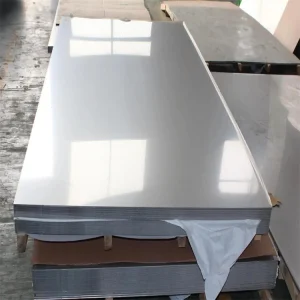
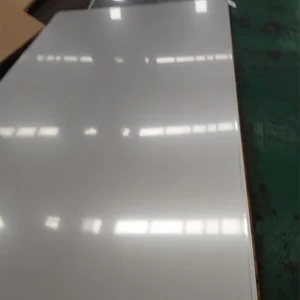
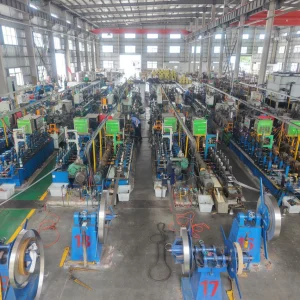
1. Global & Commercial Industrial Landscape of Stainless Steel Sheet
The global stainless steel sheet market represents a foundational pillar of modern industrial infrastructure, heavy machinery manufacturing, chemical processing, and clean energy transition technologies. Driven by accelerated urbanization, expanding food processing automation, and stringent marine corrosion engineering mandates, global consumption of flat-rolled stainless steel products continues to scale beyond 58 million metric tons annually.
Within this global landscape, China occupies an unprecedented position, producing over 60% of total worldwide crude stainless steel output. Centered around primary manufacturing clusters such as Wuxi in Jiangsu Province—where Jiangsu Renzhi Holding Group Co., Ltd. maintains its primary operational hub—China’s supply ecosystem provides unmatched scale, metallurgical diversity, and price competitiveness.
Understanding the dynamic pricing models for China stainless sheet suppliers requires an examination of raw material upstream supply chains. The commercial valuation of flat-rolled sheets—whether cold-rolled (2B/BA finish) or hot-rolled (No.1 finish)—is directly anchored to the spot market pricing of key alloying elements: Nickel Pig Iron (NPI), High-Carbon Ferrochrome (FeCr), and Molybdenum metal surcharges.
Jiangsu Renzhi Holding Group Co., Ltd. mitigates global commodity volatility for B2B buyers by maintaining strategic direct mill feedstock agreements with China’s premier state-owned and multi-national steel conglomerates, including Tsingshan Holding Group, TISCO (Taiyuan Iron and Steel), POSCO China, and Baosteel. This direct integration guarantees traceable melt-origin quality while shielding international buyers from erratic middleman surcharges.
Strategic Procurement Insight: Sourcing directly from certified tier-1 processing mills in Wuxi allows engineering procurement managers to reduce Total Cost of Ownership (TCO) by 12% to 18% compared to European or North American stocking distributors, while maintaining 100% compliance with ASTM A240 and EN 10088-2 certifications.
2. Metallurgical Science: Grade Selection, Chemistry & Surface Physics
Selecting the precise alloy composition and surface profile is critical to preventing catastrophic structural failure, pitting corrosion, or intergranular stress corrosion cracking (SCC) in industrial applications. Flat stainless sheet offerings are grouped into distinct metallurgical families based on their crystalline structures and phase balances.
Austenitic Grades (300 Series)
Characterized by a face-centered cubic (FCC) crystal structure stabilized by Nickel, grades 304, 304L, 316, 316L, 321, and 310S provide superior formability, cryogenic toughness, and high-temperature oxidation resistance. Low-carbon variants (304L/316L with C ≤ 0.03%) prevent intergranular chromium-carbide precipitation during welding.
Duplex & Super Duplex (2205 / 2507)
Engineered with a biphasic 50/50 austenitic-ferritic microstructure, Duplex 2205 and Super Duplex 2507 double the yield strength of traditional 316L while delivering extreme resistance to chloride pitting. Super Duplex 2507 achieves a PREN (Pitting Resistance Equivalent Number) value ≥ 42.
Ferritic & Economy Grades (430 / 201)
Ferritic Grade 430 offers a body-centered cubic (BCC) structure with zero nickel content, providing excellent stress-corrosion resistance in mild environments. Grade 201 substitutes Manganese and Nitrogen for Nickel, creating a highly cost-effective austenitic solution for interior decorative panels and architectural fixtures.
Pitting Resistance Equivalent Number (PREN) Calculation & Chemical Matrix
The resistance of stainless steel sheets to localized pitting corrosion in chloride-rich solutions is quantified via the empirical PREN formula:
PREN = %Cr + (3.3 × %Mo) + (16 × %N)
| Grade | UNS / EN Standard | Chemical Composition (% Nominal) | PREN Rating | Yield Strength Rp0.2 (MPa) | Primary Industrial Applications |
|---|---|---|---|---|---|
| 201 | S20100 / 1.4372 | 16-18 Cr, 3.5-5.5 Ni, 5.5-7.5 Mn, 0.25 N | ~17.5 | ≥ 350 | Architectural trim, commercial kitchenware, decorative tube |
| 304 / 304L | S30400 / S30403 / 1.4301 | 18-20 Cr, 8-10.5 Ni, C ≤ 0.03 (304L) | ~19.0 | ≥ 210 | Food processing, dairy equipment, architectural cladding, storage tanks |
| 316 / 316L | S31600 / S31603 / 1.4404 | 16-18 Cr, 10-14 Ni, 2.0-3.0 Mo | ~25.0 | ≥ 220 | Marine hardware, pharmaceutical vessels, coastal architectural sheet |
| 310S | S31008 / 1.4845 | 24-26 Cr, 19-22 Ni, Si ≤ 1.5 | ~26.5 | ≥ 205 | High-temperature furnace liners, heat exchangers, burner parts (to 1150°C) |
| Duplex 2205 | S32205 / 1.4462 | 22-23 Cr, 4.5-6.5 Ni, 3.0-3.5 Mo, 0.14-0.20 N | ~35.0 | ≥ 450 | Oil & Gas separators, chemical tankers, seawater desalination units |
| Super Duplex 2507 | S32750 / 1.4410 | 24-26 Cr, 6-8 Ni, 3.5-5.0 Mo, 0.24-0.32 N | ≥ 42.0 | ≥ 550 | Offshore platform piping, marine scrubbers, aggressive chloride systems |
Surface Finish Engineering Options
Surface roughness ($Ra$ value) fundamentally governs both aesthetic reflectivity and bacterial retention/cleaning efficiency in sanitary environments. Renzhi Stainless operates 6 specialized continuous polishing lines and 2 embossing lines delivering standard surface finishes:
- No. 1 Finish: Hot-rolled, annealed, and descaled (pickled). Non-reflective, rough texture suited for industrial tanks and structural framing.
- 2B Finish: Cold-rolled, heat-treated, pickled, and given a final light pinch pass through polished rolls. Smooth, semi-reflective matte finish; standard commercial grade.
- BA (Bright Annealed): Cold-rolled and annealed in a atmosphere-controlled nitrogen/hydrogen furnace, resulting in a mirror-like reflective surface.
- No. 4 / Hairline Finish: Unidirectional linear abrasive brush pattern ($Ra \approx 0.2 - 0.4 \mu m$). Preferred for elevator cabs, appliance fronts, and architectural panels.
- 8K Mirror Finish: Super-fine mechanical polishing using cerium oxide slurries, producing a flawless non-directional mirror surface for luxury interiors and optical reflectors.
3. Industry Development Trends & Technological Roadmap (2025–2035)
The global stainless steel manufacturing sector is undergoing a profound paradigm shift driven by stringent decarbonization mandates (EU CBAM compliance), smart factory automation, and emerging clean energy technologies. China’s stainless steel sector has transitioned from volume-driven production to high-precision, low-carbon engineering excellence.
Green Stainless & Carbon Neutrality
Transitioning from traditional Blast Furnace-Basic Oxygen Furnace (BF-BOF) routes to Electric Arc Furnaces (EAF) powered by green hydrogen and renewable energy. Modern mills in Wuxi utilize up to 80% recycled scrap, dramatically reducing Scope 1 and Scope 2 carbon intensity per metric ton of finished sheet.
Ultra-Thin Precision Foil Rolling
Advancements in 20-high Sendzimir cold rolling technology enable the commercial production of stainless steel ultra-thin foils down to 0.02mm thickness. These precision foils serve as vital bipolar plates for PEM hydrogen fuel cells and thermal management shields in electric vehicle (EV) battery packs.
AI-Driven Gauge & Defect Control
Integration of real-time laser thickness sensors and automated optical visual inspection (AOI) algorithms along continuous slitting and shearing lines. Thickness tolerances are strictly maintained within ±0.01mm, eliminating edge wave and crown defects.
Technical Outlook: By 2030, demand for high-nickel, high-molybdenum Super Austenitic (e.g., 904L, 254SMO) and Super Duplex stainless sheets is projected to grow at an 8.4% CAGR, driven by green hydrogen electrolyzer plants, carbon capture scrubbers, and marine LNG carrier cryogenic insulation tanks.
4. Localized Application Scenarios & Engineering Case Studies
Stainless steel sheets are customized to meet precise thermal, mechanical, and chemical stress environments across diverse global industries. The following case scenarios demonstrate real-world engineering deployment:
Scenario A: Marine & Desalination
Environment: Seawater reverse osmosis (SWRO) high-pressure pumps and pressure vessels exposing metals to >35,000 ppm chloride concentration.
Solution: Custom-cut Super Duplex 2507 Plates (PREN ≥ 42). 2507 eliminates localized pitting while providing high yield strength (≥550 MPa), allowing fabricators to thin vessel walls by 25% without sacrificing safety margins.
Scenario B: Hygienic Food & Pharma
Environment: Automated milk pasteurization tanks and biopharmaceutical fermenters subject to aggressive Clean-In-Place (CIP) caustic washings.
Solution: Cold-rolled SUS316L / SUS304 2B/BA Sheets with surface roughness polished to $Ra \le 0.38 \mu m$, compliant with EHEDG and 3-A sanitary guidelines to prevent bacterial adhesion.
Scenario C: High-Temp Petrochemical
Environment: Industrial ethylene cracking furnaces operating continuously above 900°C under cyclic thermal loading.
Solution: Heat-resistant 310S Austenitic Stainless Sheets enriched with 25% Chromium and 20% Nickel, creating a tight, self-healing chromium-oxide layer that prevents catastrophic scaling up to 1150°C.
5. Macro-Economic Sourcing & Supply Chain Solutions from China
Procuring stainless steel sheets directly from Chinese processing manufacturers involves strategic consideration of export documentation, logistics packaging, and quality verification protocols. Jiangsu Renzhi Holding Group Co., Ltd. provides a streamlined direct-factory procurement workflow designed for international trade risk mitigation.
| Procurement Stage | Standard Middleman Trading Process | Jiangsu Renzhi Direct Factory Model |
|---|---|---|
| Quality Traceability | Relayed third-party invoices; unverified melt origin | Direct Mill Test Certificates (MTC) to EN 10204 3.1 / 3.2 from Baosteel/TISCO/Tsingshan |
| Price Transparency | Layered 12% – 20% trading markup | Factory-direct mill-gate pricing based on live NPI and Ferrochrome indices |
| Custom Processing | Outsourced third-party shearing with wide tolerances | In-house automatic precision slitting, flattening, laser cutting, and surface polishing |
| Export Packaging | Basic bundling prone to sea-water corrosion | Heavy-duty ocean packing: plastic film wrapping, neutral interleaving paper, metal edge protectors, wooden skids |
Export Seaworthy Packaging Standard: All sheet shipments leave our Wuxi warehouse with waterproof VCI anti-rust wrapping, wooden pallets compliant with ISPM-15 fumigation standards, and heavy-duty steel radial strapping to resist high dynamic container loads during ocean transit.
Engineered Stainless Steel Portfolio — Factory Supply (Part II)
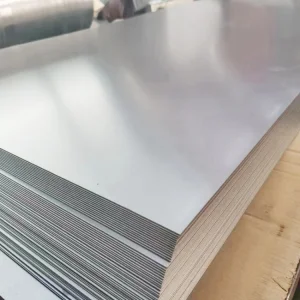
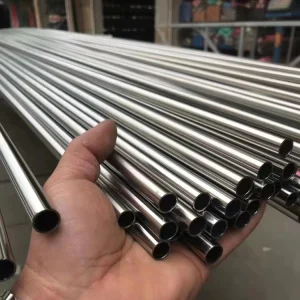
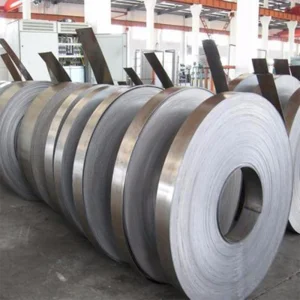
Complete product range featuring precision industrial welded pipes, low-carbon sheets, high-strength structural plates, and economical decorative strips.
6. Frequently Asked Questions (Technical & Commercial Procurement)
Addressing core engineering considerations, MTC compliance standards, dimensional tolerance guidelines, and export logistics for global B2B buyers.
We supply a comprehensive spectrum of flat-rolled sheets, plates, coils, and welded pipes. Our grade availability includes Austenitic series (201, 304, 304L, 316, 316L, 321, 310S), Ferritic series (430, 409), Duplex stainless steels (2205), and Super Duplex alloys (2507). All materials are sourced from traceable primary melts.
All stainless steel flat sheets and plates comply strictly with ASTM A240 / A480, EN 10088-2, and JIS G4304 international standards. Every export batch is supplied with an official Mill Test Certificate (MTC) according to EN 10204 3.1 (or EN 10204 3.2 for independent third-party inspection such as SGS, TÜV, or Bureau Veritas). MTC reports detail precise ladle chemical heat analysis, mechanical tensile yield values, hardness, and intergranular corrosion test results.
While 304 contains ~18% Chromium and ~8% Nickel, Grade 316L adds 2.0% to 3.0% Molybdenum and maintains a lower carbon content (C ≤ 0.03%). The addition of Molybdenum increases 316L's PREN rating to ~25 (compared to ~19 for 304), providing dramatically superior resistance to pitting and crevice corrosion in chloride, marine, and acidic pharmaceutical environments.
Our cold-rolling lines produce sheet thicknesses ranging from 0.3mm up to 6.0mm, with standard width options of 1000mm, 1219mm (4ft), 1500mm (5ft), and custom slitting down to 10mm strip width. Dimensional thickness tolerances are held tightly to ±0.01mm to ±0.03mm, outperforming standard ASTM A480 commercial limits.
To prevent scratches, water staining, and atmospheric oxidation during ocean transit, sheets are interleaved with pH-neutral anti-moisture paper or protected with custom laser-cutting PE/PVC film (70 to 100 microns thick). Packs are sealed in heavy-duty VCI barrier bags, encased in steel protective covers, and anchored onto fumigated wooden skids suitable for multi-modal sea freight.