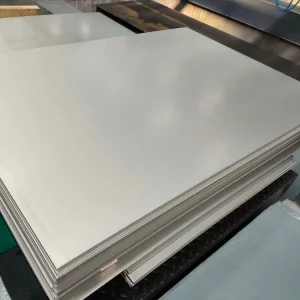
Mill-Direct Stainless Steel Pipes, Strips & Sheets
Explore our top-tier stainless steel industrial welded tubes, precision strips, and heavy structural plates direct from certified Wuxi manufacturing facilities.

Custom Stainless steel industrial welded pipe Manufacturer, Supplier
CE Certification China SUS304/304L Stainless Steel Strip Suppliers - High-Quality Factory Material for Pipes and Luxury Decor Manufacturer, Factories

Custom China Stainless Steel Pipe Suppliers - Direct Factory with Complete Specifications and Processing Services Factories, Factory
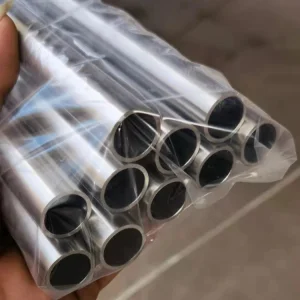
CE Certification China SUS304/304L Low Carbon Stainless Steel Pipe Suppliers - Ultimate Corrosion Resistance from Trusted Factory Manufacturers, Manufacturer
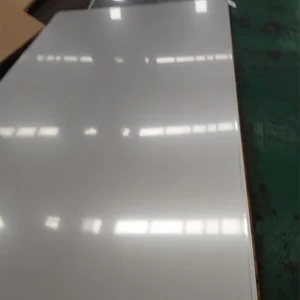
Wholesale 2507 Super Duplex Steel Plate - High Strength & Corrosion Resistance from China Suppliers and Factory Manufacturers, Manufacturer

Custom High-Quality 316L Stainless Steel Sheet from China Factory - Trusted Suppliers for Durable Solutions Manufacturer, Suppliers
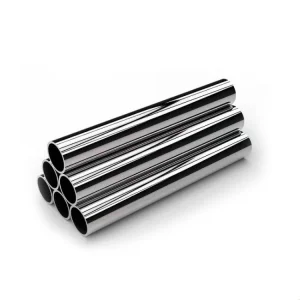
Custom Stainless Steel Decorative Pipe - High-Quality China Suppliers & Factory, Exquisite Surfaces and Diverse Designs Manufacturer, Supplier
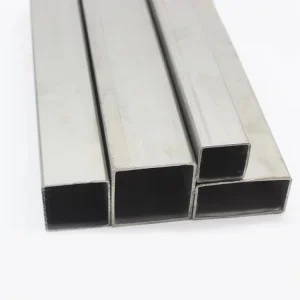
Custom Prime Quality 201 Stainless Steel Pipe from China Suppliers - Durable, Glossy & Ideal for Stairs and Handrails Factory, Quotes
Global & China Stainless Steel Tube Manufacturing Ecosystem
An authoritative evaluation of China's stainless steel (SS) tubing sector, supply chain dynamics, raw material integration, and international trade compliance.
The global industrial tubing market has undergone a structural transformation over the past decade, with China solidifying its position as the premier manufacturing hub for stainless steel welded and seamless tubes. Driven by massive upstream steelmaking clusters in Jiangsu (Wuxi), Zhejiang (Wenzhou/Foshan), and Guangdong, Chinese manufacturers produce over 55% of the world’s global stainless steel tubing output. Sourcing from China SS tube factories offers global B2B procurement managers unmatched economies of scale, rigorous quality compliance with international standards (ASTM, EN, JIS, DIN), and comprehensive surface treatment options.
Central to this manufacturing supremacy is the industrial synergy between raw material refining giants—such as Tsingshan Holding Group, TISCO (Shanxi Taigang), POSCO, and Baosteel—and downstream tube processing mills. By sourcing hot-rolled and cold-rolled coils directly from these primary mills, Chinese tube factories guarantee total metallurgical heat-number traceability, precise chemistry control, and stable mechanical properties from ingot to finished tubular product.
Metallurgical Grade Matrix & Tube Manufacturing Routes
Understanding the mechanical, chemical, and thermal performance metrics required to select the optimal alloy for your industrial applications.
Austenitic Stainless Steel (300 Series)
Contains high chromium (18-20%) and nickel (8-14%). Grade 304/304L provides superior general corrosion resistance and weldability, while Grade 316/316L incorporates 2-3% Molybdenum to prevent pitting and crevice corrosion in chloride-rich and marine environments.
Duplex & Super Duplex (2205 / 2507)
Features a dual-phase microstructure combining austenitic and ferritic grains. Delivers twice the yield strength of 304/316, exceptionally high PREN values (>40 for 2507), and total resistance to chloride stress corrosion cracking (SCC) in oil & gas and desalination plants.
Economic & Decorative Alloys (201 / 430)
Cr-Mn austenitic (201) and nickel-free ferritic (430) grades engineer cost efficiency for architectural handrails, interior furniture, appliance trim, and light structural tubing exposed to non-aggressive atmospheric conditions.
| Grade Designation | UNS / EN Standard | Chemical Composition Key (%) | PREN Rating | Yield Strength (MPa) | Primary Industrial Use Case |
|---|---|---|---|---|---|
| AISI 201 | S20100 / 1.4372 | 16-18 Cr, 3.5-5.5 Ni, 5.5-7.5 Mn | ~15 | ≥ 275 | Decorative / Structural Handrails, Stairs, Furniture |
| AISI 304 / 304L | S30400 / 1.4301 / 1.4307 | 18-20 Cr, 8-10.5 Ni, C ≤ 0.03 (304L) | ~19 | ≥ 205 | General Purpose Food Processing, Architecture, Fluid Lines |
| AISI 316 / 316L | S31600 / 1.4401 / 1.4404 | 16-18 Cr, 10-14 Ni, 2.0-3.0 Mo | ~25 | ≥ 220 | Corrosive Service Chemical Processing, Marine, Medical |
| AISI 310S | S31008 / 1.4845 | 24-26 Cr, 19-22 Ni, Si ≤ 1.5 | ~26 | ≥ 205 | High Temp Heat Exchangers, Furnace Tubes, Boilers |
| Duplex 2205 | S31803 / 1.4462 | 21-23 Cr, 4.5-6.5 Ni, 2.5-3.5 Mo, 0.14-0.20 N | ~35 | ≥ 450 | High Pressure Oil & Gas, Off-Shore Piping, Desalination |
| Super Duplex 2507 | S32750 / 1.4410 | 24-26 Cr, 6-8 Ni, 3-5 Mo, 0.24-0.32 N | > 42 | ≥ 550 | Extreme Marine Seawater Scrubbers, Petrochemical Systems |
Cost Engineering & China Factory Quote Mechanics
Deconstructing the variables behind factory price quotes to empower overseas buyers during contract negotiations and RFQ evaluations.
When requesting quotes for stainless steel tubing from Chinese manufacturers, pricing is rarely determined on a flat per-meter basis. Instead, factories calculate formal quotations based on raw metal indices, tube processing complexity, dimensional tolerances, and surface finishing specifications. Understanding these components prevents unexpected cost overruns and accelerates quotation turnaround times.
The B2B Factory Quote Formula
A standard export quote for stainless steel tube follows this engineering formula:
Unit Price / Ton = [Raw Material Coil Cost (LME/SFE Index)] + [Tube Forming & Welding Fee] + [Heat Treatment / Bright Annealing] + [Surface Polishing / Coating Cost] + [Testing & Inspection Fee] + [Export Sea Packing & Port Freight]
Critical Parameters for Instant RFQ Turnaround
To receive accurate, binding quotes within 12 hours from Chinese factories, ensure your Request for Quotation (RFQ) specifies:
- Dimensional Standards: Outer Diameter (OD), Wall Thickness (WT / Schedule), and Length (e.g., 6000mm fixed).
- Manufacturing Method: Welded (TIG, High-Frequency, Plasma) or Seamless (Cold Drawn / Cold Rolled).
- Surface Finish: 2B mill finish, No.4 brushed grit (180#, 240#, 320#), Hairline, 8K Mirror, or PVD Titanium Plated.
- Inspection Standards: Hydrostatic test pressure, Eddy current test, or Radiographic weld examination requirements.
Localized Application Engineering & Deployments
How specialized stainless steel tubing products perform across critical industrial, architectural, and commercial environments.
Architectural & Decorative Systems
High-gloss 201 and 304 decorative tubes engineered for handrails, staircase balustrades, curtain rod systems, and luxury hotel interior fit-outs. Features precise wall consistency, anti-fingerprint coatings, and custom bending ductility.
Chemical & Petrochemical Fluid Lines
Low-carbon 316L and Duplex 2205 welded and seamless industrial pipes designed for severe chemical processing, acid handling, and offshore oil platforms. Annealed in protective atmospheres to prevent intergranular corrosion.
Food, Beverage & Sanitary Tubing
Sanitary stainless steel tubes conforming to 3A, DIN 11850, and ISO 2037 standards. Internal mechanical polishing or electropolishing achieves surface roughness (Ra) < 0.4 μm, eliminating bacterial trap zones in dairy and brewery lines.
Quality Assurance, Testing Protocols & Compliance
Eliminating supply chain risk through rigorous non-destructive testing, chemical verification, and third-party mill certifications.
A primary concern for international procurement directors sourcing stainless steel tubes from China is guaranteeing that shipped goods strictly match technical spec sheets. Leading Chinese factories mitigate this through comprehensive quality management systems accredited to ISO 9001:2015 and CE Pressure Equipment Directive (PED 2014/68/EU).
Non-Destructive Testing (NDT) Protocol
To ensure zero weld seam leaks or internal material flaws, top-tier factories deploy automated inline testing equipment:
- Eddy Current Testing (ECT): 100% inline non-contact verification of longitudinal weld seams per ASTM A1016.
- Hydrostatic Testing: Pressure testing individual tubes up to 20 MPa (2900 PSI) to verify structural integrity.
- Ultrasonic Flaw Detection (UT): Evaluates wall thickness uniformity and subsurface laminations in heavy-wall pipe.
Traceability & Material Test Certificates (MTC)
Every shipment is accompanied by a certified EN 10204 3.1 Material Test Certificate detailing actual heat chemistry verified via Optical Emission Spectrometry (OES), tensile yield strength, elongation percentage, and Hardness (HRB/HV) testing. Third-party inspection by SGS, TÜV, or Bureau Veritas is routinely supported prior to container loading.
Technological Roadmap & Sustainable Manufacturing
How Chinese tube manufacturers are adopting AI quality control, precision laser welding, and green steel decarbonization initiatives.
AI-Driven Online Vision Inspection
Integration of high-speed camera sensors with deep-learning vision models right at the tube welding mill. Automatically detects bead misalignment, surface scratches, and flash burn marks in real-time at speeds up to 80m/min.
Precision Laser Welding Automation
Transitioning from traditional TIG welding to high-power fiber laser welding systems. Yields ultra-narrow heat-affected zones (HAZ), superior grain structure retention, and smoother internal weld seam bead profiles without needing fillers.
Green Steel & CBAM Compliance
To meet EU Carbon Border Adjustment Mechanism (CBAM) targets, Chinese stainless steel mills are transitioning to Electric Arc Furnaces (EAF) powered by renewable energy, reducing embodied carbon footprints across exported tube products.
When evaluating suppliers for long-term supply contracts, choose manufacturers that operate integrated coil slitting, polishing, and tube welding under a single quality system. This eliminates inter-factory handling damage, reduces transit lead times by up to 30%, and provides clear accountability for dimensional tolerances.
Frequently Asked Questions (Q&A)
Direct technical answers addressing B2B purchasing queries, standard selection, shipping terms, and factory audits.
What is the standard production lead time for custom China SS tube orders?
How do Chinese factories handle small Minimum Order Quantities (MOQ)?
What is the practical difference between ASTM A249, A312, and A554 pipe standards?
How can buyers ensure sea-freight packaging prevents surface corrosion and transport damage?
Are mill test certificates (MTC) provided prior to final payment and shipment?
Explore Additional Stainless Steel Grades & Form Factors
Browse our full range of cold-rolled sheets, perforated metal meshes, low-carbon industrial pipes, and hot-rolled structural plates.
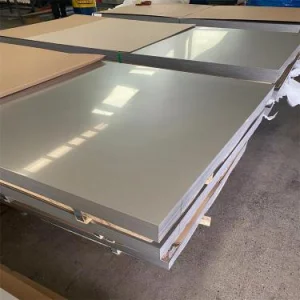
China 304 Stainless Steel Cold Rolled Sheet (ASTM A240, 2B / BA / No.4 Finish) Manufacturer, Pricelist
CE Certification China Stainless Steel Pipe Direct Factory Suppliers - MTC Certified, Full Specifications Available Manufacturers, Suppliers
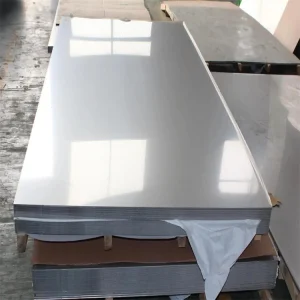
CE Certification Cold Rolled Stainless Steel Sheet from China Suppliers - High Strength and Corrosion Resistant with Custom Processing Factory Suppliers, Quotes

Wholesale Perforated Stainless Steel Sheet from China Suppliers & Factory - Durable, Custom Metal Mesh for Various Applications Manufacturer, Supplier
China High-Quality 201 Stainless Steel Pipe from China Suppliers | Durable and Aesthetic Solutions from Our Factory Suppliers, Quotes
Wholesale SUS304/304L lower carbon stainless steel pipe Factory, Quotes
China China Factory Suppliers for 316L Stainless Steel Sheet - High-Quality and Durable Metal Solutions Supplier, Suppliers