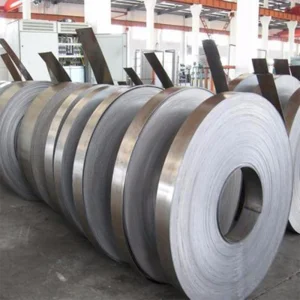
Precision Stainless Steel Tubing & Mill Products
Factory-direct structural, fluidic, decorative, and micro-engineered stainless steel components for critical industrial and medical applications.





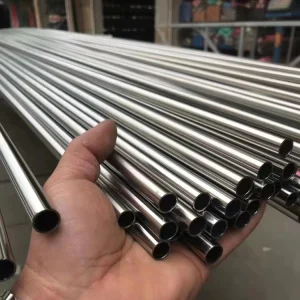
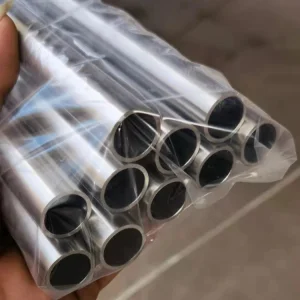
Global Enterprise Procurement Demands for Miniature Stainless Steel Tubing
An exhaustive analysis of B2B purchasing imperatives, metallurgical tolerances, and structural integrity requirements across high-tech OEM manufacturing sectors.
In modern industrial engineering, miniature stainless steel tubing—frequently categorized as micro-tubing, precision capillary tubing, or small-diameter stainless steel tubing—represents a critical hardware foundation for advanced technology sectors. Ranging from sub-millimeter outer diameters (OD < 0.25mm) to precise micro-bores (ID down to 0.05mm), these micro-tubular structures must operate under extreme thermal gradient shifts, ultra-high pressure environments, and highly corrosive chemical media.
Global procurement teams across North America, Western Europe, and the Asia-Pacific region are shifting away from standard off-the-shelf tubing solutions toward highly customized, engineered-to-spec capillary components. As automation, microfluidics, minimally invasive surgical equipment, and aerospace sensor networks evolve, enterprise buyers demand unprecedented control over three major dimensions:
- Dimensional Geometry & Concentricity: Tight outer diameter (OD) and inner diameter (ID) tolerances reaching ±0.002mm (2 microns) are now mandatory for high-performance fluid chromatography and needle cannula assemblies to prevent dead volume and turbulent shear stress.
- Surface Topography & Internal Roughness (Ra): Internal bores with an unpolished finish induce cavitation, chemical entrapment, and bacterial adhesion. B2B buyers mandate bright annealed (BA) or electropolished (EP) internal surface finishes with Ra values as low as < 0.2 μm (8 μin).
- Metallurgical Purity & Grain Structure: Cold-drawn austenitic (316L, 304L, 321), duplex (2205, 2507), and nickel superalloys must display zero intergranular corrosion susceptibility, uniform wall thickness (WT) ratios, and consistent yield strengths under cold flaring or micro-swaging operations.
Zero-Entrapment Microfluidics
Eliminating micro-voids, internal burrs, and draw-mark lines in capillary tubes to ensure pristine sample delivery in liquid chromatography (HPLC) and medical diagnostics.
High-Pressure Hydraulics
Burst pressure resistance exceeding 1,000 bar (14,500 PSI) in micro-bore lines for aerospace sensors, diesel fuel injectors, and high-pressure chemical dosing systems.
Custom Secondary Fabrication
End-of-line processing options including micro-flaring, swaging, precision slotting, laser beveling, side-hole drilling, and custom coil shaping with zero wall thinning.
Advanced Manufacturing Route for Precision Micro-Tubing
From raw feedstock slitting to multi-pass cold drawing and cleanroom passivation: How leading Chinese manufacturers achieve Swiss-grade precision.
Feedstock Selection
Sourcing prime coil/strip from TISCO, Baosteel, and Tsingshan. Rigorous optical spectrographic verification of chemical composition (Cr, Ni, Mo, C).
Continuous TIG / Laser Welding
Micro-laser or inert gas shielded tungsten welding forming master shells with 100% seam penetration and automatic weld-bead conditioning.
Multi-Pass Cold Drawing
Sequential sink drawing and floating plug/mandrel drawing to incrementally reduce wall thickness and OD down to precise micro-bore dimensions.
Atmospheric Bright Annealing
Continuous thermal treatment in 100% pure hydrogen or argon atmosphere at 1050°C–1150°C, eliminating residual stress and restoring ductility without oxidation scale.
Electropolishing & NDT
Chemical/electrochemical inner-bore polishing, ultrasonic solvent degreasing, accompanied by 100% online Eddy Current non-destructive crack detection.
Comprehensive Alloy Matrix & Micro-Tubing Physical Parameters
| Stainless Steel Grade | Standard Specification | OD Range (mm) | Wall Thickness (mm) | Tensile Strength (MPa) | Corrosion / PREN Rating | Key Industrial Applications |
|---|---|---|---|---|---|---|
| AISI 304 / 304L | ASTM A269 / ASTM A632 | 0.18 – 12.0 mm | 0.03 – 1.50 mm | ≥ 520 MPa | PREN ~ 19.0 | Surgical needles, sensor sheaths, general capillary tubes |
| AISI 316L (Low Carbon) | ASTM A632 / EN 10216-5 | 0.20 – 10.0 mm | 0.04 – 1.20 mm | ≥ 485 MPa | PREN ~ 25.0 (Mo enriched) | Medical cannula, HPLC chromatography, marine sensors |
| AISI 321 (Ti Stabilized) | ASTM A269 / DIN 17458 | 0.50 – 15.0 mm | 0.08 – 2.00 mm | ≥ 540 MPa | High Temp Anti-Sensitizing | Aerospace heat exchangers, jet engine pressure transducers |
| AISI 310S (High Temp) | ASTM A213 / EN 10088-2 | 1.00 – 20.0 mm | 0.15 – 2.50 mm | ≥ 515 MPa | Oxidation Resistant < 1150°C | Industrial thermocouple protection tubes, burner nozzles |
| Duplex 2205 (UNS S31803) | ASTM A789 / EN 10216-5 | 1.50 – 25.0 mm | 0.20 – 3.00 mm | ≥ 655 MPa | PREN ~ 34.0 (Pitting Resistant) | Offshore oil & gas instrumentation, high-pressure subsea lines |
| Super Duplex 2507 | ASTM A789 / UNS S32750 | 2.00 – 25.0 mm | 0.25 – 3.50 mm | ≥ 750 MPa | PREN ≥ 42.0 (Extreme Chloride) | Desalination high-pressure micro-manifolds, chemical reactors |
Macro Industry Solutions Driven by Precision Micro-Tubing
How miniature stainless steel tubing unlocks system performance across medical devices, high-purity analytical instruments, EV thermal systems, and aerospace engineering.
1. Medical Devices & Bio-Surgical Cannula Systems
In the biomedical sector, miniature tubing is not merely a structural component; it is an extension of critical surgical instrumentation. Standard 316L and 304L stainless steel capillary tubes serve as the backbone for laparoscopic tools, endoscope shafts, biopsy punch needles, veterinary injectors, and cardiovascular stent deployment catheters. The non-reactive nature of austenitic stainless steel combined with passivated surfaces prevents cellular toxicity and tissue inflammation. Chinese manufacturers equipped with Class 10,000 cleanroom cleaning facilities supply pre-cut, deburred, electro-polished lancet needles with multi-bevel tip geometries to global medical device original equipment manufacturers (OEMs).
2. Analytical Chemistry & High-Performance Liquid Chromatography (HPLC)
Chromatographic equipment and automated liquid handling robotics rely heavily on micro-bore stainless steel tubing. Bores ranging from 0.005 inches (0.13mm) to 0.030 inches (0.76mm) must display mirror-like internal finish (Ra < 0.15 μm) to guarantee zero peak broadening, eliminate sample carryover, and prevent pressure drops during mobile phase elution. Precision cold-drawn 316L tubing guarantees zero trace metal leaching when exposed to organic solvents, aggressive acids, and buffer solutions under operating pressures reaching up to 15,000 PSI (1,000 bar).
3. Aerospace, Avionics & Defense Sensing Lines
Modern commercial and military aircraft utilize miniaturized hydraulic control loops, cabin pressure differential transducers, and turbine temperature sensing lines. Micro-tubing fashioned from grade 321 or Inconel/Duplex alloys delivers high strength-to-weight ratios while retaining structural integrity in environments subjected to extreme mechanical vibration and operational temperatures ranging from cryogenic levels (-196°C) to elevated heat regimes (+800°C).
4. Automotive Innovation, EV Batteries & High-Pressure Fuel Injection
In internal combustion engines, micro-tubing functions within common-rail fuel injection systems requiring burst pressures exceeding 2,500 bar. In electric vehicle (EV) architectures, miniature cooling tubes and micro-channel cold plates fabricated from precision stainless steel strips and drawn tubes manage thermal runaway in high-density lithium-ion battery modules, providing exceptional corrosion resistance against glycol-water coolant fluids.
Global Commercial Status & China's Manufacturing Advantage
Navigating supply chain consolidation, cost efficiency, and technological convergence in international micro-tubing procurement.
Supply Chain Integration
China's steel manufacturing ecosystem—centered in Jiangsu (Wuxi) and Zhejiang—brings together raw material refining, precision strip slitting, cold drawing, laser welding, and surface finishing within a 50-kilometer industrial radius, dramatically shortening lead times.
Western Parity in Precision
Through investments in multi-head laser micrometers, online ultrasonic thickness monitoring, and German floating-mandrel drawing dies, Chinese tier-1 suppliers achieve dimensional repeatability matching traditional Swiss and Japanese producers at 30%–45% lower capital costs.
Tailored OEM Flexibility
Unlike rigid Western distributors requiring massive minimum order quantities (MOQs), specialized Chinese manufacturers offer quick-turn prototype runs (100–500 meters) alongside automated volume production scaling into millions of feet annually.
International Compliance, Testing Frameworks & Export Packaging
Rigorous Quality Assurance (QA) protocols guaranteeing seamless integration into international manufacturing assembly lines.
To eliminate cross-border quality discrepancies, leading Chinese precision tubing suppliers adhere to international testing and certification standards. Every batch of miniature tubing undergoes standardized non-destructive and destructive testing before global shipment:
- EN 10204 3.1 / 3.2 Material Test Certificates (MTC): Full chemical heat analysis, mechanical property verification (tensile, yield, elongation), and grain size measurement.
- 100% Eddy Current Crack Detection (ASTM E426): Automatic electromagnetic inspection identifying surface micro-fissures and weld seams during high-speed cold drawing.
- Hydrostatic & Pneumatic Burst Testing (ASTM A1047): Verifying structural pressure limits for capillary tubing destined for hydraulic or compressed gas applications.
- RoHS & REACH Compliance: Guaranteeing zero heavy metal contamination (Lead, Cadmium, Hexavalent Chromium, Mercury) for medical and consumer appliance applications.
- Seaworthy Vacuum Packaging: Micro-tubing ends are deburred, fitted with protective plastic caps, purged with dry nitrogen, vacuum sealed in anti-static plastic sleeves, and encapsulated in reinforced wooden export crates to prevent bending or moisture oxidation during transit.
Frequently Asked Questions by Technical Buyers
Expert responses regarding tolerances, custom micro-fabrication, material selection, and procurement logistics.
Our precision multi-pass cold drawing lines can produce capillary tubing with outer diameters down to 0.18 mm (34 Gauge) and inner diameters as fine as 0.05 mm (50 microns), maintaining outer diameter tolerances as tight as ±0.002 mm upon customer request.
Seamless capillary tubing is manufactured from solid billeted hollows, making it ideal for extreme ultra-high-pressure applications (>10,000 PSI) and critical implants. Laser-welded cold-drawn tubing is formed from precision-slit strip, welded, and subsequently drawn over a mandrel. Welded-drawn tubing offers superior wall thickness uniformity at a more economical price point, suitable for medical needles, sensors, and general fluidic channels.
Following cold drawing, tubing coils or straight lengths undergo multi-stage ultrasonic degreasing using specialized bio-degradable solvent baths, followed by high-pressure deionized water rinsing and 100% pure hydrogen bright annealing at 1080°C. For chromatographic or medical applications, electro-polishing or chemical passivation is applied to achieve Ra < 0.2 μm.
Yes. We provide complete secondary fabrication including burr-free electrochemical cutting, laser cutting, end micro-flaring, swaging, slotting, precision angle beveling (for needles), side-hole drilling, coil bending, and custom surface plating or PTFE coating.
Every order is delivered with a complete quality dossier, including EN 10204 3.1 Material Test Certificate, optical laser inspection reports, dimensional wall thickness distribution graphs, Eddy Current NDT certificates, and RoHS/REACH compliance declarations.
For standard stock dimensions in 304L and 316L, dispatch occurs within 3 to 5 business days. Custom cold-drawing runs with special alloy chemistry, custom wall ratios, or stringent tight tolerances typically require 15 to 25 calendar days, including full testing and export packaging.
Custom Mill Pipe, Sheet & Processing Services
Explore our broader industrial steel catalog, including high-strength rolled sheet, strip coil, perforated mesh, and heavy-wall industrial piping.