Featured 304 & Industrial Stainless Steel Supply Options
Direct-from-mill supply lines featuring certified cold rolled sheets, industrial pipes, coils, and specialty alloys.
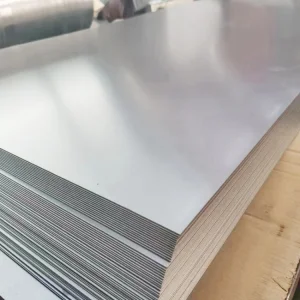
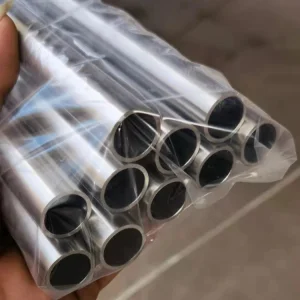
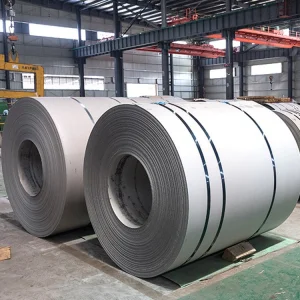
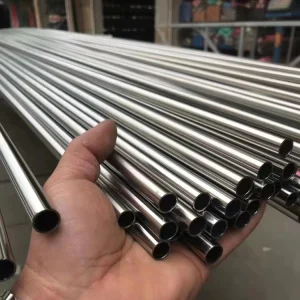
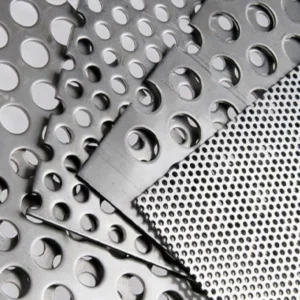
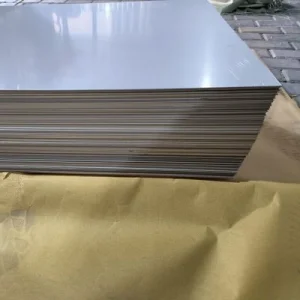
1. Executive Summary & Metallurgical Foundations of Material 304
Material 304 stainless steel—classified under UNS S30400, EN 1.4301, and Japanese SUS304 standards—represents the global backbone of austenitic stainless steel production. Accounting for over 50% of the world’s total stainless steel output, its ubiquitous commercial presence stems from an optimal metallurgical balance of corrosion resistance, mechanical strength, deep-drawing formability, and weldability.
At the atomic level, Material 304 features a face-centered cubic (FCC) crystal structure, stabilized at room temperature by the inclusion of nickel. This austenitic matrix prevents ferromagnetic phase transformation in the fully annealed state and delivers exceptional cryogenic toughness down to liquid nitrogen temperatures (-196°C).
Passive Layer Physics (Cr₂O₃)
The core mechanism behind 304’s rust resistance is the spontaneous formation of a nanometer-thin (1-3 nm) passive chromium-oxide oxide film on its surface upon exposure to atmospheric oxygen. This passive film is chemically inert, self-healing, and impermeable to water and ionic oxygen. If mechanically scratched or damaged, the chromium within the matrix immediately reacts with surrounding oxygen to re-passivate the surface.
Grade Variations: 304 vs. 304L vs. 304H
Understanding subtype chemistry is critical for engineering compliance:
- Standard 304 (UNS S30400): Carbon content up to 0.07%. Standard choice for deep drawing, stamping, and architectural fabrication.
- Low-Carbon 304L (UNS S30403): Carbon restricted to ≤ 0.030%. Eliminates chromium carbide precipitation during welding, preventing intergranular corrosion in heavy-gauge welded structures without post-weld annealing.
- High-Carbon 304H (UNS S30409): Carbon controlled between 0.04% - 0.10%. Enhances elevated-temperature creep strength for boilers, pressure vessels, and refinery piping operating above 500°C.
2. China's Factory Supply Chain Resilience & Production Efficiency
China accounts for over 60% of global crude stainless steel melt capacity. The structural advantage of Chinese material 304 factories extends far beyond low labor costs; it is anchored in deep vertical supply chain integration, state-of-the-art cold reduction metallurgy, and concentrated industrial clusters.
Direct Mill Sourcing & NPI Logistics
Leading Chinese stainless steel mills (such as Tsingshan Holding Group, TISCO, Baosteel, and POSCO China) have revolutionized the alloy cost structure through Nickel Pig Iron (NPI) processing and integrated rotary kiln-electric furnace (RKEF) technology. By feeding molten NPI directly into stainless steel converters, Chinese foundries eliminate ingot re-melting energy penalties, yielding an unbeatable baseline alloy cost advantage passed directly to B2B buyers.
Wuxi & Foshan Ecosystem Superiority
Concentrated in Wuxi (Jiangsu Province) and Foshan (Guangdong Province), China's stainless steel processing hubs feature high-density ecosystems. Within a 20-kilometer radius, factories have seamless access to multi-roll Sendzimir cold mills, continuous bright annealing lines, precision coil slitting centers, laser cutting facilities, and tube-welding workshops, drastically cutting internal freight costs and production turnaround times.
High-Speed Continuous Processing
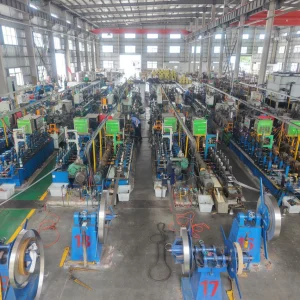
Modern Chinese cold-rolling operations utilize 20-high heavy-duty cold mills paired with real-time automatic gauge control (AGC) systems using X-ray thickness measurement. This guarantees precision thickness tolerances within ±0.01 mm across coil lengths of thousands of meters. High-frequency TIG, plasma, and laser welding lines operate continuously at speeds exceeding 20 meters per minute for tube production.
3. Global Commercial & Industrial Landscape
Material 304 serves as a universal commodity across international markets, but cross-border procurement requires strict alignment between regional standard nomenclature and international material specifications.
| Standard Organization | Specification Code | Material Designation | Equivalent Grade | Primary Regional Market |
|---|---|---|---|---|
| ASTM / ASME (USA) | ASTM A240 / A240M, A312, A269 | UNS S30400 / S30403 (304L) | AISI 304 / 304L | North America, Latin America, Middle East |
| EN / DIN (Europe) | EN 10088-2, EN 10217-7 | 1.4301 / 1.4306 (Low Carbon) | X5CrNi18-10 | European Union, UK, Turkey |
| JIS (Japan) | JIS G4304, JIS G4305, JIS G3459 | SUS304 / SUS304L | SUS 304 | Japan, Southeast Asia, East Asia |
| GB (China) | GB/T 24511, GB/T 3280, GB/T 12771 | 06Cr19Ni10 / 022Cr19Ni10 | S30408 / S30403 | China, Belt & Road Logistics Corridor |
Global procurement dynamics currently favor direct containerized sourcing from Chinese factory suppliers due to short production lead times (typically 10 to 20 days for standardized coil/sheet orders) and flexible commercial terms (FOB, CIF, CFR, DDP). Major export destinations include Germany, Italy, USA, UAE, Vietnam, Brazil, and Indonesia.
4. Material 304 Factory Pricelist & Cost Breakdown
Pricing for Material 304 stainless steel is calculated on a raw-material alloy surcharge model plus cold-rolling/processing add-ons. The primary cost drivers are London Metal Exchange (LME) nickel cash prices and ferrochrome market indices. Below is an indicative factory pricing benchmark matrix (FOB Chinese Main Port, e.g., Shanghai / Ningbo) across standard product forms:
| Product Form | Surface Finish | Thickness / Dimension Range | Standard Specification | Indicative Price Range (USD / Ton) |
|---|---|---|---|---|
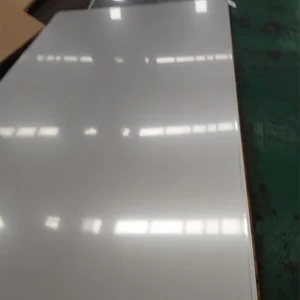
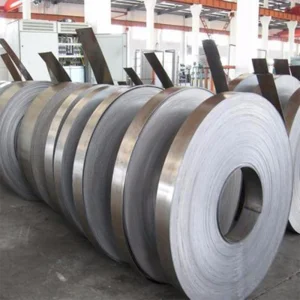
| Cold Rolled Sheet / Coil | 2B (Smooth, Matte) | 0.3 mm – 3.0 mm | ASTM A240 / EN 10088-2 | $1,850 – $2,250 |
| Cold Rolled Sheet / Coil | BA (Bright Annealed) / 8K Mirror | 0.4 mm – 2.0 mm | ASTM A240 / JIS G4305 | $2,000 – $2,450 |
| Decorative Brushed Sheet | No.4 / Hairline (HL) + PVC Film | 0.5 mm – 3.0 mm | ASTM A240 | $1,920 – $2,350 |
| Hot Rolled Plate / Coil | No.1 (Pickled, Rough) | 3.0 mm – 25.0 mm | ASTM A240 / EN 10088-2 | $1,750 – $2,100 |
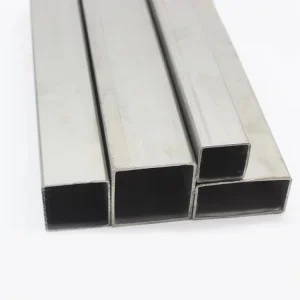
| Industrial Welded Pipe | Mill Finish / Annealed & Pickled | OD 12mm – 508mm (Sch 10S-40S) | ASTM A312 / EN 10217-7 | $2,100 – $2,600 |
| Sanitary Seamless Pipe | Descaled / Polished Ra < 0.4 μm | OD 6mm – 219mm | ASTM A269 / DIN 11850 | $2,800 – $3,400 |
Factors Influencing Real-Time Quotes
- Raw Alloy Fluctuations: Every $1,000/ton movement in LME Nickel shifts 304 factory prices by ~$80-$90/ton.
- Surface Polishing Premiums: Upgrading from standard 2B finish to 8K Mirror or PVD Color Coating adds $150-$350/ton.
- Width & Gauge Surcharges: Non-standard widths (>1500mm or <1000mm) and ultra-thin precision gauges (<0.4mm) incur cold-rolling pass surcharges.
Volume Discount Structure
Chinese factory suppliers usually operate on tiered quantity pricing:
- LCL / Sample Orders (< 5 Tons): Base pricelist + handling surcharge.
- Full Container Load (20-27 Tons FCL): Standard wholesale tier price.
- Contract / High Volume (> 100 Tons): Tier-1 mill direct discount (1.5% - 3.5% below standard pricelist).
5. Localized Application Scenarios & Engineering Use-Cases
Material 304 stainless steel is utilized across diverse industrial sectors. Matching surface finish, temper, and heat treatment to local operating environments is paramount for performance longevity.
Food, Beverage & Dairy Processing
Requirement: Non-toxic, acid-resistant, easily sanitized surfaces.
Application: Storage tanks, pasteurization tubing, conveyor frames, milk transportation tankers. Cold rolled 304 sheets with 2B finish or electropolished internal pipe surfaces prevent bacterial bio-film adhesion, satisfying FDA and 3-A Sanitary Standards.
Architecture & Interior Infrastructure
Requirement: High aesthetic appeal, atmospheric corrosion resistance, low maintenance.
Application: Elevator cabins, exterior curtain walls, handrails, interior column cladding. Satin No.4 finish, Hairline (HL), anti-fingerprint (AFP) coatings, and PVD titanium-gold tinted sheets are widely deployed in commercial high-rises.
Chemical, Petrochemical & Water Fluid Piping
Requirement: Fluid tightness, resistance to mild organic acids, pressure containment.
Application: Urban municipal water distribution, HVAC chilled water lines, low-pressure chemical transport. Thin-walled welded 304 tubes with press-fit connection systems eliminate field welding costs and deliver 50+ year maintenance-free lifespans.
6. Technical Roadmap & Future Outlook (2025–2035)
The Chinese stainless steel manufacturing sector is undergoing rapid technological transformation driven by green decarbonization mandates, intelligent digital quality monitoring, and advanced surface engineering.
Decarbonization & Green Steel Metallurgy
By replacing coal-fired gas producers with Electric Arc Furnaces (EAF) powered by green hydrogen and renewable power grids, Chinese tier-1 mills are slashing Scope 1 and Scope 2 embedded carbon emissions by up to 45%. This ensures full alignment with the European Union's Carbon Border Adjustment Mechanism (CBAM) regulations.
Nanoscale Surface Engineering
Next-generation 304 production lines integrate hydrophobic nano-passivation coatings, plasma-assisted physical vapor deposition (PVD), and laser surface texturing. These advancements double scratch resistance, impart self-cleaning properties, and eliminate fingerprint smudging in decorative and architectural applications.
7. Localization Support & Quality Compliance Safeguards
To eliminate cross-border risks for international procurement officers, reputable Chinese factories implement comprehensive testing and compliance protocols before dispatch.
Mill Test Certificates (EN 10204 3.1)
Every shipment is accompanied by an original EN 10204 3.1 MTC specifying heat numbers, exact ladle chemical analysis (Cr, Ni, C, Mn, Si, P, S), mechanical yield/tensile test data, hardness testing, and intergranular corrosion test results (ASTM A262 Practice E).
Non-Destructive Testing (NDT)
Industrial pipe and tube production lines feature inline Eddy Current Testing (ET) according to ASTM E426 and Hydrostatic Testing up to 20 MPa. PMI (Positive Material Identification) handheld XRF spectrographic analysis is performed on 100% of finished coils and sheets prior to packaging.
Seaworthy Export Packaging
Finished stainless products are wrapped in anti-rust VCI paper, encased in heavy-duty polyethylene waterproof film, strapped with steel banding, and secured on fumigated wooden skids or inside steel-framed cases with corner protectors to guarantee zero ocean freight corrosion.
8. Frequently Asked Questions (FAQ) for Global Buyers
Additional Specialty Stainless Steel & Duplex Solutions
Explore high-grade super duplex plates, decorative pipes, structural tubing, and precision strip coils.