
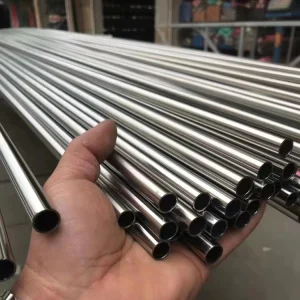
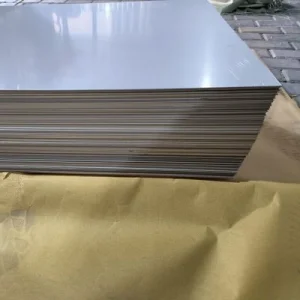
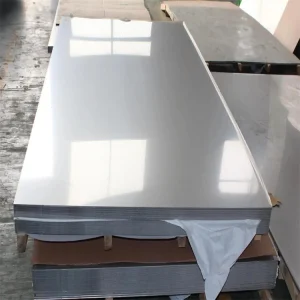
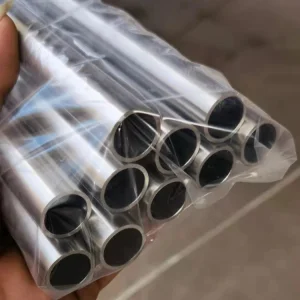
Featured High-Precision Stainless Steel Products
Explore our factory-direct stainless steel pipes, sheets, plates, and precision coils manufactured under ISO 9001 and ASTM A240 standards.
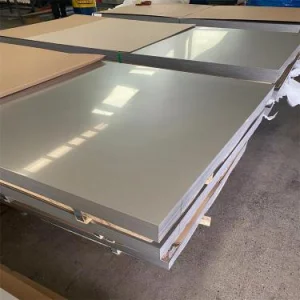
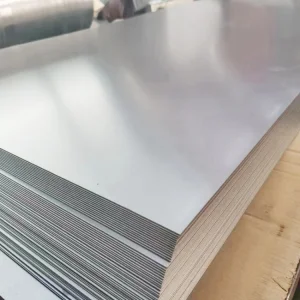
Metallurgical Fundamentals: The Engineering Science of High Cu Stainless Steel Coils
Copper ($Cu$) is one of the most transformative alloying additions in modern stainless steel metallurgy. Integrating 1.0% to 3.5% copper into austenitic or ferritic matrices drastically modifies deformation physics, corrosion kinetics, and biological surface activity.
Stacking Fault Energy (SFE) & Deep Drawing
Adding copper elevates the Stacking Fault Energy (SFE) of the austenitic phase ($\gamma$). Higher SFE suppresses strain-induced martensitic transformation ($\gamma \to \alpha'$), drastically reducing the work-hardening exponent ($n$-value). As a result, High Cu Stainless Steel Coils exhibit soft mechanical properties, superior plastic strain ratio ($r$-value), and high Limiting Drawing Ratio (LDR), allowing deep-drawn parts to be stamped without intermediate annealing or sidewall cracking.
Continuous Contact Antimicrobial Mechanism
Upon exposure to ambient humidity or liquid contact, microscopic copper-rich precipitates ($\epsilon\text{-Cu}$) within the stainless matrix release trace cupric ions ($Cu^{2+}$). These ions penetrate bacterial cell walls via contact killing mechanisms, generating reactive oxygen species (ROS) that disrupt bacterial metabolic pathways. Certified under ISO 22196 and JIS Z 2801, High Cu stainless surfaces eliminate 99.9% of *Escherichia coli* and *Staphylococcus aureus* within 2 to 4 hours.
Non-Magnetic Stabilization Post-Cold Work
Standard austenitic stainless steels like AISI 304 tend to transform into ferromagnetic martensite during severe cold deformation (such as roll forming or deep drawing). Copper acts as a powerful austenite stabilizer. High Cu grades (e.g., SUS304Cu, 201 Cu) maintain extremely low magnetic permeability ($\mu \le 1.02$) even after 40%+ cold work reductions, making them essential for precision electronics, MRI room shielding, and non-magnetic hardware.
Global Commercial & Industrial Landscape
The international demand for High Cu stainless steel coil stock is accelerating across key economic regions, driven by strict hygiene protocols, raw material inflation hedging, and complex shape stamping needs.
North America & Europe: Substitution & High Performance
In western markets, high nickel prices have prompted procurement engineering teams to shift toward lower-nickel, copper-enhanced alloys (such as 201 Cu, J4, J1, and 304Cu). European sanitaryware manufacturers and North American commercial kitchen fabricators rely heavily on imported High Cu coils to produce intricate multi-stage drawn sinks, thermos containers, and decorative architectural panels with minimal tool wear and zero orange-peel surface defects.
Asia-Pacific & Middle East: Rapid Infrastructure & Appliance Growth
Across Southeast Asia, India, and the GCC region, rapid urban development and rising demand for home appliances have expanded the market for precision strip and coil. High Cu stainless steel provides the perfect economic balance: offering high corrosion resistance in humid, coastal environments while keeping material costs predictable through optimized nickel-manganese-copper formulations.
China Factory Efficiency & Wuxi Industrial Hub Advantages
As China's premier stainless steel distribution and processing capital, Wuxi integrates tier-1 raw material refining, state-of-the-art cold rolling equipment, and streamlined export logistics.
Direct Mill Feedstock Supply
We source primary master coils directly from giant steelmakers including Tsingshan, TISCO, Baosteel, and POSCO. This ensures 100% heat-traceable chemistry, clean melt metallurgy, and stable copper distribution.
Sendzimir 20-High Rolling Precision
Equipped with 20-high cold rolling mills and Automatic Gauge Control (AGC) systems, our facility processes precision coils down to 0.1mm thickness with super-tight tolerances of $\pm 0.005\text{ mm}$.
Hydrogen Bright Annealing Lines
Our vertical Bright Annealing Lines (BAL) operate under a 100% pure hydrogen protective atmosphere. This preserves surface brightness (BA finish), eliminates scale formation, and optimizes ductility.
Integrated Slitting & Processing
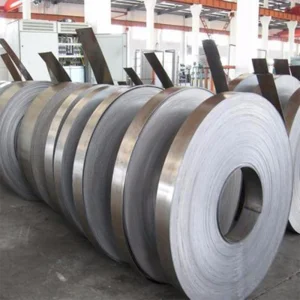
In-house high-speed precision slitting lines prepare narrow strip coils (width down to 10mm) with burr-free edges, paper interleaving, or protective PE film application for direct automated stamping lines.
Localized Application Scenarios & Engineering Solutions
High Cu stainless steel coil products serve diverse sectors where mechanical workability, chemical stability, and surface hygiene intersect.
1. Deep-Drawn Kitchenware & Sanitary Sinks
In double-bowl kitchen sinks, deep vacuum flasks, and pressure cooker bodies, regular 304 often cracks at tight corner radii. SUS304Cu and 201 Cu Coils provide extraordinary drawability (Erichsen cup test values reaching 11.5–12.0 mm), eliminating wall thinning and reducing die wear by up to 35%.
2. Hospital Walls, Elevators & Hygiene Touchpoints
Due to inherent antibacterial properties, copper-bearing stainless steel sheets are increasingly specified for hospital operating theater wall cladding, public elevator push plates, food preparation tables, and medical instrument trays. They offer lifelong antibacterial protection that cannot be washed away or worn off like surface coatings.
3. Heat Exchangers & Chemical Acid Service
Copper additions significantly improve corrosion resistance in reducing acid media—specifically stagnant water environments, diluted sulfuric acid ($H_2SO_4$), and phosphoric acid solutions. High Cu coils (including 316 Cu) are widely fabricated into plate heat exchanger fins, marine condenser tubing, and industrial chemical piping.
Technical Evaluation & Standard Comparison Matrix
Compare mechanical, chemical, and physical parameters across standard vs. copper-bearing stainless steel grades to match your precise engineering requirements.
| Steel Grade | Copper (Cu) % | Nickel (Ni) % | Tensile Strength (MPa) | Elongation A50 (%) | Erichsen Cup Value (mm) | Primary Industrial Benefit |
|---|---|---|---|---|---|---|
| 201 Cu (High Cu Grade) | 1.0 - 2.0% | 1.0 - 3.5% | ≥ 520 | ≥ 48% | 10.5 - 11.2 | Cost-effective deep drawing, indoor decorative, household items |
| Standard 201 | ≤ 0.5% | 0.8 - 1.5% | ≥ 650 | ≥ 35% | 8.5 - 9.5 | High strength, rigid structures, flat stampings |
| SUS304Cu / 304 High Cu | 1.5 - 3.5% | 8.0 - 10.0% | ≥ 480 | ≥ 55% | 11.8 - 12.5 | Extreme deep drawing, zero springback, non-magnetic post-work |
| Standard AISI 304 | ≤ 0.75% | 8.0 - 10.5% | ≥ 520 | ≥ 40% | 10.0 - 10.8 | General food-grade equipment, architecture, fluid piping |
| 316L Cu (Acid Resistant) | 1.0 - 2.5% | 10.0 - 14.0% | ≥ 480 | ≥ 50% | 11.2 - 11.8 | Enhanced sulfuric acid & chloride pitting corrosion resistance |
Note: All material orders are supplied with official Mill Test Certificates (MTC) according to EN 10204 3.1 / 3.2, including PMI chemical breakdown, tensile/elongation raw data, and hardness tests.
Future Technology Roadmap & Industry Trends (2025–2035)
The global stainless steel mill landscape is evolving toward lower carbon footprints, alloy optimization, and smart automated precision processing.
Decarbonization & Green Steel EAF Melting
Leading Chinese factories are transitioning to Electric Arc Furnace (EAF) recycling routes powered by green electricity. By utilizing high-purity copper-bearing scrap steel, carbon emissions per ton of cold-rolled coil are projected to fall by over 40% by 2030.
Ultra-Thin Foil Coils (<0.05mm)
Driven by hydrogen fuel cell bipolar plates, consumer electronics, and lithium battery shielding, cold rolling mills are advancing precision limits. High Cu alloys offer the extreme malleability necessary to roll flawless foil without micro-tears.
Standardization of Antimicrobial Surface Grades
As global healthcare and food processing standards tighten, antibacterial certification for building touchpoints and catering equipment is rapidly becoming mandatory. High Cu stainless steel is established as the premier sustainable alternative to chemical coating treatments.
Frequently Asked Questions: Global Procurement & Technical Insights
Expert answers to common engineering, ordering, and metallurgical questions from global buyers.
The main advantage is superior deep drawing capacity paired with lower yield strength and reduced work-hardening rates. Copper addition lowers the Stacking Fault Energy (SFE), enabling complex stamping shapes without cracking or annealing. Furthermore, it retains non-magnetic characteristics post-stamping and imparts long-lasting antibacterial properties.
Standard 201 is notorious for being hard, brittle, and difficult to stamp, often causing severe die wear. 201 Cu incorporates 1.0% to 2.0% copper, which softens the crystal lattice, increases elongation to over 48%, and dramatically improves deep drawing performance—making it an economical alternative to 304 for deep drawn shapes.
When alloyed correctly (typically 1.0%–3.5%), copper maintains excellent weldability under TIG/MIG protocols while improving resistance to reducing environments like stagnant water and dilute sulfuric acid. For aggressive chloride service, high Cu can be combined with molybdenum (such as 316L Cu) to maintain high pitting resistance.
We supply cold-rolled coils from 0.10mm to 3.0mm thickness, and widths from 10mm (slit strip) up to 1500mm. Available finishes include 2B, BA (Bright Annealed), No.4 Satin, Hairline, 8K Mirror, and embossed patterns. Gauge tolerances are controlled within ±0.005mm.
Coils are protected with eye-to-sky or eye-to-wall seaworthy packing: inner waterproof paper, plastic protective film, metallic edge protectors, galvanized steel outer wrapping, and heavy-duty radial/circumferential steel strapping on wooden pallets or skids.
Complete Stainless Steel Portfolio & Mill Products
Browse additional high-demand stainless steel product categories available directly from our manufacturing stock.
Request Factory Quotes & Engineering Assistance
Contact our metallurgical engineering team today for technical data sheets, custom slitting options, sample mill test reports, and direct factory pricing on High Cu stainless steel coils.
Connect with Sales Engineers →