
Precision Stainless Steel Mill Offerings (Part I)
Direct-from-factory rolled plates, structural pipes, and high-corrosion duplex solutions optimized for global engineering demands.
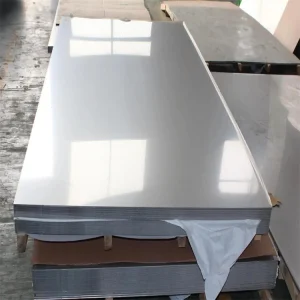
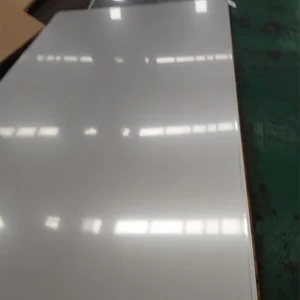
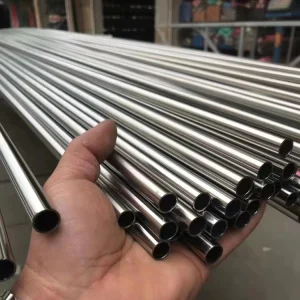


Global B2B Benchmark in Austenitic Stainless Metallurgy
In the contemporary industrial supply ecosystem, 304 Stainless Steel (UNS S30400 / EN 1.4301 / SUS304) serves as the core foundation for global engineering applications. From chemical processing networks and sanitary food automation to architectural structural frames, sourcing high-grade 304 alloy products from top-tier Chinese manufacturers ensures an optimal convergence of mechanical performance, cost efficiency, and supply chain scalability.
1. Deep Metallurgical Analysis: SUS304 / EN 1.4301 Phase Dynamics
304 Stainless Steel is a non-magnetic austenitic alloy stabilized by a face-centered cubic (FCC) crystal structure. The mechanical reliability and anti-corrosive characteristics of this material stem directly from the chemical balance maintained during primary refining (AOD/VOD processes). Understanding this balance allows B2B procurement engineers to specify precise material conditions that eliminate risk of premature structural failure or pitting corrosion in field operations.
The Self-Healing Chromium Oxide Mechanism
The primary mechanism underlying 304 stainless steel's corrosion resistance is the spontaneous formation of an ultra-thin, nanometer-scale passive film composed predominantly of Chromium Oxide ($Cr_2O_3$). When exposed to ambient oxygen or oxygenated liquids, chromium at the alloy surface reacts to establish this barrier layer. If damaged mechanically (e.g., through abrasion or cutting), the passive layer self-heals instantaneously, provided sufficient ambient oxygen remains available.
However, when operating in low-oxygen, high-chloride environments (such as stagnant marine waters or un-rinsed chemical lines), localized breakdown of the passive film can trigger pitting and crevice corrosion. For these specific high-chloride service parameters, lower-carbon variants (SUS304L) or Molybdenum-alloyed grades (SUS316L / Super Duplex 2507) should be strategically evaluated.
Chemical Composition Specification Thresholds
Leading Chinese manufacturers adhere strictly to standard international chemical limits, while enforcing elevated internal quality control bands to maintain batch-to-batch consistency:
| Element Symbol | ASTM A240 Standard Range (%) | EN 10088-2 Standard Range (%) | High-Precision Manufacturer Target (%) | Metallurgical Role & Impact |
|---|---|---|---|---|
| Chromium (Cr) | 17.50 – 19.50 | 17.50 – 19.50 | 18.10 – 18.50 | Primary driver of passivation & oxidation resistance. |
| Nickel (Ni) | 8.00 – 10.50 | 8.00 – 10.50 | 8.05 – 8.25 | Stabilizes the austenitic structure; improves ductility & toughness. |
| Carbon (C) | ≤ 0.070 | ≤ 0.070 | ≤ 0.045 (or ≤ 0.030 for 304L) | Low carbon prevents chromium carbide precipitation during welding. |
| Manganese (Mn) | ≤ 2.00 | ≤ 2.00 | 1.10 – 1.40 | Enhances hot-workability and deoxidation during melting. |
| Silicon (Si) | ≤ 0.75 | ≤ 1.00 | 0.40 – 0.60 | Deoxidizing agent; enhances oxidation resistance at elevated temperatures. |
| Phosphorus (P) | ≤ 0.045 | ≤ 0.045 | ≤ 0.028 | Impurities tightly controlled to prevent hot cracking during welding. |
| Sulfur (S) | ≤ 0.030 | ≤ 0.015 | ≤ 0.005 | Ultra-low sulfur minimizes non-metallic inclusions, maximizing pitting resistance. |
2. Global Commercial & Industrial Market Dynamics
The global consumption of 304 stainless steel continues on an upward growth trajectory, driven by industrialization across emerging markets, structural upgrading in advanced manufacturing regions, and expanding strict sanitary standards in global food and pharmaceutical production.
North America
Driven by energy infrastructure modernization, commercial food service machinery replacements, and chemical processing plant maintenance. Demand focuses heavily on certified ASTM A240 sheets and ASME-compliant pressure tubing with full MTC origin documentation.
European Union
Strong emphasis on compliance with EN 10088-2 standards, REACH/RoHS environmental declarations, and carbon footprint accountability. High demand for cold-rolled 2B and BA finish sheets used in high-end machinery and architectural facades.
Asia-Pacific
Rapid expansion in urban infrastructure, HVAC systems, mega-desalination facilities, and automotive manufacturing. Cost-competitiveness combined with high structural reliability makes Chinese 304 stainless steel the leading choice across regional supply chains.
Middle East & Africa
Extensive demand across oil & gas downstream auxiliary piping, architectural cladding, and industrial water storage tanks. High ambient temperatures require stable metallurgical supply capable of resisting thermal cycling.
Mitigating B2B Procurement Risk Factors
Global buyers frequently face challenges regarding raw material price volatility (driven by Nickel pig iron and Moly market shifts), extended ocean freight logistics, and inconsistent mill surface finishes. Partnering with established Chinese manufacturers operating fully integrated processing ecosystems provides direct mitigation against these commercial risks:
- Financial Hedging & Price Stability: Direct integration with primary smelting mills enables forward pricing contracts that insulate foreign buyers from short-term nickel market spikes.
- Buffer Stock Management: Strategic warehousing in industrial hubs like Wuxi and Foshan guarantees rapid dispatch capability for standard sheet, pipe, and coil sizes.
- Quality Non-Conformance Guarantees: Third-party pre-shipment inspections (SGS, TÜV, Bureau Veritas) backed by formal quality warranties ensure 100% compliance prior to vessel departure.
3. China Factory Supply Chain Resilience & Manufacturing Efficiency
China's global leadership in 304 stainless steel manufacturing is built upon deep industrial clustering, advanced metallurgical infrastructure, and unmatched logistical integration. Cities like Wuxi (Jiangsu Province) and Foshan (Guangdong Province) function as world-class processing centers housing complete supply ecosystems within tight geographical radii.
End-to-End Vertical Processing Capability
A primary competitive advantage of direct Chinese factory sourcing lies in comprehensive value-added processing performed under a single Quality Management System (QMS). Rather than sourcing raw coil from a mill and contracting separate facilities for slitting, surface finishing, and pipe welding, top-tier Chinese suppliers execute all operational steps in-house:
| Processing Stage | Machinery & Technology Applied | Engineering Capability Range | Quality Control Checkpoint |
|---|---|---|---|
| Primary Slitting & Flattening | High-precision automatic coil slitting lines | Thickness: 0.3mm – 12.0mm; Width: 10mm – 2000mm | Laser edge alignment & width tolerance measurement |
| Surface Mechanical Treatment | Multi-head automated grinding & polishing lines | 2B, BA, No.4 Satin, Hairline (HL), 8K Mirror, Embossed | Glossmeter reflection testing & surface roughness ($Ra$) check |
| Tube & Pipe Fabrication | TIG, Plasma, and High-Frequency Welded Lines | OD: 6mm – 1219mm; Wall Thickness: 0.5mm – 30mm | Inline Eddy Current testing & Hydrostatic pressure testing |
| Custom Sheet Cutting | Fiber Laser Cutting & Waterjet Machining | Bed size up to 12m x 3m; Tolerances to ±0.1mm | Coordinate measuring machine (CMM) dimensional verification |
4. Localized Engineering Applications & Industry Scenarios
Because 304 stainless steel offers a balanced blend of mechanical formability, weldability, and corrosion resistance, its application scenarios span virtually every modern industry sector:
Food, Dairy & Beverage
Sanitary piping networks, milk storage silos, brewery fermentation vessels, and commercial kitchen surfaces require non-porous materials that resist organic acids and sanitizing chemicals. 304 cold-rolled sheets polished to a smooth No.4 or BA finish prevent bacterial entrapment and permit thorough Clean-in-Place (CIP) sterilization cycles.
Elevators & Building Facades
From high-rise curtain walls and structural canopies to elevator cab panels and escalator trims, decorative 304 sheets treated with PVD color coatings, anti-fingerprint (AFP) films, or 8K mirror polishing provide aesthetic elegance alongside long-term resistance to atmospheric weathering.
Industrial Piping & Vessels
304/304L welded and seamless pipes are widely deployed in industrial water supply, chemical transport lines, heat exchangers, and HVAC cooling loops. Lower carbon content in 304L prevents heat-affected zone (HAZ) sensitization, maintaining full structural integrity along field weld seams.
Exhaust & Structural Frameworks
In transportation engineering, 304 stainless steel is specified for vehicle exhaust manifolds, catalytic converter housings, structural bus frames, and freight container components. Its elevated temperature oxidation resistance protects structural integrity under severe thermal loads.
5. Technology Roadmap & Future Manufacturing Outlook
The Chinese stainless steel manufacturing sector is undergoing a massive transformation driven by Industry 4.0 automation, digital quality tracking, and green decarbonization initiatives:
AI-Powered Optical Surface Defect Detection
High-speed online camera arrays coupled with deep-learning vision models continuously scan cold-rolled strip surfaces at speeds exceeding 300 m/min. Pinholes, scratches, and inclusion defects are flagged automatically in real-time, preventing non-conforming coils from reaching downstream processing lines.
Laser-Arc Hybrid Pipe Welding
Transitioning from traditional TIG welding to combined Fiber Laser + Plasma hybrid welding allows deep penetration with significantly reduced heat input. This eliminates grain coarsening in the weld seam, improving tensile ductility and corrosion resistance along the longitudinal seam of industrial pipes.
EAF Hydrogen-Enriched Steelmaking
Leading Chinese steel mills are rapidly replacing traditional blast furnaces with high-capacity Electric Arc Furnaces (EAF) powered by green energy sources and direct reduced iron (DRI) processes. This transition reduces the embodied carbon footprint ($CO_2e$ per ton) of exported 304 stainless products by up to 45%.
Ultra-Fine Grain Refining
Controlled micro-additions of Titanium, Niobium, or Nitrogen coupled with thermo-mechanical controlled processing (TMCP) yield ultra-fine grain structures. This boosts mechanical yield strength without compromising cryogenic impact toughness or deep-drawing ductility.
6. Quality Assurance, Compliance Matrix & Testing Protocols
Strict quality assurance protocols are non-negotiable when exporting stainless steel for critical engineering applications. Reputable Chinese suppliers maintain accredited ISO 9001, ISO 14001, and ISO 45001 management systems, alongside specific product certifications required by international importing authorities.
Standard Compliance Cross-Reference Table
Ensuring cross-border project compliance requires mapping equivalent international material designations and standard specifications accurately:
| Standard Organization | Material Designation / Grade | Product Form Covered | Key Quality Certification |
|---|---|---|---|
| USA (ASTM / ASME) | UNS S30400 / AISI 304 / 304L | ASTM A240 (Plate/Sheet), ASTM A312 (Pipe) | ASME Section VIII Boiler Code Compliance |
| European Union (EN) | EN 1.4301 / EN 1.4307 (X5CrNi18-10) | EN 10088-2 (Sheet), EN 10217-7 (Welded Pipe) | CE Mark / PED 2014/68/EU Pressure Equipment |
| Japan (JIS) | SUS304 / SUS304L | JIS G4304 (Hot Rolled), JIS G4305 (Cold Rolled) | JIS Mark Factory Certification |
| International (ISO) | ISO 4301-304-00-I | ISO 9445 (Continuously cold-rolled stainless) | ISO 9001:2015 QMS Standard |
Mandatory Inspection & Non-Destructive Testing (NDT) Protocols
Prior to container loading or breakbulk dispatch, each mill lot undergoes rigorous physical, chemical, and non-destructive evaluations recorded in an official EN 10204 3.1 Material Test Certificate (MTC):
- Positive Material Identification (PMI): Handheld XRF spectrometry verifies elemental percentages (Cr, Ni, Mo, Mn) directly on finished goods.
- Intergranular Corrosion Test: Performed per ASTM A262 Practice E (Copper-Copper Sulfate-16% Sulfuric Acid) to confirm immunity to sensitization.
- Hydrostatic & Eddy Current Testing: 100% inline non-destructive testing of tubes and pipes guarantees leak-free performance under pressure.
- Mechanical Tensile & Hardness Testing: Destructive testing verifies Yield Strength ($R_{p0.2}$), Tensile Strength ($R_m$), Elongation ($A_5$), and Rockwell/Vickers hardness numbers.
Precision Stainless Steel Mill Offerings (Part II)
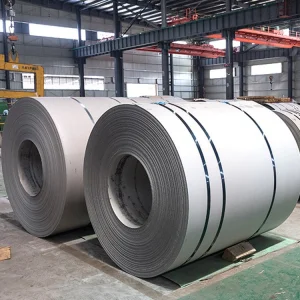
Explore custom processed cold-rolled sheets, industrial welded tubing, heavy-duty hot-rolled coils, and economical structural profiles.



Frequently Asked Questions by Global B2B Buyers
Expert engineering insights addressing common technical queries, grade selections, and procurement logistics for China-sourced 304 stainless steel products.
Partner with China's Premier Stainless Steel Manufacturing Network
Whether you require mill-standard 304 coils, precision-cut 304L cold-rolled sheets, industrial welded pipe lines, or high-corrosion super duplex plates, our engineering team provides comprehensive metallurgical technical support and factory-direct pricing guarantees.