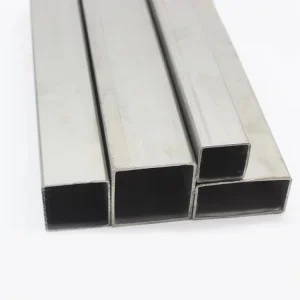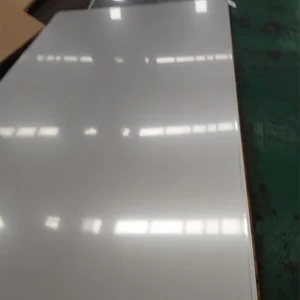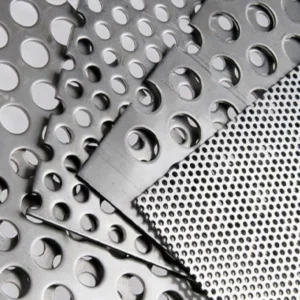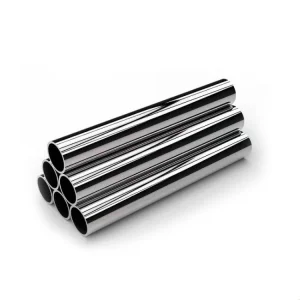
CE Certified Stainless Steel Tubing & Sheet Inventory
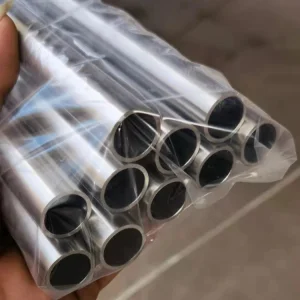
Explore our flagship CE-marked austenitic, ferritic, and duplex stainless steel products engineered for high-pressure fluid transfer, structural aesthetics, and aggressive chemical environments.
CE Certification Compliance & Localized European Support
Understanding the crucial distinction between the Pressure Equipment Directive (PED 2014/68/EU) and Construction Products Regulation (CPR 305/2011) for international steel pipe procurement.
PED 2014/68/EU Module H / H1
Mandatory for pressure piping operating under fluid pressures above 0.5 bar. Our manufacturing facility undergoes continuous Notified Body surveillance to guarantee full traceability, non-destructive testing (NDT), and hydrostatic pressure verification according to EN 10217-7 standard specifications.
CPR 305/2011 (EN 1090-1 / EN 10219)
Designated for structural stainless steel hollow sections used in architectural engineering, bridges, and infrastructure. Factory Production Control (FPC) protocols ensure strict execution class compliance (EXC1 through EXC3) with validated mechanical yield parameters.
EN 10204 3.1 & 3.2 Traceability
Every export consignment is accompanied by Mill Test Certificates (MTC) detailing complete heat chemistry (PMI testing), tensile strength, elongation, Charpy V-notch impact values, and grain size analysis certified by independent QA teams or third-party inspection (SGS, TÜV, BV).
Comprehensive QA Compliance and Local Technical Alignment
For engineering contractors and stockists importing stainless steel tubular products into EU markets or participating in municipal tenders, CE marking is not merely a stamp—it represents a legally binding guarantee of material integrity. When procuring stainless steel pipes (austenitic grades 304/304L, 316/316L, ferritic 430, or super duplex 2205/2507), structural engineering buyers must align material specs with EN ISO 1127 tolerances and ISO 3651-2 corrosion testing standards.
Stainless Steel Grade Matrix & Chemical Performance
Comparative metallurgical evaluation detailing alloy composition, Pitting Resistance Equivalent Number (PREN), yield strength, and temperature thresholds across key industrial grades.
| Grade (UNS / EN) | Chromium (Cr %) | Nickel (Ni %) | Molybdenum (Mo %) | PREN Rating | Yield Strength (Rp0.2 MPa) | Max Temp (°C) | Primary Industrial Intent |
|---|---|---|---|---|---|---|---|
| AISI 201 (S20100) | 16.0 - 18.0 | 1.0 - 3.5 | - (Mn 5.5-7.5) | ~ 17.5 | ≥ 275 | 300 | Indoor decorative, structural architectural tubing, cost-sensitive frames |
| AISI 304 (S30400 / 1.4301) | 17.5 - 19.5 | 8.0 - 10.5 | - | ~ 19.0 | ≥ 205 | 870 | Food processing, beverage pipelines, general chemical fluid transfer |
| AISI 304L (S30403 / 1.4307) | 17.5 - 19.5 | 8.0 - 10.5 | - (Low Carbon) | ~ 19.0 | ≥ 180 | 800 | Heavy-wall welded process piping, intergranular corrosion protection |
| AISI 316 (S31600 / 1.4401) | 16.5 - 18.5 | 10.0 - 13.0 | 2.0 - 2.5 | ~ 23.5 | ≥ 220 | 870 | Marine fittings, pharmaceutical lines, moderate chloride exposure |
| AISI 316L (S31603 / 1.4404) | 16.5 - 18.5 | 10.0 - 13.0 | 2.0 - 2.5 | ~ 23.5 | ≥ 200 | 800 | Offshore oil & gas, chemical reactors, high-purity fluid systems |
| Duplex 2205 (S31803 / 1.4462) | 21.0 - 23.0 | 4.5 - 6.5 | 2.5 - 3.5 | ≥ 34.0 | ≥ 450 | 300 | Desalination, high-chloride process lines, stress-corrosion cracking risk |
| Super Duplex 2507 (S32750 / 1.4410) | 24.0 - 26.0 | 6.0 - 8.0 | 3.0 - 4.5 | ≥ 42.0 | ≥ 550 | 250 | Subsea oil extraction, flue-gas cleaning, extreme chemical acids |
Calculated Corrosion Resistance: The Science of PREN
The Pitting Resistance Equivalent Number (PREN) provides engineers with a quantifiable formula to select optimal steel alloys for marine and industrial environments:
PREN = %Cr + 3.3(%Mo + 0.5 %W) + 16(%N)
While standard 304 stainless steel offers a baseline PREN of ~19 suitable for urban water supply, marine atmospheric applications and chemical processing require 316L (PREN ~23.5) or Duplex 2205 (PREN >34). Selecting the precise alloy prevents premature pitting corrosion and stress corrosion cracking (SCC), extending system lifespan from 5 years to 30+ years.
China Factory Supply Chain & Wuxi Manufacturing Superiority
Leveraging the raw material cluster, advanced continuous cold-rolling, and deep port logistics of Jiangsu Province to deliver unbeatable cost-performance ratios.
Direct Upstream Integration
Direct feedstock sourcing agreements with Tier-1 steel mills including Tsingshan, TISCO, POSCO, and Baosteel guarantee chemical purity, consistent wall thickness tolerances, and stable raw material pricing during volatile market fluctuations.
In-House Processing Precision
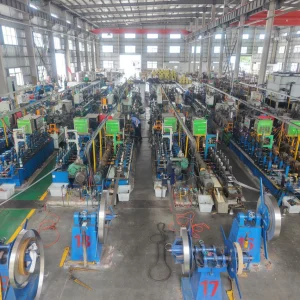
With 5 high-speed automatic flattening lines, 6 polishing lines (capable of 8K mirror, BA, No.4 hairline, and satin finishes), and over 80 automated TIG/Plasma welded pipe lines, we maintain complete quality control from coil to finished product.
Shanghai Port Logistics Hub
Located in Wuxi, Jiangsu—less than 150 km from Shanghai and Ningbo deepwater container ports. This strategic proximity reduces inland freight costs, shortens lead times, and supports FOB, CIF, DDP, and DAP international trade terms.
Global Enterprise Procurement & Risk Mitigation Framework
How multinational EPC buyers, steel stockists, and OEM manufacturers eliminate quality, legal, and delivery risks when ordering stainless steel products.
1. Supplier Audit & Technical Qualification
Navigating global supply chains requires robust vendor verification. Engineering procurement teams must mandate Factory Production Control (FPC) audits, ISO 9001:2015 Quality Management compliance, and ISO 14001:2015 Environmental System certifications before contract signing.
- Positive Material Identification (PMI): 100% XRF spectrographic verification of incoming master coils and outgoing pipes.
- Dimensional Tolerances: Strict adherence to ASTM A312 / ASTM A269 (OD ±0.75%, WT ±10%) or EN ISO 1127 D3/T3 precision levels.
- Destructive Mechanical Testing: Flattening, flaring, reverse bend, and Charpy impact tests performed on sample cutoffs per production heat.
2. Tariff, Currency & Incoterms Structuring
Global trade complexities demand transparent pricing mechanisms. We assist buyers with anti-dumping compliance strategies, customs tariff classification (HS Code 7306.40 / 7306.61 / 7219.33), and flexible hedging options against LME Nickel price volatility.
- Incoterms Transparency: Clear cost allocation for FOB Shanghai, CIF Rotterdam / Hamburg / Houston / Jebel Ali, or fully cleared DDP delivery.
- Seaworthy Heavy-Duty Export Packing: Plastic end caps, wooden case cradles, water-proof synthetic wrapping, and steel strapping to prevent saltwater corrosion in transit.
- Third-Party Inspection (TPI): Full coordination with SGS, TÜV Rheinland, Bureau Veritas, or Intertek prior to vessel loading.
Stainless Steel Industry Trends & Green Steel Transition
Emerging technological shifts shaping global steel pipe manufacturing, carbon footprint reduction, and high-performance exotic alloy adoption.
Decarbonization & EAF Production
Transitioning from blast-furnace routes to Electric Arc Furnace (EAF) recycling with high scrap metal ratios drastically cuts Scope 1 and Scope 2 carbon emissions, helping European buyers fulfill EU CBAM (Carbon Border Adjustment Mechanism) environmental disclosures.
AI-Driven Automated Weld Inspection
Integration of real-time machine vision and automated ultrasonic flaw detectors along continuous laser and TIG welding lines ensures zero-defect weld seams, eliminating human error during high-speed production runs.
Expansion of Super Duplex & Nickel Alloys
As green hydrogen, CCUS (Carbon Capture, Utilization, and Storage), and deep-sea desalination projects expand, demand is accelerating for high-PREN alloys (Duplex 2205, Super Duplex 2507, 310S high-temp) capable of withstanding extreme pressure and corrosive elements.
Localized Application Scenarios & Sector Benchmarks
Deploying tailored stainless steel pipe solutions across critical global industries, from ultra-pure pharmaceutical lines to offshore marine environments.
1. Food, Beverage & Pharmaceutical Piping
Material Mandate: SUS304, 304L, 316L (Internal roughness Ra < 0.4 μm / electro-polished).
Clean-in-Place (CIP) process lines require zero crevices or micro-roughness where bacteria can breed. Orbital TIG welding and bright annealed (BA) inner finishes prevent bio-film accumulation in dairy processing, brewery lines, and sterile pharmaceutical water-for-injection (WFI) systems.
2. Marine, Offshore & Desalination Facilities
Material Mandate: 316L, Duplex 2205, Super Duplex 2507 (EN 10217-7 / EN 10216-5).
Seawater intake systems and offshore platforms face continuous chloride pitting and splash-zone erosion. Utilizing 2205 duplex piping reduces wall thickness requirements by 30-40% compared to austenitic grades due to higher yield strength, yielding massive weight savings on marine structures.
3. High-Temperature Energy & Heat Exchangers
Material Mandate: AISI 310S, 321, 316Ti (ASTM A213 / ASTM A249).
Boiler tubes, superheaters, and heat exchangers operating continuously at temperatures exceeding 600°C up to 1100°C rely on chromium-nickel high-temperature alloys (such as 310S) to prevent oxidation, scaling, and thermal creep failure.
4. Architectural, Structural & Decorative Infrastructure
Material Mandate: Grade 201, 304, 316 (EN 10219 CPR Certified, 8K Mirror, Hairline, PVD Coated).
Modern airport terminals, luxury elevator interiors, curtain wall framing, and pedestrian bridges demand high mechanical rigidity paired with pristine aesthetics. Precision slitting, custom bending, and anti-fingerprint surface treatments deliver long-lasting architectural elegance.
Transparent Steel Pipe Pricelist & Cost Drivers
Understand how stainless steel tubing prices are calculated to optimize your purchasing timing and volume discounts.
Stainless steel pipe pricing is composed of four primary cost components: Base Metal Scrap/Ingot Price + Alloy Surcharge (LME Nickel, Ferro-Chromium, Molybdenum) + Mill Processing/Welding Fee + Quality/CE Certification Overhead. Below is an indicative market benchmark pricelist (FOB Shanghai, Port of Origin) for standard industrial sizes (1/2" to 12" SCH 10S/40S):
| Steel Grade | Outer Diameter (OD) Range | Wall Thickness (WT) | Surface Finish | Estimated Price (USD / Metric Ton) | MOQ Requirement |
|---|---|---|---|---|---|
| AISI 201 Cold Rolled | 12.7mm - 114.3mm | 0.4mm - 3.0mm | 2B / Hairline / Bright | $1,250 - $1,550 | 2 Metric Tons |
| AISI 304 Welded Pipe | 21.3mm - 323.9mm | 1.5mm - 8.0mm | Pickled & Annealed / Mill | $2,100 - $2,500 | 1 Metric Ton |
| AISI 316L Industrial Pipe | 21.3mm - 508.0mm | 2.0mm - 12.0mm | Acid Pickled / BA | $3,200 - $3,800 | 1 Metric Ton |
| Duplex 2205 Seamless/Welded | 25.4mm - 406.4mm | 2.0mm - 15.0mm | Solution Annealed | $4,200 - $5,100 | 500 Kg |
| 310S High Temp Pipe | 19.05mm - 219.1mm | 1.5mm - 10.0mm | Heat Treated / Descaled | $5,400 - $6,500 | 500 Kg |
*Note: Prices vary according to daily LME/SHFE raw material market rates, order volume, and specific third-party testing requirements. Request a direct quotation for precise firm pricing.
Frequently Asked Technical Questions
Direct technical answers to common questions asked by global procurement officers, QA engineers, and industrial distributors.
Specialty Plates, Coils & Structural Stainless Steel
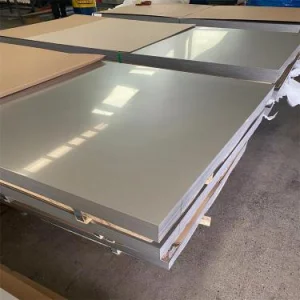
Complete your supply chain requirements with direct mill pricing on cold rolled sheets, precision strips, super duplex plates, and decorative hollow profiles.