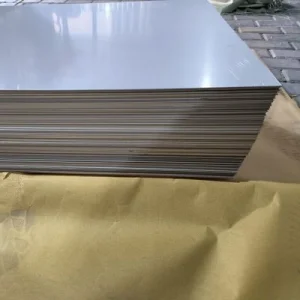
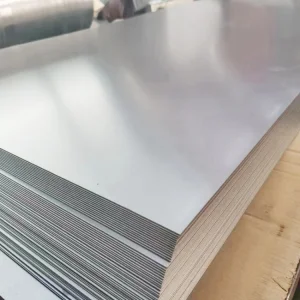
CE Certified Stainless Steel Tube & Sheet Inventory
Explore our top-tier selection of cold-rolled plates, sanitary tubes, industrial welded pipes, and precision alloys. Fully traceable to primary steel mills and verified for international compliance.
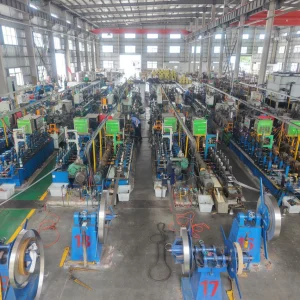
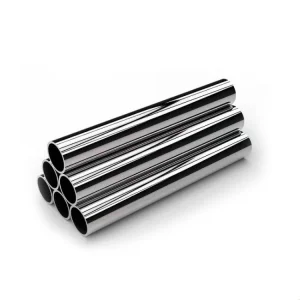
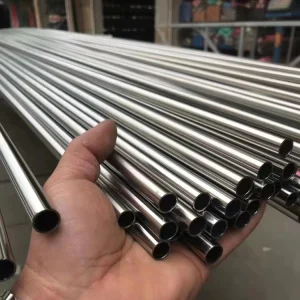
Global Enterprise Production Capacity
Empowering global infrastructure, marine engineering, and energy distribution with high-yield, fully compliant stainless tube manufacturing.
The Crucial Role of CE Certification in Industrial Stainless Tubing
When procurement managers search for a verified CE Certification Stainless Tube Supplier, compliance extends far beyond a simple stamp on paper. CE marking under the European Union Construction Products Regulation (CPR 305/2011) and the Pressure Equipment Directive (PED 2014/68/EU) guarantees that stainless steel tubular products withstand structural stresses, thermal fluctuation, and severe corrosive atmospheres without mechanical breakdown.
For pressure-bearing pipelines (EN 10217-7 for welded tubes and EN 10216-5 for seamless tubes), obtaining CE certification demands rigorous Factory Production Control (FPC). Every production heat is audited for chemical composition (Cr, Ni, Mo, C balance), tensile strength, yield limits, and impact toughness at sub-zero temperatures.
In high-stakes industrial sectors—such as offshore oil platforms, nuclear cooling networks, and pharmaceutical cleanroom distribution—non-certified tubing introduces catastrophic risks of intergranular stress corrosion cracking (SCC) and pinhole leakage. Partnering with a fully certified Chinese manufacturer ensures seamless integration into European and global engineering frameworks with complete EN 10204 3.1 / 3.2 material traceability.
Key Mandates of EN 10217-7 & PED 2014/68/EU
- 1. NDT Inspection: 100% Eddy Current Testing (ET) and Hydrostatic Pressure Testing on all longitudinal welds.
- 2. Metallurgical Control: Strict control of Delta Ferrite content to prevent embrittlement during welding.
- 3. Traceability: Direct mill correlation linking raw coil master heats to finished bundle serial numbers.
- 4. Tolerances: Strict adherence to EN ISO 1127 standards for outer diameter (OD) and wall thickness (WT) variance.
China's Stainless Steel Industrial Ecosystem: The Wuxi Hub Edge
Why do tier-1 global engineering firms source stainless tubing from specialized manufacturing clusters in Wuxi, Jiangsu? The answer lies in complete vertical integration, raw material mill access, and advanced metallurgical processing infrastructure.
Tier-1 Mill Direct Feedstock
Our strategic partnerships with primary steel producers—including Tsingshan, TISCO (Taiyuan Iron & Steel), POSCO, and Baosteel—guarantee that the raw hot-rolled and cold-rolled stainless coil feedstock possesses pristine purity, ultra-low inclusions, and accurate chemical ratios.
Integrated Surface & Tube Processing
Instead of contracting third-party processors, our facilities integrate continuous automatic slitting, cold-drawing, bright annealing (BA), electropolishing (EP), and automatic TIG/Laser welding lines under one roof. This minimizes handling damage and cuts lead times by 30%.
Optimized Total Cost of Ownership (TCO)
By leveraging high-speed automated tube rolling and high-tonnage coil reserves, Chinese manufacturers deliver significant cost-efficiency without compromising metallurgical standards. Buyers achieve optimal pricing margins for large-scale tender projects.
Comprehensive Stainless Steel Grade Comparison Matrix
Selecting the ideal stainless tube or sheet grade requires balancing pitting resistance, yield strength, formability, and operating temperature range. Review our engineering quick reference table below:
| Grade | Microstructure | PREN Rating | Corrosion Resistance | Max Temp (°C) | Primary Industrial Applications |
|---|---|---|---|---|---|
| 201 | Austenitic (Cr-Mn) | ~12 - 14 | Moderate | 300°C | Indoor decorative tubing, stair handrails, furniture frames, architectural trim. |
| 304 / 304L | Austenitic (Cr-Ni) | ~18 - 20 | Good (Standard) | 800°C | Food & beverage lines, kitchenware, architectural cladding, general fluid transport. |
| 316 / 316L | Austenitic (Cr-Ni-Mo) | ~23 - 25 | High (Chloride) | 870°C | Marine fittings, chemical processing, pharmaceutical tubing, coastal structures. |
| 310S | Austenitic (High Cr-Ni) | ~24 - 27 | High Temp | 1150°C | Furnace tubes, heat exchangers, boiler baffles, thermal treatment equipment. |
| 430 | Ferritic (Cr) | ~16 - 18 | Moderate | 750°C | Home appliance panels, magnetic conveyor components, kitchen sink trim. |
| Duplex 2205 | Austenitic-Ferritic | ~32 - 35 | Superior | 300°C | Oil & gas pipelines, desalination plants, chemical cargo tanks, pressure vessels. |
| Super Duplex 2507 | Austenitic-Ferritic | > 41 | Extreme (Seawater) | 250°C | Subsea umbilicals, offshore platforms, flue gas scrubbing, aggressive acid systems. |
* Note: PREN (Pitting Resistance Equivalent Number) is calculated via $\text{PREN} = \% \text{Cr} + 3.3 \times \% \text{Mo} + 16 \times \% \text{N}$. Higher values indicate greater resistance to localized pitting in marine and acidic environments.
Global Trends & Specialized Application Solutions
As global industrial infrastructure transitions toward higher energy efficiency and stricter environmental compliance, the specifications for stainless steel tubing are rapidly evolving.
1. Hydrogen & Green Energy Infrastructure
The rise of the global hydrogen economy requires seamless and welded stainless tubes capable of withstanding hydrogen embrittlement at elevated pressures. Ultra-high purity (EP/BA) 316L tubes with controlled sulfur content (< 0.005%) are becoming mandatory for hydrogen refueling stations and fuel cell testing manifolds.
2. Desalination & Offshore Oil Platforms
Traditional 304 and 316L alloys often suffer localized crevice corrosion in warm, high-salinity seawater. The global shift toward Duplex 2205 and Super Duplex 2507 tubings allows operators to reduce wall thickness while doubling yield strength, achieving lightweight structures with 30+ year design lifespans.
3. Hygienic & Food Grade Sanitary Lines
Dairy, brewery, and biopharmaceutical processors mandate internal surface roughness (Ra) below 0.4 µm to eliminate bacterial entrapment zones. CE-certified 304 and 316L sanitary tubes featuring orbital weld ends and bright annealed internal bores provide ideal CIP (Clean-in-Place) performance.
4. Modern Architectural Facades & Balustrades
High-end architectural projects demand consistent surface aesthetics. Utilizing 201 and 304 decorative tubes with No.4 satin, Hairline, or 8K mirror polishes—protected by PE laser protective films—ensures flawless visual appeal for stair handrails, curtain wall supports, and luxury elevator interiors.
Seaworthy Export Packaging Protocols
To prevent ocean freight salt-spray staining and physical denting during transshipment, all stainless steel tubes undergo rigorous export packaging:
- Plastic end caps fitted on both tube extremities to protect bevels and threads.
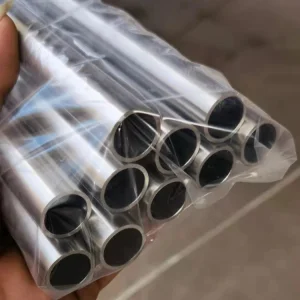
- Waterproof plastic wrapping combined with woven protective outer bundles.
- Heavy-duty wooden boxes or steel-framed crates for thin-wall polished sanitary tubing.
- Customized container loading plans to optimize space and minimize freight costs.
Mitigating Risk for Overseas Stainless Tube Buyers
Navigating international metal trade requires transparent supplier audits, predictable lead times, and financial safeguards. When procuring from China, B2B buyers should establish clear quality benchmarks before order release:
1. Demand Mill Test Certificates (MTC): Verify that the supplier issues EN 10204 3.1 certificates detailing exact heat chemical analysis, mechanical tensile/yield test figures, and NDT test validation.
2. Third-Party Quality Inspection: Pre-shipment inspections by independent agencies such as SGS, Bureau Veritas (BV), or TÜV provide objective verification of dimensional tolerances, wall thickness uniformity, and surface finish.
3. Tariff & Anti-Dumping Navigation: Professional suppliers advise buyers on harmonized system (HS) customs codes and regional trade agreements to streamline customs clearance and reduce duty overheads.
Additional High-Demand Stainless Steel Solutions
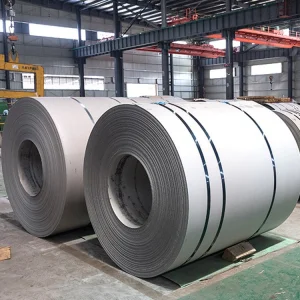
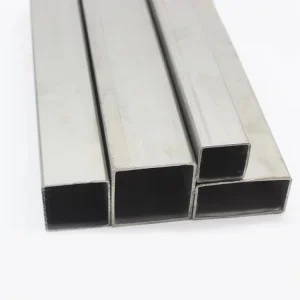
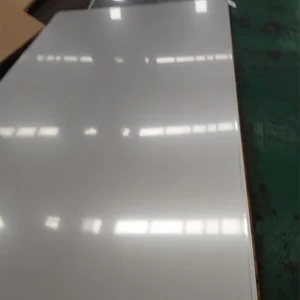
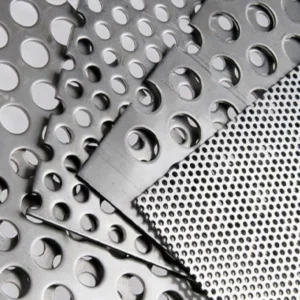
Review our broader product lineup including hot-rolled coils, low-carbon industrial pipes, perforated sheets, and high-alloy duplex plates.
Frequently Asked Questions (FAQ) for Technical Procurement
Clear answers to critical engineering, compliance, and logistical inquiries regarding stainless steel tube supply.
What does CE Certification specifically cover for stainless steel tubes?
CE Certification verifies compliance with European directives such as the Pressure Equipment Directive (PED 2014/68/EU) and Construction Products Regulation (CPR 305/2011). It ensures that the stainless tubes meet EN 10217-7 (welded) or EN 10216-5 (seamless) standards for pressure retention, dimensional tolerances, and non-destructive testing (NDT).
What is the difference between welded and seamless stainless steel tubes?
Welded tubes are manufactured by roll-forming stainless steel strip and joining the longitudinal seam via automated TIG, Laser, or Plasma welding. Modern welded tubes under EN 10217-7 achieve weld joint efficiency factors of 1.0. Seamless tubes are extruded from solid billets, eliminating weld seams, making them suitable for ultra-high-pressure applications above 300 bar.
How do I choose between 304L and 316L grades for piping projects?
Grade 304L (18% Cr, 8% Ni, low carbon) offers excellent general corrosion resistance and weldability for indoor, urban, and food-grade environments. Grade 316L includes 2-3% Molybdenum, providing superior protection against pitting corrosion in environments exposed to chlorides, salt spray, marine air, or industrial chemicals.
What surface finishes are available for industrial and sanitary tubes?
Finishes range from Mill Annealed / Pickled (AP) for standard industrial pipelines, Bright Annealed (BA) for shiny smooth surfaces, No.4 / Satin / Hairline for architectural trim, internal Electropolished (EP, Ra < 0.25 µm) for high-purity semiconductor and pharma lines, to 8K Mirror polish for decorative applications.
Are Mill Test Reports (MTR) provided with each shipment?
Yes. Every order is delivered with certified MTRs compliant with EN 10204 Type 3.1 (or 3.2 upon request). The MTR documents exact heat numbers, chemical balance, yield and tensile strength, elongation, hardness, NDT test results, and hydrostatic test pressures.
What dimensional tolerances can be maintained during tube fabrication?
Our automated cold-drawing and precision sizing mills achieve tight outer diameter (OD) tolerances down to ±0.05 mm and wall thickness tolerances according to EN ISO 1127 Tolerance Classes D4/T4 or ASTM A269 strict limits.