
Featured Structural & Decorative Stainless Materials (Part 1)
Direct factory-certified stainless steel pipes, sheets, and coils engineered for architectural railing systems and heavy-duty structural applications.


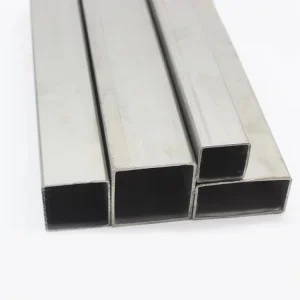
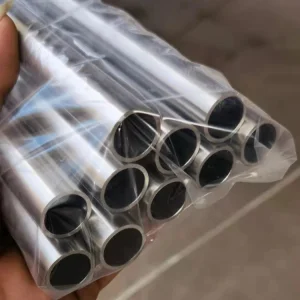
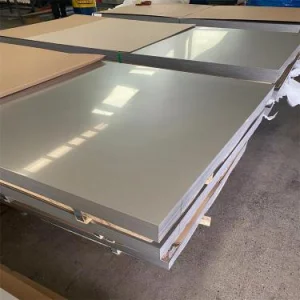

Executive Summary: Engineering CE-Certified Stainless Steel Square Pipe Railing Systems
A rigorous technical analysis of structural safety, metallurgical selection, EN 1090 / CPR regulatory compliance, and OEM manufacturing protocols.
Modern commercial, industrial, and high-density residential architecture demands structural perimeter protection that harmonizes pristine modern geometry with long-term mechanical reliability. **Stainless steel square pipe railings** have emerged as the global structural standard due to their high torsional rigidity, flat mounting surfaces for glass/cable infill hardware, and outstanding atmospheric corrosion resistance.
As a leading China-based manufacturer specializing in precision tubular stainless steel processing, our production ecosystems are aligned with **CE Certification requirements (EN 1090-1 / EN 10088-5)**. Achieving authentic CE marking requires rigorous factory production control (FPC), total raw material traceability back to master heat numbers, strictly monitored weld seam integrity, and quantified mechanical yield strength metrics. This whitepaper serves as an authoritative guide for structural engineers, project buyers, facade contractors, and global distributors seeking to de-risk their supply chains and optimize material specifications.
Metallurgical Selection & CE Structural Compliance
Navigating chemical composition, mechanical load capacities, and European conformity standards for stainless square tubing.
SUS304 / 304L Grade Baseline
Contains ~18% Chromium and ~8% Nickel. Excellent standard choice for indoor architectural railings, commercial interior atrium balustrades, and dry urban outdoor guardrails. 304L provides ultra-low carbon (≤0.03%) to eliminate carbide precipitation during site welding.
SUS316 / 316L Marine Grade
Formulated with 2.0% to 3.0% Molybdenum addition. Essential for coastal waterfront railings, swimming pool perimeters, and industrial chemical processing plants. Demonstrates high resistance to pitting and crevice corrosion in chloride-rich environment tests.
Duplex 2205 High-Strength
Features a dual-phase austenitic-ferritic microstructure delivering roughly double the yield strength of 304/316 ($R_{p0.2} \ge 450 \text{ MPa}$). Allows for thinner wall square tubing while achieving higher structural wind load safety factors in extreme environments.
Technical Specification Matrix: Square Tubing Grades for Railings
| Alloy Grade | Standard Spec | Yield Strength ($R_{p0.2}$) | Tensile Strength ($R_m$) | PREN Value | Recommended Railing Application |
|---|---|---|---|---|---|
| SUS 201 | ASTM A554 / EN 10296-2 | ≥ 275 MPa | ≥ 520 MPa | ~ 12 | Dry indoor residential handrails, low-humidity decorative trims |
| SUS 304 / 304L | ASTM A554 / EN 10088-2 | ≥ 205 MPa | ≥ 520 MPa | 18.0 - 20.0 | Standard commercial balconies, interior staircases, urban street furniture |
| SUS 316 / 316L | ASTM A554 / EN 10088-2 | ≥ 220 MPa | ≥ 520 MPa | 23.0 - 25.0 | Coastal promenades, marine harbor walkways, high-humidity spa centers |
| Duplex 2205 | ASTM A789 / EN 10217-7 | ≥ 450 MPa | ≥ 650 MPa | 32.0 - 35.0 | Heavy structural glass railings, extreme wind-load high-rise balustrades |
China Factory Supply Chain & Manufacturing Ecosystem
How vertically integrated manufacturing hubs deliver unmatched cost-efficiency, strict tolerance management, and rapid export throughput.
Global procurement teams face increasing pressures regarding lead times, price volatility, and specification consistency. Sourcing directly from certified Chinese manufacturers established in key stainless steel clusters (such as Wuxi and Foshan) provides immense competitive advantages across the entire project lifecycle.
Direct Mill Feedstock Traceability
Our manufacturing facilities source prime coil stock exclusively from tier-1 steel mills including TISCO, Tsingshan, POSCO, and Baosteel. Every batch is supplied with authentic EN 10204 3.1 Material Test Reports (MTR) detailing chemical heat numbers and mechanical testing.
High-Frequency TIG & Laser Welding
Utilizing state-of-the-art continuous roll-forming lines integrated with automated high-frequency TIG and orbital laser welding heads. Internal weld seams are mechanically leveled (bead-rolled) to ensure smooth fitting insertion during modular railing assembly.
Precision Square Profile Forming
Square pipes are cold-formed through multi-stage sizing dies to guarantee strict corner radii, perfect 90° perpendicular angles, and tight dimensional wall thickness tolerances (±0.05mm), ensuring zero gaps during architectural mitering and joining.
Global Enterprise Procurement Requirements & Submittals
Essential compliance documentation, quality verification protocols, and technical submittal frameworks demanded by international tier-1 contractors.
When enterprise EPC contractors, commercial developers, and government agencies draft tenders for public transport hubs, airport terminals, or high-rise balustrades, supplier qualification hinges on comprehensive documentation. Our export division provides complete architectural technical submittal packages:
1. EN 10204 Type 3.1 Certification
Complete chemical analysis (Carbon, Chromium, Nickel, Molybdenum, Manganese) verified via Positive Material Identification (PMI) optical emission spectroscopy, paired with destructive tensile, yield, and elongation testing results.
2. Structural Static Load Calculations
FEA (Finite Element Analysis) stress simulation reports verifying that selected square tube profiles ($40\times40\text{mm}$, $50\times50\text{mm}$ with $1.5\text{mm} - 3.0\text{mm}$ walls) fulfill regional live load horizontal thrust mandates ($1.5\text{ kN/m}$ or $3.0\text{ kN/m}$).
3. Surface Roughness Verification
Quantified surface profilometer test logs proving compliance with requested finishes: 240-grit satin, 320-grit fine brushed ($Ra \le 0.4\mu\text{m}$), or 8K mirror polish ($Ra \le 0.05\mu\text{m}$) for hygienic and architectural demands.
Localized Application Scenarios & Regional Compliance
How stainless steel square pipe railings adapt to distinct environmental conditions and international building codes.
European Transit Hubs & Public Works
Standard: EN 1090-2 Execution Class EXC2.
Requires heavy-duty SUS316 square posts ($50\times50\times2.5\text{mm}$) with continuous laser-slotted square channels for heavy tempered laminated glass infills. Built to endure high human traffic impact and mechanical wear.
Middle East High-Rise Coastal Resorts
Challenge: Extreme UV, high salinity, ambient humidity.
Employs SUS316L or Duplex 2205 square railings subjected to electropolishing ($Ra < 0.2\mu\text{m}$). Electropolishing removes surface iron contamination and thickens the protective passive oxide film ($Cr_2O_3$), preventing tea-staining.
North American Residential & Commercial
Standard: IBC 2024 & ADA Accessibility Guidelines.
Utilizes $40\times40\text{mm}$ SUS304 square tubing post systems paired with horizontal cable tensioners or stainless steel square mesh panels. Handrail graspability standards are maintained using top-mounted secondary tubular grab bars.
Industry Trends & Next-Generation Railing Innovations
Technological advancements reshaping the architectural stainless steel tubing sector over the next decade.
Smart LED-Integrated Square Tubing
Factory-milled concealed underside channels inside square stainless handrails allow seamless integration of waterproof IP67 micro-LED linear strip lighting, illuminating stair treads without visible conduit wiring.
Modular Non-Weld Interlocking Systems
Transitioning away from messy on-site welding. Modern square railing systems utilize high-precision CNC internal expansion connectors, reducing installation labor costs on job sites by up to 40% while preserving factory surface finishes.
PVD Physical Vapor Deposition Coatings
Applying micro-thin titanium ceramic coatings over satin square tubing creates vibrant architectural decorative finishes—including Titanium Gold, Rose Gold, Champagne, and Matte Black—without compromising underlying corrosion resistance.
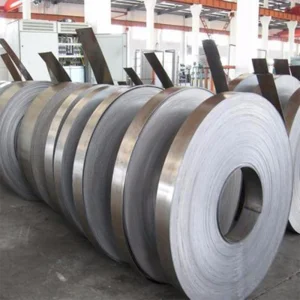
Certified Industrial Stainless Materials & Components (Part 2)
Explore our complete range of certified stainless steel pipes, sheets, and coils ready for immediate export shipment.


Enterprise FAQ: Technical & Procurement Clarifications
Addressing critical engineering, certification, and export questions for global stainless steel buyers.
What specific requirements must be met for a stainless square pipe railing to hold valid CE Certification under EN 1090?
To comply with EN 1090-1 (Execution of steel structures), the manufacturing plant must undergo independent Factory Production Control (FPC) audits. All square tubing used for load-bearing guardrails must possess certified mechanical properties (conforming to EN 10296-2 or EN 10217-7), full heat number traceability back to raw coil slabs, and qualified welding procedures (WPS/WPQR). The CE mark guarantees that the component withstands declared structural load capacities under European Construction Products Regulations.
How do I choose between SUS304 and SUS316 square tubing for outdoor architectural handrails?
The selection depends primarily on distance from saltwater bodies and atmospheric pollution levels. SUS304 is appropriate for inland urban or suburban environments with low salinity and moderate humidity. However, for coastal areas (within 5 km of the sea), industrial zones exposed to chemical emissions, or around chlorinated swimming pools, SUS316 or SUS316L is mandatory. The 2-3% Molybdenum content in 316 significantly increases its Pitting Resistance Equivalent Number (PREN) to prevent localized pitting corrosion.
What standard wall thicknesses and dimensions are recommended for commercial guardrail posts?
Standard commercial structural posts typically utilize $40\times40\text{mm}$, $50\times50\text{mm}$, or $60\times60\text{mm}$ square tubing. For public buildings and high-occupancy venues requiring $1.5\text{ kN/m}$ to $3.0\text{ kN/m}$ horizontal load resistance, wall thicknesses of $2.0\text{mm}$ to $3.0\text{mm}$ are recommended. Residential or light-commercial balustrades with shorter post spans can utilize $1.5\text{mm}$ wall thicknesses.
How does your factory ensure square tube dimensional tolerances during custom OEM orders?
Our automated production lines utilize laser-guided sizing rollers during cold forming to maintain outer dimension tolerances within ±0.05mm. Corner sharpness radii are strictly controlled according to ASTM A554 specifications. Every batch undergoes automated eddy-current testing for weld seam continuity and dimensional verification prior to surface polishing.
What surface protection measures are used during sea freight transportation to prevent staining?
All polished square tubes (satin, hairline, or mirror) are individually wrapped in laser-cut protective PE film. Tubes are bundled with heavy-duty plastic end caps, wrapped in waterproof woven plastic sheeting, and secured inside wooden cases or steel-framed crates with desiccant packs to prevent ocean humidity condensation and transit abrasion.