
Explore our mill-direct inventory of stainless steel foils, sheets, pipes, and precision rolled coils available for global distribution with full CE conformity documentation and MTR traceable chemistry.




Executive Technical Overview: Ultra-Thin Precision Stainless Steel Foils
In the landscape of modern advanced manufacturing, precision stainless steel foil sheets (typically defined as cold-rolled flat gauge materials with thicknesses ranging from 0.005mm to 0.5mm) represent the pinnacle of metallurgical engineering. Achieving dimensional consistency, planar flatness, and tailored mechanical properties at micro-scale gauges requires an integrated understanding of cold-work hardening behavior, dynamic recrystallization, and continuous tension-leveling technology.
When global procurement managers and structural design engineers evaluate CE Certification Stainless Steel Foil Sheet Factories & Quotes, the objective extends beyond sourcing basic raw materials. It involves verifying compliance with European Union harmonized standards (such as EN 10088-2 for general engineering and EN 10204 3.1/3.2 certification protocols), inspecting chemical purity via Optical Emission Spectroscopy (OES), and ensuring precise surface roughness control (Ra < 0.05 µm for bright annealed BA surfaces).
CE Certification & Regulatory Compliance Framework
The CE mark on stainless steel foil sheets serves as a legal declaration that the product conforms to essential health, safety, and environmental protection standards established under European Construction Products Regulation (CPR 305/2011) and the Pressure Equipment Directive (PED 2014/68/EU). Sourcing from vetted factories ensures seamless customs clearance across the EU internal market and guarantees long-term structural reliability.
EN 10088-2 Compliance
Mandates technical delivery conditions for general-purpose corrosion-resistant stainless steel sheet, plate, and strip. It governs chemical composition limits, minimum yield strength ($R_{p0.2}$), tensile strength ($R_m$), and elongation percentage ($A_5$).
Pressure Equipment (PED)
For thin foils used in bursting discs, heat exchanger plates, and pressure vessel linings, compliance with Annex I of 2014/68/EU guarantees that material ductility and impact energy meet strict safety margins under cyclic mechanical loads.
RoHS & REACH Verification
Precision stainless foils destined for consumer electronics, medical MEMS, and automotive sensors undergo X-ray Fluorescence (XRF) screening to confirm zero presence of hazardous heavy metals, hexavalent chromium, and restricted SVHC substances.
Harmonized Technical Specifications Matrix
| Steel Grade Standard | EN Designation | UNS Alloy ID | CE Certification Norm | Primary Industrial Properties |
|---|---|---|---|---|
| AISI 304 / 304L | 1.4301 / 1.4307 | S30400 / S30403 | EN 10088-2 / CPR | Universal formability, standard corrosion resistance, non-magnetic when annealed. |
| AISI 316L | 1.4404 | S31603 | PED 2014/68/EU | 2.0-2.5% Molybdenum addition; superior resistance to chloride pitting ($PREN \ge 25$). |
| AISI 310S | 1.4845 | S31008 | EN 10095 | High Nickel-Chromium matrix ($25\% Cr, 20\% Ni$); oxidation resistant up to 1150°C. |
| Duplex 2205 | 1.4462 | S31803 / S32205 | CE Structural / PED | Dual-phase austenitic-ferritic microstructure; twice the yield strength of 304L ($R_{p0.2} \ge 450 MPa$). |
| Super Duplex 2507 | 1.4410 | S32750 | NORSOK M-630 / CE | Ultra-high corrosion resistance in marine/acidic environments ($PREN \ge 42$). |
Manufacturing Technology Roadmap & Quality Engineering
Producing ultra-thin stainless steel foils demands stringent control over every mechanical thermal step. Advanced factories in major metallurgical hubs (such as Wuxi, Jiangsu) utilize fully automated, closed-loop processing infrastructure to eliminate batch-to-batch variation.
- Precision Cold Rolling: Utilizing 20-high Sendzimir cluster mills equipped with automatic gauge control (AGC) utilizing isotope or X-ray thickness measurement sensors to achieve $\pm 0.001 \text{ mm}$ wall accuracy.
- Pure Hydrogen Bright Annealing (BA): Processing foils through continuous vertical furnace lines under $100\%$ high-purity hydrogen gas atmospheres (dew point $\le -60^\circ\text{C}$). This avoids oxidation, preserving an ultra-smooth 8K mirror finish without requiring chemical pickling.
- Tension Leveling & Slitting: Integrating multi-roll tension levelers to cancel internal residual stresses, ensuring dynamic flatness ($\le 3 \text{ I-units}$) followed by high-speed rotary slitting equipped with tungsten carbide knives to restrict edge burrs to under $5\%$ of total foil thickness.
- Automated Surface Defect Detection: Real-time 100% optical inspection systems flag micro-pinholes, scratches, and inclusion lines before dynamic coiling.
Chemical Traceability
Direct integration with primary steelmaking mills (Tsingshan, TISCO, Baosteel) ensures guaranteed ladle chemistry, strict vacuum degasification (VOD/AOD), and low sulfur content ($\le 0.005\%$).
Custom Edge Profiling
Precision slitting capabilities allow factories to supply custom edge profiles: mill edge, slit edge, deburred edge, and safety rounded edges for high-speed automated assembly lines.
VCI Protective Packaging
Foils are wrapped in Volatile Corrosion Inhibitor (VCI) paper, vacuum sealed in moisture-proof barrier foil, and secured inside custom wooden crates to prevent ocean transport degradation.
Chinese Supply Chain Resilience & Global Efficiency
China's stainless steel industry cluster—centered predominantly around Wuxi and Foshan—offers an unmatched competitive advantage for international buyers seeking rapid turnaround, competitive pricing, and rigorous quality assurance. By integrating raw material sourcing, secondary processing, surface finishing, and export logistics within a 50-kilometer radius, Chinese suppliers drastically reduce lead times and supply chain friction.
Direct Mill Alliances
Deep upstream integration with stainless steel giants such as Tsingshan Holding Group, TISCO, POSCO, and Baosteel ensures prioritized slab allocation, stable alloy pricing surcharges, and direct mill-to-factory traceability.
Flexible MOQ & Sizing
While Western mills often demand 5-ton minimum order quantities per thickness, advanced Chinese processing centers maintain extensive coil master stocks, permitting custom narrow slitting from 3mm width upwards with low MOQs.
Logistics Ecosystem
Proximity to Shanghai and Ningbo deep-water ports enables daily container sailings to major global hubs across Europe, North America, Southeast Asia, and the Middle East, supported by streamlined export customs processing.
Localized High-Precision Application Scenarios
Due to their exceptional strength-to-weight ratio, chemical inertness, and extreme temperature resilience, precision stainless steel foil sheets are critical components across high-tech sectors:
Hydrogen Energy & Fuel Cells
Ultra-thin 316L and 2205 foils ($0.075\text{mm} - 0.1\text{mm}$) serve as stamped metallic bipolar plates in Proton Exchange Membrane (PEM) fuel cells, requiring micro-embossing precision and low contact resistance coatings.
Aerospace Thermal Insulation
Multi-layered dimpled foils in 310S and 321 grades act as lightweight reflective heat shields for jet engine cowlings and space launch vehicle propulsion bays, withstanding thermal spikes up to 1000°C.
Electronics & Micro-MEMS
Stainless 304 BA foils ($0.02\text{mm} - 0.05\text{mm}$) provide non-magnetic, corrosion-resistant spring diaphragms, smartphone camera shutter blades, dome switches, and semiconductor shadow masks.
Understanding Price Drivers & Sourcing Quotes
When requesting commercial quotes for CE-certified stainless steel foil sheets, understanding the structural pricing factors enables procurement teams to optimize cost parameters without compromising technical integrity. Pricing models in precision metals differ significantly from standard commodity hot-rolled steel plate.
1. Alloy Surcharge (LME/ShFE)
Base metal costs track global exchange prices for Nickel (Ni), Chromium (Cr), and Molybdenum (Mo). Highly alloyed grades such as 316L and Super Duplex 2507 carry higher alloy surcharges than standard 304 or manganese-substituted 201 series.
2. Cold-Rolling Processing Fee
As thickness decreases, mechanical rolling passes increase exponentially. Foil below 0.05mm requires multiple intermediate bright annealing cycles and roll changes, shifting quotes from a per-ton basis to a per-square-meter or per-kilogram precision rate.
3. Surface & Slitting Specs
Requirements for custom protective PE/Laser films, mirror polishing (8K), tight slit width tolerances ($\pm 0.05\text{mm}$), and 100% eddy current defect testing contribute incrementally to final unit costs.
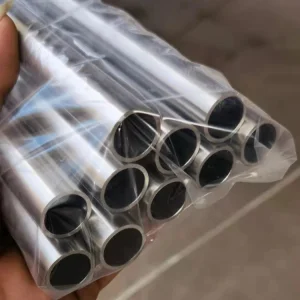
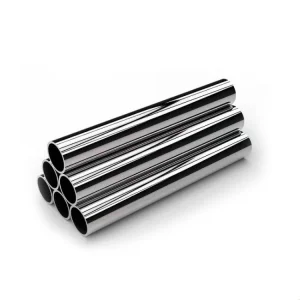
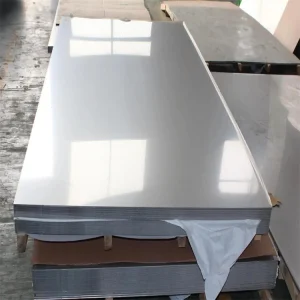
Review our full range of stainless steel tubular, sheet, and strip products engineered to satisfy worldwide industrial and architectural standard requirements.

Frequently Asked Questions (Technical Sourcing Guide)
Find authoritative answers to common engineering, compliance, and procurement questions regarding stainless steel foil sheets and custom manufacturing.
What specific documents are included with CE-certified stainless steel foil orders?
How do Sendzimir mills achieve thickness tolerances down to ±0.001mm on ultra-thin foil?
What is the difference between 2B, BA, and 8K mirror finishes on stainless steel foil?
BA (Bright Annealed): Cold rolled and continuously annealed in a protective hydrogen-nitrogen atmosphere; highly reflective without chemical pickling ($Ra \le 0.05\mu m$).
8K Mirror: Mechanically buffed with ultra-fine abrasive compounds to achieve flawless optical reflectivity ($Ra \le 0.02\mu m$).