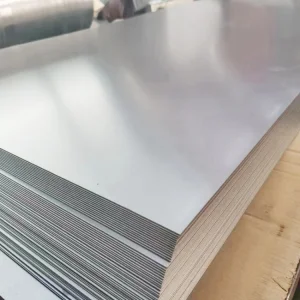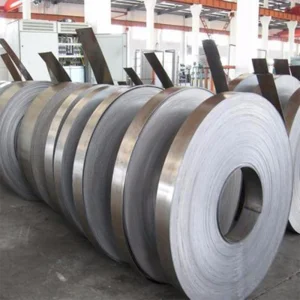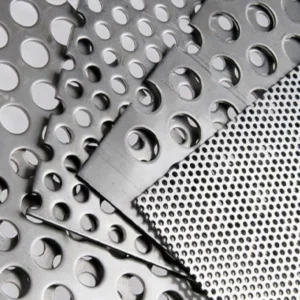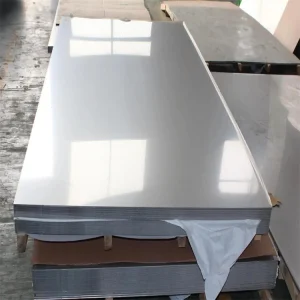
Explore our CE-certified stainless steel industrial tubing, rolled coils, decorative profiles, and specialized door protection materials directly integrated from our automated Chinese manufacturing facilities.
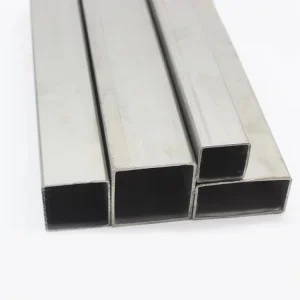
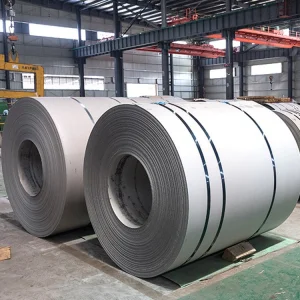
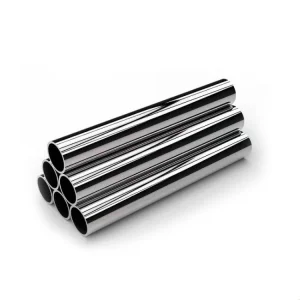
In modern architectural hardware engineering, Stainless Steel Door Protection Plates—comprising kick plates, push plates, armor plates, stretcher plates, and mop plates—serve as critical barrier components engineered to absorb kinetic impacts, withstand aggressive chemical cleaning regimes, and preserve door assembly structural integrity. Operating at the confluence of structural durability and interior aesthetics, these plates are mandatory components in high-footfall commercial, healthcare, educational, and industrial facilities globally.
Architectural specifications increasingly mandate full compliance with the European Union's Construction Products Regulation (CPR 305/2011) and EN 1634-1 fire test standards. Obtaining a valid CE Certification for door protection systems is no longer a cosmetic option; it is a legal requirement that guarantees the protection plate will not compromise fire doors' integrity, smoke seal performance, or thermal insulation under extreme heat stress up to 120 minutes.
The underlying performance of stainless steel door plates depends on the passivation dynamics of the chromium-oxide ($Cr_2O_3$) film. When alloyed with nickel and molybdenum, the steel forms a self-healing film that instantly re-passivates upon mechanical scratch exposure. Select the appropriate alloy grade based on mechanical stress and exposure vectors:
| Alloy Grade | Nominal Composition | PREN Rating | Mechanical Impact Resistance | Target Localized Environment |
|---|---|---|---|---|
| AISI 201 (UNS S20100) | 16-18% Cr, 3.5-5.5% Ni, 5.5-7.5% Mn | ~16.0 | High (Work Hardens Quickly) | Low-moisture interior commercial doors, office partitioning, decorative trims. |
| AISI 304 (UNS S30400) | 18-20% Cr, 8-10.5% Ni | ~19.0 | Excellent Balance of Ductility & Toughness | Standard commercial, hospital corridors, educational institutions, fire doors. |
| AISI 316L (UNS S31603) | 16-18% Cr, 10-14% Ni, 2-3% Mo | ~25.0 | Superior Fracture Toughness | Surgical cleanrooms, coastal marine hubs, chemical laboratories, food processing. |
| AISI 430 (UNS S43000) | 16-18% Cr, 0% Ni (Ferritic) | ~16.5 | Moderate (Magnetic Characteristics) | Low-cost interior kick plates, magnetic latching applications, mild dry service. |
The global demand for high-performance door protection hardware is experiencing structural growth driven by strict building codes, public hygiene mandates, and life-cycle cost optimization. Architectural specification shifts from temporary vinyl or plastic guards to permanent, CE-certified stainless steel protection plates are accelerating across major international markets.
European Union Standards
Strict enforcement of EN 1634-1 fire safety regulations requires all hardware mounted on timber or composite fire door assemblies to maintain certified non-combustibility and zero flame path generation.
North American Building Codes
Compliance with ANSI/BHMA A156.6 (Standard for Door Controls - Architectural Door Trim) and ADA (Americans with Disabilities Act) mandates push/kick plate dimensions up to 10" or 12" to withstand wheelchair and gurney strikes.
Middle East & APAC Infrastructure Growth
Rapid expansion of mega-hospitals, international airport terminals, and transit networks across the GCC and Asia-Pacific requires heavy-gauge AISI 316L door armor capable of surviving intense sand/dust abrasion and humidity.
Door protection plates are deployed across distinct operational environments, each demanding specific mechanical dimensions, surface treatments, beveling angles, and mounting mechanisms.
Healthcare & Sterile Cleanrooms
Primary Concern: Contamination control, bacterial harborage, harsh chemical sterilization.
Technical Spec: AISI 316L cold-rolled sheet, 1.5mm thickness, Satin No.4 finish (Ra < 0.28µm), full-perimeter beveling (45-degree angle), countersunk DIN 965 screw holes or VHB high-bond double-sided acrylic adhesive tape to prevent fluid ingress behind the plate.
High-Traffic Commercial & Hospitality
Primary Concern: Visual aesthetic preservation, anti-fingerprint maintenance, luggage impact.
Technical Spec: AISI 304 sheet, 1.2mm thickness, Physical Vapor Deposition (PVD) Titanium Bronze/Black Gold coating with Hydrophobic Anti-Fingerprint (AFP) nano-ceramic topcoat. Beveled edges for flush contact with architectural timber veneer.
Industrial Logistics & Manufacturing Plants
Primary Concern: High-energy kinetic strikes from motorized forklifts, pallet jacks, and heavy carts.
Technical Spec: Heavy-gauge AISI 304 or 316L plate (2.0mm to 3.0mm thickness / 14 to 11 Gauge), full armor plate design (covering bottom 48 inches of door assembly), heavy-duty mechanical through-bolt fastening system with shock-absorbing elastomer underlayment.
Marine, Offshore & Coastal Infrastructure
Primary Concern: Severe chloride pitting, salt fog atmosphere, high humidity ambient conditions.
Technical Spec: AISI 316L or Duplex UNS S31803 (2205) cold-rolled stainless steel plate. Pitting Resistance Equivalent Number (PREN) ≥ 25. Passivated per ASTM A967 with citric acid tank immersion to ensure complete iron-free surface integrity.
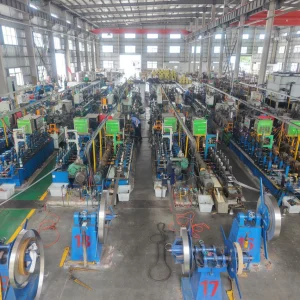
Fabricating architectural-grade stainless steel door protection plates demands modern automated machinery to eliminate burrs, edge sharpness, thermal warping, and surface contamination. Below is our factory direct manufacturing process flow:
Coil Precision Slitting
Uncoiling primary feedstock (Tsingshan/TISCO cold-rolled coils) and high-precision CNC shearing to custom plate width blanks with < 0.2mm edge tolerance.
CNC Fiber Laser Cutting
High-speed 12kW fiber laser cutting of mounting holes, lock cutouts, and corner radius profiles under nitrogen ($N_2$) assist gas to prevent oxidation along cut edges.
Automated Beveling & Deburring
Multi-axis edge grinding machines apply a smooth 45-degree micro-bevel around the entire plate perimeter, eliminating hazardous sharp edges per safety standards.
Surface Finish & PVD Coating
Automated belt polishing (Satin #4, Hairline, 8K Mirror) followed by continuous cleaning and physical vapor deposition in vacuum chambers for decorative titanium finishes.
Every factory direct shipment undergoes rigorous non-destructive and destructive testing prior to export dispatch. Mill Test Reports (MTR) according to EN 10204 3.1 are issued for every lot.
| Inspection Parameter | Testing Standard / Protocol | Acceptance Benchmark |
|---|---|---|
| Dimensional Tolerances | ISO 2768-m / EN 22768 | Length/Width: ±0.5mm, Thickness: ±0.03mm, Diagonal squareness < 0.5mm. |
| Corrosion Resistance | ASTM B117 Neutral Salt Spray Test | No red rust formation after 500 hours (AISI 304) or 1000 hours (AISI 316L). |
| Surface Roughness (Ra) | ISO 4287 Profilometer Measurement | Satin #4 finish Ra ≤ 0.4µm; Sanitary Cleanroom Specification Ra ≤ 0.2µm. |
| Adhesion Strength (Coated Plates) | ASTM D3359 Cross-Hatch Tape Test | 5B Classification (Zero coating removal along laser lattice cuts). |
Strategic procurement of door protection hardware from Chinese metallurgical clusters—specifically centered around Wuxi (Jiangsu Province) and Foshan (Guangdong Province)—offers unrivaled supply chain efficiency, vertical scale, and raw material access.
Raw Material Mill Integration
Our direct tie-ins with Tier-1 stainless steel stainless producers (Tsingshan, TISCO, Baosteel, POSCO) ensure rapid coil delivery, guaranteed chemical composition purity, and immunity from localized billet shortages.
Cost Structure Optimization
Automated, continuous laser cutting lines and high-speed automatic wrapping/packing lower conversion costs by 30-40% compared to Western European or North American regional fabricators.
Agile OEM/ODM Customization
From CAD drawing conversion to automated prototype sampling within 48 hours, Chinese manufacturing facilities easily handle custom screw hole patterns, logo laser etching, and unique door hardware cutouts.
Global architectural hardware buyers require complete documentation and compliance guarantees to satisfy local building control authorities, fire inspectors, and environmental regulations.
To streamline global customs clearing and ocean freight transit, protection plates are individually coated with 80µm UV-resistant laser protective film, interleaved with moisture-proof paper, stacked on solid wood fumigated pallets (ISPM 15 compliant), and steel-banded within heavy-duty export corrugated master cartons.
The architectural door trim industry is undergoing significant technological advancement. Next-generation door protection plates integrate smart material science, sustainable low-carbon manufacturing, and surface engineering advances.
Copper-Infused Antimicrobial Alloys
Integration of solid-solution copper ($Cu$) micro-alloying elements into 316L stainless matrices, achieving continuous 99.9% bacterial reduction without chemical liquid treatment.
Hydrophobic Ceramic PVD Films
Development of nanometer-scale sol-gel ceramic topcoats over PVD finishes, providing super-hydrophobic properties (water contact angle > 110°) to eliminate watermarks entirely.
AI-Driven Optical Quality Control
In-line AI machine vision inspection systems detecting microscopic scratch defects down to 10 microns at high production speeds prior to film application.
Net-Zero Green Stainless Steel
Transition to 100% green-hydrogen reduced stainless steel feedstock, lowering Scope 1, 2, and 3 embodied carbon footprints for LEED Platinum project specifications.
Under the EU Construction Products Regulation (CPR 305/2011) and EN 1634-1 fire safety protocols, any hardware accessory attached to a fire-rated door assembly must be certified non-combustible and tested to ensure it does not compromise structural insulation, door latching mechanisms, or cause heat-conduction ignition paths during a fire event.
For standard hospital corridors subject to frequent gurney and wheelchair strikes, 1.2mm (18 Gauge) or 1.5mm (16 Gauge) AISI 304 or 316L stainless steel provides the optimal balance between deflection resistance, weight, and flush door surface alignment. Heavy service doors subjected to motorized carts should utilize 2.0mm (14 Gauge) armor plates.
AISI 304 offers excellent structural strength and corrosion resistance suitable for 85% of interior commercial applications. However, AISI 316L contains 2-3% Molybdenum, which substantially elevates its resistance to chloride-induced pitting corrosion (PREN ~25 vs ~19 for 304), making 316L essential for surgical suites cleaned with chlorine disinfectants and coastal marine installations.
Plates can be supplied with pre-drilled countersunk holes for DIN 965 flat-head stainless steel screws, factory-applied 3M VHB high-tack acrylic adhesive foam tape for screwless cleanroom installation, or a combination of adhesive backing and perimeter mechanical fasteners for maximum dynamic shear strength.
Yes. Utilizing automated 12kW fiber laser cutting machinery guided by CAD/CAM drawings, custom cutouts for panic hardware, lever handles, key cylinders, and glazing vision frames are produced with a positional accuracy of ±0.05mm.
All plates are laminated with a heavy-duty, 80-micron UV-resistant PE or laser-fiber protective film. This film remains intact during CNC fiber laser cutting and installation, protecting the polished finish from job-site scratches, and is peeled off upon final hand-over.
Standard mill stock plates carry an MOQ of 100 units per specification. Custom CAD laser-cut or PVD-coated orders typically ship within 7 to 14 business days. Expedited air-freight sampling for architectural mock-ups can be dispatched within 72 hours.
Browse our full range of certified cold-rolled sheets, slit coils, decorative pipes, and structural steel plates ready for global export and direct factory quotation.