
Certified Factory Direct Distribution Catalog
Explore CE-compliant stainless steel plates, pipes, and sheets directly sourced from premier manufacturing mills with full material test certificate (MTR) traceability.

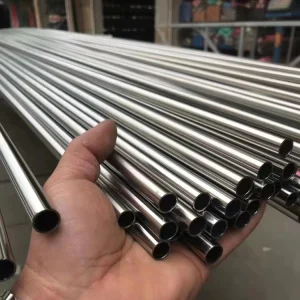



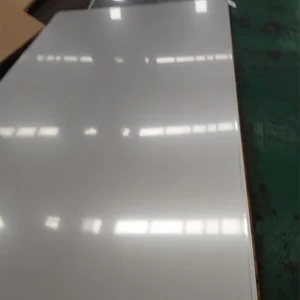

Executive Summary: The Strategic Value of Certified Stainless Steel Distribution
In modern industrial procurement, stainless steel distribution has evolved beyond raw material logistics into a high-precision science governed by compliance guarantees, metallurgical integrity, and dynamic cost optimization. International engineering enterprises, EPC contractors, and original equipment manufacturers (OEMs) demand absolute material reliability. Sourcing stainless steel plates, welded pipes, coils, and structural sections requires strict adherence to European standards, specifically CE Certification frameworks under the Pressure Equipment Directive (PED 2014/68/EU) and the Construction Products Regulation (CPR EU 305/2011).
This technical white paper explores the underlying mechanics of Chinese stainless steel distribution hubs—headquartered in industrial clusters like Wuxi, Jiangsu—and dissects the price structure, quality assurance protocols, and localized logistics support essential for seamless global distribution. By bridging mill-scale production capacity with stringent EU regulatory compliance, top-tier factories deliver substantial information gain, verifiable quality, and competitive pricing frameworks for global procurement officers.
PED 2014/68/EU Compliance
Mandatory for pressure vessels, heat exchangers, and industrial piping. Ensures chemical composition and mechanical properties withstand designated operating pressures.
CPR EU 305/2011 (EN 1090)
Essential for load-bearing structural stainless components. Guarantees factory production control (FPC) and structural yield consistency across heavy load applications.
EN 10204 3.1 & 3.2 MTR Traceability
Complete metallurgical breakdown provided by independent QA teams, validating heat numbers, chemical ladle analysis, and non-destructive test (NDT) results.
Supply Chain Integration: The Wuxi Ecosystem
China accounts for over 50% of the world's crude stainless steel output. At the heart of this supply ecosystem lies the Wuxi Industrial Metal Hub in Jiangsu Province. Factories in this region maintain direct partnerships with major raw material producers such as Tsingshan Holding Group, TISCO (Taiyuan Iron and Steel), POSCO, and Baosteel.
By controlling the entire processing flow—from raw coil slitting, cold rolling, and bright annealing to automated pipe welding and surface mirror/hairline finishing—Wuxi distribution centers eliminate secondary vendor markups. This vertical integration allows buyers to order custom alloy grades (Austenitic 201, 304, 316L, 310S, and Super Duplex 2205/2507) with tightly controlled dimensional tolerances and fast lead times.
Stainless Steel Grade Selection & Technical Breakdown
A comprehensive white paper matrix detailing elemental chemistry, corrosion performance, and engineering application mapping across key alloy families.
| Grade Category | UNS / AISI | Key Alloy Elements | PREN Rating | Primary Industrial Use Cases | Compliance Standards |
|---|---|---|---|---|---|
| Economy Austenitic | AISI 201 / J1 J4 | 13-15% Cr, 1-1.5% Ni, 8-10% Mn | ~ 15 - 17 | Indoor stair handrails, decorative tubing, home appliance trim | EN 10088-2, ASTM A240 |
| General Austenitic | SUS304 / UNS S30400 | 18-20% Cr, 8-10.5% Ni | ~ 18 - 20 | Food processing, commercial kitchenware, architectural cladding | ASTM A240, EN 10088-2, JIS G4304 |
| Marine / Chemical Grade | SUS316L / UNS S31603 | 16-18% Cr, 10-14% Ni, 2-3% Mo | ~ 23 - 25 | Pharmaceutical pipelines, marine hardware, chemical tanks | PED 2014/68/EU, ASTM A312, EN 10217-7 |
| High-Temp Heat Resistant | AISI 310S / UNS S31008 | 24-26% Cr, 19-22% Ni | ~ 26 - 28 | Furnace components, heat exchangers, kiln combustion tubes | ASTM A240, EN 10095 |
| Ferritic Magnet Grade | AISI 430 / UNS S43000 | 16-18% Cr, 0.75% Ni max | ~ 16 - 18 | Washing machine drums, automotive exhaust, interior panels | ASTM A240, DIN 17440 |
| Duplex Stainless | UNS S31803 / S32205 | 22% Cr, 5% Ni, 3% Mo, 0.17% N | ~ 32 - 35 | Oil & gas separators, chemical tankers, seawater processing | PED 2014/68/EU, ASTM A789, EN 10088-3 |
| Super Duplex | UNS S32750 (2507) | 25% Cr, 7% Ni, 4% Mo, 0.27% N | ≥ 42 | Offshore oil platforms, high-chloride desalination, FGD scrubbers | NORSOK M-630, ASTM A240, EN 10204 3.2 |
*Note on PREN Calculation: The Pitting Resistance Equivalent Number (PREN) is calculated using the standard formula: PREN = %Cr + 3.3(%Mo + 0.5%W) + 16%N. Higher PREN values indicate superior resistance to localized pitting and crevice corrosion in harsh halide/chloride environments.
Transparent B2B Pricing Formula & Quote Calculation
Understanding how factory quotes are formulated allows procurement teams to optimize cost structures and predict market risk.
1. Raw Material Base Price
Tied directly to London Metal Exchange (LME) nickel/molybdenum spot prices and domestic Shanghai Futures Exchange steel coil indexes.
2. Custom Processing Tolls
Covers slitting, precision cold-rolling, edge trimming, surface polishing (No.4, Hairline, 8K Mirror), embossing, and laser perforation.
3. Seaworthy Export Packaging
Anti-rust waterproof paper wrapping, plastic film interleave, wooden pallets, fumigated crates, and metal edge protectors for ocean transit.
Formulated Cost Calculation Equation for B2B Quotes:
Total Quote (FOB/CIF) = [(Base Coil Tonne Rate + Processing Fee/Ton) × Weight] + Quality Certification Costs + Export Seaworthy Packaging + Port Logistics & Freight
By eliminating intermediary brokers and purchasing direct from factory distribution hubs in Jiangsu, buyers typically achieve a 12% to 18% cost reduction compared to European or North American regional stockists while retaining identical CE certification guarantees.
Localized Support & Rigorous Quality Control Systems
Ensuring full structural and chemical integrity through comprehensive non-destructive testing and global logistics coordination.
Eddy Current & Hydrostatic Testing
100% inline non-destructive testing for all industrial welded pipes to ensure zero leak risk in pressurized gas and fluid transport systems.
Handheld XRF / PMI Analysis
Positive Material Identification (PMI) verification prior to dispatch to ensure exact nickel, chromium, and molybdenum percentages in accordance with purchase orders.
Global DDP / CIF Logistics
Complete customs clearance handling, local warehousing options, and multi-modal transport coordination across Europe, Americas, Middle East, and Southeast Asia.
Custom Spec Stainless Steel Solutions & Pipes
Precision-engineered welded pipes, perforated mesh sheets, and decorative tubing tailored for structural, mechanical, and architectural deployment.

Global Industry Applications & Emerging Market Trends
Analyzing localized deployment scenarios and the transition toward green steel, automated processing, and digital supply chain integration.
Green Steel & EAF Production
Shift toward Electric Arc Furnace (EAF) smelting utilizing up to 80% recycled scrap metal, reducing carbon intensity per ton to satisfy EU Carbon Border Adjustment Mechanism (CBAM) requirements.
High-Efficiency Duplex Adoption
Increasing reliance on Duplex (2205) and Super Duplex (2507) alloys in desalination and green hydrogen electrolyzers to maximize corrosion lifespan while reducing structural wall thickness.
Digital Smart Warehousing
Implementation of automated storage retrieval systems (ASRS) and QR-code-encoded Mill Test Certificates, enabling immediate verification of origin at destination ports.
Frequently Asked Questions (Technical Sourcing & Compliance)
In-depth technical answers addressing common procurement questions regarding certification, custom processing, export logistics, and quality assurance.
Need Certified Stainless Steel Quotes for Your Project?
Get direct factory pricing, request complete MTR certification packages, or consult with our metallurgical engineers regarding custom slitting, pipe welding, and international logistics.