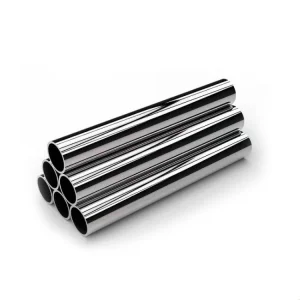
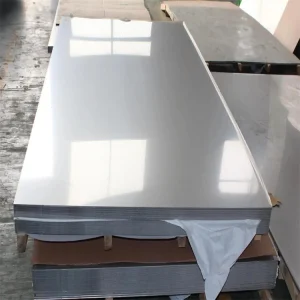
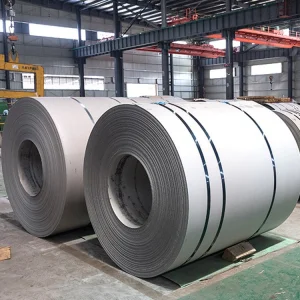
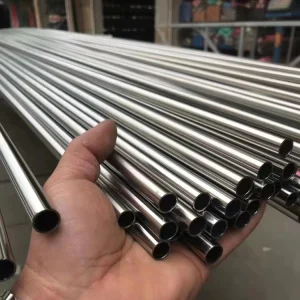
Featured Stainless Steel Pipes, Sheets & Coils
Direct mill supply with rigorous metallurgical quality control, standard certifications, and custom fabrication capabilities.





Global Industrial Landscape & Technical White Paper Executive Summary
Analyzing current global demand, material engineering breakthroughs, and compliance metrics for perforated stainless steel screens.
Global Market Dynamics & Commercial Demand
Perforated stainless steel screens represent a critical component class within modern industrial process engineering, architectural envelope systems, energy conversion plants, and sanitary processing lines. Global consumption of engineered perforated mesh has expanded rapidly due to stringent environmental regulations requiring high-efficiency particulate filtration, ballast water treatment, and acoustic attenuation. As industrial operations shift toward high-pressure, highly corrosive environments, the demand for precision-punched austenitic (AISI 304, 316L), duplex (2205), and super-duplex (2507) alloys with verified CE certification has grown exponentially across Europe, North America, and the APAC region.
Compliance Integrity & Information Gain Framework
In alignment with international quality raters and structural standards, procuring industrial screens requires transparent metallurgical provenance. CE certification (under the Construction Products Regulation CPR 305/2011 and Pressure Equipment Directive PED 2014/68/EU) guarantees that screen panels maintain structural rigidity, exact open area ratios, and precise dimensional tolerances under dynamic thermal and pressure loads. Our manufacturing facility in Wuxi, Jiangsu, integrates end-to-end processing—from coil slitting and CNC punching to roller leveling and degreasing—providing verified Mill Test Certificates (MTC EN 10204 3.1) with fully traceable heat numbers.
Increasing hole density improves flow dynamics and reduces differential pressure ($\Delta P$), but exponentially degrades shear strength and fatigue life. Our CNC punch pattern optimization utilizes dynamic bridge spacing calculations to maintain structural yield strength exceeding $240 \text{ MPa}$ even at open areas above $55\%$.
Metallurgical Engineering & Hole Pattern Specifications
Selecting optimal alloy grades, pitch geometry, and surface finishes based on fluid dynamics and corrosive stress metrics.
| Alloy Grade | Metallurgical Structure | PREN Index | Mechanical Yield Strength | Primary Industrial Suitability |
|---|---|---|---|---|
| AISI 304 / 304L | Austenitic (18% Cr, 8% Ni) | 18.0 - 20.0 | $\ge 205 \text{ MPa}$ | Food processing, architectural sunshades, general HVAC acoustic panels, agricultural sieves. |
| AISI 316 / 316L | Austenitic (16% Cr, 10% Ni, 2% Mo) | 23.0 - 25.0 | $\ge 220 \text{ MPa}$ | Marine environments, pharmaceutical filtration, chemical processing, ballast water treatment screens. |
| Duplex 2205 (UNS S31803) | Austenitic-Ferritic Dual Phase | 32.0 - 35.0 | $\ge 450 \text{ MPa}$ | High-pressure desalination plants, oil & gas separators, pulp & paper bleaching towers. |
| Super Duplex 2507 | High-Alloy Duplex (25% Cr, 7% Ni, 4% Mo) | > 42.0 | $\ge 550 \text{ MPa}$ | Offshore subsea manifolds, aggressive acid filtering, FGD scrubber system internals. |
| Ferritic 430 | Nickel-Free Ferritic Chromium | 16.0 - 17.5 | $\ge 260 \text{ MPa}$ | Magnetic sorting screens, indoor appliance panels, dry industrial dust extraction. |
Staggered Round Hole Pattern ($60^\circ$)
The industry benchmark for maximum structural integrity combined with uniform stress distribution.
Formula: $OA\% = \frac{D^2 \times 90.69}{P^2}$
Where $D$ = Hole Diameter, $P$ = Pitch distance center-to-center.
Square Hole Straight Grid
Provides high visual open area and maximum flow rate for non-pressurized gravity filtration and architectural facades.
Formula: $OA\% = \frac{S^2}{(S + C)^2} \times 100$
Where $S$ = Side length of square, $C$ = Bar/bridge width.
Slotted / Oblong Hole Pattern
Designed specifically for solid-liquid separation, seed processing, and grain drying where directional material flow is mandatory.
Customization: Side-staggered or end-staggered configurations tailored to slurry viscosity.
Industry Trends & Next-Gen Manufacturing Roadmap
How high-speed CNC punching, fiber laser micro-perforation, and AI-driven quality inspection are reshaping screen performance.
Fiber Laser Micro-Perforation
Transitioning from mechanical die punching to multi-beam ultra-fast fiber laser cutting enables aperture diameters down to $0.15 \text{ mm}$ with zero burr formation and zero mechanical deformation, critical for micro-filtration in medical diagnostics and turbine intake screens.
AI Optical Defect Inspection
Integrating high-resolution inline vision systems running real-time convolutional neural networks (CNNs). Every punched hole is scanned for circularity variance, pitch deviation ($\pm 0.02 \text{ mm}$ tolerance threshold), and microscopic micro-cracks before roller leveling.
Stress-Relief Roller Leveling
Perforation induces severe internal tensile and compressive stresses. Our 21-roll precision hydraulic levelers eliminate coil set, oil-canning, and edge wave, ensuring flat panels ($\le 1.5 \text{ mm/m}$) ready for automated robotic welding or structural framing.
Engineering Application Scenarios & Turnkey Solutions
Tailored perforation parameters engineered for harsh operational environments around the world.
1. Petrochemical & Heavy Filtration Internals
Operating Challenge: Extreme differential pressure, hydrocarbon slurry abrasion, and hydrogen sulfide ($H_2S$) corrosion.
Engineered Solution: Heavy-gauge AISI 316L or Duplex 2205 screens ($3\text{mm} - 6\text{mm}$ thickness) featuring conical or countersunk holes. Conical perforations reduce clogging by providing a back-relief angle, drastically extending filter backwash cycles in refinery basket strainers and downhole sand control screens.
2. Architectural Envelopes & Acoustic Attenuation
Operating Challenge: High wind-load forces, solar heat gain, and strict aesthetic uniformity requirements.
Engineered Solution: Surface-treated 304/316 screens with PVDF coating, PVD titanium anodizing, or 8K mirror polishing. Custom open areas ($30\% - 45\%$) balance natural daylighting with shading coefficients, while integrated sound-absorbing backing fleece delivers NRC acoustic ratings up to $0.85$ in transport hubs and concert halls.
3. Sanitary Food, Dairy & Pharmaceutical Processing
Operating Challenge: Strict FDA / 3-A Sanitary Standards forbidding bacterial traps, burrs, or chemical residues.
Engineered Solution: Electropolished AISI 316L perforated sheets featuring smooth, deburred hole edges ($Ra \le 0.4\,\mu\text{m}$). Perforated centrifugal drums and fluid-bed dryer trays ensure maximum yield without cross-contamination during automated CIP (Clean-in-Place) sterilization cycles.
4. Agricultural Sieving & Mining Aggregate Classification
Operating Challenge: Severe impact fatigue, continuous vibration, and high abrasive wear from stone, ore, or grain movement.
Engineered Solution: High-yield 304 or work-hardened stainless steel sheets with heavy bridge margins and reinforced border zones. Precise round or slotted apertures ensure exact particle size segregation with minimal blinding or pegging.
CE Certification, Quality Control & Testing Protocols
Multi-stage inspection guaranteeing structural compliance and compliance with international standards.
Raw Material Spectrometry
Every coil from Tsingshan, TISCO, POSCO, or Baosteel undergoes X-ray Fluorescence (XRF) alloy analysis to verify chemical composition (Cr, Ni, Mo, C balance) prior to production entry.
Dimensional & Flatness Verification
Automated coordinate measuring machines (CMM) and laser thickness gauges verify pitch distance, hole diameter accuracy, margin consistency, and panel diagonal squareness.
Corrosion & Pressure Testing
Salt spray testing (ASTM B117) and hydrostatic pressure testing for filter basket assemblies ensure zero weld decay or intergranular corrosion in active fluid lines.
Frequently Asked Questions & Technical Procurement Guide
Clear, authoritative answers to critical engineering, manufacturing, and shipping inquiries.
What certifications accompany your perforated stainless steel screens?
How do I calculate the required open area percentage for liquid filtration?
Can perforated screens be delivered with non-perforated unpunched margins?
What is the thickness-to-hole diameter ratio limit in punching?
How do you prevent distortion or warping during sheet perforation?
What secondary fabrication and surface finishing options do you provide?
Complete Stainless Steel Product Catalog
Explore additional specialized sheets, decorative tubes, industrial welded pipes, and high-performance duplex plates.