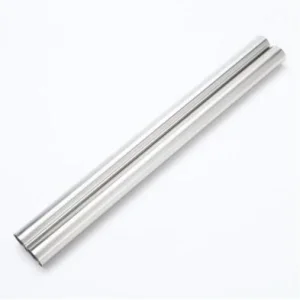
Precision Steel Sheets, Plates & Structural Tube Solutions
Explore mill-certified materials sourced directly from Jiangsu Renzhi Holding Group Co., Ltd. Standardized quality control, custom tolerances, and full CE documentation for global engineering projects.


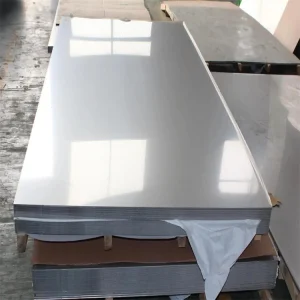
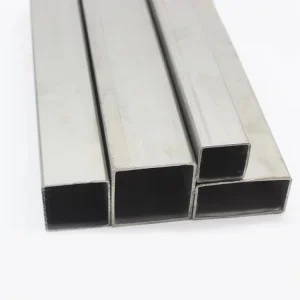
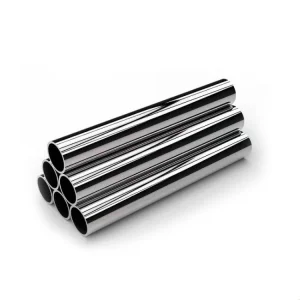
Global Commercial Status of CE Certified Corten Sheet Metal
A comprehensive examination of global supply chains, atmospheric corrosion mechanisms, and structural compliance in civil engineering.
Structural Weathering Steel Dynamics
Corten steel—often classified generically as atmospheric corrosion resistant structural steel—has emerged as a foundational material across modern civil engineering, architectural cladding, heavy transport, and infrastructure development. Developed originally to eliminate the ongoing operational costs associated with manual painting and sacrificial anti-corrosion coatings, structural weathering steel relies on controlled chemical alloying to form a self-passivating oxide protective layer (the protective patina).
Across the European Union, UK, Middle East, and North America, strict regulatory mandates surrounding infrastructural life-cycle assessment (LCA) have accelerated the adoption of structural weathering sheet metal. Under EU Construction Products Regulation (CPR 305/2011), structural metal products incorporated into permanent civil works must bear CE marking, verifying compliance with harmonized European standards such as EN 10025-5 and execution standards EN 1090-1 / EN 1090-2.
Manufacturing & Raw Feedstock Security
At Jiangsu Renzhi Holding Group Co., Ltd., based in Wuxi, Jiangsu—China’s primary stainless and alloy steel manufacturing hub—our supply chain strategy integrates direct primary mill feedstock with high-precision downstream cold rolling, leveling, slitting, and surface conditioning lines. Sourcing primary slabs and hot-rolled coils directly from premier metallurgical state mills including TISCO, Baosteel, POSCO, and Tsingshan guarantees consistent chemical homogeny.
By controlling trace micro-alloying ratios (Copper, Chromium, Nickel, and Phosphorus), our CE certified Corten sheet metal eliminates the risk of premature flaking, pitting, or structural fatigue under cyclic wet-dry atmospheric exposure. Our manufacturing plant operates over 80 production lines, supporting custom sheet thicknesses from 0.5mm thin decorative cladding up to 100mm heavy structural plates.
Patina Formation Chemistry & Alloy Kinetics
Unpacking the nano-scale electrochemical passivating mechanism that distinguishes authentic Corten A (S355J0WP) and Corten B (S355J2W) from standard carbon steel.
The Electrochemical Patina Passivation Phase
Unlike conventional carbon steels that continuously oxide into coarse, porous rust ($\gamma$-FeOOH / lepidocrocite) which spalls off and exposes fresh iron to atmospheric degradation, CE certified Corten metal undergoes a catalytic two-stage electrochemical transformation. Driven by micro-alloyed Copper (Cu), Chromium (Cr), Nickel (Ni), and Phosphorus (P), wet-dry atmospheric cycles transform the initial unstable surface oxides into a dense, amorphous, and densely packed inner layer of $\alpha$-FeOOH (goethite). This inner barrier layer isolates the base metal from free oxygen and moisture influx.
Stage 1: Initial Oxidation (0 – 6 Months)
Upon atmospheric exposure, the surface forms traditional porous iron oxides. Rain and atmospheric humidity dissolve soluble iron ions, resulting in a yellowish-orange rust appearance. Controlled drainage design is essential during this stage to handle initial rust runoff.
Stage 2: Patina Stabilization (6 – 24 Months)
Cu and Cr ions accumulate at the metal-oxide interface, catalyzing the densification of the oxide matrix. The rust texture turns fine-grained, transitioning in tone from orange-brown to a deep, dark reddish-brown chocolate hue as $\alpha$-FeOOH crystallizes.
Stage 3: Perpetual Passivation (24+ Months)
The protective patina reaches equilibrium, drastically slowing corrosion rates to under 0.01 mm/year in typical C3 atmospheric environments. The surface self-heals if mechanically scratched or abraded under outdoor exposure.
| Steel Grade Standard | EN 10025-5 Equivalent | Primary Micro-Alloying Elements | Weldability Rating | Typical Industrial Applications |
|---|---|---|---|---|
| Corten A | S355J0WP / S355J2WP | Cu (0.25-0.55%), Cr (0.30-1.25%), P (0.07-0.15%), Ni (<0.65%) | Moderate (High P content) | Architectural facades, decorative screens, rainscreen cladding, art structures. |
| Corten B | S355J0W / S355J2W | Cu (0.25-0.60%), Cr (0.40-0.80%), P (<0.035%), Mn (0.80-1.50%) | Excellent (Low P structural steel) | Heavy bridge girders, freight containers, load-bearing columns, pressure vessels. |
| ASTM A588 | Grade A / Grade B / Grade K | Cu (0.20-0.40%), Cr (0.40-0.65%), V (0.02-0.10%), Si (0.30-0.65%) | High Structural Strength | Transmission towers, high-span highway bridges, heavy crane booms. |
| ASTM A242 | Type 1 | Cu (0.55% max), Cr (1.25% max), P (0.15% max) | Moderate (Thin gauges) | Architectural sheet panels, outdoor chimney stacks, railway car frames. |
CE Certification (CPR 305/2011) & Structural Safety
Navigating mandatory European structural standards, Factory Production Control (FPC), and mill test certification requirements.
Construction Products Regulation (CPR)
CE marking on Corten sheet metal is a legal prerequisite for supplying steel into structural applications across the European Economic Area (EEA). Under CPR Regulation No 305/2011, structural weathering steel sheets and plates must fulfill basic requirements for construction works (BWRs), including mechanical resistance, stability, and fire safety.
- Declaration of Performance (DoP) documentation for every coil heat number.
- EN 10025-1 & EN 10025-5 harmonized technical delivery conditions.
- CE physical marking stenciled directly on certified sheets and plates.
EN 1090-1 Structural Execution Classes
For fabricators assembling Corten steel into structural components, material traceability is paramount. Renzhi Stainless Steel supplies Corten sheets fully aligned with EN 1090-1 / EN 1090-2 requirements up to Execution Class 3 (EXC3).
- Full metallurgical melt shop origin tracking.
- Charpy V-notch impact toughness tested at -20°C (J2 grades) or -50°C (K2 grades).
- Ultrasonic flaw detection (EN 10160) for heavy structural plates.
MTC EN 10204 3.1 & 3.2 Verification
Every shipment dispatched from our factory is accompanied by an authentic Mill Test Certificate in strict accordance with EN 10204 Type 3.1 (or Type 3.2 third-party inspection upon customer request by TÜV, SGS, or Lloyd's Register).
- Direct SPECTRO optical emission spectrometer chemical analysis.
- Tensile, Yield (Rp0.2), and Elongation mechanical test verifications.
- Surface roughness and dimensional tolerance verification records.
Processing & Engineering Fabrication Specifications
Ensuring material integrity through specialized laser cutting, cold forming, welding filler selection, and surface pre-patination techniques.
Laser Cutting & Mechanical Forming
Corten sheet metal exhibits high yield strength (typically $\ge 355$ MPa for S355 grades). When fiber laser cutting Corten sheets, high-pressure Nitrogen ($N_2$) or Oxygen ($O_2$) cutting gas must be selected based on desired edge condition:
- Nitrogen Cutting: Prevents edge oxidation, ensuring clean weld prep without needing manual grinding. Ideal for precision architectural laser-cut screens.
- Press Brake Bending: Require slightly larger internal bend radii ($R \ge 2.0t$ for Corten B) compared to standard structural carbon steel to avoid micro-cracking along outer bend radius.
- Automated Leveling: High-precision roller leveling relieves residual rolling stresses, maintaining flat tolerances for CNC punching and facade installation.
Welding Consumables & Surface Activation
To preserve uniform weather-resisting properties across welded joints, welding consumables must match the chemical composition of the base Corten metal:
- Filler Metals: Use Cu-Ni micro-alloyed electrodes/wires such as AWS A5.28 E80S-G, AWS A5.5 E8018-W0, or EN ISO 14341-A G 2Ni1 for single-pass and multi-pass structural welds.
- Pre-heating Protocols: For Corten B plates thicker than 20mm, pre-heat joint zones to 100°C–150°C to eliminate hydrogen-induced cold cracking risks.
- Accelerated Pre-Patination: Acidic mist pickling spray or liquid chemical oxidation accelerators can be applied to achieve a uniform rusted patina within 48 to 72 hours, avoiding months of uneven weather staining.
Localized Industrial & Architectural Application Scenarios
From landmark urban architecture to heavy infrastructure and transportation engineering.
Architectural Facades & Rainscreens
Utilizing Corten A (S355J0WP) cassette panels for ventilated exterior curtain walls. Provides natural organic texture, zero maintenance painting costs, and high visual contrast alongside glass and polished concrete.
Civil Infrastructure & Highway Bridges
Corten B (S355J2W / ASTM A588) plate girders for highway overpasses and pedestrian footbridges. Eliminates dangerous, high-cost highway lane closures traditionally needed for bridge re-painting over 50+ year lifespans.
Freight Containers & Intermodal Transport
Corrugated Corten steel sheet construction for ISO shipping containers and railway coal hopper cars. Resists abrasive mechanical wear and severe marine salt spray exposure during ocean transit.
Landscape Engineering & Retaining Walls
Heavy Corten sheet borders, planter boxes, retaining soil barriers, and outdoor acoustic sound barriers. Blends harmoniously into botanical landscapes while offering structural soil containment.
Macro Industry Solutions & Life-Cycle Cost Analysis (LCCA)
Evaluating long-term economic efficiency, decarbonization advantages, and Total Cost of Ownership (TCO).
Total Cost of Ownership: Corten vs. Painted Carbon Steel
While the initial material purchase cost of CE certified Corten sheet metal is approximately 15% to 25% higher than standard S355 JR unalloyed structural steel, its overall Life-Cycle Cost (LCC) is radically lower. Standard carbon steel structural components in exterior C3/C4 environments require sandblasting, primer, intermediate coats, and polyurethane topcoats every 10 to 15 years.
Over a 60-year operational design life, maintenance coating expenses for painted structural steel exceed the original capital material outlay by up to 300%. Corten steel entirely circumvents these recurring labor, scaffold, solvent purchase, and environmental containment costs.
ESG Decarbonization & Circular Economy
From an Environmental, Social, and Governance (ESG) perspective, Corten sheet metal provides significant decarbonization benefits:
- Zero VOC Emissions: Eliminates volatile organic compounds (VOCs) and hazardous paint solvent runoffs into surrounding soil and water tables.
- 100% Recyclable: At end-of-life demolition, Corten steel structures are fully recyclable via Electric Arc Furnace (EAF) steelmaking without needing toxic paint removal pre-treatments.
- Lower Carbon Footprint: Eliminates lifetime energy expenditure associated with repainting material synthesis, transit, and application.
Technical Roadmap & Future Innovations (2025–2035)
Emerging trends in nano-engineered weathering alloys, ultra-high strength Corten grades, and smart monitoring technology.
Ultra-High Yield Weathering Steels
Development of thermo-mechanically controlled processed (TMCP) Corten steels with yield strengths exceeding 500 MPa to 700 MPa, allowing thinner gauge sheet usage in heavy transport and crane booms without sacrificing atmospheric durability.
Marine Microclimate Enhancements
Innovations in trace alloy additions (such as micro-alloyed Rare Earth Elements, Titanium, and Tin) designed to stabilize protective patinas in high-chloride marine environments (C5-M), expanding Corten's viable coastal installation boundary within 500 meters of ocean surf.
Automated Pre-Patination & Digital Twins
Factory-applied non-toxic organic salt sprays that produce uniform patina aesthetics prior to jobsite delivery, paired with IoT ultrasonic thickness sensors embedded into structural Corten bridge joints for real-time corrosion monitoring.
Engineering Questions & Procurement Insights
Direct answers from our metallurgical quality assurance team regarding Corten sheet metal selection, CE certification, and fabrication guidance.
What is the explicit difference between Corten A and Corten B sheet metal?
How does CE Certification protect structural engineers and importers?
Can Corten sheet metal be used in coastal or marine salt-spray environments?
How can fabricators prevent rust staining on adjacent concrete or stone structures?
What mill test documentation accompanies Jiangsu Renzhi Corten shipments?
High-Performance Stainless Steel, Strip & Decorative Tubing
Explore our extended catalogue of mill-sourced products engineered to exacting global specifications. Request direct factory quotes and custom processing quotes.