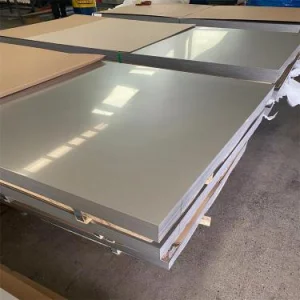
CE-Certified Stainless Steel & Chrome Plate Portfolio
Direct supply of high-grade coils, plates, tubes, and custom slit strips certified to European standards.
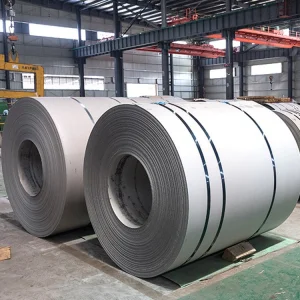
Wholesale China Hot Rolled Stainless Steel Coil Suppliers | Heavy-Duty Industrial Grade Factory Quality Products Manufacturers, Supplier
View Product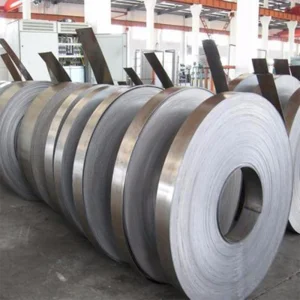
Custom High-Quality 201 Stainless Steel Strip/Coil from China Suppliers | Factory Direct Discounts Supplier, Quotes
View Product
CE Certification Corrosion-Resistant SUS304 Stainless Steel Cold-Rolled Plate from China Suppliers and Factory for Food Safety Supplier, Factory
View Product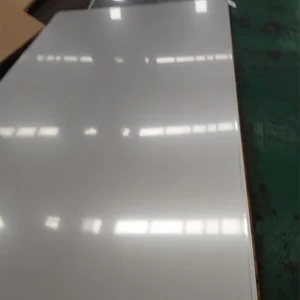
China China Super Duplex Steel Plate 2507 Suppliers - High Corrosion Resistance and Ultra-High Strength Factory Direct Supplier, Factory
View Product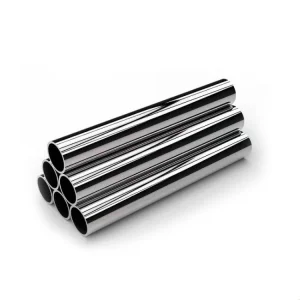
Wholesale China Stainless Steel Decorative Pipe Suppliers - Factory Direct Quality, Exquisite Surfaces & Diverse Designs Supplier, Factory
View Product
China China Suppliers - Industrial Welded Stainless Steel Pipes Factory | 201, 304, 316L, Wide Specifications Supplier, Factories
View Product
China China Factory Suppliers for 316L Stainless Steel Sheet - High-Quality and Durable Metal Solutions Supplier, Suppliers
View Product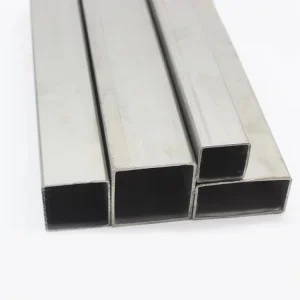
CE Certification Prime Quality 201 Stainless Steel Pipe from China Suppliers | Durable, Glossy Tubes for Stairs and Guardrails - Factory Direct Suppliers, Quotes
View ProductEngineering Excellence in Chrome Plated Stainless Steel
A detailed technical analysis of passive layer dynamics, electro-deposition mechanisms, and compliance engineering.
1. The Metallurgy of Chrome Plated Stainless Steel vs. Native Passivation
In modern structural and mechanical engineering, understanding the distinct operational boundary between naturally passivated stainless steel alloys and chromium-plated stainless steel substrates is crucial. Stainless steel derives its natural corrosion resistance from an atomic-scale, self-healing passive oxide film composed primarily of chromium oxide (Cr₂O₃), which spontaneously forms when chromium content exceeds 10.5%. However, in extreme mechanical environments requiring exceptional surface hardness, low friction coefficients, and heightened chemical inertness against aggressive chlorides or hydrogen sulfide, standard austenitic or ferritic matrixes require structural surface modification.
Chrome plating on stainless steel combines the bulk core toughness, ductile yield strength, and structural integrity of alloy grades such as SUS304, 316L, or 201 with an electro-deposited micro-layer of metallic hard chrome. This electro-deposition process creates a functional micro-cracked chrome micro-structure (typically 10 to 50 microns in thickness), which dramatically elevates surface Vickers Hardness up to 800 - 1000 HV. Factory-certified chrome-plating procedures demand strict electrochemical pre-treatment—specifically anodic etching and Woods nickel-strike activation—to overcome the native passive film of stainless steel and guarantee molecular cohesion without risk of delamination under cyclical stress.
Austenitic Matrix (304 / 316L)
Non-magnetic, highly ductile alloys optimized for deep drawing, welding, and sanitary environments.
- 304 (18/8): Standard food-grade alloy offering optimal cost-to-performance balance.
- 316L (Low Carbon + Mo): Enhanced with 2-3% Molybdenum to mitigate localized pitting.
- Mechanical Yield: ~205 MPa tensile yield, excellent cryogenic impact toughness.
Duplex Alloys (2205 / 2507)
Dual-phase ferritic-austenitic microstructures providing superior mechanical strength and stress corrosion cracking immunity.
- 2205 Duplex: Yield strength double that of 304, high resistance to sour gas ($H_2S$).
- 2507 Super Duplex: High Chromium (~25%), Molybdenum (~4%), and Nitrogen (~0.28%).
- PREN Value: Exceeds 40, ideal for marine platforms and offshore desalination plants.
Electro-Plated Chrome Finish
Precision functional or decorative hard hexavalent/trivalent chromium layers applied via state-of-the-art baths.
- Functional Chrome: Heavy deposit (10–50µm) engineered for hydraulic rams and pistons.
- Decorative Chrome: Micro-thin layer over nickel undercoat for architectural mirror sheen.
- Salt Spray Endurance: Exceeds ASTM B117 standards for over 500 hours without corrosion.
CE Certification & Local Compliance Safeguards
Eliminating commercial, legal, and operational risks for international B2B buyers through certified quality assurance.
2. Navigating CE Certification and Technical Harmonization for European and Global Imports
Procuring metal raw materials and structural steel components for major infrastructure, pressure equipment, and architectural installations in the European Economic Area (EEA) and global markets requires absolute compliance with mandatory regulatory frameworks. A certified CE Certification Chrome Plate Stainless Steel Factory provides certified evidence that products conform to strict safety, health, and environmental protection requirements established under harmonized European standards such as EN 10088-2 (for stainless steel sheet/plate) and EN 10217-7 (for welded stainless steel tubes for pressure purposes).
Under the Pressure Equipment Directive (PED 2014/68/EU) and the Construction Products Regulation (CPR 305/2011/EU), stainless steel products integrated into pressure vessels, heat exchangers, or load-bearing structures must be supplied with a factory Mill Test Certificate (MTC) conforming to EN 10204 3.1 or 3.2. Factory inspection protocols require total material batch chemical analysis via Positive Material Identification (PMI), destructive tensile testing, Charpy V-notch impact testing, and non-destructive testing (NDT)—such as continuous Eddy Current or Hydrostatic testing for fluid tubes.
EN 10204 3.1 Traceability
Every shipment is accompanied by an independent MTC validating actual ladle heat chemistry, mechanical yield, elongation, and grain size verification.
Dimensional Tolerances
Strict manufacturing execution guarantees ultra-precise thickness tolerances (down to $\pm 0.02\text{mm}$ on cold-rolled strip) and strict outer diameter roundness.
Seaworthy Export Packaging
Steel coils and cut sheets are bundled with heavy-duty plastic inner wrapping, anti-rust paper, edge protectors, and IPPC-stamped wooden skids.
China’s Integrated Stainless Steel Supply Chain Ecosystem
Unlocking cost efficiency, rapid scaling, and advanced manufacturing synergy in Wuxi, Jiangsu.
3. Structural Ecosystem Benefits of Partnering with Wuxi Stainless Steel Manufacturing Hubs
China’s stainless steel manufacturing ecosystem—centered in major industrial hubs such as Wuxi, Jiangsu—represents the world's most concentrated, vertically integrated supply chain for raw steel processing, cold-rolling, tube welding, surface finishing, and international logistics. Direct access to primary domestic and global mill feedstock suppliers, including Tsingshan, TISCO, POSCO, and Baosteel, ensures that primary slabs and black coils possess uniform chemical compositions and minimal non-metallic inclusion levels prior to secondary re-rolling or slitting.
By operating centralized, high-capacity facilities containing over 80 continuous welded pipe production lines, multi-roll cold rolling mills, automated slitting systems, and specialized chemical/electro-plating bays, Chinese export suppliers deliver unmatched lead-time agility and scale economies. B2B procurement managers gain significant competitive advantages, including reduced cost-per-ton pricing, customized order lot sizes, and single-source procurement for diverse product forms (coils, thin strips, heavy plates, structural tubes, decorative profiles).
Direct Mill Integration
Direct supply contracts with tier-1 steelmakers ensure raw material availability, mill price protection, and complete heat-batch chemical traceability.
Advanced In-House Slitting & Finishing
In-house processing capabilities feature precision coil slitting down to narrow widths, custom length cut-to-length lines, and automatic edge conditioning.
Port Proximity Logistics
Proximity to Shanghai and Ningbo deep-water ports reduces inland transit freight times and enables efficient container consolidation or break-bulk shipping.
End-Use Scenarios & Specialized Sector Performance
Matching material chemistry, mechanical processing, and surface treatments to precise industrial operational environments.
Food Processing & Sanitary Equipment
SUS304 and 316L cold-rolled plates with 2B / BA / No.4 brushed finishes offer extremely low surface roughness ($Ra < 0.4\mu\text{m}$), preventing bacterial bio-film adhesion in dairy, brewery, and pharmaceutical processing lines.
Chemical Processing & Heat Exchangers
Heavy-wall 316L and 310S heat exchanger tubes withstand elevated temperatures up to 1150°C without excessive scaling, resisting cyclic oxidation in acid synthesis and petrochemical refining.
Marine & Offshore Infrastructure
Super Duplex 2507 plates and high-grade chrome-plated piston shafts resist pitting and crevice corrosion in splash zones, desalination high-pressure pumps, and marine winch systems.
Architectural & Elevator Installations
201 and 304 decorative tubes, mirror-polished (8K) sheets, and custom embossed/perforated panels provide durable, luxury finishes for elevator cabins, facades, and interior guardrails.
Key Stainless Steel Trends Driving Global Procurement
Market forecasts and technological evolutions redefining metal specifications for 2025–2030.
5. Future-Proofing Metal Procurement: High-PREN Alloys, Trivalent Chrome, and Decarbonization
Global buyers are adjusting procurement strategies in response to volatile nickel/molybdenum commodity markets, stricter environmental mandates, and demanding engineering criteria. Key industry trends shaping supply agreements include:
- Transition to Green Steel & Decarbonized Metallurgy: Mills are increasing Electric Arc Furnace (EAF) usage utilizing recycled stainless scrap, cutting carbon intensity per ton to meet EU Carbon Border Adjustment Mechanism (CBAM) standards.
- Expansion of Duplex Alloys over High-Nickel Austenitics: Rising nickel price volatility is accelerating the adoption of Duplex 2205 as a lean-nickel, high-strength alternative to standard 316L in structural applications.
- Eco-Friendly Trivalent Chrome ($Cr^{3+}$) Plating Technologies: Compliance with REACH regulations is driving a shift from traditional hexavalent chromium baths to advanced trivalent chromium electro-deposition, providing equal corrosion resistance without environmental liabilities.
- Ultra-Clean Surface Engineering & PVD Coatings: Modern architectural and medical applications increasingly specify Physical Vapor Deposition (PVD) titanium color coatings combined with anti-fingerprint hydrophobic nano-layers on cold-rolled stainless surfaces.
Frequently Asked Questions by International Procurement Buyers
Expert answers covering standards, quality control, testing, and shipping logistics.
Complete Stainless Steel Pipe, Sheet & Coil Selection
Explore our specialized industrial decorative pipes, precision strips, perforated sheets, and high-strength plates.
CE Certification Stainless Steel Decorative Pipe Supplier, Quotes
View Product
Wholesale Perforated Stainless Steel Sheet from China Suppliers & Factory - Durable, Custom Metal Mesh for Various Applications Manufacturer, Supplier
View Product
Custom Stainless Steel Decorative Pipe - High-Quality China Suppliers & Factory, Exquisite Surfaces and Diverse Designs Manufacturer, Supplier
View Product
Wholesale High-Quality SUS304/304L Stainless Steel Strip from China Suppliers & Factory for Luxury Manufacturing Factory, Quotes
View Product
CE Certification 2507 Super Duplex Steel Plate Supplier in China - High Strength and Corrosion Resistance from Leading Factory Factory, Pricelist
View Product
Wholesale High-Quality 201 Stainless Steel Strip/Coil from China Suppliers | Reliable Factory Direct Supply Supplier, Factory
View Product
China China Stainless Steel Pipe Factory: Direct Suppliers for All Sizes with Custom Processing Services Supplier, Factory
View Product