
CE Certified Stainless Steel Tubing & Structural Products
Explore our factory-direct stainless steel tubing, sheets, and coils engineered to meet stringent EN, ASTM, and DIN standards.

Custom China Perforated Stainless Steel Sheet Suppliers - High-Quality Factory Custom Metal Mesh Products Manufacturer, Suppliers
View Technical Details
Wholesale High-Quality 201 Stainless Steel Strip/Coil from China Suppliers | Reliable Factory Direct Supply Supplier, Factory
View Technical Details
China China SUS304 Cold-Rolled Stainless Steel Plate Suppliers | Factory Direct Food Grade Corrosion-Resistant Material Manufacturer, Quotes
View Technical Details
Custom 2507 Super Duplex Steel Plate Supplier, Quotes
View Technical Details
Wholesale Cold Rolled Stainless Steel Sheet - China Suppliers & Factory, Custom Processing & Delivery Services Available Supplier, Pricelist
View Technical Details
CE Certification China Stainless Steel Industrial Welded Pipe Suppliers - High-Quality Factory Products for Conveying and Structural Use Manufacturer, Factories
View Technical Details
Wholesale SUS304/304L lower carbon stainless steel pipe Factory, Quotes
View Technical Details
Custom China 316L Stainless Steel Sheet Suppliers - High-Quality Stainless Steel Sheets from Trusted Factory Manufacturers, Factory
View Technical DetailsUnderstanding Bright Annealed (BA) Stainless Steel Tubing Excellence
In modern industrial engineering, fluid purity, chemical inertness, and structural integrity dictate system longevity. Bright Annealed (BA) Stainless Steel Tubing represents the pinnacle of thermal processing and surface engineering.
Unlike standard Annealed and Pickled (AP) tubing—which relies on acid baths that can leave micro-scale surface imperfections—BA tubing undergoes heat treatment in a controlled, oxygen-free atmosphere consisting of pure hydrogen ($H_2$) or dissociated ammonia ($N_2 + H_2$).
This vacuum-tight, controlled atmosphere prevents surface oxidation, yielding a mirror-like aesthetic finish with ultra-low inner diameter (ID) surface roughness ($Ra \le 0.20 \mu m$ to $0.40 \mu m$). Consequently, BA tubing eliminates micro-pitting sites where bacteria, moisture, and corrosive chlorides can aggregate, making it the preferred standard for semiconductor fabs, biopharmaceutical cleanrooms, and ultra-high-pressure gas networks.
Key Technical Takeaways (Information Gain)
- Atmospheric Control: Processed at temperatures reaching $1,050^\circ C - 1,150^\circ C$ in 100% pure $H_2$ gas with dew points below $-60^\circ C$.
- CE & PED Compliance: Fully accredited under Pressure Equipment Directive (PED 2014/68/EU) and EN 10216-5 / EN 10217-7.
- Corrosion Superiority: Preserves chromium concentration at the surface boundary, forming an uncompromised, self-healing passive oxide layer ($Cr_2O_3$).
- Industry 4.0 Supply Integration: Full MTR traceability back to original steel heat numbers (EN 10204 3.1/3.2 certified).
BA Tubing vs. Alternative Surface Treatments
Selecting the correct tubing process requires understanding the trade-offs between surface topography, grain boundary stability, and financial investment.
| Property Parameter | Bright Annealed (BA) | Annealed & Pickled (AP) | Electropolished (EP) |
|---|---|---|---|
| Thermal Atmosphere | Inert $H_2$ / $N_2$ Controlled Atmosphere | Open Air Furnace + Acid Pickling Bath | BA Base + Chemical-Electrical Bath |
| Surface Roughness ($Ra$) | 0.15 µm – 0.40 µm (Ultra-Smooth) | 0.80 µm – 1.50 µm (Rough / Matte) | 0.05 µm – 0.15 µm (Nano-Mirror) |
| Passivation Oxide Layer | Rich Chromium, Continuous ($Cr_2O_3$) | Variable Density, Micro-Etched Surface | Ultra-Dense $Cr/Fe > 1.5$ Ratio |
| Particulate Entrapment | Negligible (Aseptic Quality) | Moderate to High | Absolute Zero Entrapment Risk |
| Primary Cost Efficiency | High Performance / Balanced Cost | Lower Initial Cost / Industrial Grade | Premium High-Purity Application |
| CE Directives Standard | EN 10216-5 TC2, ASTM A269 / A213 | EN 10217-7, ASTM A312 | ASTM A269, SEMI F19 Compliance |
Regulatory Deep Dive: Demystifying CE & PED Certification for Tubing
For European and global B2B engineering procurement managers, the CE mark on stainless steel tubing is not merely a trading logo—it is a legally binding declaration of conformity with the **Pressure Equipment Directive (PED 2014/68/EU)**. Under European safety legislation, pressurized fluid conveyance networks require materials engineered to withstand precise design pressure, thermal fatigue, and mechanical stress without catastrophic failure.
Leading Chinese manufacturing hubs have upgraded their testing regimes to ensure CE compliance via **Module H / Module H1** certification audits. This involves:
- Destructive Testing Compliance: Tensile strength ($R_m$), Yield strength ($R_{p0.2}$), elongation ($A$), and intergranular corrosion testing according to ASTM A262 Practice E / ISO 3651-2.
- Non-Destructive Testing (NDT): 100% online Eddy Current Testing according to EN ISO 10893-2 and Hydrostatic Pressure Testing conforming to EN ISO 10893-1.
- Dimensional & Geometric Tolerances: Precision wall thickness control ($\pm 5\%$) and outer diameter tolerances ($D4/T4$ class according to EN 10216-5).
China Industry 4.0: Modernizing Stainless Steel Supply Chains
How advanced manufacturing clusters in Wuxi and Jiangsu leverage automation, scale, and digital quality control to deliver high-precision tubing worldwide.
Automated Cold Pilgering
Multi-roller cold pilgering and ultra-precision cold drawing mills reduce grain structures homogeneously, ensuring wall thickness uniformity down to micrometer tolerances.
Continuous Hydrogen Furnaces
Fully integrated, computer-controlled muffle furnaces maintain continuous line speed and pure hydrogen gas dew point monitoring to guarantee zero surface oxidation.
End-to-End Traceability
Direct integration with Tier-1 raw material smelting giants (Tsingshan, TISCO, Baosteel) guarantees chemical purity and verified PREN numbers for every lot.
Engineering Scenarios for CE Certified BA Tubing
Different industrial ecosystems require tailored steel formulations, tube dimensions, and surface finishes.
1. Semiconductor & Ultra-High Purity (UHP) Gas Lines
Fabrication plants require transport of corrosive process gases ($HCl, NH_3, SiH_4$). BA tubing in grade 316L (with controlled Mo ≥ 2.5% and low Mn content) prevents outgassing and corrosion-induced particle generation that degrades microchip yields.
2. Biopharmaceutical Aseptic Fluid Handling
In vaccine and injectable medicine production, bacterial bio-film accumulation is a critical risk factor. The ultra-smooth inner surface ($Ra \le 0.25 \mu m$) of BA tubing complies with ASME BPE standards, supporting Clean-In-Place (CIP) and Steam-In-Place (SIP) sterilization.
3. Hydrogen Infrastructure & Automotive High-Pressure Systems
Fuel cell vehicles and hydrogen refueling stations operate under extreme pressures (350 bar to 1000 bar). Seamless BA tubing in 316/316L or Duplex 2205 prevents hydrogen embrittlement while delivering high yield strength and fatigue resistance.
4. Petrochemical & Instrumentation Control Tubing
Offshore oil platforms and refinery analytical impulse lines rely on BA coiled and straight tubing to eliminate leakage points, streamline installation with compression fittings, and resist pitting in chloride-rich marine environments.
Frequently Asked Questions by B2B Procurement Teams
Get expert answers regarding standards, surface roughness, testing procedures, and global logistics.
What is the exact distinction between BA (Bright Annealed) and EP (Electropolished) tubing?
Bright Annealed (BA) tubing achieves its bright, smooth finish through thermal processing in a hydrogen-reducing atmosphere furnace, resulting in an inner surface roughness of $Ra \le 0.20 - 0.40 \mu m$. Electropolished (EP) tubing takes a BA tube as its raw material base and subjects it to an electrochemical anodic polishing process that dissolves surface peaks, further reducing roughness to $Ra \le 0.10 - 0.15 \mu m$ and enriching the surface chromium oxide ratio. BA is ideal for high-purity industrial and sanitary applications, whereas EP is reserved for the most stringent ultra-high purity semiconductor process lines.
How does CE certification under PED 2014/68/EU protect global buyers?
CE certification under the Pressure Equipment Directive (PED 2014/68/EU) provides legal assurance that the stainless steel tubing has been manufactured under strict quality assurance procedures and verified to withstand specific pressure-temperature thresholds. It mandates complete material traceability (EN 10204 3.1 certification), mechanical property verification, intergranular corrosion testing, and non-destructive hydrostatic or Eddy Current testing. This eliminates safety liability risks for European and international equipment builders.
Which stainless steel grades are optimal for Bright Annealing?
Austenitic stainless steels such as 304 (1.4301), 304L (1.4307), 316L (1.4404 / 1.4435), and 321 (1.4541) are the most common grades for bright annealing. For ultra-corrosive chemical or marine applications, Duplex grades like 2205 (1.4462) and Super Duplex 2507 (1.4410) are also bright annealed to combine high yield strength ($R_{p0.2} \ge 450 \text{ MPa}$) with superior resistance to stress corrosion cracking.
How is internal surface roughness ($Ra$) measured and certified?
Surface roughness ($Ra$) is measured using a calibrated diamond-stylus profilometer or optical non-contact profilometer according to ISO 4287 / ASME B46.1 standards. Samples are cut longitudinally from production lots, and multiple trace measurements are taken along the inner diameter wall. The certified average $Ra$ value is recorded on the Mill Test Certificate (MTC).
What packaging protocols ensure BA tubing arrives without ocean freight contamination?
To preserve the pristine surface quality achieved during bright annealing, tube ends are trimmed clean, deburred, purged with dry nitrogen, and capped with clean polyethylene end caps. Individual tubes are encased in continuous plastic sleeves, vacuum-sealed or bundled, and packed into heavy-duty fumigated wooden cases or reinforced steel-framed boxes lined with moisture-barrier barrier films.
What are the standard lead times for custom-sized CE certified BA tubing from Chinese suppliers?
Standard stocked sizes (e.g., OD 6mm to 25.4mm, wall thickness 0.89mm to 2.11mm in 304L/316L) can be dispatched within 7 to 10 days. Custom dimensions, special alloy ratios, or orders requiring third-party inspection (TUV, SGS, BV) typically require a manufacturing lead time of 20 to 35 days from technical drawing confirmation.
Explore Complete Stainless Steel Product Solutions
Factory-direct supply for precision tubing, industrial pipes, cold-rolled sheets, and specialty alloy strips.
Custom High-Quality Cold Rolled Stainless Steel Sheet from China Suppliers & Factory - Corrosion Resistant & Customizable Manufacturer, Factories
View Technical Details
China China Factory Suppliers for 316L Stainless Steel Sheet - High-Quality and Durable Metal Solutions Supplier, Suppliers
View Technical Details
Wholesale SUS304/304L Stainless Steel Strip for pipe Suppliers, Factories
View Technical Details
Wholesale Perforated Stainless Steel Sheet from China Suppliers & Factory - Durable, Custom Metal Mesh for Various Applications Manufacturer, Supplier
View Technical Details
China Cold Rolled Stainless Steel Sheet from China Suppliers - High Strength & Corrosion Resistant | Factory Direct Services Supplier, Pricelist
View Technical Details
China China Stainless Steel Decorative Pipe Suppliers - Exquisite Designs from a Leading Factory Manufacturer, Quotes
View Technical Details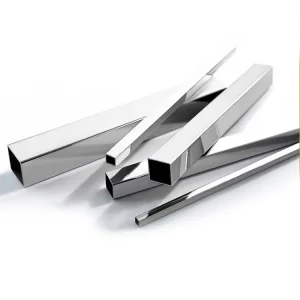
CE Certification Telescopic Stainless Steel Mop Handle Tube, Adjustable, 22mm OD, Anti-Fingerprint Manufacturers, Quotes
View Technical Details
China China Stainless Steel Pipe Factory - Direct Supplier with Certification, Complete Specifications & Custom Processing Services Manufacturers, Manufacturer
View Technical DetailsRequest a Technical Quote & Mill Test Certificate Sample
Partner with a trusted, CE-certified manufacturer. Speak with our metallurgical engineers to discuss your outer diameter, wall thickness, tolerance, and surface roughness requirements today.
Contact Engineering Team Now