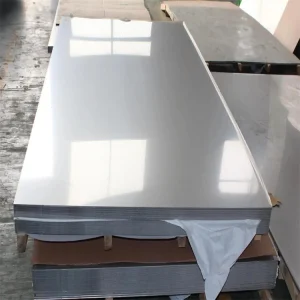
Featured Certified Stainless Steel Products (Catalog Batch 01)
Explore our premium-grade stainless steel plates, tubes, coils, and perforated metal sheets certified under rigorous CE, ISO, and ASTM protocols.


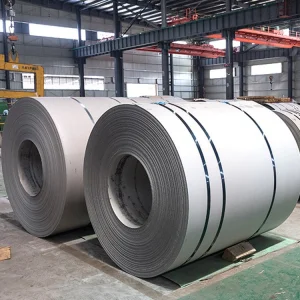


1. Executive Overview & Global Industrial Status of 316L Stainless Steel
In the rapidly evolving landscape of global heavy industry, marine architecture, chemical processing, and sanitary engineering, 316L austenitic stainless steel sheet (UNS S31603 / EN 1.4404) represents the gold standard for high-corrosion, medium-to-high stress environments. Characterized by its low carbon content (ceiling strictly maintained under 0.03%) and substantial addition of Molybdenum (2.0% – 3.0%), 316L resolves the critical vulnerability of intergranular corrosion during welding while offering superior pitting resistance against aggressive chloride ions.
PREN = %Cr + (3.3 x %Mo) + (16 x %N). Standard 304 achieves a PREN score of ~19.0, whereas CE-certified 316L sheet systematically delivers a PREN between 23.0 and 25.5, doubling operational life in marine splash zones.
Low Carbon Integrity
With C ≤ 0.03%, chromium carbide precipitation at grain boundaries during welding is virtually eliminated, bypassing the need for post-weld solution annealing.
Molybdenum Synergy
The inclusion of 2.0–3.0% Mo alters the passive oxide film kinetics, creating a self-healing barrier against crevice corrosion and pitting induced by halides.
Cryogenic Toughness
Retains an face-centered cubic (FCC) austenitic microstructure down to cryogenic temperatures (-196°C), avoiding ductile-to-brittle transition phase shifts.
2. CE Certification Framework & EN 10088-2 Compliance
Procuring stainless steel sheets for European Union projects or international infrastructure mandates strict compliance with the Construction Products Regulation (CPR Directive 305/2011) and Pressure Equipment Directive (PED 2014/68/EU). CE marking is not a mere marketing logo; it is a legally binding assertion that the factory maintains continuous Factory Production Control (FPC) and material batch traceability.
| Certification Standard | Scope & Regulatory Focus | Mandatory Quality Verification Tests | Mill Test Certificate (MTC) Type |
|---|---|---|---|
| EN 10088-2 | Stainless steel sheet/plate for general & structural engineering | Chemical ladle analysis, Yield ($R_{p0.2}$), Tensile ($R_m$), Elongation ($A_5$) | EN 10204 3.1 Traceable |
| EN 10088-4 / CPR | Structural stainless steel products used in European construction | Impact toughness (Charpy V-Notch), Dimensional tolerances (EN ISO 9445 / EN 10029) | CE Certificate of Conformity + DoP |
| PED 2014/68/EU | Materials for pressure vessels, heat exchangers, and boilers | Intergranular corrosion test (ASTM A262 Practice E / ISO 3651-2), Non-destructive testing | EN 10204 3.1 / 3.2 Third-Party Witnessed |
| ASTM A240 / A480 | Chromium and chromium-nickel stainless plate for pressure equipment | Hardness testing (HRB/HV), Bend tests, Surface roughness ($R_a$) mapping | ISO 17025 Laboratory Endorsed |
3. Industrial Scale & Efficiency Advantages of Modern China Factories
The concentration of high-precision cold-rolling mills in industrial hubs like Wuxi and Foshan, integrated directly with primary smelting giants (such as Tsingshan, TISCO, and Baosteel), gives Chinese stainless steel suppliers an unmatched structural advantage. It is not merely cost efficiency—it is end-to-end technological control.
Integrated Upstream Supply Chains
Direct hot-rolled coil (HRC) allocation from premier steel mills ensures stable chemistry (Mo ≥ 2.05%, Ni ≥ 10.05%) and minimizes batch-to-batch structural variance before cold reduction.
Automated Surface Processing
Equipped with 20-high Sendzimir cold rolling mills, continuous Bright Annealing (BA) furnaces, and multi-head Italian polishing lines achieving $R_a < 0.1\mu m$ mirror finishes without surface distortion.
4. Technical Data Matrix: Grade Comparisons & Surface Finishes
Selecting the appropriate alloy specification prevents premature failure and capital misallocation. Below is an expert metallurgical breakdown of chemical bounds and mechanical properties across common engineering grades.
A. Chemical Composition Boundaries (Weight %)
| Grade (UNS / EN) | Carbon (C) max | Chromium (Cr) | Nickel (Ni) | Molybdenum (Mo) | Nitrogen (N) |
|---|---|---|---|---|---|
| 316L (S31603 / 1.4404) | 0.030% | 16.5% – 18.5% | 10.0% – 13.0% | 2.00% – 2.50% | ≤ 0.10% |
| 304 (S30400 / 1.4301) | 0.070% | 17.5% – 19.5% | 8.0% – 10.5% | — | ≤ 0.10% |
| 304L (S30403 / 1.4307) | 0.030% | 17.5% – 19.5% | 8.0% – 10.5% | — | ≤ 0.10% |
| 201 (J1/J4 Grade) | 0.150% | 13.5% – 15.0% | 1.0% – 4.0% (Mn: 8.5%) | — | ≤ 0.20% |
| Duplex 2205 (S31803) | 0.030% | 21.0% – 23.0% | 4.5% – 6.5% | 2.50% – 3.50% | 0.14% – 0.20% |
B. Mechanical Performance & Engineering Limits
| Steel Grade | Yield Strength $R_{p0.2}$ (MPa) min | Tensile Strength $R_m$ (MPa) | Elongation $A_5$ (%) min | Hardness (Rockwell B) max |
|---|---|---|---|---|
| 316L Sheet (Cold Rolled) | ≥ 220 | 520 – 670 | ≥ 40% | 95 HRB |
| 304 Sheet (Cold Rolled) | ≥ 210 | 520 – 720 | ≥ 45% | 92 HRB |
| Duplex 2205 (Hot Rolled) | ≥ 450 | 650 – 880 | ≥ 25% | 31 HRC |
5. Localized Global Application Scenarios
The versatile physical properties of CE-marked 316L cold-rolled and hot-rolled sheets allow them to fulfill strict architectural and industrial roles across distinct global micro-climates.
Middle East Desalination & Energy
In high-ambient, high-salinity coastal environments (e.g., Persian Gulf desalination plants), 316L sheets provide essential resistance against warm brine corrosion and atmospheric salt fog.
European Pharmaceutical & Bioprocess
Cold-rolled 316L 2B/BA sheets finished to surface roughness $R_a ≤ 0.4\mu m$ prevent bacterial entrapment, satisfying EU sanitary standards for clean-in-place (CIP) reactors.
Southeast Asian Chemical Processing
In tropical, high-humidity chemical storage facilities across Vietnam, Indonesia, and Malaysia, 316L plates safeguard storage tanks from severe organic and inorganic acid vapors.
6. Global Enterprise Sourcing & Quality Inspection Protocols
Enterprise procurement leads evaluating OEM manufacturers in China must utilize a structured Quality Assurance / Quality Control (QA/QC) verification checklist before placing container-level purchase orders.
Mandatory Factory Audit Checklist
- Raw Material Traceability: Verify heat numbers back to original mill casting certificates (TISCO, Tsingshan).
- Spectrometer Verification: Handheld XRF Positive Material Identification (PMI) testing on every sheet.
- Dimensional Precision: Laser thickness gauge verification conforming to EN ISO 9445 Class A tolerances.
- Intergranular Corrosion Testing: ASTM A262 Practice E certification performed per production heat.
Export Packaging & Sea Freight Protection
- Surface Protection: 70μm to 100μm Laser PE / PVC protective film on brushed and mirror surfaces.
- Moisture Safeguards: High-density waterproof kraft paper wrapping with desiccants inside sealed PE lining.
- Structural Crating: Fumigated wooden pallets or heavy-duty steel frames strapped with galvanized steel bands.
- Container Loading: Anti-sliding wooden chocks and tension wire bracing engineered for rough sea transit.
7. Future Trends: Decarbonization, AI Inspection & Next-Gen Alloys
The global stainless steel sector is experiencing a paradigm shift driven by stringent carbon neutrality targets and Industry 4.0 automation:
Green Stainless Steel Production
Integration of Electric Arc Furnaces (EAF) powered by renewable solar/hydro energy, drastically reducing Scope 1 and Scope 2 carbon intensity per metric ton produced.
AI Vision Quality Control
Inline high-speed optical camera arrays integrated with machine learning models scan 100% of sheet surfaces at 200m/min to instantly flag microscopic scratches or pinholes.
Hydrogen & Clean Energy Alloys
Development of ultra-thin (0.1mm) precision 316L foils with modified surface chemistries engineered for fuel cell bipolar plates and green hydrogen electrolyzers.
8. Frequently Asked Questions (Technical & Commercial FAQ)
Clear, authoritative answers to common technical queries from metallurgical engineers and international procurement officers.
Complete Certified Stainless Steel Product Line (Catalog Batch 02)
Explore additional factory-direct stainless steel products, including strips, coils, custom perforated sheets, and industrial pipes.