
Featured Stainless Steel Piping & Mill Stock
Explore our premium factory-direct inventory including CE-marked welded pipes, cold-rolled sheets, and precision strips manufactured under ISO 9001:2015 standards.





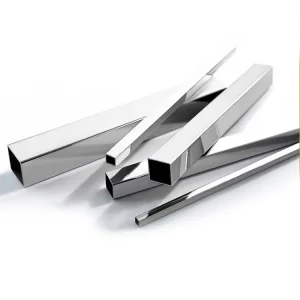

Metallurgical Authority: Why 316L (UNS S31603 / EN 1.4404) Dominates Corrosive Environments
An in-depth engineering breakdown of chemical stoichiometry, pitting resistance equivalent numbers (PREN), and European pressure compliance protocols.
When engineering fluid transportation infrastructure for aggressive halide environments, selecting the appropriate stainless steel alloy is paramount to operational safety and lifecycle return on investment (ROI). 316L stainless steel (UNS S31603, EN 1.4404, SUS 316L) stands out as the ultimate low-carbon molybdenum-bearing austenitic alloy designed to neutralize severe pitting, crevice corrosion, and intergranular sensitization during high-heat welding operations.
1. The Chemistry of Pitting Resistance: Molybdenum Addition & Low-Carbon Matrix
Unlike standard 304/304L alloys, 316L incorporates a targeted addition of 2.0% to 3.0% Molybdenum (Mo). Molybdenum fundamentally alters the thermodynamic stability of the passive chromium-oxide ($Cr_2O_3$) surface film. When exposed to chloride ions ($Cl^-$) found in seawater, de-icing salts, or chemical process streams, Molybdenum stabilizes the oxide boundary, preventing local breakdown that causes catastrophic microscopic pitting.
Furthermore, the "L" designation signifies an ultra-low carbon ceiling of maximum 0.03%. During field welding of industrial pipe lines, standard carbon grades (carbon > 0.08%) experience chromium carbide precipitation along grain boundaries within the critical heat-affected zone (HAZ) temperature window of 425°C to 860°C (800°F to 1500°F). This sensitization depletes local chromium levels below the 10.5% passivity threshold, causing intergranular corrosion. 316L eliminates carbide precipitation, guaranteeing high structural weld integrity without requiring post-weld solution annealing.
2. Technical Cross-Reference Matrix: Standard Comparison & PREN Calculation
The Pitting Resistance Equivalent Number (PREN) provides a quantitative benchmark to evaluate alloy suitability in halide-rich media. Calculated using the standardized metallurgical formula:
| Alloy Grade | UNS / EN Standard | Chemical Composition (%) | PREN Rating | Corrosion Resistance & Service Target |
|---|---|---|---|---|
| AISI 201 | UNS S20100 / EN 1.4372 | Cr: 16.0-18.0 | Ni: 3.5-5.5 | Mn: 5.5-7.5 | Mo: -- | ~ 17.5 | Indoor architectural tubing, moderate humidity, budget applications. |
| AISI 304 / 304L | UNS S30403 / EN 1.4307 | Cr: 17.5-19.5 | Ni: 8.0-10.5 | C: ≤ 0.03 | Mo: -- | ~ 19.0 | General fluid lines, potable water, food & dairy processing equipment. |
| AISI 316L (Core) | UNS S31603 / EN 1.4404 | Cr: 16.5-18.5 | Ni: 10.0-13.0 | Mo: 2.0-2.5 | C: ≤ 0.03 | 23.1 - 25.0 | Marine piping, chemical reactors, pharma WFI systems, coastal infrastructure. |
| Duplex 2205 | UNS S31803 / EN 1.4462 | Cr: 21.0-23.0 | Ni: 4.5-6.5 | Mo: 2.5-3.5 | N: 0.14-0.20 | ~ 35.0 | High-pressure offshore oil/gas, desalination plants, stress corrosion cracking risks. |
3. CE Certification Framework: PED 2014/68/EU & Construction Products Regulation (CPR)
For European Union procurement directors and EPC project leads, obtaining simple mill test reports is insufficient. Piping installed in pressure-containing systems must strictly comply with the Pressure Equipment Directive (PED 2014/68/EU). Our manufacturing facility in Jiangsu, China operates under certified Module H quality assurance protocols, ensuring every batch of 316L industrial welded and seamless pipe meets EN 10217-7 (welded steel tubes for pressure purposes) and EN 10216-5 (seamless steel tubes for pressure purposes).
Each pipe carries a factory-etched laser traceability mark identifying heat heat numbers, wall thickness, outer diameter, hydrostatic test pressures, and CE certification marks linked directly to our EN 10204 3.1 Mill Test Certificates (MTC).
The Wuxi Industrial Hub: China's Integrated Stainless Steel Supply Chain Advantages
How direct integration with tier-1 raw material mills and advanced automation lowers procurement TCO (Total Cost of Ownership) for global enterprise buyers.
Traceable Raw Material Sourcing
We eliminate raw material inconsistency by sourcing 100% of our stainless steel coil feedstock directly from global steel giants: Tsingshan Holding Group, TISCO (Taiyuan Iron & Steel), POSCO, and Baosteel. Every master coil arrives with certified heat numbers and verified chemical spectroscopy.
80+ Automated Production Lines
Operating over 80 high-speed TIG (Tungsten Inert Gas), Plasma, and Laser automatic welding lines in our Wuxi facility allows continuous high-yield production. Our inline internal seam leveling (bead rolling) and automatic online annealing yield near-seamless flow characteristics.
Precision In-House Fabrications
By combining coil slitting, tube forming, mechanical polishing (No.4 brushed, 8K mirror, BA finish), telescopic sizing, and CNC laser cutting under one roof, we eliminate third-party processing markups, cutting total lead time by 35% compared to regional trading intermediaries.
Deepwater Port Logistics
Located strategically near Shanghai and Ningbo deepwater ports, our logistics division ensures rapid ocean freight container consolidation, customized export-grade wooden crate bundling, and waterproof plastic wrapping for damage-free global transit.
Localized Application Scenarios: Matching 316L Pipes to Critical Industry Needs
Detailed engineering guidelines on where and why 316L stainless steel pipes should be specified across global industrial projects.
1. Offshore & Marine Engineering
Operating Environment: Severe exposure to salt spray, splash zone sea air, and high-salinity ballast water pumping systems.
Specification Advice: Standard 304 pipes suffer rapid pitting under brackish conditions. Our 316L seamless and heavy-wall welded pipes ensure zero pitting buildup in desalination intake loops, ship deck railings, and offshore platform heat exchangers.
2. Biopharmaceutical & WFI Loops
Operating Environment: Water-for-Injection (WFI) generation, sterile process piping, strict clean-in-place (CIP) steam sterilization cycles.
Specification Advice: Requires internal mechanical and electro-polishing down to $Ra < 0.38 \mu m$ (15 micro-inch). Our sanitary 316L tubes prevent bacterial bio-film attachment and withstand aggressive nitric acid passivation flushes.
3. Chemical Processing Plants
Operating Environment: Handling organic acids, acetic/formic acids, dilute sulfuric solutions, and halogenated compounds under pressure.
Specification Advice: Specify schedule 10S to schedule 80S ASTM A312 316L pipes. The low carbon content eliminates sensitization risks during plant modification field welds.
4. Cryogenic LNG & Hydrogen Storage
Operating Environment: Liquefied Natural Gas (-162°C) and liquid hydrogen handling at extreme sub-zero temperatures.
Specification Advice: Austenitic 316L maintains superb Charpy V-notch impact toughness down to -196°C without undergoing brittle phase transformation, outperforming ferritic steels.
Quality Assurance Protocol: Zero-Defect NDT Testing & Future Market Trends
How rigorous Non-Destructive Testing (NDT) safeguards your infrastructure, aligned with global green steel and automation developments.
100% Non-Destructive Quality Inspection
To ensure flawless compliance with ASTM A312, ASTM A240, and EN 10217-7, every single 316L pipe produced at our facility undergoes strict multi-tier verification before shipment:
- Hydrostatic Pressure Testing: Tested up to 20 MPa (2900 PSI) to verify wall integrity under extreme internal hoop stresses.
- Online Eddy Current Testing (ET): Automated electromagnetic probe scanning detects surface micro-cracks and weld seam voids according to ASTM E426 standards.
- Ultrasonic Flaw Detection (UT): Deep volumetric examination for thick-wall pipes ensuring zero internal laminations.
- XRF Positive Material Identification (PMI): Handheld spectroscopic confirmation verifying exact Ni, Cr, and Mo percentages before packing.
- Intergranular Corrosion Test: Conducted according to ASTM A262 Practice E (Monypenny / Strauss test).
Future Industry Trends (2025–2030)
- Green Steelmaking & Low-Carbon Footprint: Global buyers are increasingly subject to the EU Carbon Border Adjustment Mechanism (CBAM). Renzhi is adopting electric arc furnace (EAF) feedstock utilizing renewable energy, dropping Scope 1 and 2 carbon intensity.
- Automated Precision Laser Welding: Transitioning from traditional TIG welding to ultra-narrow heat zone high-power fiber laser welding, reducing weld grain growth and improving burst pressure resistance by 15%.
- Digital MTC & Blockchain Traceability: Replacing easily forged paper certificates with QR-code embedded digital certificates linked to raw material heat chemistry logs.
Frequently Asked B2B Technical Questions (FAQ)
Expert engineering answers addressing procurement, compliance, tolerance, and manufacturing capabilities.
1. What is the fundamental difference between 316 and 316L stainless steel pipes? ▼
2. Does your 316L stainless steel pipe comply with EU Pressure Equipment Directive (PED 2014/68/EU)? ▼
3. What dimensional tolerances and size ranges can your factory produce? ▼
4. How do you prevent contamination between carbon steel and stainless steel during production? ▼
5. What interior and exterior surface finishes are available for industrial and ornamental tubing? ▼
- No.1 / AP (Annealed & Pickled): Standard industrial unpolished finish for chemical piping.
- 2B / Mill Finish: Smooth cold-rolled finish.
- BA (Bright Annealed): Highly reflective heat-treated surface for high-purity systems.
- Mechanical Polish (No.4 / Hairline / 180-600 Grit): Satin brushed finish for food, architectural, and decorative applications.
- 8K Mirror Polish / Electro-polishing (EP): Ultra-smooth interior finish ($Ra < 0.38 \mu m$) required for bio-pharmaceutical process piping.
6. What is your typical production lead time and Minimum Order Quantity (MOQ)? ▼
7. How does Renzhi support OEM drawing requirements and post-processing fabrication? ▼
Additional Factory-Direct Products & Stainless Steel Solutions
Browse our expanded range of industrial welded pipes, duplex plates, and cold-rolled stainless sheets available for worldwide ocean freight export.



Optimize Your Stainless Steel Piping Procurement Today
Connect directly with our metallurgical engineers and international trade specialists in Wuxi. Request chemical mill test certificates, customized dimension quotes, or technical compliance documentation within 2 hours.