
CE Certified Stainless Steel Product Portfolio (Part I)
Explore our top-tier CE certified stainless steel products engineered for high-corrosion, pressure-vessel, and decorative structural deployments.


Understanding 316L Metallurgy & CE Compliance Mechanics
An engineering breakdown of Grade 316L (UNS S31603 / 1.4404) alloy chemistry, corrosion performance dynamics, and European CE compliance requirements.
Chemical Architecture & Molybdenum Surcharge Impact
316L stainless steel is an extra-low carbon variant of the standard 316 grade. By maintaining carbon content strictly at C ≤ 0.030%, carbide precipitation during welding is essentially eliminated, preventing intergranular corrosion in as-welded heat-affected zones (HAZ). The critical inclusion of 2.0% to 3.0% Molybdenum (Mo) boosts resistance against localized chloride pitting and crevice corrosion.
CE Certification Mandates: PED 2014/68/EU & EN 10204 3.1/3.2
For global engineering projects operating under European Jurisdiction, CE certification is legally binding. Under the Pressure Equipment Directive (PED 2014/68/EU) and Construction Products Regulation (CPR EU 305/2011), 316L products must provide full metallurgical traceability via Mill Test Certificates (MTR) according to EN 10204 3.1 or independent third-party verified 3.2 inspection (TÜV, Lloyd's Register, SGS).
Comparative Chemical & Mechanical Specification Table
| Grade / Standard | Carbon (C) | Chromium (Cr) | Nickel (Ni) | Molybdenum (Mo) | PREN Rating | Yield Strength (Rp0.2) | Tensile Strength (Rm) |
|---|---|---|---|---|---|---|---|
| 316L (EN 1.4404) | ≤ 0.030% | 16.5 - 18.5% | 10.0 - 13.0% | 2.0 - 2.5% | 23.1 - 26.5 | ≥ 220 MPa | 520 - 670 MPa |
| 316 (EN 1.4401) | ≤ 0.070% | 16.5 - 18.5% | 10.0 - 13.0% | 2.0 - 2.5% | 22.5 - 25.8 | ≥ 205 MPa | 515 - 690 MPa |
| 304L (EN 1.4307) | ≤ 0.030% | 17.5 - 19.5% | 8.0 - 10.5% | — | 17.5 - 19.5 | ≥ 200 MPa | 500 - 650 MPa |
| Duplex 2205 (1.4462) | ≤ 0.030% | 21.0 - 23.0% | 4.5 - 6.5% | 2.5 - 3.5% | 32.0 - 35.5 | ≥ 450 MPa | 650 - 880 MPa |
*Pitting Resistance Equivalent Number (PREN) formula: PREN = %Cr + (3.3 × %Mo) + (16 × %N). Higher values represent superior resistance to chloride-induced pitting.
316L Stainless Steel Real-Time Price Matrix & Cost Factors
Pricing for 316L stainless steel varies based on raw material alloy surcharges (LME Nickel & Molybdenum spot prices), processing heat treatments, and dimensional tolerances.
| Product Form | Dimension Range | Surface Finish | Standard Specification | Price Range (USD / Ton) | Lead Time (Days) |
|---|---|---|---|---|---|
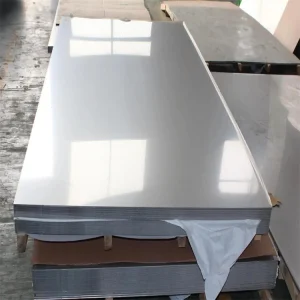
| 316L Cold Rolled Coil | 0.3mm - 3.0mm Width: 1000-1500mm | 2B / BA / No.4 / 8K Mirror | ASTM A240 / EN 10088-2 | $2,650 - $2,950 | 7 - 12 Days |
| 316L Hot Rolled Plate | 3.0mm - 60.0mm Width: 1500-2000mm | No.1 Annealed & Pickled | ASTM A240 / EN 10088-2 | $2,550 - $2,820 | 10 - 15 Days |
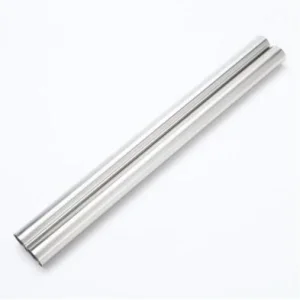
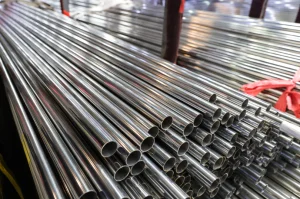
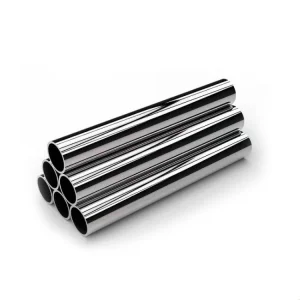
| 316L Welded Industrial Pipe | OD 1/2" - 48" (WT: SCH 5S - SCH 80S) | Pickled / AP / 320 Grit | ASTM A312 / EN 10217-7 | $2,800 - $3,250 | 12 - 18 Days |
| 316L Seamless Fluid Pipe | OD 6mm - 630mm (WT: 1mm - 40mm) | Bright Annealed (BA) / Descaled | ASTM A312 / EN 10216-5 | $3,200 - $3,850 | 15 - 22 Days |
| 316L Precision Slit Strip | Thickness: 0.1mm - 2.0mm (Width: 10-600mm) | TR / 2B / Custom Polish | JIS G4305 / ASTM A666 | $2,750 - $3,100 | 5 - 10 Days |
Molybdenum & Nickel Spot Correlation
Because Grade 316L contains 2.0-3.0% Molybdenum and ~10% Nickel, roughly 68% of the final quote is tied to raw material surcharges on the London Metal Exchange (LME) and Shanghai Futures Exchange (SHFE).
Processing & Heat Treatment Costs
Bright Annealing (BA) in a pure hydrogen atmosphere eliminates oxidation scales without chemical pickling, commanding a $120–$250/ton premium over standard 2B finishes.
Volumetric Scale Discounts
Tier-1 global procurement contracts exceeding 50 metric tons qualify for direct mill discounts of up to 4.5–7.0%, alongside custom length slitting that minimizes fabrication scrap.
Wuxi Stainless Steel Supply Chain: Technical Superiority
Located in Wuxi, Jiangsu—China's premier stainless steel distribution and processing hub—our facility leverages direct mill feedstock from Tsingshan, TISCO, Baosteel, and POSCO.
Vertical Integration from Master Coil to Precision Tube
Unlike secondary processors that outsource slitting or polishing, our integrated Wuxi factory handles all core operations internally. Operating over 80 welded pipe mills, 5 automatic high-speed slitting lines, 6 automated surface-polishing bays (capable of No.4, Hairline, and 8K Mirror finishes), and 2 heavy embossing lines, we eliminate intermediary markups and prevent cross-contamination between carbon and stainless steel.
Rigorous QA: 100% Non-Destructive Testing (NDT)
Every length of CE-marked 316L industrial welded pipe undergoes online continuous Eddy Current inspection and off-line hydrostatic testing according to ASTM A999 / EN 10246 requirements. PMI (Positive Material Identification) spectrographic handheld testing is performed on every heat number prior to packing, verifying exact Cr-Ni-Mo stoichiometry.
Localized Application Scenarios & Global Regulatory Support
Grade 316L stainless steel provides dependable service across harsh localized environments. Here is how our materials meet specific regional standards and operational conditions.
Marine & Offshore Engineering
Environment: High saline marine spray, ballast water piping, and splash-zone structural supports.
Engineering Advantage: 316L's 2.0-3.0% Molybdenum content counters pitting corrosion caused by ambient sodium chloride (NaCl). Certified to DNV-GL, ABS, and CE CPR regulations for marine construction.
Chemical & Petrochemical Processing
Environment: Organic acids, acetic solutions, and sulfurous gas processing lines.
Engineering Advantage: Low carbon levels prevent intergranular cracking during high-heat operation. Meets ASME SA240, ASTM A312, and European PED 2014/68/EU Module H compliance for pressure vessels.
Pharmaceutical Cleanrooms & WFI Systems
Environment: Water for Injection (WFI) loops, bioreactor vessels, and sterile liquid conveyance.
Engineering Advantage: Electro-polished (EP) internal surface roughness down to Ra ≤ 0.38 μm minimizes biofilm adhesion. Full compliance with ASME BPE and FDA food/pharma contact regulations.
Industry Development Trends & Smart Quality Control
The global stainless steel sector is undergoing rapid technological updates driven by green manufacturing, digital quality tracking, and material substitution.
1. Decarbonized Green Steel Production (EAF Route)
To meet European Carbon Border Adjustment Mechanism (CBAM) requirements, leading mills are shifting from traditional Blast Furnace-Basic Oxygen Furnace (BF-BOF) routes toward Electric Arc Furnaces (EAF) powered by renewable energy. EAF-melted 316L scrap yields a reduced carbon footprint (<0.8 tCO2/t steel), giving global buyers a low-carbon procurement path.
2. AI-Powered Surface Defect Detection & Blockchain MTRs
Our Wuxi production facilities integrate AI-driven automated optical inspection (AOI) cameras along cold-rolling and polishing lines. Scanning at 120 meters/minute, AI vision algorithms detect pinholes, micro-scratches, and inclusions instantly. Coupled with tamper-proof QR-coded Mill Test Certificates, global clients can verify material authenticity on-site.
Frequently Asked Technical & Procurement Questions
Detailed answers regarding CE certification, material grade selection, tolerances, and ordering procedures for international buyers.
What does CE Certification mean for 316L stainless steel pipes and plates?
CE Certification confirms that our 316L stainless steel products comply with European Union health, safety, and environmental protection standards. For pressure-bearing applications, CE marking under the Pressure Equipment Directive (PED 2014/68/EU) allows these products to be installed in industrial boilers, pressure vessels, and chemical pipelines across the EU without requiring additional local regulatory re-testing.
How does 316L compare to 304 and 316 in corrosion resistance?
Grade 304 lacks Molybdenum, offering lower pitting resistance (PREN ~18-19). Standard Grade 316 contains 2.0-3.0% Mo (PREN ~23-25) but has higher carbon (up to 0.07%), making it prone to intergranular corrosion after welding. Grade 316L combines 2.0-3.0% Mo with extra-low carbon (≤0.030%), providing superior protection against both pitting in chloride environments and intergranular corrosion in welded zones.
Can I request EN 10204 3.2 inspection certificates for my order?
Yes. While our standard orders include EN 10204 3.1 Mill Test Reports directly issued by our quality control department, we routinely accommodate third-party EN 10204 3.2 inspections. Authorized independent inspectors from TÜV, SGS, Bureau Veritas, or Lloyd's Register can witness chemical sampling, hydrostatic testing, and tensile trials at our factory prior to export.
What dimensional tolerances do you guarantee on cold-rolled 316L sheets and tubes?
Our cold-rolled 316L sheets adhere strictly to ASTM A480 / EN ISO 9445 standards, maintaining thickness tolerances within ±0.02mm for precision strips and ±0.05mm for standard 2B sheets. Industrial welded pipes conform to ASTM A312 / EN 10217-7, with outer diameter (OD) tolerances within ±0.75% and wall thickness tolerances within ±10%.
How are 316L stainless steel products packaged for long-distance ocean freight?
To prevent surface scratches and sea-water moisture damage, cold-rolled sheets feature PE protective film and neutral interleaving paper between layers. Coils are bound on heavy-duty wooden pallets with moisture-proof plastic wrapping and steel strapping. Pipes are capped at both ends, packed in seaworthy wooden crates, or bundled with heavy woven plastic sleeves.
What is the typical Minimum Order Quantity (MOQ) and delivery timeline?
For standard stock items (2B/NO.1 sheets, standard SCH 10S/40S welded pipes), the MOQ is 1 metric ton. Custom cut-to-length orders, mirror-polished finishes, or special slitting widths require a 3–5 ton minimum. Stock items dispatch within 5–7 days, while custom production runs complete in 12–18 days.
CE Certified Stainless Steel Product Portfolio (Part II)
Explore additional high-grade cold rolled sheets, precision strips, and specialized 316L welded solutions ready for global shipment.



Require CE-Marked 316L Stainless Steel Quotes?
Submit your material specification, wall thickness, outer diameter, surface finish, and target destination port. Our metallurgical engineers will issue a formal quote within 24 hours.
Request Engineering Quote & MTR Sample