Primary Industrial Stainless Steel Plate Solutions for Algeria
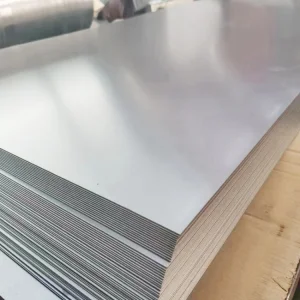
Featured cold-rolled and hot-rolled stainless steel plates precision-manufactured for Algerian industrial procurement
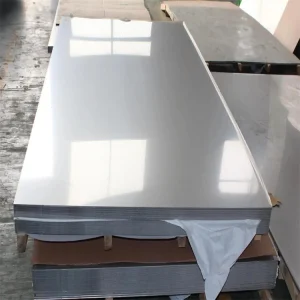
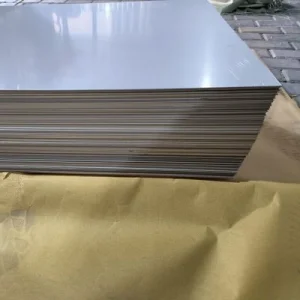
Algeria's Industrial Transformation & Strategic Stainless Steel Demand
A comprehensive analysis of metallurgical requirements under Algeria’s Economic Recovery Plan and industrial modernization initiatives
The Macroeconomic Context: Vision 2030 & Infrastructure Expansion
As the largest economy in North Africa, Algeria is executing a structural transformation aimed at expanding its industrial base beyond hydrocarbon extraction. Driven by sovereign investments under the national economic recovery blueprint, massive infrastructure expansions are underway across key industrial corridors including Algiers, Oran, Constantine, Annaba, and Skikda. The scaling of heavy manufacturing, mining projects (such as Gara Djebilet iron ore development), and public transit networks has triggered exponential demand for high-grade structural and corrosion-resistant steel plates.
To meet these demanding local standards, EPC contractors, state enterprises (such as Sonatrach and Sonelgaz), and private fabricators require foreign suppliers capable of delivering standardized ASTM A240 and EN 10088-2 compliant material with guaranteed metallurgical consistency.
Severe Corrosion Dynamics in Coastal & Sahara Environments
Algeria presents unique operational challenges due to its extreme dual-climate geography. The 1,200 km Mediterranean coastline subjects industrial infrastructure to high marine humidity, elevated airborne salinity, and ambient chloride attack, demanding high Pitting Resistance Equivalent Number (PREN) alloys such as SS316L, Duplex 2205, and Super Duplex 2507 for coastal projects.
Conversely, the southern Saharan energy basins—such as Hassi Messaoud, Hassi R'Mel, and In Salah—present extreme thermal cycling, high ambient temperatures exceeding 50°C, sand abrasion, and sour gas (H₂S) exposure. Selecting the appropriate stainless steel plate thickness, heat treatment condition (solution annealed), and grade prevents catastrophic stress corrosion cracking (SCC) and premature equipment downtime.
Market Demand Drivers across Key Algerian Industrial Sectors
The procurement of stainless steel plates in Algeria spans four vital economic sectors, each requiring tailored chemical compositions, surface treatments, and mechanical strength specifications:
- Hydrocarbon & Energy Refining (Oil & Gas): Sonatrach projects demand heavy-gauge hot-rolled plates (No. 1 finish) in SS316L, 310S, and Duplex 2205 for pressure vessels, distillation columns, storage tanks, and separator equipment. Plates must meet strict NACE MR0175/ISO 15156 standards for sulfide stress cracking resistance in sour gas environments.
- Seawater Desalination Mega-Projects: To mitigate water scarcity, Algeria is constructing major reverse osmosis (RO) seawater desalination facilities across its coastal provinces (including Cap Djinet, Fouka, and Kinet). High-pressure pump casings, membrane pressure vessels, and header piping manifolds depend strictly on Super Duplex 2507 (UNS S32750) plates due to their PREN > 40 and exceptional resistance to chloride pitting.
- Agro-Food Processing & Pharmaceutical Manufacturing: Regional industrial zones in Blida, Sétif, and Mitidja are expanding dairy processing, beverage bottling, grain storage, and pharmaceutical production plants. These hygienic applications specify cold-rolled 304 and 316L sheets with 2B or No. 4 brushed finishes, ensuring smooth, non-porous surfaces that prevent bacterial adherence and facilitate CIP (Clean-In-Place) sterilization cycles.
- Architectural Cladding, Elevators & Commercial Infrastructure: Modern urban developments in Algiers, Oran, and Constantine require decorative 201 and 304 cold-rolled stainless steel sheets featuring 8K mirror, hairline, and embossed textures for exterior building facades, airport terminal interiors, metro station paneling, and elevator cabins.
Engineering Grade Selection Matrix for Algerian Projects
Technical evaluation of chemical compositions, mechanical properties, and environmental suitability to optimize lifecycle cost and prevent material failure
| Steel Grade | Standard Equivalents | Chemical Profile (Nominal) | PREN Rating | Corrosion Resistance | Recommended Algerian Application |
|---|---|---|---|---|---|
| Austenitic 201 | AISI 201 / UNS S20100 / EN 1.4372 | 16-18% Cr, 3.5-5.5% Ni, 5.5-7.5% Mn | ~ 17 | Moderate | Indoor architectural trims, elevator interiors, commercial kitchenware, furniture. |
| Austenitic 304 / 304L | ASTM A240 304 / EN 1.4301 / 1.4307 | 18-20% Cr, 8-10.5% Ni, C ≤ 0.030% (304L) | ~ 19 - 21 | High | Food & dairy processing plants in Blida, municipal water tanks, general fabrication. |
| Austenitic 316 / 316L | ASTM A240 316L / EN 1.4404 / 1.4435 | 16-18% Cr, 10-14% Ni, 2-3% Mo | ~ 23 - 25 | High (Chloride) | Coastal refineries (Skikda/Arzew), marine hardware, chemical storage tanks. |
| High-Temp 310S | ASTM A240 310S / EN 1.4845 | 24-26% Cr, 19-22% Ni, High Heat Resistance | ~ 25 | High Heat (<1150°C) | Furnace liners, cement kiln components, gas turbine exhaust systems in Sahara basins. |
| Duplex 2205 | UNS S31803 / S32205 / EN 1.4462 | 21-23% Cr, 4.5-6.5% Ni, 3% Mo, 0.14-0.20% N | ~ 34 - 36 | Very High | Oil & gas separators, offshore structures, high-stress chemical processing vessels. |
| Super Duplex 2507 | UNS S32750 / EN 1.4410 | 24-26% Cr, 6-8% Ni, 3.8-4.5% Mo, 0.27-0.32% N | > 42 | Extreme (PREN>40) | Seawater reverse osmosis (SWRO) high-pressure manifolds, severe sour oil wells. |
Pitting Resistance Equivalent Number (PREN) Explained
The PREN metric provides an engineering baseline for predicting pitting corrosion resistance in chloride-rich environments using the standard formula: PREN = %Cr + 3.3(%Mo + 0.5%W) + 16(%N). For Algerian buyers operating along the coastal belt, specifying material with verified PREN guarantees extended service life under severe atmospheric salt loading.
Intergranular Corrosion Prevention (Low Carbon .316L/304L)
During heavy plate welding in industrial pressure vessel fabrication, carbon precipitation at grain boundaries can cause intergranular corrosion (sensitization). By supplying low-carbon variants (C ≤ 0.030%), our plates maintain complete metallurgical stability post-welding without requiring costly post-weld solution annealing.
Surface Finishes: From Mill Scale to 8K Mirror
We deliver tailored surface finishes to match application intent: No.1 hot-rolled for industrial tanks; 2B cold-rolled for general fabrication; No.4 satin/brushed with PE protective film for architectural panels; and 8K mirror finish for decorative interior architecture in Algerian commercial developments.
China Industry 4.0 Manufacturing & Global Supply Chain Resilience
Leveraging automated production technologies and integrated logistics to optimize total cost of ownership (TCO) for Algerian importers
Smart Factory Production & Precision Processing
Our state-of-the-art manufacturing infrastructure in Wuxi, Jiangsu—China’s premier stainless steel hub—integrates Industry 4.0 automation across slitting, leveling, laser cutting, and surface treatment lines. Automated optical thickness gauges and laser flatness sensors ensure tight dimensional tolerances (±0.02mm on cold-rolled sheets), ensuring flawless compatibility with CNC fiber laser cutters and automated bending brakes operated by Algerian fabricators.
- Direct mill feedstock integration with Baosteel, TISCO, Tsingshan, and POSCO.
- In-house multi-roll precision leveling preventing internal residual stress.
- Automated laser ultrasonic testing (UT) for heavy plate internal soundness.
Direct Maritime Shipping Logistics to Main Algerian Ports
Supply chain resilience relies on seamless ocean freight execution. We maintain strategic ocean carrier agreements for containerized (FCL) and breakbulk bulk vessel shipments departing major Chinese ports (Shanghai/Ningbo) directly to primary Algerian ports: Port of Algiers, Port of Oran, Port of Skikda, and Port of Bejaia.
- Heavy-Duty Export Packaging: Fumigated wooden skids, waterproof craft paper wrapping, edge protectors, and steel strapping designed for rough sea transit.
- Full Customs Compliance: Complete documentation including Certificate of Origin (Form CO / EUR.1 compliance assistance), Commercial Invoice, Packing List, and Bill of Lading.
- Third-Party Quality Inspection: Pre-shipment verification by SGS, Bureau Veritas (BV), or TÜV upon customer request.
Localized Applications across Algerian Industrial Ecosystems
Real-world engineering implementations of our stainless steel plates in North African energy and industrial infrastructure
Refining & Storage Tanks in Hassi Messaoud & Skikda
Heavy hot-rolled ASTM A240 316L and 2205 duplex plates are heavily utilized in constructing high-pressure oil-gas separators and chemical storage tanks. The low carbon chemistry inhibits carbide precipitation during field welding, resisting aggressive hydrogen sulfide (H₂S) gas in desert extraction wells.
Seawater Desalination Plants (Cap Djinet & Fouka)
Desalination plants along the Algerian coast handle ultra-high salinity Mediterranean brine. Super Duplex 2507 plates are engineered specifically into high-pressure pumps and RO filter housings, where high PREN (>42) eliminates pitting risks and extends asset lifespan beyond 25 years.
Food Processing & Dairy Plants in Blida & Sétif
For Algeria's growing agricultural and food production sector, cold-rolled 304 2B and No.4 finish sheets provide smooth, hygienic surfaces compliant with international food contact standards. Ideal for milk cooling tanks, grain storage silos, and commercial cooking kettles.
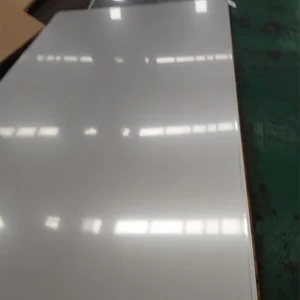
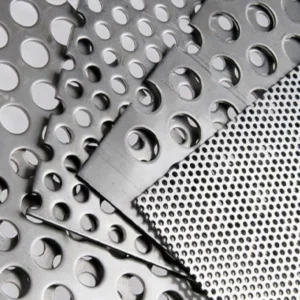
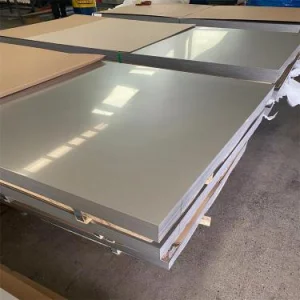
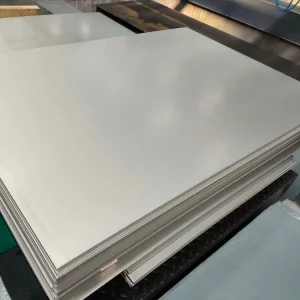
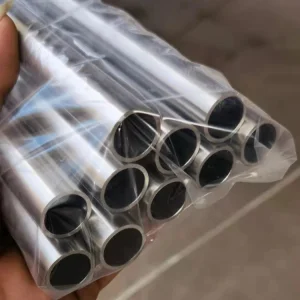
Full Industrial Product Catalog for Direct Import to Algeria
Explore our complete inventory of mill-certified stainless steel plates, sheets, and pipes available for shipment to Algiers, Oran, and regional ports
Quality Verification & International Certification Compliance
Rigorous multi-stage metallurgical testing ensuring 100% compliance with Algerian import standards and EPC project specifications
EN 10204 3.1 & 3.2 Inspection Certificates
Every order of stainless steel plates shipped to Algeria is accompanied by an official Mill Test Certificate (MTC) according to EN 10204 3.1. Chemical heat analysis, mechanical tensile/yield testing, elongation values, and hardness numbers (HBW/HV) are fully certified and traceable back to the raw material melt batch.
Non-Destructive & Corrosion Testing (NDT)
For heavy plates intended for critical oil, gas, or chemical duty in Algeria, we perform ultrasonic testing (UT per ASTM A578 Level A/B), Positive Material Identification (PMI spectro-analysis), hydrostatic pressure verification, and ASTM A262 Practice E intergranular corrosion testing prior to dispatch.
Pre-Shipment Inspection (SGS / BV / TÜV)
We fully accommodate Algerian banking requirement procedures (Letter of Credit / Bank Documentations) by facilitating independent third-party inspection agencies including SGS, Bureau Veritas (BV), or Intertek to verify dimensional tolerances, quantity, and packaging integrity before container sealing.
Frequently Asked Questions for Algerian Procurement & Engineering Teams
Expert answers addressing import regulations, technical standards, grade matching, and shipping logistics to Algeria
What are the primary shipping lead times and container routes from your factory to Algerian ports?
How do I select between 316L and Duplex 2205 for an Algerian coastal oil refining project?
What documentation and mill test reports (MTC) do you supply for customs and banking in Algeria?
Can your factory process custom plate dimensions, cut-to-size shapes, and surface protective films?
What anti-corrosion packaging measures are taken to ensure seaworthy delivery to North Africa?
Partner with China's Premier Stainless Steel Manufacturer for Your Algerian Projects
Need mill-direct pricing, technical datasheets, or custom quotation for stainless steel plates, sheets, or pipes? Contact our senior metallurgical engineering sales team today for rapid support.