Core Stainless Steel Piping Solutions for German Industry
Engineered to conform with strict DIN, EN, and AD 2000-Merkblatt W0 standards for seamless integration into German manufacturing hubs.
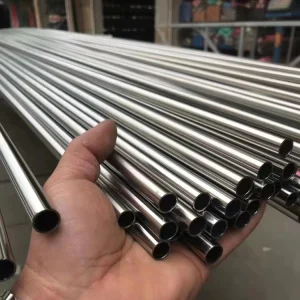
DIN/EN Precision Stainless Steel Pipe Solutions
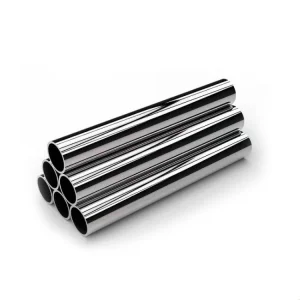
CE Certified Architectural & Decorative Stainless Tubing
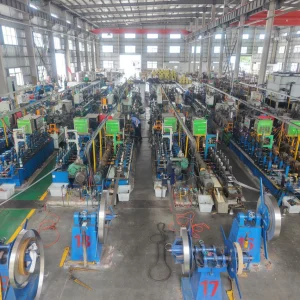
Heavy Industrial Welded Stainless Pipe (DIN EN 10217-7)
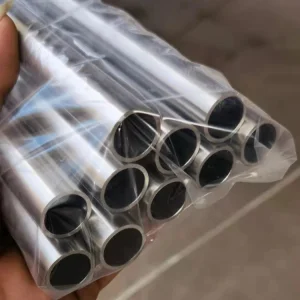
Low-Carbon EN 1.4301 / 1.4307 (304/304L) Process Piping
Germany's Industrial Landscape & Stainless Steel Requirements
An authoritative analysis of supply chain transformations, regional demand hubs, and decarbonization mandates across the German Federal Republic.
North Rhine-Westphalia (NRW) Chemical Corridor
The chemical and petrochemical complexes along the Rhine (Leverkusen, Dormagen, Krefeld) demand high-molybdenum austenitic (1.4404 / 316L) and Duplex stainless steel pipes designed to resist severe pitting and stress-corrosion cracking under aggressive thermal cycling.
Baden-Württemberg & Bavaria Automotive Powerhouses
Precision stainless steel tubing for fluid lines, exhaust manifolds, and high-pressure hydrogen feed lines requires exact dimensional tolerances (ISO 1127 / EN 10305-5) and zero-defect eddy current weld testing to satisfy Tier-1 automotive suppliers in Stuttgart and Munich.
Northern Germany Green Energy & Offshore Transition
The North Sea green hydrogen infrastructure, offshore wind substations, and coastal LNG terminals (Wilhelmshaven, Brunsbüttel) mandate Super Duplex 1.4410 (2507) and 1.4462 (2205) piping systems tested to withstand high-salinity chloride marine environments.
Global Supply Chain Shifts and Germany’s Sourcing Strategy
Germany’s industrial core—the world's fourth-largest economy—is experiencing a structural transformation driven by the EU Carbon Border Adjustment Mechanism (CBAM), elevated domestic energy costs, and the national Energiewende (Energy Transition). As traditional domestic European stainless steel mills adjust output due to energy market fluctuations, procurement leaders across Germany are diversifying their supply chains. They seek reliable, high-capacity international manufacturers capable of delivering fully compliant, mill-certificated stainless steel pipes directly to key industrial ports such as Hamburg, Bremen, and Rotterdam.
To successfully serve German industrial buyers, a supplier must go beyond basic manufacturing. It requires an intimate engineering knowledge of European Material Numbers (Werkstoffnummer), European Standards (EN 10217-7, EN 10216-5, EN 10088-2), and stringent quality verification protocols including TÜV-aligned inspections and EN 10204 3.1 Material Test Certificates (MTC).
Strict Regulatory & Quality Assurance Framework
Our manufacturing and testing protocols align perfectly with German national and European Union engineering standards.
Essential Standards Matrix for German Procurement Engineers
When requesting quotes for stainless steel pipes in Germany, engineering specifications dictate exact physical and chemical parameters. Below is our standard manufacturing coverage for the German market:
- DIN EN 10217-7: Welded stainless steel tubes for pressure purposes. Covers dimensions, technical delivery conditions, and non-destructive testing (NDT) criteria for austenitic and austenitic-ferritic (duplex) steel grades.
- DIN EN 10216-5: Seamless stainless steel tubes for pressure applications. Precision cold-drawn or hot-finished tubing engineered for high-temperature and high-pressure steam boiler or heat exchanger systems.
- AD 2000-Merkblatt W0 / W2: Certification essential for pressure vessel equipment operating under the German Druckgeräte-Richtlinie (Pressure Equipment Directive 2014/68/EU - PED).
- DIN EN ISO 1127: Standard governing stainless steel tube dimensions, tolerances, and conventional masses per unit length, guaranteeing flawless fitments with German press-fit and orbital welding systems.
Localized Application Scenarios Across German Industry
Customized stainless steel pipe manufacturing tailored for high-tech, hygienic, and severe-corrosion German industrial sectors.
Brewery, Beverage & Food Processing (Bavaria & Lower Saxony)
Hygienic stainless steel pipes (DIN 11850 / EN 10357 Range A) featuring interior surface roughness Ra < 0.8 µm (or Ra < 0.4 µm electro-polished). Perfect for CIP (Clean-In-Place) systems in Munich breweries, dairy processing plants, and food packaging machinery.
Machine Building & Precision Mechanical Engineering (Maschinenbau)
German OEM machine builders demand tight dimensional accuracy and high tensile strength. We supply precision cold-drawn structural tubes (EN 10296-2 / EN 10305-5) in 1.4301 and 1.4404 for automated production lines, robotic arms, and hydraulic sleeves.
Pharmaceutical & Semiconductor Ultra-Pure Gas Lines (Saxony / Silicon Saxony)
High-purity 316L (1.4435 / 1.4404) bright annealed (BA) and electro-polished (EP) micro-tubing serving microelectronics foundries in Dresden and pharmaceutical biotech hubs in Hesse and Berlin.
Technology Roadmap & Future Outlook (2025–2035)
Pioneering green steel manufacturing, hydrogen-ready piping systems, and digital supply chain integration for European buyers.
1. CBAM-Compliant Green Stainless Steel Production
In response to the European Green Deal and German Federal Climate Change Act (Klimaschutzgesetz), our partner mills are shifting toward Electric Arc Furnace (EAF) steelmaking powered by renewable solar and hydro energy. By maximizing scrap metal ratios up to 85% and tracking Scope 1, 2, and 3 carbon emissions, we provide verified Carbon Footprint Declaration documents to streamline your CBAM compliance at German customs.
2. Hydrogen-Ready Pipe Testing Protocol (H2-Ready)
As Germany expands its national 9,700 km Hydrogen Core Network (Wasserstoff-Kernnetz), standard gas piping is no longer sufficient. We have engineered high-purity austenitic stainless steel pipes subjected to specialized helium leak detection, micro-fissure laser scanning, and inner-wall passivating processes to eliminate hydrogen embrittlement risks under extreme pressure (up to 700 bar).
3. AI-Driven Smart Quality Control & Digital MTC
Every batch of stainless steel pipe produced for our German clients incorporates dynamic QR-coded digital product passports (DPP). Scanning the pipe body instantly retrieves heat numbers, spectral chemical analysis, tensile testing charts, and 100% NDT inspection logs verified via immutable cloud records.
Full Range Stainless Steel Pipes, Sheets & Coils
Explore our full line of industrial, decorative, and specialized structural products for immediate export to Germany.
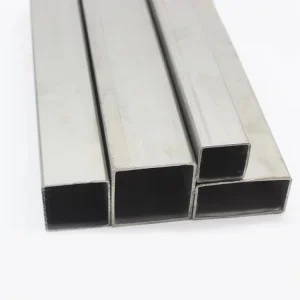
Prime Grade Commercial 201 Stainless Steel Tubing
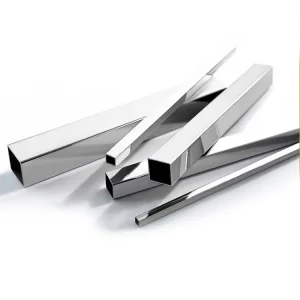
CE Telescopic Anti-Fingerprint Stainless Steel Tubing (22mm OD)
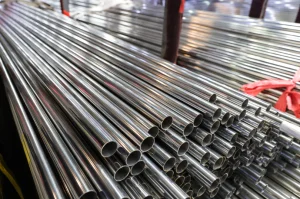
High-Corrosion 316L (1.4404) Welded Industrial Pipe
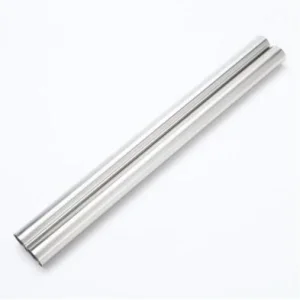
Powder Coated Decorative Stainless Tubes (25mm OD)
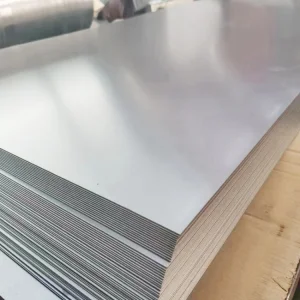
Heavy Industrial 316L Stainless Steel Sheet & Plate
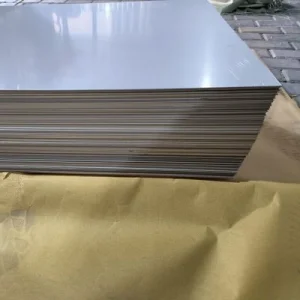
Food-Grade SUS304 (1.4301) Cold-Rolled Stainless Plate
Multi-Grade Industrial Welded Pipes (201 / 304 / 316L)
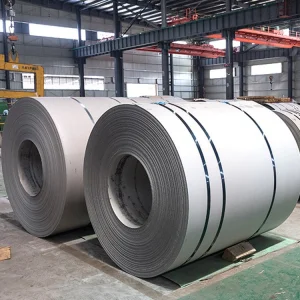
Heavy-Duty Hot-Rolled Stainless Steel Coil & Strip
Questions German Procurement Managers Ask Us
Clear, authoritative answers regarding standards compliance, logistics to German ports, testing procedures, and customs clearance.
Ready to Request a Mill-Direct Stainless Steel Quote?
Partner with a proven stainless steel pipe manufacturer dedicated to meeting German industrial precision, strict EN/DIN compliance, and competitive international pricing.