

Bangkok Industrial Stainless Steel Piping Report: Supply Chain Economics, Corrosion Resistance Dynamics & Local Procurement Framework
The industrial ecosystem of Greater Bangkok—spanning the industrial zones of Samut Prakan, Pathum Thani, Ayutthaya, and extending directly into Thailand’s Eastern Economic Corridor (EEC) including Chonburi and Rayong—demands advanced metallurgical solutions capable of withstanding severe operational stressors. As Bangkok continues its modernization through mega infrastructure projects, urban transport expansion, food processing automation, and coastal water treatment developments, procurement managers and project engineers face a complex matrix of choices regarding stainless steel grade selection, manufacturing standards, and supply chain risk mitigation.
This technical whitepaper provides a comprehensive analysis of the local Bangkok market environment, metallurgical selection standards (austenitic vs. duplex vs. ferritic), the advantages of Industry 4.0 Chinese smart manufacturing, and actionable strategies for optimizing international B2B procurement while maintaining total compliance with international engineering codes.
1. Local Commercial & Industrial Context: Greater Bangkok & The EEC Corridor
Procuring stainless steel pipe serving Bangkok requires an acute understanding of the local climate and industrial parameters. Thailand’s central region is characterized by a high-humidity tropical climate with average annual relative humidity exceeding 75% and frequent exposure to coastal atmospheric salts from the Gulf of Thailand.
Tropical Humidity & Marine Pitting
High moisture levels combined with airborne sodium chloride in Samut Prakan and coastal Bangkok accelerate localized crevice and pitting corrosion in low-grade alloys. Selecting pipes with adequate Pitting Resistance Equivalent Number (PREN) is paramount.
Food & Beverage Dominance
Greater Bangkok houses major food processing hubs (seafood, poultry, beverage distillation, condiment processing). Sanitary piping systems (SUS304L/SUS316L) with internal surface roughness Ra < 0.4μm are strictly required to prevent bio-film accumulation.
Commercial Mega-Structures
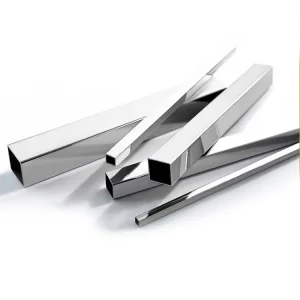
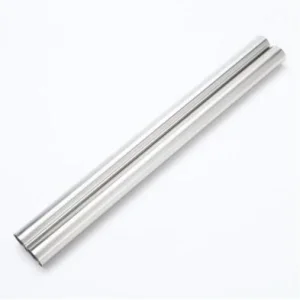
From Sukhumvit commercial towers to iconic riverside developments along the Chao Phraya River, mirror-polished and decorative stainless structural tubing must balance aesthetic brilliance with zero-maintenance weatherability over multi-decade lifespans.
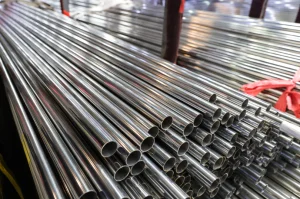
In municipal water distribution and industrial effluent treatment plants operating across Bang Pooh, Bang Pa-in, and Wellgrow Industrial Estates, standard carbon steel pipe fails rapidly. Consequently, engineering firms serving Bangkok are systematically replacing legacy piping with high-frequency welded and seamless stainless steel piping systems operating under ASTM A312, ASTM A554, and EN 10217-7 specifications.
2. Global Market Dynamics & Industry Development Trends
The global stainless steel industry is undergoing a paradigm shift driven by three primary catalysts: decarbonization of raw steel production, raw material price volatility (Nickel, Molybdenum, Chromium), and digital supply chain integration.
- Green Stainless Steel Smelting: Global buyers are increasingly scrutinizing Scope 1, 2, and 3 carbon emissions. Leading mills are adopting Electric Arc Furnace (EAF) technology utilizing high scrap ratios (over 70%) combined with Argon Oxygen Decarburization (AOD) refining to minimize the carbon footprint per metric ton of steel produced.
- Raw Material Risk Hedging: Fluctuations on the London Metal Exchange (LME) and Shanghai Futures Exchange (SHFE) for nickel pig iron (NPI) and ferro-molybdenum significantly impact final tube pricing. Direct mill integration allows forward-contract hedging, providing stable quarterly fixed quotes for project engineering contractors in Bangkok.
- Shift Toward Duplex Alloys: For chloride-heavy applications, end-users are transitioning from traditional 316L austenitic steel to Duplex 2205 (UNS S31803/S32205) and Super Duplex 2507 (UNS S32750). Duplex alloys offer double the yield strength of austenitic grades while vastly improving resistance to stress corrosion cracking (SCC), reducing total material wall thickness requirements and overall freight cost.
3. China Industry 4.0: Supply Chain Resilience & Cost Efficiency
As a global leader in stainless steel processing, China’s industrial hubs—specifically the metallurgical processing clusters in Wuxi, Jiangsu—provide unmatched manufacturing scale and technological efficiency. Jiangsu Renzhi Holding Group Co., Ltd. exemplifies this Industry 4.0 transformation, operating over 80 automated continuous welding lines, high-precision slitting centers, and advanced surface finishing installations.
| Manufacturing Parameter | Traditional Manual/Semi-Auto Mill | Renzhi Industry 4.0 Smart Facility | Direct Benefit to Bangkok Buyers |
|---|---|---|---|
| Feedstock Sourcing | Spot market non-traceable strip | Direct mill allocation (Tsingshan, TISCO, Baosteel, POSCO) | Guaranteed chemical heat numbers & full MTR integrity |
| Welding Technology | Standard single-arc TIG welding | Multi-cathode plasma + TIG + High-Frequency Laser Welding | 100% weld seam penetration, zero pinholes, higher burst pressure |
| Quality Control (NDT) | Random manual visual inspection | On-line continuous Eddy Current & Hydrostatic testing | Elimination of field leaks in installed Bangkok industrial plants |
| Logistics Efficiency | Third-party fragmented packing | Automated seaworthy bundling + anti-moisture VCI wrapping | Zero surface oxidation or transit scratching during sea voyage |
Furthermore, under the ASEAN-China Free Trade Area (ACFTA), stainless steel pipes imported from China into Thailand qualify for 0% preferential import duty when accompanied by a Form E Certificate of Origin. This trade framework provides Bangkok purchasing entities with a decisive cost reduction of 5% to 10% compared to non-FTA sourcing channels.
4. Comprehensive Grade Selection & Technical Comparison Matrix
Selecting the optimal stainless steel alloy involves balancing corrosion performance, mechanical yield strength, thermal stability, and total lifecycle cost. Below is the technical reference matrix curated by our senior metallurgical team:
| Grade Standard | Microstructure Family | PREN Value | Yield Strength (MPa) | Corrosion Resistance Environment | Primary Bangkok Application Scenario |
|---|---|---|---|---|---|
| 201 (12Cr17Mn6Ni5N) | Austenitic (Cr-Mn) | ~11 - 13 | ≥ 275 | Low (Mild indoor dry environments) | Interior decorative handrails, furniture, curtain rods |
| 304 / 304L (18/8) | Austenitic (Cr-Ni) | ~18 - 20 | ≥ 205 / ≥ 175 | Medium (General atmospheric & freshwater) | Commercial building piping, potable water tanks, kitchenware |
| 316 / 316L (Cr-Ni-Mo) | Austenitic (Cr-Ni-Mo) | ~23 - 25 | ≥ 205 / ≥ 175 | High (Chloride environments & organic acids) | Coastal architectural facades, food & brewery processing, pharma |
| 310S (25Cr-20Ni) | Austenitic (High Temp) | ~24 - 26 | ≥ 205 | High Temp Oxidation Resistance (<1150°C) | Furnace exhaust lines, boiler tubes, incineration plants |
| Duplex 2205 (S32205) | Austenitic-Ferritic | ~32 - 35 | ≥ 450 | Very High (Stress Corrosion Cracking immune) | Petrochemical refineries in Rayong/Map Ta Phut, offshore rigs |
| Super Duplex 2507 | Austenitic-Ferritic | ≥ 42 | ≥ 550 | Extreme (Seawater desalination & severe acids) | Marine seawater cooling systems, aggressive chemical reactors |
*Note: PREN (Pitting Resistance Equivalent Number) is calculated via formula: $\text{PREN} = \% \text{Cr} + 3.3 \times \% \text{Mo} + 16 \times \% \text{N}$.
5. Localized Bangkok Application Engineering Case Studies
Case Study A: Chao Phraya Riverbank Luxury Hotel Development
Challenge: High ambient moisture and brackish river mist causing surface tea-staining on standard decorative stainless steel handrails within 6 months of installation.
Solution: Renzhi supplied custom 316L high-mirror polished (8K finish) ASTM A554 ornamental tubing with automated passivation treatment. After 36 months of exposure, zero pitting or discoloration was observed.
Case Study B: Pathum Thani Automated Beverage Processing Line
Challenge: Strict FDA and Thai Industrial Standards Institute (TISI) hygiene mandates requiring zero bacterial entrapment in continuous liquid sugar transfer lines.
Solution: SUS304L low-carbon sanitary welded pipes manufactured to DIN 11850 / SMS standards, featuring argon-back shielded orbital welds and internal bead rolling for completely flat seam geometry.