
Featured Stainless Steel Pipes for Costa Rican Buyers
Direct factory supply of certified austenitic, lower carbon, and decorative stainless steel piping tailored for immediate export dispatch to Limón and Caldera ports.

Direct Factory Wholesale Stainless Steel Pipe for Costa Rica Manufacturing Facilities
Request Quote & Specs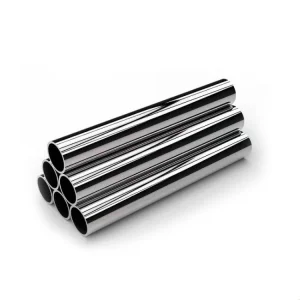
CE-Certified Decorative Stainless Steel Tubing for Commercial Architecture in San José
Request Quote & Specs
Custom Welded Industrial Stainless Steel Pipe for Costa Rican Infrastructure & Water Systems
Request Quote & Specs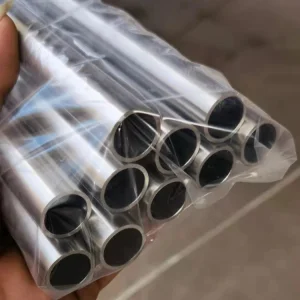
Low Carbon SUS304/304L Sanitary Stainless Steel Pipe for Food & Beverage Plants
Request Quote & SpecsCosta Rica Industrial Reality: Demands for High-Grade Stainless Steel Piping
Costa Rica has established itself as Central America’s primary high-tech manufacturing, medical device, and agricultural processing hub. The nation’s unique economic transition—from a traditionally agrarian exporter (coffee, bananas, pineapples) to a sophisticated manufacturer exporting medical equipment, processed food, and premium beverages—has altered its industrial raw material requirements. For engineering firms, EPC contractors, and metal stockholders in Costa Rica, sourcing reliable, corrosion-resistant stainless steel pipes and structural tubing is no longer a commodity purchase; it is a critical operational safeguard.
Operating within tropical marine environments presents severe corrosion challenges. Costa Rica's geography, flanked by the Pacific Ocean to the west and the Caribbean Sea to the east, exposes civil infrastructure, port facilities, and agricultural processing plants to high relative humidity (averaging 80%–90% year-round) and intense atmospheric salt deposition. Standard carbon steel or poorly passivated alloys suffer rapid degradation, leading to micro-cracking, fluid contamination, and premature system failures.
Agro-Industrial & Beverage Lines
Demands ultra-smooth SUS304/304L sanitary tubes with internal surface roughness ($Ra \le 0.4\mu m$) to prevent bacterial adherence in pineapple, coffee, sugar, and dairy processing facilities in Cartago and Alajuela.
Medical Device Cleanrooms
With Coyol Free Zone (Alajuela) hosting top global medical technology corporations, ultra-low carbon 316L stainless tubing is mandatory for process fluid lines, clean dry air (CDA), and purified water (PW) distribution.
Coastal Architecture & Tourism
Eco-luxury resorts along Guanacaste, Puntarenas, and Limón require structural 316L and decorative 201/304 stainless steel tubing with protective finishes (PVD/powder coating) to resist chloride pitting.
Global Stainless Steel Market Dynamics & Metallurgical Shifts
The global stainless steel pipe and tube sector is undergoing a profound structural shift driven by volatile nickel and molybdenum raw material prices, stricter decarbonization mandates, and the rising adoption of high-performance duplex alloys. Globally, industrial procurement directors are shifting away from standard 304 alloys toward specialized Duplex (UNS S31803 / S32205) and Super Duplex (UNS S32750 / 2507) steel grades for harsh marine and chemical processing applications.
Duplex stainless steels provide a mixed austenitic-ferritic microstructure that effectively doubles the mechanical yield strength compared to standard 300-series alloys, while delivering exceptional resistance to chloride stress corrosion cracking (SCC). In addition, high-frequency induction welding (HFW) combined with inline bright annealing technology has bridged the performance gap between seamless and welded stainless pipes, allowing engineers to achieve pressure integrity at significantly reduced cost profiles.
Chinese Manufacturing Efficiency: Why Wuxi Sourcing Dominates Global Value Chains
As the epicenter of global stainless steel processing, Wuxi (Jiangsu Province, China) represents an integrated industrial cluster housing state-of-the-art cold-rolling mills, tube welding facilities, and metallurgical testing laboratories. Sourcing directly from a high-capacity manufacturer like Jiangsu Renzhi Holding Group Co., Ltd. provides Costa Rican importers and B2B procurement managers with distinct technical and financial advantages over buying through middle-tier regional traders.
Key Operational Superiorities of Our Direct-Factory Model:
1. Traceable Raw Material Feedstock: We source prime mother coils exclusively from Tier-1 steel mills, including Tsingshan, TISCO, POSCO, and Baosteel. This guarantees strict chemical composition compliance—ensuring precise nickel, chromium, and molybdenum percentages that meet international ASTM A240, ASTM A312, and EN 10088 standards.
2. In-House Processing Integration: By maintaining 80+ welded pipe production lines, 5 automatic flattening and slitting lines, and 6 specialized polishing lines under unified quality control, we eliminate outsourcing delays and margin stacking. From coil slitting to TIG/Plasma welding, bead rolling, online solution annealing, and final surface polishing (No.4, Hairline, 8K Mirror), every step is meticulously monitored.
3. Advanced Non-Destructive Testing (NDT): Every industrial pipe destined for fluid handling in Costa Rica undergoes automated online Eddy Current Flaw Detection, hydrostatic pressure verification, and dimensional tolerance checks. Material Test Reports (MTR) according to EN 10204 3.1 are provided with every shipment.
Targeted Application Scenarios Across Costa Rica’s Key Economic Zones
To maximize life-cycle performance and optimize material expenditures, engineering specifications must align with the micro-climates and industrial activities of Costa Rica’s distinct geographical regions:
San José & Heredia (Greater Metropolitan Area)
Focus on commercial construction, urban transport infrastructure, stair balustrades, and structural handrails. Premium 201 and 304 decorative tubes provide glossy aesthetic finishes and cost efficiency for dry inland environments.
Puerto Limón & Moín (Caribbean Coast)
Heavy port handling infrastructure, fuel logistics, and marine transport lines require high resistance to humid, salt-laden sea mist. Recommended: 316L and Super Duplex 2507 welded pipes engineered to resist severe pitting and crevice corrosion.
Guanacaste & Puntarenas (Pacific Eco-Tourism Hubs)
Luxury resort architecture, oceanfront balustrades, coastal wastewater treatment facilities, and swimming pool filtration systems require 316L decorative and fluid tubing to withstand direct salt spray without rusting or staining.
Technical Specification Matrix: Matching Grade to Service Environment
Selecting the incorrect stainless steel grade leads to either premature failure or unnecessary material cost overruns. The table below outlines metallurgical characteristics and recommended service conditions for B2B buyers in Central America.
| Grade | Chemical Makeup | PREN Rating | Corrosion Resistance | Primary Costa Rica Application |
|---|---|---|---|---|
| Grade 201 | 15-17% Cr, 1-1.5% Ni, 5.5-7.5% Mn | ~15 | Moderate (Indoor) | Indoor furniture, decorative trim, curtain rods in San José |
| Grade 304 / 304L | 18-20% Cr, 8-10.5% Ni, <0.03% C (304L) | ~18 - 20 | High (General Industry) | Food processing, dairy plants, indoor piping, water tanks |
| Grade 316 / 316L | 16-18% Cr, 10-14% Ni, 2-3% Mo | ~23 - 25 | Very High (Marine/Chemical) | Coastal architecture, medical cleanrooms, marine hardware |
| Duplex 2205 | 22% Cr, 5% Ni, 3% Mo, 0.16% N | ~32 - 35 | Superior (High Stress) | Desalination plants, chemical transport, oil & gas lines |
| Super Duplex 2507 | 25% Cr, 7% Ni, 4% Mo, 0.27% N | > 42 | Extreme (Aggressive Marine) | Offshore structures, high-chloride chemical reactors, port pumps |
* PREN (Pitting Resistance Equivalent Number) = $\%Cr + 3.3 \times \%Mo + 16 \times \%N$. Higher PREN values indicate superior resistance to localized pitting in marine and chloride environments.
Comprehensive Stainless Steel Product Lineup
Explore our broader catalogue of premium stainless steel pipes, tubes, sheets, and specialized hardware components available for bulk export to Costa Rican importers.
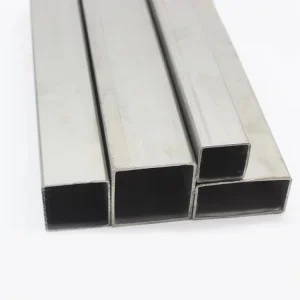
Prime Quality 201 Stainless Steel Pipe for General Interior Construction
Request Quote & Specs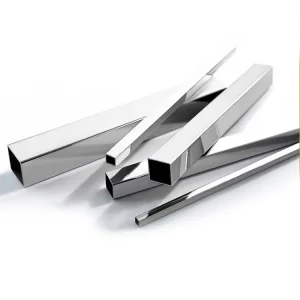
CE-Certified Telescopic Stainless Steel Handle Tube (22mm OD, Anti-Fingerprint)
Request Quote & Specs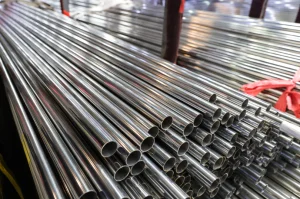
Custom 316L Stainless Steel Welded Pipe for Coastal & Marine Infrastructure
Request Quote & Specs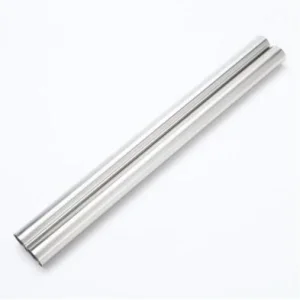
Wholesale 201 Stainless Steel Curtain Rod Tube (25mm OD, Powder Coated Finish)
Request Quote & Specs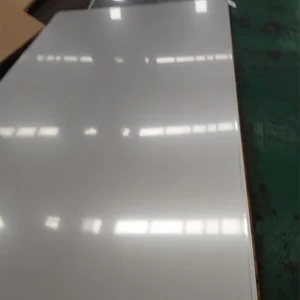
Ultra-High Strength Super Duplex Steel Plate 2507 for Severe Corrosion Environments
Request Quote & Specs
Factory Direct SUS304/304L Ultra-Low Carbon Stainless Pipe for Sanitary Applications
Request Quote & Specs
Glossy Finish 201 Stainless Steel Pipe for Staircase Balustrades & Architectural Trim
Request Quote & Specs
Custom Aesthetic 201 Stainless Steel Tubing for Hardware Manufacturers
Request Quote & SpecsB2B Procurement Protocols & Maritime Logistics to Costa Rica
Importing steel products into Costa Rica involves navigating regional customs regulations, CAFTA-DR import frameworks, and maritime logistics. Jiangsu Renzhi Holding Group ensures seamless end-to-end execution through dedicated export management:
EN 10204 3.1 Certification
Every batch includes traceable mill test certificates documenting ladle heat chemical analysis, tensile strength, yield point, elongation, hardness, and hydrostatic/NDT test results.
Seaworthy Export Packing
Pipes are bundled with protective plastic end caps, wrapped in moisture-proof woven fabric, and secured in stiffened wooden cases or iron crates to prevent scratches during ocean transit.
Direct Freight Routes
We manage direct shipping lines from Ningbo/Shanghai ports to Puerto Caldera (Pacific side) and Puerto Limón (Caribbean side), with typical ocean transit times of 28 to 35 days.
Frequently Asked Questions (Technical & Purchasing Guide)
Answers to common queries from Costa Rican engineering contractors, procurement heads, and metal distributors.
Which stainless steel grade is best suited for coastal industrial facilities in Costa Rica?
For installations located within 5 kilometers of Costa Rica's Pacific or Caribbean coastlines (such as Puerto Limón, Puntarenas, or Quepos), Grade 316/316L is strongly recommended over standard 304 due to its 2–3% Molybdenum content, which inhibits chloride-induced pitting corrosion. For high-pressure or heavy structural applications in coastal salt mist, Duplex 2205 provides superior yield strength and pitting resistance.
How does Jiangsu Renzhi ensure pipe dimension accuracy and surface quality?
We utilize fully automated high-precision cold drawing and tube rolling mills equipped with laser-guided wall thickness monitoring systems. Surface polishing options (No.4, Hairline, 8K Mirror, BA) are executed on 6 continuous polishing lines, maintaining tight outer diameter (OD) and wall thickness (WT) tolerances compliant with ASTM A312 and ASTM A554 specifications.
What are the lead times and ocean shipping timelines to Costa Rican ports?
Standard manufacturing lead time for standard dimension welded pipes is 15 to 20 days upon order confirmation. Maritime shipment from Shanghai or Ningbo port to Puerto Caldera or Puerto Limón typically takes between 28 and 35 days, allowing Costa Rican buyers to plan inventory replenishment efficiently.
Can you supply custom dimensions, cut-to-length tubes, and specialized surface finishes?
Yes. We offer complete custom fabrication services, including custom outer diameters, specified wall thicknesses, precision cut-to-length requirements, end-beveling for field welding, powder coating, and specialized internal sanitary polishing ($Ra \le 0.4\mu m$) for food and pharmaceutical applications.
Do you provide mill test certificates and third-party quality inspection reports?
Every shipment is accompanied by an official Material Test Report (MTR) according to EN 10204 3.1. We also welcome independent third-party inspection agencies (such as SGS, BV, or Intertek) to conduct pre-shipment testing at our Wuxi production base.
Partner with a Leading Stainless Steel Manufacturer Today
Request direct factory pricing, technical mill certificates, or customized product samples for your next project in Costa Rica. Our engineering sales group is ready to support your procurement needs.
Send Inquiry Now