

Featured Product Specifications
High-Demand Stainless Steel Piping Solutions for India
Mill-direct structural, decorative, and industrial welded pipes engineered to ASTM & EN standards for Mumbai's rigorous industrial applications.

CE Certification Stainless Steel Decorative Pipe Supplier, Quotes
View Product Specs
Custom Stainless steel industrial welded pipe Manufacturer, Supplier
View Product Specs
Wholesale SUS304/304L lower carbon stainless steel pipe Factory, Quotes
View Product Specs80+
Automated Welded Pipe Lines
100%
Traceable Mill Test Certificates (EN 10204 3.1)
PREN >35
Duplex 2205 High Pitting Resistance
14-21 Days
Average Transit Time to JNPT Mumbai Port
Mumbai Industrial & Commercial Ecosystem: Corrosive Dynamics & Piping Requirements
The Mumbai Metropolitan Region (MMR)—spanning from the commercial core of Nariman Point and Bandra-Kurla Complex (BKC) to the heavy industrial belts of Thane-Belapur, Taloja MIDC, Tarapur, and Patalganga—represents India’s powerhouse of industrial commerce, offshore oil & gas, pharmaceuticals, fine chemicals, and infrastructure construction. However, Mumbai’s geographic location along the tropical Arabian Sea coast creates one of the world's most aggressive atmospheric and maritime microclimates.
Industrial piping networks in Mumbai are continuously subjected to high airborne marine salinity, relative humidity exceeding 85% during monsoon periods, and severe industrial chemical effluents. Under standard environmental conditions, basic carbon steel and low-alloy tubing suffer rapid pitting and stress corrosion cracking (SCC). Engineering specifications in major projects overseen by the MMRDA (Mumbai Metropolitan Region Development Authority), CIDCO, and ONGC (Offshore platform operations at Mumbai High) strictly mandate high-grade austenitic (AISI 304L, 316L) and duplex stainless steel (2205, 2507) pipe systems to guarantee a 30- to 50-year service life.
Furthermore, major logistics nodes such as the Jawaharlal Nehru Port Trust (JNPT / Nhava Sheva) facilitate massive inflows of raw materials. Direct factory procurement from tier-1 Chinese manufacturers allows Mumbai engineering EPC contractors and stockholders to bypass domestic supply bottlenecks, securing traceable, mill-certified stainless steel pipes at highly competitive landed costs (CIF Nhava Sheva).
Metallurgical Roadmap: Selecting the Right Stainless Grade for Mumbai Projects
Optimal material selection requires balancing initial capital expenditure (CAPEX) with long-term operational maintenance costs (OPEX). Selecting an inadequate alloy grade leads to premature localized pitting, while over-specifying inflates budget requirements. The PREN (Pitting Resistance Equivalent Number) formula provides an authoritative benchmark for evaluating corrosion behavior in chloride-rich saline environments:
PREN = %Cr + (3.3 × %Mo) + (16 × %N)
| Stainless Grade | Microstructure Type | Nominal Chemistry | PREN Index | Mumbai Market Application Fit |
|---|---|---|---|---|
| Grade 201 (J1/J4) | Austenitic (Cr-Mn) | 14-16% Cr, 1-1.5% Ni, 8-10% Mn | ~13 - 15 | Indoor architectural trim, handrails in low-salinity interior commercial spaces. |
| Grade 304 / 304L | Austenitic (Cr-Ni) | 18-20% Cr, 8-10.5% Ni, <0.03% C | ~18 - 20 | Urban water supply lines, dairy processing, commercial kitchen equipment. |
| Grade 316 / 316L | Austenitic (Cr-Ni-Mo) | 16-18% Cr, 10-14% Ni, 2-3% Mo | ~23 - 25 | Mumbai Coastal Standard: Outdoor architecture, marine fittings, pharmaceutical loops in Taloja. |
| Grade 310S | Austenitic (High Temp) | 24-26% Cr, 19-22% Ni | ~25 - 27 | Industrial furnaces, heat exchangers, boiler exhaust systems in power plants. |
| Duplex 2205 (UNS S31803) | Ferritic-Austenitic | 22% Cr, 5% Ni, 3% Mo, 0.18% N | ~34 - 36 | Offshore oil & gas (ONGC rigs), seawater desalination plants, chemical tankers at JNPT. |
| Super Duplex 2507 | Ferritic-Austenitic | 25% Cr, 7% Ni, 4% Mo, 0.27% N | >42 | Aggressive marine chemical processing, high-pressure subsea oil lines. |
For industrial chemical facilities located along the Thane Creek or marine structural installations near Navi Mumbai, SUS316L and Duplex 2205 welded and seamless pipes are the benchmark standards. Low carbon variants ("L" grades) prevent chromium carbide precipitation along grain boundaries during field welding, eliminating intergranular corrosion risks.
Global Procurement & Regulatory Compliance: Navigating BIS & Customs to JNPT
Procuring stainless steel tubular products for deployment in India demands absolute compliance with both international engineering codes and local Indian statutory standards. The Bureau of Indian Standards (BIS) strictly enforces quality guidelines under mandatory Quality Control Orders (QCOs) for steel products, requiring foreign manufacturers to provide verified chemistry and physical test certifications.
Our direct-factory manufacturing hub operates under stringent quality management frameworks fully aligned with international standards:
- ASTM A312 / ASME SA312: Standard specification for seamless, welded, and heavily cold worked austenitic stainless steel pipes intended for high-temperature and general corrosive service.
- ASTM A554: Standard for ornamental, structural, furniture, and decorative tubing requiring precise outer diameter (OD) and wall thickness tolerances.
- EN 10204 3.1 Mill Test Certification: Complete chemical heat analysis (spectral analysis) and mechanical properties testing (Tensile, Yield, Elongation, Hydrostatic, Eddy Current NDT) issued directly by our internal laboratory traceable to raw material heats from Tsingshan, TISCO, Baosteel, and POSCO.
- BIS IS 6911 / IS 17875 Alignment: Equivalent raw material chemistry control ensuring smooth Indian customs clearance at Nhava Sheva (JNPT).
By leveraging automated continuous TIG (Tungsten Inert Gas), Plasma, and Laser welding equipment, our mill produces weld seam factors of $E = 1.0$, guaranteeing pressure rating equivalence to seamless pipes for fluid transfer networks across Mumbai's infrastructure projects.
Technical Innovation & Future Outlook: Automated Precision & Green Manufacturing
The global steel industry is undergoing a dual transformation focused on digital precision and environmental sustainability. To meet the expanding requirements of global EPC firms and Indian stockists, our manufacturing complex in Wuxi has integrated next-generation production technologies:
1. Online Real-Time Weld Seam Annealing: Utilizing high-frequency induction heating to anneal the weld heat-affected zone (HAZ) online at $1050^\circ\text{C}-1100^\circ\text{C}$, followed by rapid water quenching. This restores the full austenitic phase structure, completely mitigating localized intergranular corrosion.
2. Automated Non-Destructive Testing (NDT): 100% of industrial welded pipes undergo inline dual-channel Eddy Current Testing (ECT) and ultrasonic flaw detection in accordance with ASTM E426, catching micro-fissures prior to hydrostatic pressure testing.
3. Low-Carbon Green Steel Feedstock: Partnering with primary mills utilizing Electric Arc Furnace (EAF) technology with high scrap recycled content, significantly reducing the embodied carbon footprint per ton of finished stainless steel pipe shipped to global ports.
Require Custom Stainless Steel Pipe Specifications or Quotes for Mumbai?
Get in touch with our senior engineering and export procurement specialists today. We provide instant mill-direct price quotes (FOB/CIF Nhava Sheva), detailed material test certificates, and sample dispatch.
Send Inquiry Now
Procurement FAQ
Frequently Asked Questions for Mumbai Buyers & Stockists
Clear engineering and commercial guidance regarding direct mill imports, shipping timelines, and material standards.
What is the typical shipping transit time from your factory to JNPT (Nhava Sheva), Mumbai?
Our production base in Wuxi benefits from direct access to Shanghai and Ningbo deep-water ports. Sea freight transit times from Shanghai/Ningbo to Nhava Sheva (JNPT), Mumbai, typically range between 14 to 18 days on direct liner services. Standard production lead time is 15 to 20 days depending on total tonnage and specification requirements.
How do you prevent surface rust and corrosion during sea transit in tropical marine conditions?
All export pipes undergo surface passivation treatment. For sea transport, each pipe end is fitted with plastic protective caps. Pipes are bundled in waterproof plastic wrapping, reinforced with iron strapping, and packed into seaworthy wooden cases or steel-framed bundles containing desiccant bags to prevent moisture condensation inside containers.
Why choose welded stainless steel pipe over seamless for fluid piping in Mumbai MIDC industrial parks?
Modern automatic TIG/Laser welded pipes produced to ASTM A312 offer superior wall thickness uniformity, superior internal surface smoothness, and tighter dimensional tolerances compared to hot-rolled seamless pipes. Combined with 100% Eddy Current and hydrostatic testing, welded pipes deliver identical pressure performance at a 20% to 35% lower cost.
Can you supply Mill Test Certificates (MTC) compliant with EN 10204 3.1?
Yes. Every order is dispatched with an authentic EN 10204 3.1 Mill Test Certificate detailing the exact chemical composition (C, Si, Mn, P, S, Ni, Cr, Mo, N), mechanical yield/tensile testing, hardness, flattening/flaring tests, and non-destructive test results, fully traceable to the original raw coil heat numbers.
Which stainless steel grade is recommended for outdoor handrails and architectural facades near Marine Drive, Mumbai?
For outdoor applications located within 5 kilometers of Mumbai's coastline (such as Marine Drive, Worli, or Bandra), grade AISI 316 or 316L with a mirror polished (8K) or hairline (No.4) finish is strongly recommended. Grade 201 or standard 304 will eventually develop tea-staining and surface pitting due to continuous ocean salt spray.
Complete Catalogue
Factory-Direct Stainless Steel Products for Global Export
Select from our comprehensive line of precision-rolled pipes, decorative tubes, perforated sheets, and low-carbon industrial solutions.

China Prime Quality 201 Stainless Steel Pipe Manufacturers, Manufacturer
View Specs & Quote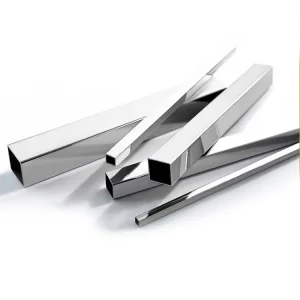
CE Certification Telescopic Stainless Steel Mop Handle Tube, Adjustable, 22mm OD, Anti-Fingerprint Manufacturers, Quotes
View Specs & Quote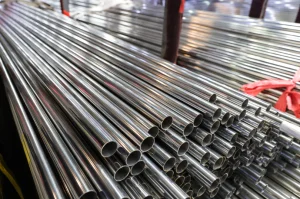
Custom 316L Stainless Steel Weld Pipe Suppliers, Factories
View Specs & Quote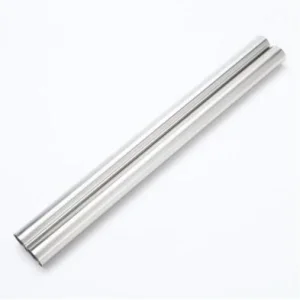
Wholesale 201 Stainless Steel Curtain Rod Tube, 25mm OD, Powder Coated, Custom Length Factory, Pricelist
View Specs & Quote
Custom China Perforated Stainless Steel Sheet Suppliers - High-Quality Factory Custom Metal Mesh Products Manufacturer, Suppliers
View Specs & Quote
China Prime Quality 201 Stainless Steel Pipe Manufacturers, Manufacturer
View Specs & Quote
Custom China SUS304/304L Low Carbon Stainless Steel Pipe Suppliers | Factory for Ultimate Corrosion Resistance Supplier, Quotes
View Specs & Quote