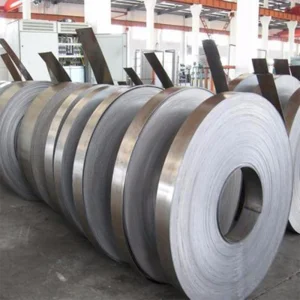
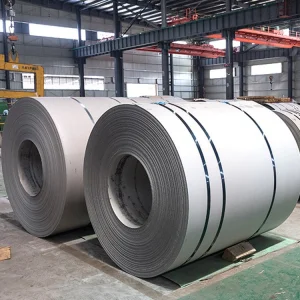
Engineered to meet the exact tolerances of Northern German manufacturing, shipbuilding, and architectural sectors, our initial tier of stainless steel coils and strips offer unmatched metallurgical consistency and edge processing.
As Northern Europe’s premier maritime logistics hub and the second-largest port city in the European Union, Hamburg occupies a strategic position in global industrial material supply chains. The Metropolitan Region of Hamburg hosts high-density manufacturing clusters spanning maritime engineering, aerospace (Airbus Finkenwerder), chemical processing, renewable hydrogen production, and food technology.
The environmental exposure profile of the Port of Hamburg and the Lower Elbe region presents unique metallurgical challenges. Operating in brackish to high-salinity marine environments (C4 to C5 corrosive categories under ISO 12944-2), regional engineers require raw materials capable of resisting pitting, crevice corrosion, and stress corrosion cracking (SCC). Stainless steel coils serve as the vital feedstock for slit strips, welded structural tubes, heat exchanger plates, and architectural cladding deployed across these harsh maritime sectors.
Procurement directors and material engineers across Hamburg’s industrial parks—from Wilhelmsburg to Harburg—face shifting regulatory environments. The implementation of the European Union’s Carbon Border Adjustment Mechanism (CBAM) and stringent REACH environmental mandates require stainless steel coil suppliers to provide complete transparency regarding embedded carbon intensity, scrap percentage ratios, and supply chain origin. Direct-from-factory procurement models, coupled with automated continuous rolling technologies, enable Hamburg importers to achieve cost efficiency without compromising compliance with EU Directives.
Selecting the optimal stainless steel coil specification requires a comprehensive understanding of phase structures, chemical alloying elements, work-hardening rates, and surface passivity dynamics.
Austenitic Series (304, 304L, 316L, 310S)
Featuring a face-centered cubic (FCC) crystal structure, austenitic coils deliver exceptional ductility, high impact toughness at cryogenic temperatures, and superior weldability. Grade 316L incorporates 2.0–3.0% Molybdenum to prevent chloride-induced pitting in Hamburg harbor marine infrastructure.
Duplex & Super Duplex (2205 / 2507)
Combining ferrite and austenite in a balanced 50/50 phase ratio, duplex coils offer roughly double the yield strength of standard austenitic alloys. With a Pitting Resistance Equivalent Number (PREN) ranging from 35 to >42, duplex coils are ideal for offshore wind energy structures in the North Sea.
Ferritic & Low-Nickel Series (430 / 201)
Ferritic 430 offers excellent thermal conductivity and stress-corrosion resistance in dry indoor architectural panels, while modified Manganese-substituted 201 series coils provide high work-hardening capacity for commercial interior fixtures.
Pitting resistance is calculated using the industry standard PREN formula: PREN = %Cr + 3.3(%Mo) + 16(%N). For saltwater contact along the Hamburg port terminals, materials with PREN > 24 are mandatory to avoid localized passivation film breakdown.
| EN Standard Designation | AISI / UNS Grade | Cr (%) | Ni (%) | Mo (%) | PREN Value | Primary Industrial Use in Hamburg |
|---|---|---|---|---|---|---|
| 1.4301 | AISI 304 | 17.5 – 19.5 | 8.0 – 10.5 | — | ~ 19.0 | Food processing, general machinery, interior architecture |
| 1.4404 | AISI 316L | 16.5 – 18.5 | 10.0 – 13.0 | 2.0 – 2.5 | ≥ 24.5 | Shipbuilding, harbor fittings, chemical storage, maritime piping |
| 1.4462 | UNS S31803 / 2205 | 21.0 – 23.0 | 4.5 – 6.5 | 2.5 – 3.5 | 33.0 – 36.0 | Offshore energy platform components, high-pressure desalination |
| 1.4410 | Super Duplex 2507 | 24.0 – 26.0 | 6.0 – 8.0 | 3.0 – 4.5 | ≥ 42.0 | North Sea marine subsea systems, acidic chemical handling |
| 1.4016 | AISI 430 | 16.0 – 18.0 | < 0.75 | — | ~ 16.5 | Appliance trim, elevator interiors, indoor architectural cladding |
Our direct factory supply chain delivers specialized stainless steel coils tailored to four core industry sectors across the Metropolitan Region of Hamburg.
1. Shipbuilding & Offshore Maritime Engineering
Hamburg's shipyards and maritime component suppliers demand EN 10088-2 compliant 316L and 2205 duplex coils. These coils are slit into narrow strips for automated TIG/Laser tube welding to fabricate exhaust gas scrubber systems, marine cooling piping, and deck structures subject to constant salt fog exposure.
2. Green Hydrogen & Clean Energy Infrastructure
With Hamburg establishing itself as a central European hydrogen hub (Hamburg Green Hydrogen Hub at Moorburg), our cold-rolled 316L coils feature ultra-smooth 2B and BA surface finishes that prevent gas permeation, ideal for electrolysis equipment, heat exchangers, and high-pressure gas distribution manifolds.
3. Food, Beverage & Pharmaceutical Processing
Northern Germany's food processing operations rely on food-grade AISI 304 and 316L cold-rolled coils for deep-drawing into storage vats, mixing tanks, and conveying lines. Our coils maintain strictRa surface roughness thresholds (<0.4μm after polishing) to prevent bacterial adhesion and facilitate CIP (Clean-in-Place) sterilization.
In urban architectural developments like Hamburg's HafenCity, aesthetics must be balanced with atmospheric longevity. Custom embossed, hairline (No.4), and 8K mirror stainless steel coils provide weather-resistant outer skins for high-rise buildings, elevator enclosures, and public transit terminals. The inherent self-healing passive chromium-oxide layer eliminates ongoing painting or anti-corrosion maintenance cycles.
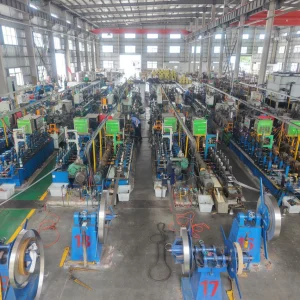
We operate advanced cold-rolling tandem mills, continuous bright annealing lines, and precision tension levelers capable of maintaining microscopic tolerances according to DIN EN ISO 9445-2.
| Manufacturing Parameter | Cold-Rolled (CR) Stainless Steel Coil | Hot-Rolled (HR) Stainless Steel Coil |
|---|---|---|
| Thickness Range | 0.3 mm – 3.0 mm | 3.0 mm – 16.0 mm |
| Standard Widths | 1000mm, 1219mm (4ft), 1500mm, Slit strips down to 10mm | 1250mm, 1500mm, 1800mm, 2000mm |
| Thickness Tolerance | ±0.015 mm to ±0.03 mm (ISO 9445 Fine Class) | ±0.15 mm to ±0.25 mm (EN 10029 Class B) |
| Surface Finishes | 2B, BA (Bright Annealed), No.4, Hairline, 8K Mirror, Embossed | No.1 (Pickled & Annealed), Black Acid-Washed |
| Coil Inner Diameter (ID) | 508 mm / 610 mm | 610 mm |
| Edge Configuration | Precision Slit Edge (Deburred) or Mill Edge | Mill Edge or Trimmed Machine Edge |
Every coil batch delivered to Hamburg port or local warehouse facilities undergoes rigorous non-destructive testing (NDT). Our quality assurance workflow includes chemical spectral analysis, mechanical yield/tensile testing, Intergranular Corrosion Tests (ASTM A262 Practice E), and hydrostatic/eddy-current inspection for strip intended for tube production. Full documentation is provided with EN 10204 3.1 or 3.2 Material Test Certificates (MTC), guaranteeing origin from accredited raw feedstock suppliers (Tsingshan, TISCO, Baosteel).
In alignment with Germany's "National Hydrogen Strategy" and the EU's 2050 climate neutrality targets, our manufacturing facilities are actively transforming coil production methodologies.
EAF Green Steel Melting
Increasing the ratio of Electric Arc Furnace (EAF) melting powered by renewable energy, utilizing over 80% recycled stainless scrap to reduce Scope 1 and Scope 2 emissions per ton of coil produced.
Nanoscale Passivation
Implementation of chrome-free eco-passivation surface treatments that enhance salt-spray resistance (>1000 hours without red rust) while complying fully with updated EU REACH guidelines.
Digital Twin MTC Verification
Deploying cryptographic QR code validation on all bundled coils, allowing Hamburg customs officers and quality inspectors to instantly verify chemical heat numbers and lab test data.
Direct engineering answers to technical queries regarding shipping logistics, certification, material selection, and customs compliance for Northern Germany.
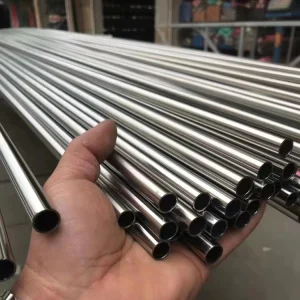
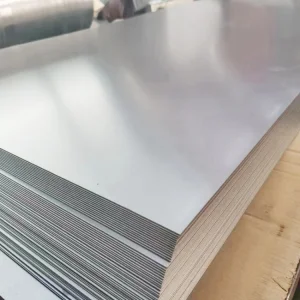
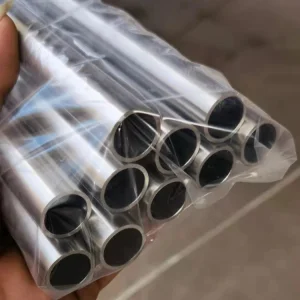
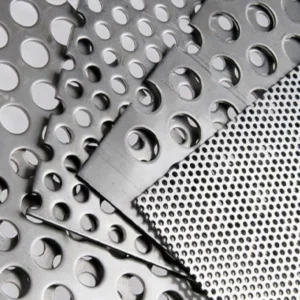
Explore our full line of mill-direct stainless steel products, including hot-rolled heavy industrial coils, welded structural pipes, perforated architectural sheets, and low-carbon alloy plates engineered for European compliance.