
Featured Precision Stainless Coils & Strips (Los Angeles Hub Inventory)
Immediate mill-direct dispatch for Southern California industrial and commercial manufacturing pipelines.

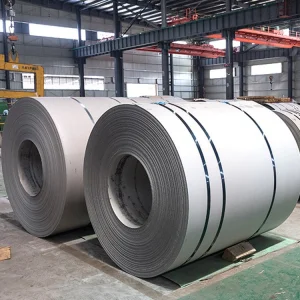


1. Executive Overview: The Los Angeles Stainless Steel Coil Industrial Ecosystem
Navigating supply dynamics, localized precision slitting, and Pacific Rim trade logistics in Southern California.
The Strategic Role of Greater Los Angeles
As the primary economic powerhouse of the U.S. West Coast, Greater Los Angeles—spanning LA County, Orange County, and the Inland Empire—represents one of North America's highest-density consumption hubs for flat-rolled stainless steel products. Anchored by the twin deepwater ports of Port of Los Angeles and Port of Long Beach, this metropolis serves as both the gateway for raw alloy imports and the manufacturing cradle for critical high-value sectors.
Local OEM ecosystems rely heavily on continuous, high-precision supply chains of stainless steel coils (austenitic, ferritic, and duplex grades). From high-spec aerospace structural components in Hawthorne and El Segundo to sanitary food preparation equipment in Commerce and Vernon, the demand for exact metallurgical tolerances has never been more pressing.
Logistical Realities & Local Sourcing Imperatives
Procuring stainless steel coils within the Los Angeles industrial corridor presents a dual challenge: navigating volatile international mill lead times while meeting strict local fabricator turnaround requirements. Local service centers and factories must balance extensive inventory holding with rapid slitting and processing capabilities.
By leveraging advanced mill-direct manufacturing coupled with strategic West Coast warehousing, high-performance coil suppliers offer Southern California enterprises an essential hedge against supply disruption, tariff volatility, and uncertified material bottlenecks.
2. Macro Industry Trends & Global B2B Sourcing Economics
Analyzing market forces shaping raw nickel volatility, carbon border compliance, and total cost of ownership (TCO).
Raw Material & Nickel Volatility Hedges
The London Metal Exchange (LME) and Shanghai Futures Exchange (SHFE) nickel price fluctuations directly dictate 300-series alloy surcharges. Smart procurement heads in Los Angeles are increasingly utilizing multi-grade substitution strategies (such as lean duplex 2205 or high-grade 201 series for non-corrosive indoor applications) to mitigate input cost inflation while preserving structural yield strength.
Decarbonization & Green Steel Trends
California's stringent environmental regulations (including CARB standards and Buy Clean California Act mandates) are forcing local procurement agents to evaluate the carbon footprint of structural metals. Advanced steel factories are integrating electric arc furnaces (EAF) and renewable energy-powered cold-rolling mills to supply low-embodied-carbon stainless steel coils.
Precision Slitting & Yield Optimization
Material scrap rate is the silent killer of profitability in high-volume stamping and pipe-making operations across Southern California. Sourcing coils pre-slit to custom micro-tolerances minimizes edge trimmer scrap, extends stamping die operational life, and drastically lowers total cost of manufacturing per unit.
3. Comprehensive Technical Guide & Metallurgy Matrix
Detailed mechanical, chemical, and dimensional specifications for engineers and technical buyers.
| Grade Family | Nominal Chemistry | Yield Strength (MPa) | Tensile Strength (MPa) | Finish Options | Key Los Angeles Industry Usage |
|---|---|---|---|---|---|
| Austenitic 304 / 304L | 18% Cr, 8% Ni, Low C | ≥ 205 | ≥ 515 | 2B, BA, No.4, Hairline, 8K | Commercial Kitchens, Food Processing, Architectural Trims |
| Austenitic 316 / 316L | 16% Cr, 10% Ni, 2.5% Mo | ≥ 240 | ≥ 550 | 2B, No.1, Mill Edge, Slit Edge | Pacific Marine Hardware, Chemical Vessels, Port Logistics |
| Economic 201 Series | 15% Cr, 1.5% Ni, 6% Mn | ≥ 275 | ≥ 685 | 2B, BA, Powder Coated | Decorative Tubing, Household Utensils, Indoor Furniture |
| Ferritic 430 | 16-18% Cr, Nickel-Free | ≥ 205 | ≥ 450 | BA, 2B, Protective Film | Appliance Panels, Automotive Exhaust, Elevator Interiors |
| Duplex 2205 | 22% Cr, 5% Ni, 3% Mo, N | ≥ 450 | ≥ 655 | No.1 Hot Rolled, Pickled | Oil & Gas Rigs, Desalination, Heavy Chemical Tanks |
| Super Duplex 2507 | 25% Cr, 7% Ni, 4% Mo, N | ≥ 550 | ≥ 750 | No.1 Hot Rolled | Severe Marine Chloride Duty, Subsea Cables & Piping |
Cold Rolled vs. Hot Rolled Strip Tolerances
Understanding processing limits is vital for die tool protection:
- Cold Rolled (CR) Coil: Thickness range from 0.3mm to 3.0mm; width range from 10mm to 1500mm. Features smooth 2B or mirror BA surfaces suitable for aesthetic applications.
- Hot Rolled (HR) Coil: Thickness range from 3.0mm to 16.0mm; pickled and annealed No.1 finish. Tailored for heavy structural forming, welded industrial pipe, and vessel fabrication.
Edge Condition & Slitting Burr Controls
Burr heights exceeding 10% of sheet thickness cause severe line stoppages in automated stamping machines. Primary factory precision slitting equipment utilizes rotary carbide knives with hydraulic tension leveling, keeping edge burr under 0.02mm and ensuring flat, stress-relieved strip payoff.
4. Macro Sector Solutions for Southern California Enterprises
Engineered metal solutions matched to specific regional industrial operating conditions.
Marine & Coastal Infrastructure
Pacific ocean air carries high concentrations of salt fog, causing severe pitting corrosion on standard steels. We engineer 316L and Duplex 2205 coils with elevated Pitting Resistance Equivalent Numbers (PREN ≥ 25 to 35), extending service life for dock hardware, desalination piping, and seaside architectural cladding along Santa Monica and San Diego coastal lines.
Aerospace & Cleanroom Manufacturing
Precision aerospace ducting, satellite housing brackets, and semiconductor processing equipment demand ultra-clean surfaces free from pinholes, inclusions, or oil residues. Bright Annealed (BA) 304L and 316L precision strips undergo solvent degreasing and protective PVC film lamination before shipment to LA aerospace corridors.
Commercial Food Equipment & Sanitary Piping
Southern California's food manufacturing industry requires strict compliance with NSF/ANSI standard hygiene criteria. Sourcing food-grade SUS304 cold-rolled coils ensures precise wall thickness uniformity, enabling automated TIG tube welding without internal weld bead collapse or micro-void contamination.
5. Quality Assurance, Compliance Standards & Verification Protocols
Ensuring 100% material integrity and compliance for critical engineering projects.
International Certification Standards
All coils leaving our factories for North American destinations are rigorously manufactured and documented according to established standards:
- ASTM A240 / A480: Standard specifications for chromium and chromium-nickel stainless steel plate, sheet, and strip for pressure vessels and general applications.
- EN 10088-2: European compliance standard for general purpose corrosion-resisting steel strip and sheet.
- JIS G4304 / G4305: Japanese industrial standards governing hot-rolled and cold-rolled stainless steel strip.
Full Heat Traceability & Mill Test Certificates (MTR)
Every single coil is shipped with a comprehensive EN 10204 3.1 Certified Mill Test Report (MTR). Documentation clearly specifies:
- Ladle chemical composition analysis (Carbon, Chromium, Nickel, Molybdenum, Manganese, Phosphorus, Sulfur).
- Mechanical testing (Yield strength, Tensile strength, Elongation percentage, Rockwell/Vickers Hardness).
- Intergranular corrosion test results (ASTM A262 Practice E).
- Positive Material Identification (PMI) XRF spectroanalysis verification upon warehouse arrival.
6. Technology Roadmap: The Next Generation of Coil Processing
Pioneering smart automation and AI-driven quality inspection in modern steel production lines.
AI Optical Surface Defect Detection
High-speed lines running at 300 meters per minute now incorporate multi-camera laser optical arrays. Powered by neural networks trained on millions of metal surface samples, these systems spot surface oil spots, scratches, or pinholes down to 0.01mm², tagging defective coil sections before packing.
Laser-Guided Precision Slitting
Traditional mechanical slitting knives can suffer subtle thermal expansion during long continuous runs. Modern laser-calibrated blade arbors continuously adjust cutter gaps in real time, guaranteeing consistent narrow-strip widths across multi-ton coil production runs.
Continuous Annealing & Pickling (CAPL)
Next-generation hydrogen furnace atmosphere annealing prevents oxide scale formation on cold-rolled strips, resulting in exceptionally bright surface finishes (BA) with minimal micro-roughness, reducing subsequent polishing steps for fabricators.
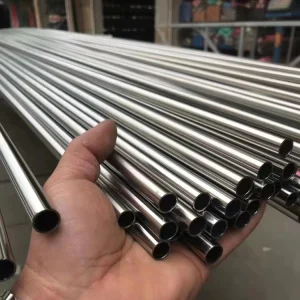
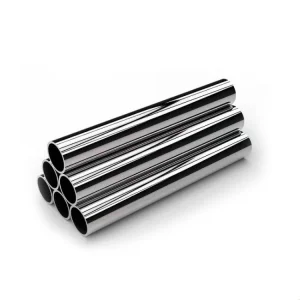
Complete Stainless Steel Product Catalog (Coils, Plates, Strips & Pipes)
Explore our full line of mill-certified products ready for fast shipment to Los Angeles and international destinations.



7. Frequently Asked Questions: Los Angeles Stainless Coil Procurement
Expert technical answers addressing common B2B buyer inquiries in Southern California.
Q1: What is the typical transit and customs clearance timeframe for stainless steel coils arriving at the Port of Los Angeles?
Direct ocean freight from primary Asian production centers to the Port of Los Angeles/Long Beach typically takes 14 to 20 days port-to-port. Customs clearance and ISF filing processing require an additional 2 to 4 business days. For urgent projects, local West Coast warehouse buffers allow next-day truck delivery throughout LA, Orange County, and Riverside.
Q2: How do I determine whether 304 or 316L stainless steel coil is required for coastal California installations?
For installations located within 5 miles of the Pacific coastline (such as Santa Monica, Long Beach, or Newport Beach), Grade 316L is strongly recommended due to its 2.0-3.0% Molybdenum addition, which resists salt spray pitting. Grade 304 is suitable for inland applications (like Pasadena, Ontario, or Inland Empire facilities) where atmospheric chloride exposure is minimal.
Q3: What mill edge options and slitting tolerances are available for custom strip orders?
We offer both Mill Edge (untrimmed raw coil edges) and Slit Edge (precision rotary shears cut to width). Width tolerances for slit coil strips can be maintained within ±0.05mm (0.002 inches) with controlled burr height under 0.02mm, optimizing automated feed stamping and roll-forming machinery.
Q4: Are your stainless steel coils compliant with ASTM A240 and Buy American Act requirements?
All stainless coils are produced strictly in compliance with ASTM A240 / A480 standards and accompanied by EN 10204 3.1 certified Mill Test Reports (MTRs). For federal or state projects requiring Buy American or Buy Clean California compliance, specific mill certification and low-embodied-carbon documentation can be provided prior to order lock-in.
Q5: What protective coatings and surface finishes are available for architectural coils?
Available finishes include 2B (cold rolled smooth), BA (bright annealed), No.4 (satin/brushed), Hairline, 8K Mirror, and Embossed patterns. Coils can be laminated with 50 to 100 micron PE/Laser PVC protective film to prevent surface marring during laser cutting, stamping, and transit.
Partner with a Leading Stainless Steel Coil Manufacturer
Get instant mill pricing, custom slitting schedules, and technical material consultations tailored for your Los Angeles operations.