
Core Stainless Steel Plate Solutions for Kazakhstan Projects
Engineered for extreme continental temperature fluctuations (-40°C to +45°C), high pressure, and severe corrosive operating conditions across Central Asian industrial hubs.
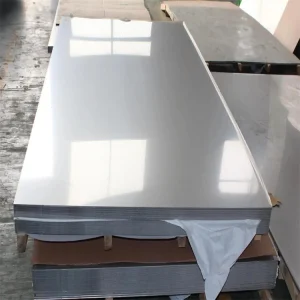
Cold Rolled Stainless Steel Sheet for Almaty Architectural & Industrial Equipment
View Product Specifications
CE Certified 316L Stainless Steel Sheet for Atyrau Refinery & Petrochemical Use
Request Factory Quotes
China SUS304 (06Cr19Ni10 / GOST 08Ch18N10) Corrosion-Resistant Cold-Rolled Plate
Explore Technical Specs
High Cost-Effectiveness 201 Cold-Rolled Stainless Sheet for Astana Construction
Download Pricing CatalogThe Growing Demand for Chinese Stainless Steel Plates in Kazakhstan
As the economic powerhouse of Central Asia, Kazakhstan is undergoing a historic industrial transformation driven by energy sector modernization, infrastructure expansion, and regional trade integration.
Energy & Petrochemical Expansion
Mega-projects in the Caspian Basin (Tengiz, Kashagan, Karachaganak) and refinery upgrades in Atyrau and Shymkent demand sour-gas resistant 316L, Duplex 2205, and Super Duplex 2507 heavy plates certified to stringent international standards.
Mining & Metallurgical Processing
Kazakhstan’s vast mineral extraction infrastructure in Karaganda, Pavlodar, and East Kazakhstan requires abrasion and acid-resistant stainless plates (such as 317L and 310S) for copper, zinc, and uranium leaching tanks.
Belt & Road Logistics Hub
Positioned as the vital link between East Asia and Europe, Kazakhstan’s dry ports (Khorgos Gateway, Altynkol) benefit from direct rail freight connections to Wuxi and Foshan stainless steel mill clusters in China.
Information Gain Insight: Navigating GOST vs. ASTM Standards
Procurement managers in Almaty and Astana frequently face challenges reconciling legacy CIS standards (GOST 5632-2014) with global standards (ASTM A240 / EN 10088-2). China's leading mills now produce cross-certified stainless steel plates that simultaneously satisfy GOST 08Ch18N10 (304), 03Ch17N14M3 (316L), and 12Ch18N10T (321), accompanied by dual-language EN 10204 3.1 Mill Test Certificates in English and Russian.
Localized Stainless Steel Plate Engineering Applications
From Caspian offshore platforms to North Kazakhstan agricultural machinery, our stainless steel plates are tailored for exact mechanical stress and environmental demands.
Oil & Gas Separators and Storage Tanks (Atyrau & Mangystau)
Offshore sour-gas environments in Kashagan contain elevated hydrogen sulfide ($H_2S$) and chloride levels. We supply heavy-gauge 316L (EN 1.4404) and Duplex 2205 (EN 1.4462) hot-rolled plates (No.1 finish, 6mm to 50mm thickness) featuring a Pitting Resistance Equivalent Number (PREN) ≥ 35, guaranteeing resistance to sulfide stress cracking (SSC).
- 100% Ultrasonic Testing (UT) per ASTM A578 Level II
- Charpy V-Notch impact tested at -40°C for winterized resilience
- Custom bevel edge processing for immediate site welding
Acid Hydro-Metallurgy Leaching Vessels (East Kazakhstan & Karaganda)
Uranium extraction and non-ferrous mineral hydrometallurgy involve aggressive sulfuric and nitric acid leach solutions. Our Super Duplex 2507 (UNS S32750) and high-alloy 310S heat-resistant plates offer superior erosion-corrosion performance compared to traditional carbon steel linings.
- High yield strength (≥ 550 MPa) reducing structural plate thickness
- Resistance to intergranular corrosion per ASTM A262 Practice E
- Extended service life exceeding 25 years in hydrometallurgical duty
Agricultural Processing & Dairy Infrastructure (Kostanay & North KZ)
Kazakhstan’s booming grain processing, food manufacturing, and milk refining sectors rely on sanitary 304 (2B finish) and 304L cold-rolled sheets. Smooth surface roughness ($Ra < 0.4 \mu m$) prevents bacterial adhesion and meets strict Eurasian Economic Union (EAC) hygienic norms.
- Mirror (8K) and Hairline (No.4) decorative finishes available
- Paper-interleaved or laser-film protected surfaces
- Food-contact compliant alloy chemistry certification
Architectural Facades & Transport Terminals (Astana & Shymkent)
Modern urbanization projects in Astana require weather-resistant exterior cladding and heavy-duty elevator panels. Our perforated 201, 304, and 316 stainless steel sheets provide elevated tensile strength, thermal cycle resistance, and modern visual aesthetics.
- Custom perforation geometry (round, square, decorative slots)
- PVD color coating (Gold, Rose Gold, Black Titanium, Champagne)
- High flatness control (+/- 1mm tolerance across 2000mm length)
Comprehensive Stainless Steel Grade Cross-Reference Matrix
Direct technical comparison between International (ASTM / EN) standards and Eurasian CIS (GOST) standards to streamline procurement decisions for Kazakhstan engineers.
| ASTM Grade | EN Standard | GOST Equivalent | Key Metallurgical Profile | Recommended Service Environment | PREN Rating |
|---|---|---|---|---|---|
| AISI 304 | 1.4301 | 08Ch18N10 | 18% Cr / 8% Ni (Austenitic) | General industrial, food processing, urban structural facades | 18.0 - 20.0 |
| AISI 304L | 1.4307 | 03Ch18N11 | Low Carbon Austenitic ($C \le 0.03\%$) | Welded pressure vessels, chemical tanks, cryogenic service | 18.0 - 20.0 |
| AISI 316L | 1.4404 | 03Ch17N14M3 | 16.5% Cr / 10% Ni / 2.1% Mo | Petrochemical refiners, Caspian marine structural parts, sour gas | 23.0 - 25.0 |
| AISI 321 | 1.4541 | 12Ch18N10T | Titanium Stabilized Austenitic | High-temperature exhaust lines, heat exchangers (up to 850°C) | 18.5 - 20.5 |
| AISI 310S | 1.4845 | 20Ch25N20S2 | 25% Cr / 20% Ni High Heat Grade | Furnace liners, metallurgical kilns, thermal power generation | 25.0 - 27.0 |
| Duplex 2205 | 1.4462 | 02Ch22N5AM3 | 50:50 Ferritic-Austenitic Duplex | High chloride oilfield water, mining acid tanks, high stress | 34.0 - 36.0 |
| Super Duplex 2507 | 1.4410 | 02Ch25N7AM4 | 25% Cr / 7% Ni / 4% Mo + Nitrogen | Aggressive marine, severe pitting & crevice corrosion service | > 42.0 |
China Factory Resilience & Direct Logistics to Kazakhstan
Eliminating supply disruptions through integrated manufacturing capabilities in Wuxi and direct trans-Eurasian rail and truck corridors.
Integrated Factory Processing
Our Wuxi manufacturing hub houses 5 automated coil slitting lines, 6 polishing lines, plasma/laser cutting tables (up to 120mm thickness), and hydraulic press brake bending for immediate semi-finished component fabrication.
Khorgos & Alashankou Gateway Logistics
Leveraging direct rail connections from Lianyungang/Xi'an to Almaty-1, Dostyk, and Altynkol. Transit times for bonded rail containers are optimized to 10-14 days, offering substantial time savings over sea freight via Baltic ports.
Seaworthy & Winterized Export Packaging
Heavy wooden cases treated under ISPM-15, rust-inhibiting VCI film wrapping, waterproof plastic covers, and heavy-duty steel strapping ensure zero moisture ingress or physical scratching during cross-border transit.
Global Market Trends & Kazakhstan Stainless Steel Outlook (2025–2030)
How raw material fluctuations, green transition policies, and Central Asian infrastructure capital expenditure shape raw stainless plate pricing and supply contracts.
Nickel & Moly Price Stabilization
With Indonesian Nickel Pig Iron (NPI) capacity reaching equilibrium, base 304 prices show localized stability. However, high Molybdenum surcharges for 316L and Duplex alloys necessitate strategic forward hedging. Direct factory contracts help Kazakh buyers lock in quarterly pricing terms.
Decarbonization & Green Steel
As European and CIS carbon adjustment mechanisms (CBAM) phase in, Chinese mills are integrating Electric Arc Furnace (EAF) recycling with high-grade scrap. This yields stainless plate product lines with reduced carbon intensity without sacrificing mechanical purity.
Local Fabrication Modernization
Kazakhstan's national strategy to increase localized industrial fabrication means EPC contractors require pre-cut, pre-beveled plates delivered ready for automatic sub-arc welding on site, reducing local labor overheads and fabrication bottlenecks.
Strict Quality Inspection Protocols & EAC Compliance
Every stainless steel plate delivered to Kazakhstan undergoes multi-stage metallurgical, non-destructive, and dimensional testing before export dispatch.
Positive Material Identification using XRF spectro-analysis on every single plate to verify Cr, Ni, Mo, and C composition.
100% UT scanning per ASTM A435 / A578 to eliminate internal laminations, voids, and sub-surface inclusion flaws.
Mechanical testing executed down to -40°C in certified labs to verify yield strength, elongation, and toughness.
Supply of EN 10204 3.1 or 3.2 (TÜV/SGS witnessed) certification alongside Certificate of Origin (Form A / FE).
Comprehensive Stainless Steel Plate, Pipe & Specialty Products
Discover our full product catalog engineered for industrial fabricators, stockists, and EPC buyers across Central Asia.
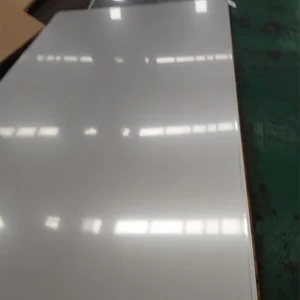
Custom 2507 Super Duplex Stainless Steel Plate for Caspian Marine Use
Inquire 2507 Plate Pricing
CE Certified Perforated Stainless Steel Sheet for Mining & Agricultural Screens
View Perforation Options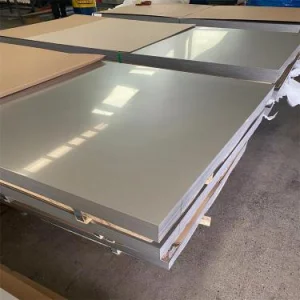
ASTM A240 304 Stainless Cold Rolled Sheet (2B / BA / No.4 Surface)
Get Wholesale Pricelist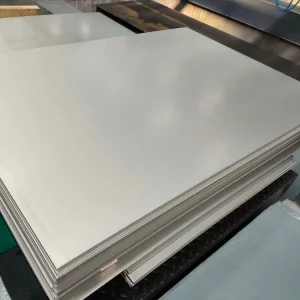
CE Hot Rolled Stainless Steel Plate (No.1) – 304 / 316L / 310S / 321 / 2205
View Hot Rolled Specs
Heavy Structural Stainless Steel Plate (EN 10088-2 / JIS G4304 Standard)
Request Custom Dimensions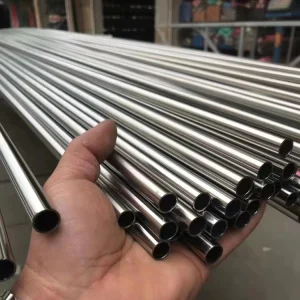
Wholesale China Stainless Steel Industrial Pipe with Custom Processing Services
Get Industrial Pipe Quote
CE Certified Stainless Steel Industrial Welded Pipe for Oil & Gas Pipelines
Explore Welded Pipe Range
Direct Factory Custom Stainless Steel Pipe Solutions for Kazakhstan Projects
Contact Factory EngineersFrequently Asked Questions (Procurement & Metallurgy)
Addressing key operational, logistical, and technical engineering queries from industrial buyers in Almaty, Astana, and Atyrau.
How do Chinese stainless steel plate grades correspond to CIS GOST standards?
What are the lead times and shipping routes for stainless steel plate delivery to Kazakhstan?
How do your stainless plates perform in sub-zero winter temperatures (-40°C)?
Can you supply customized cut-to-size and pre-processed stainless steel plates?
What certification package accompanies the steel shipment for local KZ compliance?
Request a Direct Mill Quote for Your Kazakhstan Project Today
Whether you require high-volume 304 cold-rolled sheets for architectural cladding or specialized 316L / Duplex 2205 plates for energy infrastructure, our technical engineering team is ready to assist.