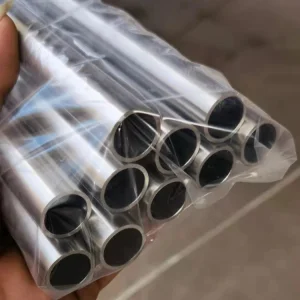
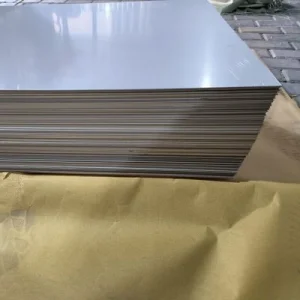
Featured Industrial Stainless Steel Products
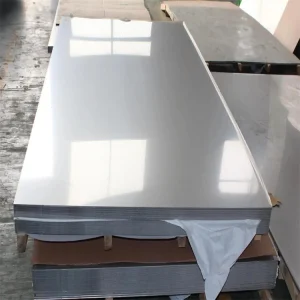
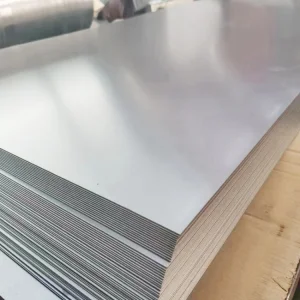
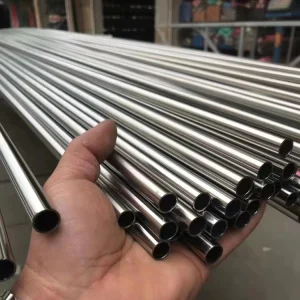
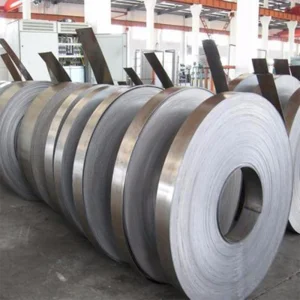
Mill-certified plates, decorative pipes, structural tubes, and precision coils from Tier-1 China fabrication centers.
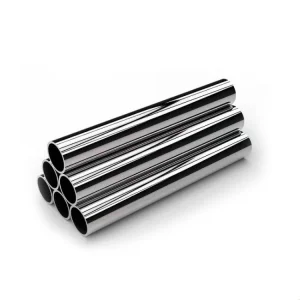
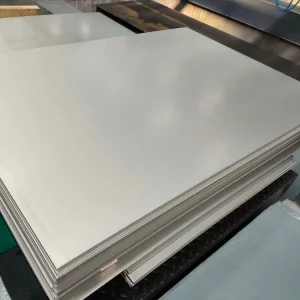
Executive Sourcing Summary & Market Dynamics
Navigating raw material price volatility, alloy surcharges, and global capacity distribution in B2B steel procurement.
In the contemporary B2B industrial ecosystem, purchasing decision-makers face unprecedented complexity when evaluating Wholesale Stainless Steel Fabrication Factories & Pricelists. Global manufacturing demands require not merely low mill-gate pricing, but extreme structural reliability, total metallurgical traceability, and seamless international compliance. Stainless steel—an iron-based alloy containing a minimum of 10.5% chromium—derives its corrosion resistance from a self-healing chromium-rich oxide film (passivation layer). Selecting the correct metallurgical variant and fabrication route is critical to optimizing Life Cycle Cost (LCC) across infrastructure, chemical processing, AEC (Architecture, Engineering, and Construction), and energy production sectors.
Raw material cost structures are heavily dictated by London Metal Exchange (LME) nickel indexes, ferrochrome market pricing, and molybdenum surcharges. Understanding these macroeconomic drivers allows global procurement officers to timing-hedge bulk orders, structure index-linked floating pricing agreements, and evaluate OEM mill capacity across major production hubs in China, Europe, and Southeast Asia.
Technical Metallurgy Matrix & Material Selection Framework
Engineering evaluation of Austenitic, Ferritic, Duplex, and Super Duplex stainless steel grades.
Austenitic Series (300 / 200 Series)
Characterized by a face-centered cubic (FCC) crystal structure, non-magnetic in annealed states, exceptional cryogenic toughness, and excellent weldability. Grades include SUS304, 304L, 316, 316L, 310S, and 321. Standard choice for food processing, sanitary piping, and heat exchangers.
Ferritic Series (400 Series)
Body-centered cubic (BCC) crystal lattice providing magnetic properties, high thermal conductivity, and superior resistance to chloride stress corrosion cracking (SCC). Grade SUS430 is heavily utilized in automotive trims, household appliances, and indoor architectural panels.
Duplex & Super Duplex (2205 / 2507)
A dual-phase microstructure containing roughly equal proportions of austenite and ferrite. Offers nearly double the yield strength of 304/316 with exceptional Pitting Resistance Equivalent Number (PREN = %Cr + 3.3%Mo + 16%N), making it vital for offshore oil & gas and desalination plants.
| Steel Grade | Microstructure | Tensile Strength (MPa) | Yield Strength (MPa) | PREN Rating | Primary Industrial Application |
|---|---|---|---|---|---|
| SUS201 | Austenitic (Cr-Mn) | ≥ 520 | ≥ 275 | ~ 15 | Indoor decorative framing, consumer hardware |
| SUS304 / 304L | Austenitic (Cr-Ni) | ≥ 515 | ≥ 205 | ~ 19 | Food processing, dairy equipment, architectural cladding |
| SUS316 / 316L | Austenitic (Cr-Ni-Mo) | ≥ 485 | ≥ 170 | ~ 25 | Marine fittings, chemical reactor vessels, pharmaceuticals |
| SUS310S | Austenitic (High Cr-Ni) | ≥ 515 | ≥ 205 | ~ 26 | High-temperature furnace tubes, heat treating fixtures |
| Duplex 2205 | Austenitic-Ferritic | ≥ 620 | ≥ 450 | ~ 35 | Chemical tankers, oil & gas piping, pulp & paper digestors |
| Super Duplex 2507 | Austenitic-Ferritic | ≥ 750 | ≥ 550 | ≥ 42 | Seawater reverse osmosis (SWRO), subsea umbilical lines |
China Industry 4.0: Modern Manufacturing & Supply Chain Resilience
How advanced automation and integrated steel hubs in Wuxi/Jiangsu deliver efficiency, speed, and strict tolerance control.
Raw Material Integration
Sourcing directly from primary melt shops such as Tsingshan, TISCO, POSCO, and Baosteel ensures exact chemical stoichiometry, minimal non-metallic inclusions, and consistent heat-to-heat mechanical performance.
Automated Cold-Rolling & Slitting
High-precision multi-roll cold rolling mills paired with automatic optical gauge controls achieve ultra-tight thickness tolerances (up to ±0.02mm), crucial for high-speed automated stamping and roll forming.
Laser Welding & Online NDT Testing
Continuous automated TIG, Plasma, and Laser welding lines integrated with online Eddy Current Testing (ECT) and Ultrasonic Inspection guarantee 100% seam integrity for pressure piping standards (ASTM A312 / EN 10217-7).
Fabrication Technical Roadmap & Surface Finishing Technologies
From raw sheet slitting to advanced PVD coating, electropolishing, and 5-axis fiber laser cutting.
Mechanical Polishing & Brushed Finishes
Automated belt grinding machines produce uniform No.4 satin, Hairline (HL), and Scotch-Brite finishes. Surface roughness ($R_a$) is continuously monitored via profilometers to maintain decorative consistency across multi-ton production runs.
8K Mirror & Electro-Polishing (EP)
Chemical electro-polishing removes surface micro-peaks, producing an ultra-smooth $R_a < 0.38\,\mu\text{m}$ finish. Crucial for pharmaceutical bio-reactors and semiconductor gas delivery lines where bacterial adhesion must be eliminated.
PVD Physical Vapor Deposition Coating
Titanium nitride sputtering under vacuum conditions imparts resilient, fade-resistant decorative colors (Gold, Rose Gold, Black Titanium, Champagne, Bronze) without compromising the base material's inherent corrosion resistance.
Precision Stamping, Bending & Hydroforming
CNC Press Brakes equipped with laser angle measurement systems ensure springback compensation on high-yield stainless grades, enabling complex structural geometries for architecture and automotive exhaust manifolds.
Macro Industry Solutions & Sector-Specific Deployments
Tailored material engineering for demanding operating environments worldwide.
Chemical & Petrochemical Processing
Challenge: Severe pitting and stress corrosion cracking from concentrated acids and high process temperatures.
Solution: Implementation of low-carbon SUS316L and Duplex 2205 seamless/welded piping systems compliant with ASME SA249/SA312.
Food, Beverage & Sanitary Engineering
Challenge: Strict FDA/EHEDG sanitary requirements prohibiting bacterial traps or metal leaching.
Solution: SUS304/316L cold-rolled sheets and sanitary tubing polished internally to $R_a < 0.4\,\mu\text{m}$, fully solution-annealed for optimal hygienic performance.
AEC Commercial Architectural Engineering
Challenge: Exterior structural facade integrity against atmospheric pollution and salt air corrosion.
Solution: PVD-coated stainless sheets, honeycomb composite panels, and structural decorative tubing engineered to ASTM A240 standards.
Wholesale Pricelist Mechanics & Cost Engineering Guide
Understanding commercial pricing models, MOQ tier structures, and total landed cost calculations for B2B importers.
A transparent Stainless Steel Pricelist relies on a combination of Base Price + Alloy Surcharge + Processing Add-ons + Logistics Cost. Understanding these variables empowers procurement officers to audit quotes accurately.
| Cost Component | Pricing Calculation Basis | Cost Optimization Strategy |
|---|---|---|
| Base Steel Price | USD per Metric Ton (MT) based on carbon steel benchmark & mill melting energy costs | Lock in annual volume framework agreements to fix base processing charges. |
| Alloy Surcharge | Floating monthly adjustment calculated from LME Nickel, FeCr, and FeMo spot market pricing | Utilize forward hedging or order when alloy surcharges enter historic cyclical troughs. |
| Processing Add-ons | Per MT or square meter charge for 2B, BA, 8K Mirror, PVD Color, Slitting, or Laser Film coating | Consolidate processing steps (e.g. order slit coil directly rather than processing full width coil locally). |
| Freight & Ocean Logistics | 20ft GP (heavy coils/plates) vs 40ft HQ (light structural pipe) container utilization | Max out weight limits (approx. 26-28 MT per 20ft GP) to reduce per-ton shipping overhead. |
Quality Compliance, ESG & Localized Global Support
Rigorous quality documentation, CE/PED certifications, and decarbonization commitment.
Mill Test Certificates (EN 10204 3.1 / 3.2)
Every shipment is accompanied by a full MTC detailing heat numbers, chemical spectral analysis, mechanical yield/tensile tests, elongation, hardness, and non-destructive testing results for complete supply chain transparency.
International Standards Compliance
Manufacturing adheres strictly to global standards including ASTM A240, ASTM A312, EN 10088-2, EN 10217-7, JIS G4304, and JIS G4305, ensuring seamless insertion into overseas project engineering specifications.
Decarbonization & CBAM Preparedness
Our partner mills utilize Electric Arc Furnace (EAF) recycling routes powered by green grid initiatives, drastically lowering Scope 1 & 2 carbon footprints to simplify compliance with Europe's Carbon Border Adjustment Mechanism (CBAM).
Frequently Asked Questions (B2B Procurement Intelligence)
Technical and commercial answers to critical sourcing questions.
How do I verify the authenticity and grade of imported stainless steel plates or pipes?
Authenticity is confirmed via a certified Mill Test Certificate (EN 10204 3.1) accompanying the heat number stamped on the material. Furthermore, third-party handheld XRF spectrographic analysis or PMI (Positive Material Identification) testing can be conducted at loading to verify Chromium, Nickel, and Molybdenum weight percentages.
What is the practical difference between SUS304 and SUS316L for industrial piping?
While SUS304 contains 18% Cr and 8% Ni, SUS316L adds 2-3% Molybdenum and reduces carbon content below 0.03%. The molybdenum drastically improves resistance to chloride pitting and crevice corrosion, while the lower carbon prevents intergranular chromium-carbide precipitation during welding.
How are wholesale stainless steel prices quoted and calculated?
Wholesale quotes are typically structured on a USD/MT basis for coil and sheet orders, or per meter/foot for specialized pipe profiles. Quotes specify trade terms (FOB, CIF, DDP) and specify whether pricing is fixed or floating against LME nickel surcharges at the time of manufacturing readiness.
What packaging standards are used to prevent ocean freight surface damage?
Coils and sheets feature protective PE/Laser film application, heavy-duty waterproof Kraft paper wrapping, steel edge protectors, and are strapped to wooden pallets or eye-to-sky/eye-to-wall steel cradles treated under ISPM-15 fumigation standards.
Why choose China fabrication factories over regional distributors?
Direct sourcing from primary fabrication hubs in China eliminates intermediary distributor markups, provides direct OEM custom sizing/slitting capabilities, offers access to massive stock reserves, and drastically shortens lead times for large-scale EPC infrastructure projects.
Additional Wholesale Product Catalog
Explore our full line of low-carbon pipes, cold-rolled sheets, and custom decorative tubing.