
High-Precision Perforated & Stainless Steel Sheet Catalogue
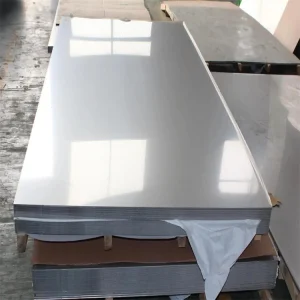
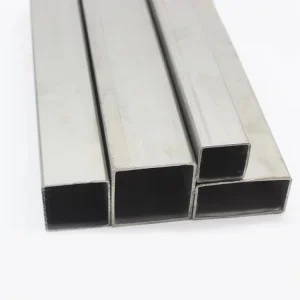
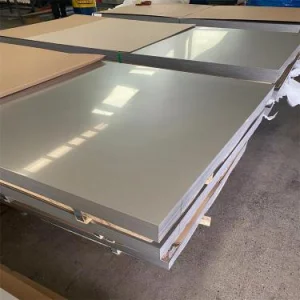
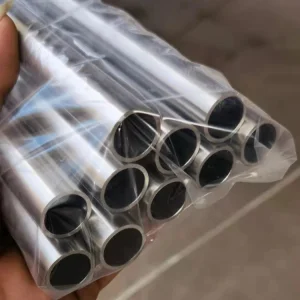
Direct mill-sourced cold-rolled and hot-rolled stainless steel sheets, perforated metal meshes, and industrial piping engineered to strict ASTM, EN, and JIS standards.


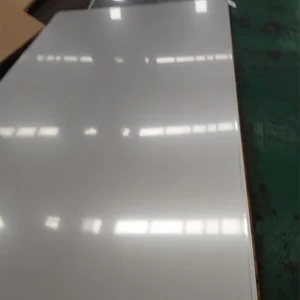

The Global Industrial & Commercial Landscape of Round Hole Perforated Metal
Understanding the macro-economic drivers, supply chain shifts, and structural demand behind perforated stainless steel solutions across major world economies.
Architectural & Structural Trends
In modern urban infrastructure across North America and Western Europe, round hole perforated sheets are transitioning from purely functional acoustic filters to prime facade aesthetics. They offer solar shading, energy dissipation, and high strength-to-weight ratios in LEED-certified green building enclosures.
Industrial Filtration & Chemical Processing
The Middle East and Southeast Asian markets show an aggressive demand uptick for 316L and Duplex 2205 round hole perforated sheets. Crucial for marine desalination, offshore oil gas extraction, and petrochemical filtration, these sheets must endure extreme pitting resistance equivalent numbers (PREN > 34).
Automotive & Acoustic Engineering
Electric Vehicle (EV) battery casing ventilation, thermal management baffles, and aerospace cabin noise reduction panels increasingly rely on micro-perforated stainless steel sheets with tight tolerance pitch arrays down to ±0.05mm precision.
Engineering Intelligence: Why Round Holes Dominate Perforated Metal Sales
Round hole patterns represent over 65% of the total perforated sheet market volume. Geometrically, a round perforation distributes structural mechanical stress uniformly across the web, eliminating stress concentration points inherent in square or slotted perforations. This provides max yield strength during high-pressure fluid filtration or heavy architectural loads.
The Chinese Factory Advantage: Manufacturing Efficiency & Cost Scaling
How Wuxi and Jiangsu stainless steel industrial clusters deliver unprecedented lead times, strict metallurgical control, and wholesale price advantages for overseas buyers.
Fully Automated High-Speed CNC Punching Lines
Chinese direct manufacturing hubs utilize multi-ram CNC punch presses and automated fiber laser perforation hybrids capable of up to 1,500 strokes per minute. This allows mass customization of hole diameter ratios (0.5mm to 100mm) without compromising panel flatness or edge burr integrity.
Integrated Upstream Raw Material Sourcing
By coupling production directly with tier-1 steel mills such as Tsingshan, TISCO, Baosteel, and POSCO, Chinese manufacturers bypass intermediate stockist markups. Buyers receive guaranteed chemical composition (verified nickel/chromium/molybdenum ratios) with direct Mill Test Certificates (MTC to EN 10204 3.1).
Inline Leveling & Degreasing Passivation
A critical flaw in low-tier perforated manufacturing is panel warping caused by internal stress release during punching. Chinese Tier-1 factories integrate high-precision 21-roller roller levelers and ultrasonic degreasing lines to deliver dead-flat sheets with zero oil residue, ready for immediate anodizing or PVD coating.
Engineering Mathematics: Hole Patterns, Pitch & Open Area Formulae
Selecting the precise geometric arrangement for fluid dynamics, structural integrity, and acoustic transparency.
When specifying wholesale round hole perforated stainless steel sheets, procurement officers and structural engineers must balance open area percentage against sheet tensile rigidity. The three main geometric configurations are 60° Staggered, 45° Staggered, and Square/Straight Grid.
| Perforation Pattern | Calculation Formula for Open Area (% OA) | Structural Rigidity | Primary Industrial Use-Case |
|---|---|---|---|
| 60° Staggered Round | % OA = (D² × 90.69) / C² |
Highest (Uniform Stress Distribution) | General Filtration, Architectural Facades, Vibrating Screens |
| 45° Staggered Round | % OA = (D² × 157.08) / (S1 × S2) |
Medium High | Acoustic Panels, Specialized Grain Sorting, HVAC Grilles |
| Straight / Square Grid | % OA = (78.54 × D²) / (C1 × C2) |
Moderate (Directional Bending Risk) | Display Fixtures, Ventilation Covers, Security Guards |
* Where D = Hole Diameter, C = Hole Center Pitch (Center to Center distance), S1/S2 = Staggered Spacing Dimensions.
Grade 304 Stainless Steel
Standard 18/8 austenitic stainless steel. Ideal for indoor decorative panels, food processing equipment, architectural trims, and general industrial sorting where extreme chemical exposure is absent.
Grade 316 / 316L Stainless
Contains 2-3% Molybdenum to prevent chloride pitting corrosion. Essential for marine infrastructure, pharmaceutical cleanrooms, coastal architectural cladding, and harsh chemical fluid strainers.
Duplex 2205 / Super Duplex 2507
Combines austenitic and ferritic microstructures. Delivers double the yield strength of 304/316 with exceptional resistance to stress corrosion cracking in high-salinity or acidic industrial environments.
Localized Application Scenarios & Global Industry Trends
From architectural marvels in Western Europe to heavy industrial centrifuges in Latin America, see how round hole sheets drive modern engineering.
Architectural Exterior Cladding & Sunscreens
In hot-climate regions (Middle East, Southern USA), exterior perforated stainless facades significantly lower HVAC cooling loads by blocking thermal solar radiation while permitting natural light passage and air circulation. PVD titanium color-coated perforated sheets are popular in luxury hotel facades.
Food Processing & Agricultural Sieving
Round hole perforated screens with burr-free polished surfaces (No.4 or BA finish) are vital for automated grain cleaning, coffee bean grading, and dairy processing line strainers. Grade 304 and 316L sheets prevent bacterial growth traps in sanitary washdowns.
Acoustic Attenuation & Machine Silencing
Industrial generator housings, heavy equipment sound enclosures, and auditorium acoustic wall panels employ round hole perforated sheets over sound-absorbing rockwool core. The round holes let sound waves pass into the insulation while maintaining a rugged protective barrier.
Global B2B Purchasing Strategy: How to Request Quotes & Optimize Costs
A tactical guide for sourcing agents and engineering buyers to secure competitive mill-direct pricing while safeguarding quality standards.
Essential RFQ Data Checklist for Wholesale Suppliers
To receive an accurate binding quotation within 24 hours, your RFQ should define these 7 mechanical parameters:
e.g., AISI 304, 316L, 2205 (ASTM A240 / EN 10088-2)
Thickness (mm) × Width (mm) × Length (mm)
Hole Diameter (mm) & Pitch / Center-to-Center (mm)
60° Staggered, 45° Staggered, or Square Grid
Specify unperforated side/end margins (e.g., 20mm plain border)
2B (Mill finish), BA (Bright Annealed), No.4 (Brushed), 8K Mirror
Export Packaging & Logistics Protocol
Stainless steel perforated sheets are prone to edge damage and inter-sheet scratching during ocean transit. Ensure your supplier guarantees heavy-duty seaworthy packaging: plastic waterproof film wrapping, anti-rust VCI paper layers, corrugated edge protectors, and solid wooden pallet crating strapped with steel bands.
Frequently Asked Questions (FAQ) & Buyer Guidance
In-depth technical and commercial answers curated by our metallurgical and supply chain engineering team.
1. What is the standard ratio limit between hole diameter and sheet thickness?
As a golden rule of punch perforation metallurgy, the minimum hole diameter (D) should be equal to or greater than the sheet thickness (T) for austenitic grades like 304 and 316 (i.e., D ≥ T). If the hole diameter is smaller than the sheet gauge (e.g., trying to punch a 1mm hole in a 3mm plate), punch pins are prone to frequent breakage due to extreme shear pressure. For micro-hole configurations where D < T, high-speed fiber laser cutting or chemical etching must be utilized instead of mechanical die punching.
2. How do you prevent sheet warping or oil canned distortion during punching?
Punching thousands of round holes releases residual cold-rolling stress in the steel, which can warp the sheet into a bowl or wave shape. Premium manufacturers resolve this by passing perforated sheets through a multi-roll precision roller leveler post-punching. Furthermore, applying proper punching lubricants and maintaining ultra-sharp CNC dies prevents localized thermal expansion and material stress concentration.
3. What is the difference between 304 and 316L for round hole perforated sheets?
Grade 304 (18% Cr / 8% Ni) is standard for indoor cladding, acoustic baffles, and general industrial sorting screens. Grade 316L contains low carbon plus 2-3% Molybdenum, boosting pitting and crevice corrosion resistance in high-chloride environments such as coastal architectural facades, marine filtration, and chemical processing lines.
4. Can round hole perforated stainless steel sheets be custom cut and folded?
Yes. Perforated sheets can be laser cut to custom polygon shapes, notched, rolled into cylindrical filter tubes, or press-brake bent into facade cassettes with unperforated mounting flanges. It is vital to specify blank borders/margins in advance so bending lines fall on solid, unpunched metal rather than across hole centers.
5. What mill certifications and quality reports accompany wholesale shipments?
All tier-1 wholesale exports include an EN 10204 3.1 Mill Test Certificate (MTC) detailing chemical ladle analysis, mechanical yield/tensile strength, elongation, and hardness test results. Additional third-party inspection reports (SGS, TUV, Intertek) for dimensional hole pitch tolerance, burr height, and salt spray corrosion resistance can be supplied upon contract request.
Explore Additional Stainless Steel Products & Processed Plates
Custom cold-rolled sheets, industrial welded piping, CE-certified strips, and specialized structural alloys direct from factory stock.

Request Wholesale Quotations & Engineering Samples
Get in touch with our engineering sales team for mill-direct pricing, custom hole pattern CAD drawings, material samples, and FOB/CIF freight rates.