
Featured Mill-Direct Products: Cold-Rolled & Industrial Stock (Part I)
Explore primary product offerings manufactured and processed under rigorous ISO 9001:2015, CE, ASTM A240, EN 10088-2, and JIS G4304 quality assurance protocols.

Custom China SUS304 Stainless Steel Cold-Rolled Plate Suppliers - Corrosion-Resistant Food Grade Factory Products Suppliers, Factory
Request Quote & Specs
Wholesale High-Quality SUS304 Stainless Steel Cold-Rolled Plate - Corrosion Resistant Food Grade Material from China Suppliers and Factory Manufacturer, Suppliers
Request Quote & Specs
Custom Cold Rolled Stainless Steel Sheet Suppliers - High Strength Corrosion Resistant Material from China Factory Manufacturer, Factories
Request Quote & Specs
Custom 316L Stainless Steel Sheet from China Suppliers - High Quality Factory Direct Products Manufacturers, Pricelist
Request Quote & Specs
CE Certification Corrosion-Resistant SUS304 Stainless Steel Cold-Rolled Plate from China Suppliers and Factory for Food Safety Supplier, Factory
Request Quote & Specs
CE Certification China SUS304/304L Ultra-Low Carbon Stainless Steel Pipe Suppliers - Superior Corrosion Resistance & Welding Performance Factory Suppliers, Factory
Request Quote & Specs
Wholesale China Stainless Steel Pipe Factory - Direct Supplies with Material Certification and Custom Processing Services Manufacturer, Pricelist
Request Quote & Specs
Wholesale 2507 Super Duplex Steel Plate - High Strength & Corrosion Resistance from China Suppliers and Factory Manufacturers, Manufacturer
Request Quote & Specs1. Executive Metallurgy Whitepaper: Phase Stability & Passivation Kinetics
Understanding the thermodynamic stability, alloying mechanisms, and oxidation dynamics that define prime-grade flat-rolled stainless steel.
Chromium Oxide Passivation Dynamics and PREN Metallurgy
Prime-quality stainless steel sheet performance fundamentally relies on the instantaneous formation of a self-healing, nanometer-thin passive surface film primarily composed of hydrated chromium oxide ($Cr_2O_3$). When exposed to atmospheric oxygen or aqueous environments, alloyed chromium ($Cr \ge 10.5\%$) reacts dynamically to passivate the substrate, suppressing anodic dissolution. In aggressive halide-rich environments—such as marine splash zones or acidic chemical process streams—molybdenum ($Mo$) and nitrogen ($N$) additions act synergistically to reinforce film integrity, raising the Pitting Resistance Equivalent Number (PREN).
PREN = %Cr + 3.3(%Mo) + 16(%N)Standard austenitic SUS304 achieves a PREN of ~18-19, SUS316L achieves ~23-25, whereas Super Duplex 2507 exceeds PREN 42, enabling resistance to severe pitting and crevice corrosion under extreme offshore operations.
Furthermore, cold-rolling engineering alters the crystallographic orientation and grain boundary network of austenitic steels (SUS304/316L). Controlled cold work deformation induces strain-induced martensitic transformation ($\gamma \rightarrow \alpha'$), enhancing tensile strength ($R_m$) and yield strength ($R_{p0.2}$) while maintaining workability. Proper bright annealing in a pure hydrogen atmosphere at $1040^\circ C - 1100^\circ C$ subsequently dissolves grain-boundary chromium carbides ($Cr_{23}C_6$), guarding against sensitization and intergranular corrosion.
| Grade Designation | Microstructure Class | Nominal Chemical Composition (%) | PREN Rating | Tensile Strength $R_m$ (MPa) | Primary Industrial Vector |
|---|---|---|---|---|---|
| SUS201 / AISI 201 | Austenitic (Cr-Mn) | 16-18 Cr, 3.5-5.5 Ni, 5.5-7.5 Mn, 0.15 N | 17.0 - 18.5 | ≥ 650 | Architectural Trim, Decorative Tube, Stamping |
| SUS304 / EN 1.4301 | Austenitic (Cr-Ni) | 18.0-20.0 Cr, 8.0-10.5 Ni, ≤ 0.07 C | 18.5 - 20.0 | ≥ 520 | Food Processing, Sanitary Vessels, Kitchenware |
| SUS304L / EN 1.4307 | Ultra-Low Carbon Aust. | 18.0-20.0 Cr, 8.0-12.0 Ni, ≤ 0.03 C | 18.5 - 20.0 | ≥ 485 | Heavy Welded Structures, Chemical Tanks |
| SUS316L / EN 1.4404 | Mo-Austenitic | 16.0-18.0 Cr, 10.0-14.0 Ni, 2.0-3.0 Mo | 23.0 - 25.0 | ≥ 485 | Marine Hardware, Pharmaceuticals, Petrochemical |
| Duplex 2205 / EN 1.4462 | Austenitic-Ferritic | 21.0-23.0 Cr, 4.5-6.5 Ni, 2.5-3.5 Mo, 0.14-0.20 N | 34.0 - 36.0 | ≥ 655 | Oil & Gas Rigs, Desalination, Paper Pulping |
| Super Duplex 2507 | Super Duplex | 24.0-26.0 Cr, 6.0-8.0 Ni, 3.0-5.0 Mo, 0.24-0.32 N | ≥ 42.0 | ≥ 750 | Subsea Pipelines, Phosphoric Acid Scrubbers |
2. Global Industrial & Commercial Landscape of Flat-Rolled Stainless Steel
Analysis of macro-economic drivers, raw material price elasticity, regional production clusters, and supply chain decarbonization trends.
Market Volatility & Upstream Raw Material Dynamics
The global trade of prime quality stainless steel sheets is inextricably linked to price fluctuations in Class 1 nickel, nickel pig iron (NPI), high-carbon ferrochrome, and molybdenum oxide. As primary manufacturing mills in Wuxi and Jiangsu consolidate downstream processing, B2B buyers must navigate surcharge formulas (LME Nickel index linkage) while securing mill-direct price stability through structured forward contracts.
Asia-Pacific Production Supremacy & Export Hubs
China remains the undisputed epicenter of flat-rolled stainless steel production, accounting for over 55% of global output. Wuxi operates as China’s central stocking, slitting, and surface-finishing clearinghouse. Sourcing directly from certified Wuxi mills allows global procurement teams to achieve significant cost efficiency without sacrificing metallurgical traceability.
Green Steel Transformation & CBAM Readiness
Environmental regulations, including the European Union's Carbon Border Adjustment Mechanism (CBAM), are reshaping global steel trade. Leading mills are transitioning toward Electric Arc Furnace (EAF) steelmaking utilizing high percentages of recycled stainless scrap, reducing Scope 1 and Scope 2 carbon intensity per metric ton of cold-rolled coil produced.
3. Precision Surface Engineering & Processing Roadmap
From No.1 hot-rolled master coils to mirror-polished decorative and perforated precision sheets: detailing mechanical tolerances and surface roughness ($Ra$) parameters.
2B & BA (Bright Annealed) Finish
2B Finish: Cold-rolled, heat-treated, pickled, and given a light skin pass through polished rolls. Smooth, slightly reflective surface with $Ra \approx 0.1 - 0.5 \mu m$. Ideal for general industrial fabrication.
BA Finish: Cold-rolled and annealed in an atmosphere-controlled furnace (hydrogen/nitrogen mix) to prevent oxidation, achieving a mirror-like finish ($Ra \le 0.05 \mu m$) required for medical and optical applications.
No.4 Brushed & Hairline (HL)
No.4 Finish: Produced by grinding with 150-240 mesh abrasives. Characterized by short, parallel grain lines with consistent light reflectivity. Essential for commercial kitchen equipment, architectural wall paneling, and sanitary appliances.
Hairline Finish: Continuous longitudinal linear texture achieved via specialized abrasive belt processing, offering superior visual depth for luxury elevator interiors and high-end cladding.
8K Mirror, PVD Color & Perforation
8K Mirror: Multi-stage mechanical buffing with micro-alumina slurries creates a non-directional, ultra-reflective mirror surface.
Physical Vapor Deposition (PVD): Plasma coating applies TiN/ZrN compounds to yield durable Gold, Rose Gold, Black Titanium, and Champagne shades without altering base alloy corrosion resistance.
Perforated Sheets: CNC turret punching creates round, square, or custom slots for acoustic barriers and industrial sieves.
Commercial sheet products supplied by prime Chinese factories maintain strict thickness tolerances (e.g., nominal $1.0mm \pm 0.02mm$), diagonal squareness variance $< 1.5mm$, and tension leveling flatness $\le 3mm/m$, eliminating edge wave and camber during automated fiber laser cutting.
4. Sector-Specific Industry Solutions & Localization Scenarios
Tailored material selection matrix mapped across global industrial sectors, regional compliance codes, and operating stresses.
Food Processing & Sanitary Equipment
Material Choice: SUS304 / SUS316L Cold-Rolled 2B / No.4
Key Requirements: Non-toxic elemental migration, resistance to organic acids and caustic washdowns (Clean-In-Place systems). $Ra < 0.4 \mu m$ surface polish prevents bacterial adhesion in dairy, brewery, and meat processing lines compliant with FDA, EHEDG, and EU 1935/2004 standards.
Chemical Processing & Desalination
Material Choice: 316L / Duplex 2205 / Super Duplex 2507
Key Requirements: Prevention of Stress Corrosion Cracking (SCC) and pitting in warm, chloride-laden process streams. Duplex grades double yield strength over standard 300-series, allowing equipment designers to reduce wall thickness, reducing vessel weight and total project cost.
Architecture, Building & Construction (AEC)
Material Choice: SUS201 (Indoor) / SUS304 (Outdoor) / 316L (Coastal)
Key Requirements: Long-term aesthetic retention, structural rigidity, and fire resistance. PVD-coated embossed sheets provide scratch resistance for heavy foot-traffic elevator cabins, curtain walls, and transit terminal roofing systems.
5. Quality Assurance Protocols & Mill Verification Standard
Eliminating supply chain risks through comprehensive metallurgical inspection, non-destructive testing, and certified EN 10204 3.1 documentation.
1. Chemical Composition Analysis (PMI & OES)
Every heat of steel undergoes Optical Emission Spectrometry (OES) and Positive Material Identification (PMI) via X-ray Fluorescence (XRF) gun testing upon receipt. This verifies precise elemental compliance (Cr, Ni, Mo, C, N, Mn) prior to slitting or cold rolling, guaranteeing zero grade substitution.
2. Mechanical Properties & Formability Testing
Destructive tensile testing measures yield strength ($R_{p0.2}$), ultimate tensile strength ($R_m$), and elongation percentage ($A_5$). Rockwell (HRB) and Vickers (HV) micro-hardness tests confirm cold work consistency, ensuring deep-drawing quality (DDQ) sheets perform predictably without tearing.
3. Intergranular Corrosion & Flaw Detection
In accordance with ASTM A262 Practice E (Copper-Copper Sulfate-16% Sulfuric Acid Test), low-carbon austenitic grades are evaluated for carbide precipitation sensitivity. Ultrasonic testing (UT) and eddy current inspection detect internal laminations or surface micro-cracks before dispatch.
Featured Mill-Direct Products: Special Alloys & Tubular Stock (Part II)
Complete portfolio featuring perforated sheets, structural industrial pipes, super duplex plates, and customized decorative tubings for global B2B procurement.

CE Certification China Perforated Stainless Steel Sheet Suppliers - High-Quality Factory Products for Industrial and Architectural Use Suppliers, Factory
Request Quote & Specs
Wholesale Prime Quality 201 Stainless Steel Pipe from China Suppliers | Durable and Stylish Factory-Direct Solutions Supplier, Factories
Request Quote & Specs
Custom Prime Quality 201 Stainless Steel Pipe from China Suppliers - Durable, Glossy & Ideal for Stairs and Handrails Factory, Quotes
Request Quote & Specs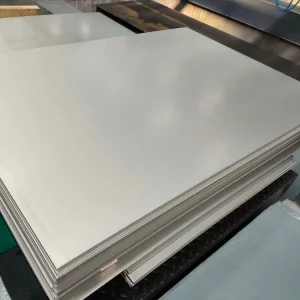
CE Certification Stainless Steel Hot Rolled Plate (No.1) – 304 / 304L / 316L / 310S / 321 / 2205, ASTM A240, EN 10088-2, JIS G4304 Manufacturer, Factories
Request Quote & Specs
China China SUS304 Stainless Steel Cold-Rolled Plate - Food Grade, Corrosion Resistant | Reliable Suppliers & Factory Supplier, Factory
Request Quote & Specs
China China Stainless Steel Pipe Factory - Direct Supplier with Certification, Complete Specifications & Custom Processing Services Manufacturers, Manufacturer
Request Quote & Specs
Custom China Suppliers Factory Direct Stainless Steel Industrial Welded Pipe in Various Sizes and Materials Manufacturer, Pricelist
Request Quote & Specs
CE Certification 2507 Super Duplex Steel Plate Supplier in China - High Strength and Corrosion Resistance from Leading Factory Factory, Pricelist
Request Quote & Specs6. Comprehensive Technical FAQ & Buyer Procurement Guide
In-depth metallurgical and logistical answers designed to assist procurement engineering teams during vendor auditing and specification drafting.