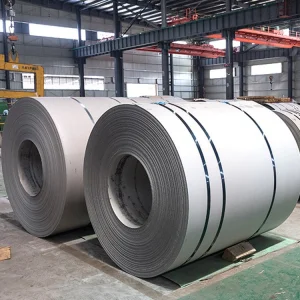
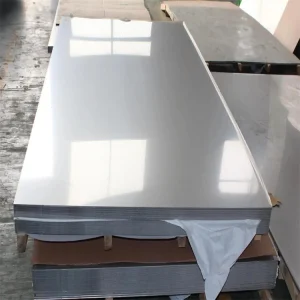
Precision Steel Pipes, Coils & Sheets Showcase
Explore high-performance austenitic, ferritic, and duplex acero inoxidable inventory manufactured to international ASTM, EN, and JIS benchmarks.



Executive Summary: Sourcing Wholesale Inoxidable Steel in the Global Market
The global industrial landscape is undergoing a structural transition toward long-lifecycle, low-maintenance materials. Among engineering alloys, inoxidable steel (stainless steel) stands as the backbone of modern chemical infrastructure, energy transition projects, food-grade processing, and sustainable architecture. As procurement teams evaluate wholesale options, navigating the operational trade-offs between mill-direct supply networks and regional distribution centers requires a granular understanding of metallurgical chemistry, total cost of ownership (TCO), and manufacturing resilience.
Industrial buyers sourcing from leading manufacturing clusters—such as Wuxi and Foshan in China—gain unprecedented economies of scale, stringent material traceability, and bespoke processing flexibility. This whitepaper serves as a technical procurement playbook for global enterprise buyers, EPC contractors, and stockholders, outlining key alloy selection criteria, advanced manufacturing protocols, and risk-mitigated supply chain strategies.
Alloy Selection Architecture: Precision Metallurgy for Industrial Performance
Selecting the optimal stainless steel grade demands a precise balance between corrosion kinetics, mechanical yield strength, formability, and long-term economic viability. Mis-specifying alloy chemistry can result in premature localized pitting, stress corrosion cracking (SCC), or unnecessary capital expenditure.
Austenitic Series (201, 304, 316L, 310S)
Characterized by a face-centered cubic (FCC) crystal structure, austenitic steels provide exceptional toughness, ductility, and broad corrosion resistance. Grade 201 leverages manganese-nitrogen substitution for cost efficiency in indoor architectural uses. Grade 304/304L forms the baseline for food-sanitary equipment. Grade 316L incorporates 2-3% Molybdenum to resist chloride pitting, while high-nickel Grade 310S excels in cyclic thermal oxidation up to 1150°C.
Ferritic & Martensitic Series (430, 410)
Featuring a body-centered cubic (BCC) matrix, ferritic alloys like Grade 430 provide nickel-free economic stability, high thermal conductivity, and immunity to stress corrosion cracking in mild indoor or automotive trim environments. Martensitic alloys offer heat-treatable hardness for surgical cutlery and mechanical turbine blades.
Duplex & Super Duplex (2205, 2507)
Engineered with a biphasic 50/50 ferrite-austenite microstructure, duplex stainless steels double the yield strength of conventional 300-series steels. Duplex 2205 and Super Duplex 2507 achieve Pitting Resistance Equivalent Numbers (PREN) exceeding 40, rendering them essential for offshore oil & gas platforms, seawater desalination plants, and aggressive chemical digestors.
Comparative Technical Matrix for B2B Procurement Specifiers
| Alloy Grade | Microstructure | Key Chemical Elements | PREN Rating | Tensile Strength (MPa) | Primary Industrial Applications |
|---|---|---|---|---|---|
| AISI 201 | Austenitic (Cr-Mn) | 16-18% Cr, 3.5-5.5% Ni, 5.5-7.5% Mn | ~17-19 | ≥ 520 | Architectural tubing, stair railings, appliances |
| AISI 304 / 304L | Austenitic (Cr-Ni) | 18-20% Cr, 8-10.5% Ni, C ≤ 0.03% | ~18-20 | ≥ 515 | Food & beverage processing, sanitary piping, civil design |
| AISI 316 / 316L | Austenitic (Cr-Ni-Mo) | 16-18% Cr, 10-14% Ni, 2-3% Mo | ~23-25 | ≥ 485 | Marine hardware, chemical process pipe, pharma vessels |
| AISI 310S | Austenitic (High Temp) | 24-26% Cr, 19-22% Ni | ~25 | ≥ 515 | Furnace components, kilns, heat exchangers, boiler tubes |
| AISI 430 | Ferritic | 16-18% Cr, Ni ≤ 0.75% | ~16-18 | ≥ 450 | Kitchenware panels, elevator interiors, trim components |
| Duplex 2205 | Austenitic-Ferritic | 22% Cr, 5% Ni, 3% Mo, 0.17% N | ~32-35 | ≥ 620 | Chemical tankers, oil & gas lines, pressure vessels |
| Super Duplex 2507 | Austenitic-Ferritic | 25% Cr, 7% Ni, 4% Mo, 0.27% N | ≥ 42 | ≥ 750 | Seawater desalination, subsea umbilical lines, acid plants |
China Factory 4.0: Modern Production Infrastructure & Supply Chain Resilience
The transformation of Chinese stainless steel manufacturing from high-volume output to precision smart manufacturing represents a paradigm shift for international wholesale procurement. Centered in modern metallurgical hubs such as Wuxi, Jiangsu, integrated factories utilize fully automated, closed-loop production systems that ensure micro-level dimensional accuracy and chemical consistency.
1. Primary Raw Material Sourcing
Direct mill integration with tier-1 refiners like Tsingshan, TISCO, POSCO, and Baosteel ensures verified melt heat chemistries, eliminating recycled scrap contamination and guaranteeing tight trace element controls.
2. High-Precision Cold Rolling & Slitting
Automated multi-roll cold rolling mills deliver tight thickness tolerances (down to ±0.02mm). High-speed hydraulic slitting lines prepare customized strip widths for seamless automated tube welding mills.
3. Automated TIG/Plasma Pipe Welding
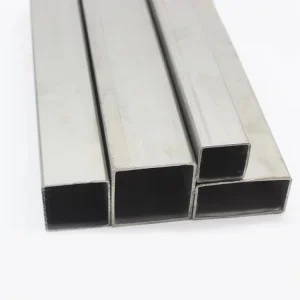
Operating 80+ continuous welded pipe lines equipped with automatic inner-seam bead leveling, bright annealing furnaces, and inline eddy-current defect detection ensures flawless hydrostatic performance.
4. Rigorous Quality Assurance & Testing
Every export shipment undergoes non-destructive ultrasonic testing, hydrostatic pressure verification, spectrographic PMI chemical validation, and surface roughness (Ra) profilometry.
Macro Industry Solutions: Engineering Inoxidable Steel for Critical Applications
Industrial operating environments present complex degradation pathways. Wholesale suppliers must provide more than raw tonnage; they must deliver tailored metallurgical solutions designed for specific environmental stress factors.
Chemical, Petrochemical & Process Piping
High-concentration organic and inorganic acids require low-carbon molybdenum-bearing alloys. 316L and Duplex 2205 welded industrial pipes prevent intergranular corrosion in weld heat-affected zones (HAZ) while resisting pitting in acidic, high-chloride fluids.
Sanitary Food, Beverage & Pharma Systems
Sanitary processing lines require interior surfaces free from micro-voids where bacteria can harbor. Ultra-smooth cold-rolled 304/304L sheets and electro-polished 316L tubes (Ra < 0.4µm) conform to FDA, 3-A, and EHEDG hygienic standards.
Architectural Infrastructure & Structural Design
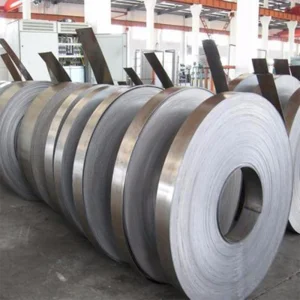
From high-rise curtain walls to heavy-duty stair handrails and elevator interiors, decorative 201 and 304 stainless steel strips and pipes offer versatile surface finishes including 8K mirror, No.4 satin hairline, PVD color coatings, and embossed slip-resistant patterns.
Future Outlook & Technology Roadmap (2025–2035)
The stainless steel industry is evolving at the intersection of green metallurgy, digital twin manufacturing, and advanced surface nanotechnology. Understanding these long-term trends enables global enterprise buyers to future-proof their supply chains against regulatory shifts and carbon border adjustments.
Green Steel & Hydrogen Decarbonization
To meet global Scope 1, 2, and 3 emissions mandates (including the EU's Carbon Border Adjustment Mechanism - CBAM), modern Chinese mills are transitioning to Electric Arc Furnaces (EAF) powered by renewable energy and integrating green hydrogen as a reducing agent in place of coal-based coke.
Advanced PVD & Nanotechnology Coatings
Next-generation architectural and industrial stainless steels are adopting Physical Vapor Deposition (PVD) titanium vacuum plating coupled with hydrophobic, anti-fingerprint nano-sealants. This technology enhances surface hardness (up to 2000 HV) while eliminating the need for harsh chemical cleaning agents.
High-Entropy Alloys & Additive Manufacturing
Emerging additive manufacturing powders and multi-element High-Entropy Alloys (HEAs) are expanding the operational boundaries of traditional stainless steel, providing thermal stability above 1200°C and resistance to extreme cryogenic embrittlement down to -196°C.
Global Sourcing Strategy: Localized Compliance & Risk Assurance
Procuring wholesale metal products internationally involves navigating currency fluctuations, sea-freight logistics, and stringent import tariff compliance. Leading factories provide structured risk-mitigation protocols to ensure seamless end-to-end delivery.
1. International Standard Alignment & Certification
Products are engineered and documented in accordance with ASTM A240, ASTM A312, EN 10088-2, EN 10217-7, and JIS G4304. All shipments are accompanied by certified Mill Test Reports (MTC) conforming to EN 10204 3.1 or 3.2, detailing heat chemical breakdown, yield/tensile strength, elongation, and hardness test results.
2. Seaworthy Anti-Corrosion Packaging Protocols
Long-distance ocean transport exposes steel products to salt spray and humidity. Enterprise exporters utilize heavy-duty seaworthy packaging, including waterproof VCI (Vapor Corrosion Inhibitor) paper, wooden crate crating, steel end-cap protectors, and containerized moisture-absorbent desiccant packs.
3. Hedging & Flexible Commercial Incoterms
To protect buyers against volatile nickel and chromium raw material spot prices, direct suppliers offer structured forward-pricing contracts and flexible commercial terms across FOB, CIF, CFR, and DDP (Delivered Duty Paid) destination arrangements.
Frequently Asked Questions by Global Enterprise Buyers
Technical and commercial guidance curated by our chief metallurgical engineers and supply chain specialists.
What are the primary differences between 201, 304, and 316L stainless steel for wholesale orders?
How do Chinese factories ensure wall thickness and outer diameter tolerances on welded pipes?
What Mill Test Certificates (MTC) are provided with international orders?
Can cold-rolled stainless steel sheets be supplied with custom protective films?
What is the advantage of sourcing Duplex 2205 over 316L in heavy industrial projects?
How are raw material price risks managed for bulk wholesale supply contracts?
What surface finishes are available for architectural stainless steel strips and plates?
What is the standard lead time for containerized export shipments from China?
Full Industrial Inoxidable Steel Product Range
Review additional direct-factory stainless steel pipes, strips, coils, and plates ready for immediate global procurement.