
Factory-Direct Cold Rolled & Stainless Steel Solutions
Explore our mill-certified product catalog. Fully compliant with ASTM A240, EN 10088-2, and JIS G4305 standards, featuring precision slit edges, tailored roughness tolerances, and custom protective films.







Executive Overview: Metallurgical Mechanics of Cold Rolled Surface Finishing
Cold rolling is not merely a dimensional thickness-reduction procedure; it is a fundamental metallurgical transformation that defines the structural integrity, surface topology, crystal orientation, and electrochemical passivation performance of steel sheets and coils.
Work Hardening & Grain Boundary Elongation
During the cold reduction process on Sendzimir multi-roll cluster mills, hot-rolled pickled feedstock undergoes significant plastocrystallographic slip. Dislocations pile up at grain boundaries, yielding substantial increases in yield strength ($R_{p0.2}$) and tensile strength ($R_m$), while refining micro-roughness characteristics.
Chromium Oxide Passivation Layer Dynamics
The anti-corrosive capability of cold rolled stainless steel depends directly on its self-healing passive film ($\text{Cr}_2\text{O}_3$). Cold rolling, paired with hydrogen bright annealing or chemical acid pickling, eliminates depleted chromium zones, maximizing the $\text{Cr}/\text{Fe}$ ratio on the outermost 2-5 nanometers of the surface.
Standardized Cold Rolled Steel Surface Finish Classification
Selecting the appropriate surface finish requires balancing aesthetic requirements, surface roughness limits ($R_a$), cleanability, friction coefficients, and localized pitting corrosion resistance (PREN).
| Finish Code | Processing Route & Description | Surface Roughness ($R_a$) | Reflectivity & Appearance | Primary Industrial Applications |
|---|---|---|---|---|
| 2B Finish | Cold rolled, heat treated, pickled, light skin-pass (temper rolled) with polished rolls. | 0.10 - 0.50 µm | Smooth, semi-reflective matte silver grey. | Chemical equipment, food processing plants, pharmaceutical vessels, general sheet metal fabrication. |
| BA (Bright Annealed) | Cold rolled and bright annealed in a atmosphere-controlled hydrogen gas furnace; no scaling occurs. | 0.05 - 0.15 µm | Highly reflective, mirror-like smooth finish. | Kitchen appliances, surgical equipment, automotive trims, semiconductor cleanroom panels. |
| No.4 / Satin Finish | Polished with unidirectional abrasive grit belts (150-240 mesh grit size). | 0.20 - 0.60 µm | Linear grained, non-directional subdued luster. | Commercial kitchen counters, elevator interiors, architectural facades, food machinery covers. |
| Hairline (HL) | Continuous longitudinal fine polishing using fine abrasive grit (180-320 mesh). | 0.15 - 0.40 µm | Extended continuous fine parallel grain lines. | High-end architectural wall cladding, luxury elevator cabs, consumer electronics enclosures. |
| 8K / No.8 Mirror | Multi-stage polishing with fine alumina/silica compounds on felt wheels. | < 0.03 µm | Specular mirror reflection with perfect image clarity. | Architectural mirrors, optical reflectors, decorative sculptures, cleanroom inspection doors. |
| Embossed / Textured | Cold rolled through engraved pattern rolls (e.g., linen, leatherette, 5-bar tear drop). | Variable pattern geometry | Textured anti-scratch surface, reduced contact drag. | High-traffic floor plates, transit vehicle interiors, industrial walkway steps, cold room walls. |
Skin-Pass (Temper Rolling) Mechanics
Skin-pass rolling applies a small reduction (0.5% to 1.5%) to eliminate yield point elongation (Lüders lines), ensuring superior flatness and suppressing orange-peel effects during subsequent deep drawing.
Protective PE & Laser Film Application
To preserve surface finish during stamping and laser cutting, we apply 50µm to 100µm UV-resistant PE films or specialized Novacel fiber laser protective films with residual-free acrylic adhesive.
Passivation Verification (ASTM A967)
Every batch of cold rolled sheet undergoes salt spray testing (ASTM B117) and ferroxyl testing to guarantee complete removal of free iron contamination acquired during slitting or mechanical handling.
Global B2B Purchasing Intent & Total Cost of Ownership (TCO) Optimization
Engineering procurement teams must evaluate cold rolled steel purchases beyond baseline metric ton pricing. Factoring processing yield, dimensional scrap rates, tooling wear, and post-assembly polishing labor reveals true life-cycle procurement costs.
Automotive & Precision Stamping Sector Needs
High-volume automotive press lines require strict thickness consistency ($\pm 0.01\text{ mm}$) to prevent die damage and elastic springback variation. Deep drawing quality (DDQ) cold rolled coils in 304/316L grades require precise strain hardening exponents ($n$-value) and plastic strain ratios ($r$-value) to eliminate wall thinning during complex stamping.
Architectural & Exterior Facade Specifications
Exterior architectural cladding demands strict gloss level consistency ($\pm 5 \text{ GU}$) across multiple master coils to prevent panel color mismatching. We utilize automated optical camera inspection systems along our tension leveling lines to guarantee zero micro-pits, roll marks, or oil stains.
Macro Industry Solutions: Engineering Case Studies
How our engineered cold rolled surface finishes solve complex corrosion, friction, and aesthetic challenges across global industrial applications.
LNG Cryogenic Containment Systems
Challenge: Liquid Natural Gas storage requires alloys that maintain impact toughness at $-196^\circ\text{C}$ without brittle fracture.
Solution: Cold rolled 304L/316L sheets processed with controlled austenitic grain sizes and 2B passivated surfaces to ensure zero micro-cracking during thermal cycling.
High-Speed Elevator Panels & Architecture
Challenge: Scratches, fingerprint oils, and reflection distortion on high-rise elevator interiors.
Solution: Custom Anti-Fingerprint (AFP) hydrophobic nano-coated Hairline finish sheets that repel skin lipids while providing uniform directional reflectivity.
Desalination & Chemical Evaporators
Challenge: Severe chloride pitting in high-temperature brine environments.
Solution: Cold rolled Super Duplex 2507 ($PREN \ge 42$) in 2B finish, providing double the yield strength of 316L and immunity to stress corrosion cracking (SCC).
Technology Roadmap: AI Quality Control & Green Metallurgical Processing
Our factory incorporates Industry 4.0 digitalization, automated vision systems, and sustainable closed-loop acid recovery technologies to deliver zero-defect cold rolled coils with minimized carbon footprint.
AI Optical Defect Scanning
High-speed line cameras utilize neural network image recognition to detect pinholes, roll slippage marks, line scratches, and localized stain defects at line speeds of up to 400 meters per minute.
Hydrogen Bright Annealing & Zero-Acid Pickling
By transitioning to 100% pure hydrogen atmosphere bright annealing furnaces, we eliminate acid pickling scale removal for BA products entirely, yielding zero hydrofluoric acid discharge and reduced carbon emissions.
Global Commercial Ecosystem & Compliance Verification
Our cold rolled products comply with global engineering standards, supporting seamless international import customs clearing and project quality sign-offs.
ASTM / ASME
ASTM A240 / A480 for pressure vessels and general chromium-nickel stainless steel plate, sheet, and strip.
EN / DIN
EN 10088-2 / EN 10028-7 chemical compositions, mechanical tolerances, and heat treatment delivery conditions.
JIS Standards
JIS G4305 cold rolled stainless steel plate, sheet, and strip dimensional precision guidelines.
Quality & MTC
ISO 9001:2015, REACH, RoHS, and 100% Mill Test Certificate EN 10204 3.1 compliance with full heat number traceability.
Wholesale Pricelist Mechanics & Surcharge Calculation Formula
Understanding how wholesale cold rolled steel pricing is constructed enables B2B buyers to optimize ordering timing and mitigate raw material price volatility.
Formula: Final Metric Ton Price Calculation
Price per MT = Base Carbon/Steel Cost + Alloy Surcharge (Ni, Cr, Mo) + Cold Reduction Fee + Surface Polishing Premium + Width/Thickness Extra + Seaworthy Packing Surcharge
Alloy surcharges shift monthly according to London Metal Exchange (LME) settlement prices for Nickel and Ferro-molybdenum. Surface finishes like 8K Mirror or custom Embossing add processing premiums ranging from $80 to $250 per metric ton over standard 2B mill finish.
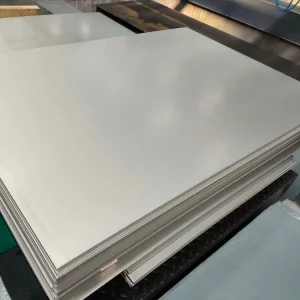
High-Performance Industrial Strip, Pipe & Plate Catalog
Explore our specialized precision strip coils, high-strength industrial welded pipes, and hot/cold rolled plates available for immediate global export container shipment.

Frequently Asked Technical & Procurement Questions
Direct engineering answers regarding surface roughness, passivating chemical treatments, international standard equivalencies, and export logistics.
What is the main difference in corrosion resistance between 2B and BA finish?
While both finishes share identical chemical compositions for a given alloy grade (e.g., 304 or 316L), Bright Annealed (BA) exhibits lower micro-roughness ($R_a \le 0.10 \mu\text{m}$) compared to 2B finish ($R_a 0.15 - 0.40 \mu\text{m}$). The smoother surface topology of BA reduces crevices where chloride ions accumulate, offering slightly superior pitting corrosion resistance in atmospheric exposures.
How do you measure and verify surface roughness ($R_a$) on polished coils?
We measure surface roughness using contact stylus profilometers calibrated to ISO 4287 standards. Measurements record the arithmetical mean deviation ($R_a$) across a standardized cut-off length (typically 0.8 mm). Mill Test Certificates (MTCs) report certified $R_a$ values for specialized orders like No.4, HL, and 8K Mirror.
What protective films are recommended for laser cutting applications?
For standard mechanical shearing, a standard 50µm PE film is sufficient. However, for fiber laser cutting, we apply specialized Novacel or Nitto 80µm - 100µm black/white laser protective films. These films prevent bubbling, melt-burning, or adhesive residue deposition under high-power laser beams.
How does cold rolling affect magnetic permeability in austenitic grades like 304?
Fully annealed austenitic stainless steel (304/316) is non-magnetic ($\mu \approx 1.02$). However, severe cold working induces a partial strain-induced martensitic phase transformation ($\gamma \rightarrow \alpha'$), making cold rolled sheet slightly magnetic. Bright annealing restores full austenitic structure and non-magnetic properties.
What export packaging standards are used to prevent ocean freight corrosion?
Cold rolled coils and cut sheets are packed in heavy-duty wooden skids or steel cradles, wrapped with VCI (Vapor Corrosion Inhibitor) paper, encased in galvanized outer edge protectors, and strapped with high-tensile steel bands to withstand tropical humidity and maritime transit shocks.
Can you provide custom slitting and tension leveling tolerances?
Yes, our high-speed precision slitting lines achieve width tolerances as tight as $\pm 0.05 \text{ mm}$ for narrow strip coils (width 10mm-600mm). Our tension levelers correct camber, edge wave, and center buckle to yield flat sheet tolerances within ASTM A480 limits.
Partner with a Leading Cold Rolled Steel Manufacturer
Request mill test certificates, tailor surface roughness parameters ($R_a$), or get an updated wholesale FOB/CIF pricelist quote within 24 hours.