
Featured Industrial Stainless Steel Portfolio
Direct mill supply of cold-rolled and hot-rolled coils, precision strips, and welded tubular solutions adhering to ASTM, EN, and JIS standards.


Understanding 316L Stainless Steel Coil Chemistry & Performance
A rigorous material science assessment of Grade 316L (UNS S31603 / EN 1.4404) for critical industrial applications.
Grade 316L represents the gold standard in molybdenum-bearing austenitic stainless steel alloys. Unlike standard 304 austenitic steel, 316L incorporates between 2.0% and 3.0% Molybdenum (Mo) by weight. This deliberate metallurgical addition drastically increases the alloy's resistance to localized pitting corrosion, crevice corrosion in chloride-rich environments, and chemical attack by reducing acids such as sulfuric, acetic, and phosphoric systems.
The "L" designation signifies "Low Carbon" (restricted to a maximum of 0.030% Carbon). This ultra-low carbon chemistry is critical for preventing carbide precipitation during welding processes—a phenomenon known as sensitization. When standard stainless steel is exposed to welding temperatures between 425°C and 860°C, chromium carbides precipitate along grain boundaries, depleting the surrounding region of protective chromium and making it susceptible to intergranular corrosion. 316L eliminates this risk, enabling heavy-gauge weldments without requiring post-weld solution annealing.
Pitting Resistance Equivalent Number (PREN) Analysis
In aggressive marine and chemical environments, materials engineers calculate the Pitting Resistance Equivalent Number (PREN) to evaluate alloy performance. The formula used for austenitic stainless steels is:
PREN = %Cr + 3.3(%Mo) + 16(%N)
While standard 304 stainless steel yields a PREN of approximately 18.0 to 19.0, wholesale 316L stainless steel coil consistently achieves a PREN between 23.0 and 25.0. This elevated score reflects its ability to withstand severe halide exposures, acidic condensation in exhaust flues, and high-salinity marine air.
| Element (%) | Carbon (C) | Chromium (Cr) | Nickel (Ni) | Molybdenum (Mo) | Nitrogen (N) | Silicon (Si) | Manganese (Mn) |
|---|---|---|---|---|---|---|---|
| 316L (ASTM A240) | ≤ 0.030 | 16.0 - 18.0 | 10.0 - 14.0 | 2.00 - 3.00 | ≤ 0.10 | ≤ 0.75 | ≤ 2.00 |
| 304L (ASTM A240) | ≤ 0.030 | 17.5 - 19.5 | 8.0 - 12.0 | — | ≤ 0.10 | ≤ 0.75 | ≤ 2.00 |
| 2205 Duplex | ≤ 0.030 | 22.0 - 23.0 | 4.5 - 6.5 | 3.00 - 3.50 | 0.14 - 0.20 | ≤ 1.00 | ≤ 2.00 |
Global Industry Trends & B2B Procurement Demand
Strategic shift in global stainless steel consumption across energy transition, marine infrastructure, and high-purity processing sectors.
LNG & Cryogenic Transport
With global investments expanding Liquefied Natural Gas (LNG) bunkering and transport infrastructure, demand for 316L cold-rolled coils has increased. 316L retains exceptional notch toughness at cryogenic temperatures (-196°C), preventing brittle fracture in containment vessels and double-walled piping systems.
Biopharmaceutical & Cleanroom Tech
Global pharmaceutical scaling demands ultra-pure, electropolished interior surfaces derived from prime 316L cold-rolled coils. The low inclusions and high surface homogeneity of 316L slit coils allow precision fabrication of bioreactors and fermenter vessels without contamination risks.
Green Hydrogen & Desalination
Proton Exchange Membrane (PEM) electrolyzers and seawater Reverse Osmosis (RO) desalination plants require high-molybdenum stainless coils for manifold plates and heat exchangers. 316L provides a cost-effective corrosion threshold prior to upgrading to Super Duplex 2507 alloys.
China Industry 4.0: Supply Chain Resilience & Wuxi Hub Advantage
How advanced smart rolling mills, integrated raw material partnerships, and automated slitting achieve low lead times and strict thickness tolerances.
The global stainless steel supply chain has evolved rapidly. Wuxi, Jiangsu, stands as the premier processing and distribution epicenter for stainless steel in the Asia-Pacific region. By integrating primary mill feedstock from industry titans such as Tsingshan, TISCO, POSCO, and Baosteel, advanced Chinese processing centers eliminate raw material bottlenecks while ensuring complete heat-number traceability.
1. Smart Continuous Cold-Rolling & AGC Precision
Modern 20-high Sendzimir cold-rolling mills equipped with Automatic Gauge Control (AGC) systems continuously measure coil thickness across the strip width using X-ray thickness gauges. This guarantees strip thickness tolerances within ±0.01 mm, eliminating edge-wave defects and ensuring consistent forming for downstream pipe welding and stamping lines.
2. Automated Bright Annealing (BA) & Surface Polishing Lines
To eliminate surface scaling and preserve mechanical ductility, automated continuous bright annealing furnaces utilize a hydrogen-nitrogen protective atmosphere. Downstream, automated multi-head polishing lines produce precise surface finishes, including No.4 satin, Hairline (HL), and 8K Mirror, applying laser-grade protective film (PE/PVC) for damage-free transit.
3. High-Speed Slitting & Tension Leveling
Equipped with high-precision rotary shears and automated tension control systems, Chinese coil centers slit master coils (widths of 1219mm, 1500mm, or 1550mm) down to narrow precision strips as narrow as 10mm. Tension leveling units remove internal residual stresses, ensuring flat strips that do not warp during laser cutting or roll forming.
316L Stainless Steel Coil Wholesale Pricelist Architecture
Understanding the pricing formula, surcharge indexing, and mill processing premiums for overseas bulk procurement.
Wholesale stainless steel pricing is structured around a base price plus alloy surcharges and processing extras. Because Grade 316L contains 10-14% Nickel and 2-3% Molybdenum, its wholesale spot price fluctuates in direct correlation with the London Metal Exchange (LME) Nickel contracts and FeMo (Ferro-Molybdenum) market indices.
| Finish / Specification | Thickness Range (mm) | Width Range (mm) | Processing Surcharge Matrix | Primary Industrial Applications |
|---|---|---|---|---|
| Cold Rolled 2B Coil | 0.3mm - 3.0mm | 1000mm - 1500mm | Base Price + Standard 2B Passivation | Medical equipment, chemical tanks, tubing |
| Bright Annealed (BA) Coil | 0.4mm - 2.0mm | 600mm - 1250mm | Base + Hydrogen Annealing Premium | Automotive trim, cleanroom panels, appliances |
| Hot Rolled No.1 Coil | 3.0mm - 16.0mm | 1240mm - 2000mm | Base - Cold Rolling Discount | Heavy structural weldments, industrial flanges |
| No.4 / Hairline Brushed Coil | 0.5mm - 4.0mm | 1000mm - 1500mm | Base + Polishing & Film Application | Architectural facades, elevator interiors |
| Precision Slit Strip | 0.1mm - 2.5mm | 10mm - 600mm | Base + Custom Slitting & Edge Trimming | Flexible bellows, spring washers, heat exchangers |
Factors Influencing B2B Factory Quotations:
- Alloy Surcharge Indexing: Molybdenum and Nickel market price movements directly modify weekly factory pricelists.
- Mill Edge vs. Slit Edge: Mill edge coils retain natural rolled margins, while slit edge coils undergo edge trimming for exact width tolerances (+0/-0.2mm).
- Order Volume Tiers: Container-load quantities (25 metric tons per 20ft container) unlock maximum factory-direct wholesale discounts.
- Protective Packaging Options: Seaworthy export packaging (fumigated wooden skids, vertical/horizontal coil eye packing, waterproof paper, radial metal edge protectors) ensures zero rust or mechanical denting during ocean transit.
Comprehensive Stainless Steel Product Line
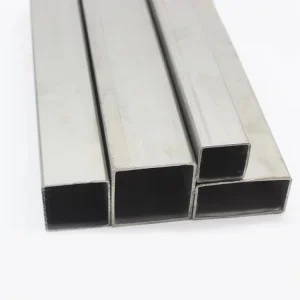
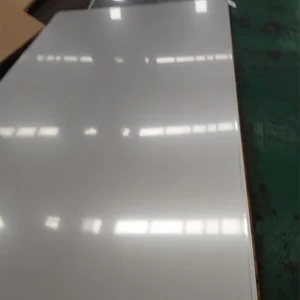
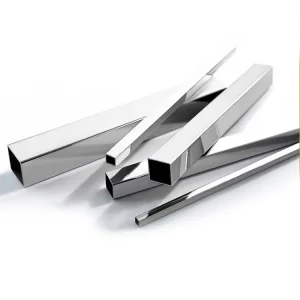
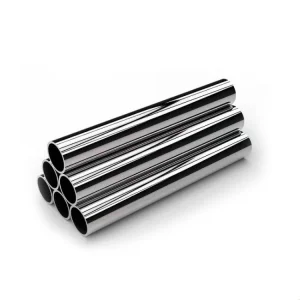
Explore our full range of plates, sheets, decorative pipes, and high-performance alloys available for global shipping.


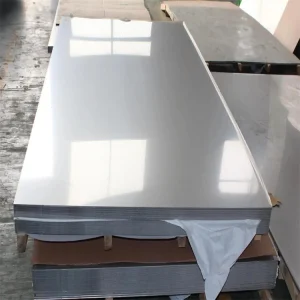
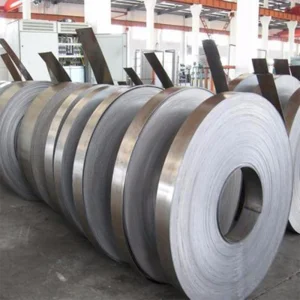
Localized Application Scenarios & Field Performance
How 316L stainless steel coil products perform under demanding industrial environments around the globe.
Coastal Architecture & Curtain Walls
In high-salinity coastal urban developments (such as Middle Eastern or Southeast Asian port cities), standard 304 stainless steel suffers from tea-staining (surface pitting). Utilizing 316L cold-rolled coils processed with 2B or Hairline finish guarantees long-term visual appeal and structural integrity without degradation from airborne chlorides.
Chemical & Petrochemical Piping
316L stainless steel slit coils serve as the primary raw feedstock for continuous TIG and Plasma welded industrial pipe manufacturing. In chemical processing plants handling organic acids and chloride solutions, 316L welded pipes prevent stress corrosion cracking (SCC) and intergranular attack along weld seams.
Food, Beverage & Dairy Processing
Sanitary standards require zero surface porosity to prevent bacterial growth and allow easy Cleaning-in-Place (CIP) procedures. 316L cold-rolled coil, polished to BA or No.4 finish with surface roughness Ra < 0.4 μm, provides the compliance required by FDA and European hygiene directives.
Quality Control Protocols & Mill Test Certification (EN 10204 3.1)
Full traceability, non-destructive testing, and chemical verification protocols engineered into every shipment.
To meet international quality requirements, every wholesale 316L stainless steel coil dispatched from our factory undergoes rigorous non-destructive and destructive testing. Material Test Certificates (MTC) according to EN 10204 3.1 accompany every lot, detailing exact ladle chemistry, mechanical yield strength, tensile strength, elongation, and hardness values.
1. Positive Material Identification (PMI)
X-ray fluorescence (XRF) analyzers verify the presence of 2.0%-3.0% Molybdenum and 10.0%-14.0% Nickel prior to slitting or dispatch, preventing grade mix-ups.
2. Intergranular Corrosion Testing
Samples undergo ASTM A262 Practice E testing (Copper-Copper Sulfate-16% Sulfuric Acid Test) to verify resistance to intergranular attack along heat-affected zones.
3. Surface Roughness & Dimensional Inspection
Digital profilometers measure surface finish (Ra), while laser micrometers verify edge-to-edge thickness uniformity across the coil length.
Frequently Asked Questions (B2B Procurement & Engineering)
Expert answers addressing technical, commercial, and logistical queries regarding wholesale 316L stainless steel coil purchasing.
What is the exact metallurgical difference between 316 and 316L stainless steel coils?
How does Molybdenum enhance the performance of 316L coil in marine environments?
What surface finishes are available for wholesale 316L stainless steel coils?
- No.1: Hot-rolled, annealed, and descaled; suitable for industrial tanks and heavy re-rolling.
- 2B: Cold-rolled, heat-treated, pickled, and given a light pass; standard smooth finish.
- BA (Bright Annealed): Bright heat-treated in an atmosphere-controlled furnace for a mirror-like reflective surface.
- No.4 / Hairline: Polished with abrasive belts to produce directional satin or brushed lines.
- 8K Mirror: Highly polished with fine abrasives for non-distorted reflection in architectural cladding.