Featured Steel Pipes, Plates & Custom Feedstock
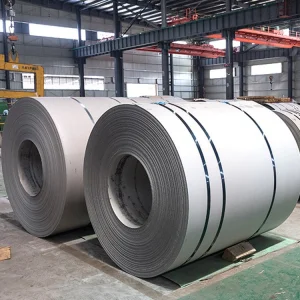
Direct factory manufacturing certified to ASTM A240, EN 10088-2, and JIS G4304 specifications.
Executive Overview: Navigating Custom Tube & Steel Procurement
A comprehensive analysis of global supply dynamics, material selection frameworks, and manufacturing capabilities.
In the modern industrial landscape, securing specialized steel piping, structural tubing, and precision cold-rolled plates requires a sophisticated alignment of metallurgical expertise, raw material sourcing transparency, and seamless fabrication capabilities. Industrial procurement managers, EPC contractors, and global distributors face unprecedented challenges: balancing cost volatility, satisfying strict regional engineering standards (ASTM, EN, JIS), and ensuring long-term operational longevity under severe environmental stressors such as chloride-induced pitting, high-pressure fluid transfer, and thermal cycling.
Custom tube and steel manufacturing is no longer restricted to stock dimensions. As advanced engineering projects push operational boundaries—from ultra-deepwater off-shore platforms demanding Super Duplex 2507 (UNS S32750) to automated hygienic food processing lines utilizing high-finish SUS304 cold-rolled sheets—the role of dedicated custom factories has become foundational. This whitepaper systematically breaks down the architectural advantages of China’s stainless steel production infrastructure, details material grade selection matrices, analyzes global application scenarios, and provides actionable RFQ frameworks for overseas procurement leads.
Strategic Advantages of China’s Custom Steel & Tube Factories
Understanding the micro-economic and technical drivers behind Wuxi and Foshan industrial centers.
Tier-1 Mill Integration
Direct supply-chain integration with primary steelmakers like Tsingshan, TISCO, POSCO, and Baosteel ensures precise chemical purity, controlled delta-ferrite levels, and zero scrap-re-melt contamination.
Vertical Processing Lines
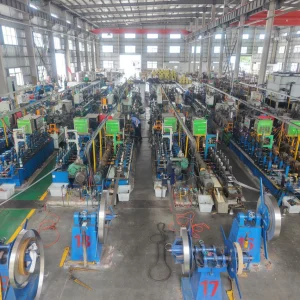
By housing over 80 automated TIG/Plasma welded pipe lines, continuous coil slitting, multi-stage 8K mirror polishing, and sheet embossing under one roof, factories eliminate middleman markups and reduce lead times by 40%.
Rigorous NDT Quality Control
Every industrial pipe batch undergoes non-destructive testing (NDT), including online eddy-current inspection, hydrostatic pressure testing up to 200 bar, and Positive Material Identification (PMI) spectrographic verification.
Why Sourcing from Wuxi, Jiangsu Redefines Global Supply Chain Stability
Wuxi has consolidated its standing as the world's primary distribution and processing hub for stainless steel and special alloys. Operating at the epicenter of East China’s logistics corridor, factories in Jiangsu leverage deep maritime access through Shanghai and Ningbo ports alongside immediate raw-feedstock availability. Unlike secondary processing workshops that rely on spot-market purchased strips, integrated factories in Wuxi maintain structural agreements with major melting facilities. This structural alignment allows custom tube mills to guarantee exact wall-thickness tolerances (down to ±0.05mm) and custom cut-to-length orders from 1 meter to 12 meters without incurring exorbitant scrap penalties.
Comprehensive Material Grade Selection Matrix
Technical evaluation of chemical compositions, PREN values, and recommended operating environments.
| Steel Grade | Alloy Classification | Nominal Chemistry (% Key Elements) | PREN Rating | Corrosion Resistance | Primary Industrial Applications |
|---|---|---|---|---|---|
| 201 (UNS S20100) | Austenitic (Cr-Mn) | 16-18 Cr, 3.5-5.5 Ni, 5.5-7.5 Mn | ~15 | Moderate / Mild | Indoor decorative tubing, stair handrails, display fixtures, household appliances. |
| 304 / 304L (1.4301/1.4307) | Austenitic (Cr-Ni) | 18-20 Cr, 8-10.5 Ni, C ≤ 0.030 (304L) | ~19.0 | Good General | Food processing lines, architectural trim, pressure vessels, municipal water systems. |
| 316 / 316L (1.4401/1.4404) | Austenitic (Cr-Ni-Mo) | 16-18 Cr, 10-14 Ni, 2.0-3.0 Mo | ~25.0 | Very High (Chloride) | Marine hardware, chemical heat exchangers, pharmaceutical lines, offshore piping. |
| 310S (1.4845) | Austenitic (High-Temp) | 24-26 Cr, 19-22 Ni, Si ≤ 1.50 | ~25.0 | High Heat Resistance | Furnace muffles, kiln components, thermal treatment fixtures up to 1150°C. |
| 430 (1.4016) | Ferritic (Cr Steel) | 16-18 Cr, Ni ≤ 0.75, Fe Balance | ~16.5 | Moderate Atmospheric | Kitchen sink bowls, interior cladding, elevator panels, automotive trim. |
| Duplex 2205 (UNS S31803) | Austenitic-Ferritic | 21-23 Cr, 4.5-6.5 Ni, 2.5-3.5 Mo, 0.14-0.20 N | ~35.0 | Superior SCC Resistance | Oil & Gas flowlines, desalination plants, chemical tankers, structural members. |
| Super Duplex 2507 (UNS S32750) | Austenitic-Ferritic | 24-26 Cr, 6-8 Ni, 3-5 Mo, 0.24-0.32 N | ≥ 42.0 | Extreme Marine / Acid | Subsea umbilicals, seawater injection systems, flue gas desulfurization (FGD). |
Pitting Resistance Equivalent Number (PREN) Calculation
For chemical and marine engineers specifying custom tubing, relying solely on basic grade names (like 304 vs 316) is often insufficient. The Pitting Resistance Equivalent Number (PREN) provides a standardized mathematical model to predict localized corrosion vulnerability in aqueous chloride environments. The standard formula utilized by metallurgical labs is:
PREN = %Cr + (3.3 × %Mo) + (16 × %N)
While standard 304 yields a PREN of approximately 19, Super Duplex 2507 achieves a PREN greater than 42. This structural difference enables engineers to substitute thick-walled carbon steel pipes with thin-walled duplex tubes—reducing overall structural weight by up to 40% while simultaneously eliminating the need for periodic anti-corrosion painting or cathodic protection.
Macro Industry Solutions & Localized Engineering Scenarios
Tailored manufacturing pathways developed for specialized global infrastructure and industrial sectors.
Hygienic Fluid Handling
Sector: Food, Beverage & Pharma
Internal surface roughness (Ra) polished to < 0.4 µm. Solution-annealed ASTM A270/A269 tubes prevent bio-film accumulation and accommodate Clean-in-Place (CIP) chemical washdowns.
Aggressive Chemical Transfer
Sector: Petrochemical & Fertilizers
Heavy-wall 316L and 2205 welded industrial pipes designed to resist nitric, phosphoric, and organic acids. Each pipe undergoes 100% hydrostatic and eddy-current testing before dispatch.
Architectural Cladding
Sector: Urban Construction & Elevators
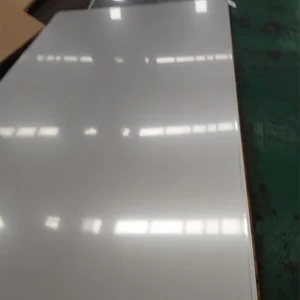
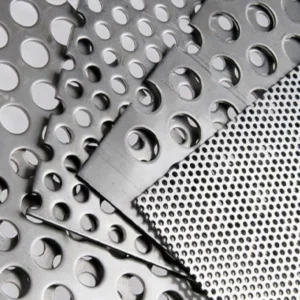
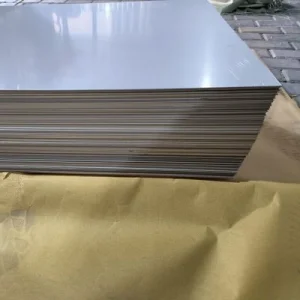
Custom 304 cold-rolled plates with PVD color coating, 8K mirror reflection, or custom micro-embossing. High scratch resistance combined with uniform visual aesthetic across thousands of panels.
High-Thermal Exchangers
Sector: Energy & Power Generation
310S and 321 seamless and welded tube geometries capable of surviving continuous heat loads up to 1100°C without scaling or structural creep deformation.
Optimizing Global Procurement & Request for Quote (RFQ) Workflows
How overseas buyers can structure RFQs to minimize landed costs and eliminate quality ambiguities.
Procuring custom steel tubes, strips, and plates from overseas factories requires precise technical specifications during the initial RFQ stage. Incomplete engineering inquiries frequently result in misquoted pricing, delayed production cycles, or unexpected import tariff classifications. Global buyers should adopt a standardized 5-point RFQ template when engaging direct factories in China:
1. Dimensional & Tolerance Specifications
Define Outer Diameter (OD), Wall Thickness (WT), and Length. Specify exact tolerance parameters (e.g., ASTM A312 standard vs precise ±0.05mm cold-drawn tolerances).
2. Surface Finish & End Preparation
State exact surface finishes: No.1 (hot rolled), 2B (cold rolled), BA (bright annealed), No.4 (satin), or 8K (mirror). Indicate end treatments: Plain End (PE), Beveled End (BE), or Threaded.
3. NDT & Mill Certification Scope
Specify required testing: Eddy Current Inspection, Hydrostatic Test, Intergranular Corrosion Test (ASTM A262 Practice E), PMI spectrographic verification, and EN 10204 3.1 documentation.
International Shipping Protection & Seaworthy Packaging
Long-distance ocean transport exposes finished steel products to saltwater moisture, high humidity, and physical vibration. Leading Chinese export manufacturers implement multi-layer protective packaging systems:
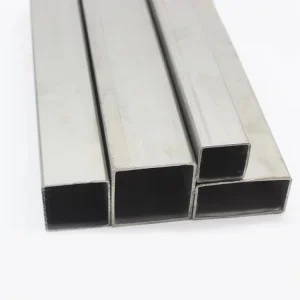
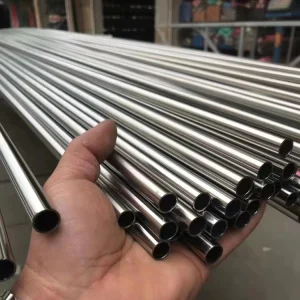
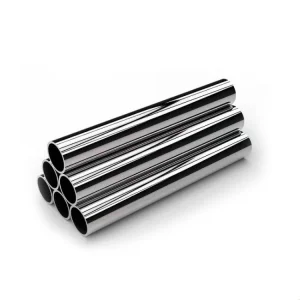
- Tube & Pipe Bundles: Wrapped in heavy-duty waterproof woven plastic, fitted with protective end caps, and secured with heavy steel strapping over protective plastic corner guards.
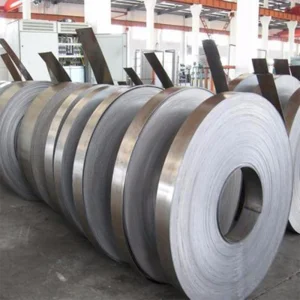
- Cold-Rolled Sheet & Strip Coils: Fitted with internal/external steel edge protectors, rust-inhibiting VCI (Vapor Corrosion Inhibitor) paper, and placed on wooden pallets fumigated to ISPM-15 standards.
- Polished Surface Protection: Covered with 50-micron to 100-micron anti-UV laser-cutting protective film to prevent scratching during subsequent laser processing and mechanical bending.
Industry Trends: Technological Innovation & Sustainable Steel
Key developments shaping the next decade of custom tube production and material engineering.
Automated Laser Welded Tube Lines
Traditional TIG welding is rapidly evolving into high-speed fiber laser welding. Laser-welded tubes feature narrower Heat-Affected Zones (HAZ), superior weld seam ductility, and improved burst pressure capacity for critical hydraulic lines.
Lean Duplex Steel Expansion
Due to nickel price fluctuations, lean duplex alloys (such as 2101 and 2304) are increasingly replacing standard 304/316 in structural and storage tank applications, delivering twice the mechanical yield strength at lower cost.
Green Metallurgy & EAF Production
Export factories are shifting raw material sourcing toward Electric Arc Furnace (EAF) steelmaking powered by renewable grids. Sourcing high-recycled-content stainless steel enables global buyers to satisfy Scope 3 ESG reporting mandates.
Frequently Asked Questions (Technical & Procurement Q&A)
In-depth answers to critical technical and logistical queries submitted by international B2B buyers.
Additional Factory-Direct Products & Specialty Plate Stock
Explore super duplex, decorative, and cold-rolled stainless solutions ready for direct global dispatch.