
Technical Sourcing & Price Intelligence Overview
A definitive guide for procurement leads, structural engineers, and global supply chain directors specifying custom sanitary, decorative, and industrial polished stainless steel tubing.
In modern industrial manufacturing and high-end architectural engineering, specifying custom polished stainless steel tubing requires a rigorous understanding of metallurgical compositions, surface metrology, dimensional tolerances, and global supply chain economics. Whether designing a sanitary fluid distribution manifold for a biopharmaceutical facility or procuring mechanical tubing for marine structures, selecting the correct combination of grade, finish, and processing method directly determines operational longevity, corrosion resistance, and total cost of ownership (TCO).
Featured Mill Stock & Custom Tubing Products (Top Tier)
Explore mill-certified stainless steel plate, pipe, and coil products available for immediate custom processing and global dispatch.
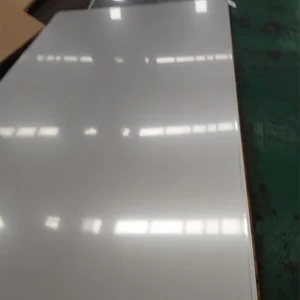
CE Certification 2507 Super Duplex Steel Plate Supplier in China - High Strength and Corrosion Resistance
Get Quote & Specs
CE Certification Prime Quality 201 Stainless Steel Pipe from China Suppliers | Durable, Glossy Tubes
Get Quote & Specs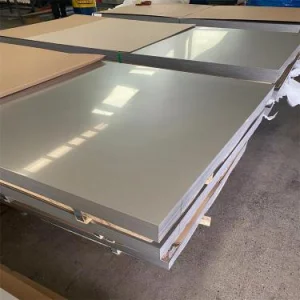
China 304 Stainless Steel Cold Rolled Sheet (ASTM A240, 2B / BA / No.4 Finish) Manufacturer
Get Quote & Specs
China Factory Suppliers for 316L Stainless Steel Sheet - High-Quality Metal Solutions
Get Quote & Specs
Custom China SUS304 Stainless Steel Cold-Rolled Plate Suppliers - Food Grade Factory Products
Get Quote & Specs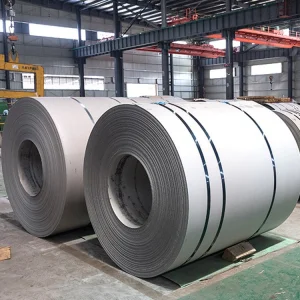
CE Certification Hot Rolled Stainless Steel Coils from China Suppliers - Durable Industrial Solutions
Get Quote & Specs
CE Certification Cold Rolled Stainless Steel Sheet - Custom Processing Factory Suppliers
Get Quote & Specs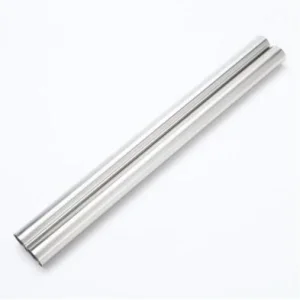
Wholesale 201 Stainless Steel Curtain Rod Tube, 25mm OD, Powder Coated, Custom Length
Get Quote & Specs1. Technical Surface Metrology: Grit Ratings vs. Roughness Average (Ra)
The term "polished" in stainless steel tubing encompasses a wide spectrum of mechanical abrasion and electrochemical processes. For procurement specifications, relying solely on commercial grit numbers (e.g., "180 grit" or "320 grit") can lead to ambiguity. Precision engineering mandates defining surface quality by Roughness Average (Ra) measured in microinches (µin) or micrometers (µm) using a calibrated profilometer.
Mechanical Polishing (MP)
Utilizes silicon carbide or aluminum oxide abrasives mounted on rotary heads. Progressively finer grit belts remove surface defects, creating directionally grain-finished tubing (180 to 400 grit).
Electropolishing (EP)
An electrochemical process that preferentially dissolves microscopic high points on the tube wall. EP smooths the surface, removes embedded iron impurities, and increases the Chromium-to-Iron ratio to > 1.5.
Passivation & Bright Annealing
In-line citric or nitric acid passivation removes tramp metal, while controlled hydrogen-atmosphere bright annealing (BA) prevents surface oxidation during thermal processing.
| Polishing Designation | Typical Grit Rating | Roughness Average (Ra µin) | Roughness Average (Ra µm) | Primary Industry Applications |
|---|---|---|---|---|
| Commercial Brushed | 180 Grit | 32 – 50 µin | 0.80 – 1.25 µm | Architectural handrails, structural frames, outdoor balustrades |
| Satin / Hairline Finish | 240 / 320 Grit | 15 – 32 µin | 0.40 – 0.80 µm | Food processing machinery, kitchen trim, commercial appliances |
| Sanitary Mechanical | 400 Grit MP | 10 – 15 µin | 0.25 – 0.40 µm | ASTM A270 dairy lines, beverage tubing, cosmetic manufacturing |
| High Mirror Finish | 600 / 800 Grit | 4 – 8 µin | 0.10 – 0.20 µm | Semiconductor cabinetry, luxury marine fittings, decorative facades |
| Electropolished (EP) Ultra-Pure | EP Processed | < 5 µin (Max 10) | < 0.12 µm | Biopharm CIP/SIP loops, high-purity gas delivery, ultra-pure water |
2. Global Benchmark Pricelist & Cost Factor Analysis
Understanding the price structure of custom polished stainless steel tubing requires evaluating raw material surcharges, alloy indexing, polishing passes, and dimensional processing complexity.
Raw Material Alloy Indexing
Stainless steel prices fluctuate based on spot market prices for Nickel (LME), Chromium, Molybdenum, and Iron. Grade 316L carries a premium over 304 due to its 2.0-3.0% Molybdenum content, while Duplex 2205 pricing scales with high Chromium (22%) and Nickel savings.
Polishing Pass Overhead
Each mechanical polishing pass adds labor, abrasive wear, and metal loss sifts. Outer Diameter (OD) polishing is highly automated; Inner Diameter (ID) polishing requires specialized lance systems or orbital EP setups, significantly driving up unit cost.
Wall Thickness & Seam Integrity
Heavy-wall seamless tubing requires hot extrusion and cold pilgering, pushing baseline costs higher than welded and cold-drawn (WCD) tubing. Laser-welded high-frequency tubing delivers cost savings for decorative and structural uses.
Cost Optimization Strategy for Bulk Procurement
When sourcing custom polished tubing in volume (5+ Metric Tons), specify Standard Mill Lengths (6.0m or 20ft) with protective PE-sleeve bundling. Requesting non-standard cut lengths directly at the mill level adds cutting surcharges; ordering stock lengths and performing cut-to-length processing locally often reduces total FOB costs by 8% to 12%.
3. Global Industrial Trends & Supply Chain Dynamics
Analyzing procurement shifts, trade flows, and manufacturing advancements shaping the global market for stainless tubing.
China Industry 4.0: Manufacturing Efficiency & Supply Chain Resilience
China’s stainless steel industrial clusters, centered in regions like Wuxi and Foshan, have undergone massive digital transformations. The integration of Industry 4.0 smart factory protocols has redefined production efficiency across welded and seamless tubing mills:
- Automated Continuous Laser Welding: Replacing traditional TIG welding, high-power fiber laser welding increases line speed while drastically reducing the Heat-Affected Zone (HAZ). This ensures higher burst pressure ratings and superior mechanical ductility during post-polish bending.
- Real-Time Laser Profilometry & NDT: Integrated inline optical profile gauges and continuous Eddy Current flaw detectors automatically tag dimensional variances or weld seam micro-cracks before tubing reaches the polishing stage.
- Vertical Integration: Major manufacturing hubs process raw slab through hot rolling, cold slitting, tube forming, brightness annealing, and multi-axis polishing under a unified quality management system (ISO 9001:2015 & PED 2014/68/EU).
Localized Application Engineering & Industry Standards
Polished stainless steel tubing is deployed globally under strict regional and industry-specific regulatory standards:
- North America (ASTM / ASME): ASTM A240 / A270 for sanitary food/dairy applications; ASTM A554 for ornamental and structural tubing; ASTM A312 / A269 for industrial pressure piping.
- Europe (EN / DIN): EN 10217-7 for welded stainless pressure tubes; EN 10296-2 for mechanical engineering; DIN 11850 for food and chemical process technology.
- Asia-Pacific (JIS / GB): JIS G3447 for stainless steel sanitary pipes; GB/T 12771 for fluid transport tubing.
4. Custom Secondary Fabrication Capabilities
Beyond surface polishing, precision tube processing allows direct integration into downstream sub-assemblies.
5-Axis Fiber Laser Cutting
High-speed laser slotting, hole punching, and beveling with zero thermal distortion, maintaining polished surface integrity near cut edges.
Precision Mandrel Bending
Rotary draw bending down to 1.5D bend radius without wall thinning, wrinkling, or cracking pre-polished outer surfaces.
End Forming & Swaging
Flanging, expanding, tapering, and bead forming for sanitary Tri-Clamp, DIN flanged, or push-fit mechanical couplings.
Frequently Asked Questions (Technical Sourcing FAQ)
Direct answers to critical procurement and engineering questions regarding polished stainless steel tubing.
Complete Factory Direct Catalog & Custom Piping Series
Browse additional high-demand stainless steel pipes, sheets, and duplex steel plates with full material certification.
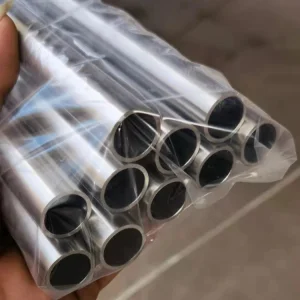
China SUS304/304L Lower Carbon Stainless Steel Pipe - High Welding Performance Factory
Get Quote & Specs
Wholesale 2507 Super Duplex Steel Plate - High Strength & Corrosion Resistance Manufacturers
Get Quote & Specs
CE Certification China SUS304/304L Low Carbon Stainless Steel Pipe Suppliers | Factory Price
Get Quote & Specs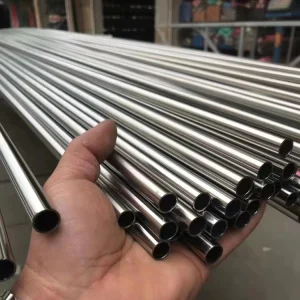
Wholesale China Stainless Steel Pipe Factory - Direct Supplies with Custom Processing Services
Get Quote & Specs
Custom China 316L Stainless Steel Sheet Suppliers - High-Quality Trusted Factory Sheets
Get Quote & Specs
Wholesale China Stainless Steel Decorative Pipe Suppliers - Exquisite Designs & Durable Luxury
Get Quote & Specs
CE Certification China Perforated Stainless Steel Sheet Suppliers - High-Quality Metal Mesh
Get Quote & Specs