
Featured Industrial Stainless Steel & Checker Plate Solutions




Global Enterprise Sourcing Dynamics for Custom Stainless Checker Plate
Mechanical Traction & Slip Friction
Checker plates (also known as diamond plates or tread plates) require high-precision raised pattern geometry (tear-drop, diamond, 5-bar, or 2-bar patterns) adhering to ASTM A793 standards. Optimal pattern elevation ensures a high Dynamic Coefficient of Friction (DCOF > 0.6) under wet, oily, or chemical exposure.
Custom Metal Patterning & Tolerances
Industrial buyers require targeted thickness variations ranging from 2.0mm to 12.0mm, combined with mill-edge slit customization and specialized hot-rolled vs. cold-embossed pattern depths. Custom fabrication eliminates post-purchase cutting waste and speeds up structural assembly.
Corrosion & Cost Balance Optimization
Balancing budgetary constraints with severe environmental exposure demands rigorous grade matching. While austenitic 304 provides an economical baseline for indoor flooring, marine or high-chloride environments demand 316L or Super Duplex 2507 to prevent localized pitting.
Information Gain Insight: Pitting Resistance Equivalent Number (PREN) Calculation
When sourcing custom checker plate stainless steel for chemical processing platforms or off-shore marine decks, relying purely on grade designation can lead to premature failure. Engineers use the PREN formula: PREN = %Cr + 3.3(%Mo + 0.5%W) + 16(%N). While standard SUS304 yields a PREN of ~19, SUS316L achieves ~25, and Duplex 2205 reaches ~35. Selecting a custom embossed 2205 floor plate increases the service life by 400% in saline spray environments compared to conventional carbon steel diamond plate.
| Alloy Grade | Metallurgical Family | Pattern Type (ASTM A793) | Yield Strength (MPa) | PREN Rating | Primary Industrial Suitability |
|---|---|---|---|---|---|
| AISI 304 / 304L | Austenitic (18Cr-8Ni) | Pattern 1 (5-Bar) / Pattern 2 (1-Bar) | 205 - 240 | 18.0 - 20.0 | Food processing, architectural walkways, cleanrooms |
| AISI 316 / 316L | Austenitic (16Cr-10Ni-2Mo) | Pattern 1, Pattern 3 (Diamond) | 220 - 270 | 23.0 - 25.5 | Marine docks, chemical plants, offshore oil platforms |
| Duplex 2205 | Austenitic-Ferritic (22Cr-5Ni-3Mo-N) | Custom Hot-Rolled Pattern 1 | 450 - 550 | 34.0 - 36.0 | Heavy industrial mezzanines, mining rigs, desalination |
| Super Duplex 2507 | Austenitic-Ferritic (25Cr-7Ni-4Mo-N) | Custom Heavy Heavy-Duty Raised | 550 - 700 | > 41.0 | Subsea environments, pulp & paper processing, acidic scrubbers |
Macro-Industry Solutions for Custom Checker Plate Stainless
Chemical & Petrochemical Refineries
Refinery catwalks, valve access stairs, and acid-scrubbing platforms require maximum corrosion immunity. Utilizing custom 316L tear-drop checker plates prevents localized stress-corrosion cracking (SCC) caused by hydrocarbon exposure and vapor condensate. Pickled and passivated finishes ensure zero chemical retention.
Marine, Shipbuilding & Ports
Salt spray, wave impact, and high humidity break down traditional painted carbon steel plates within months. Custom 316L and 2205 duplex checker plates engineered with raised 5-bar slip patterns ensure crew safety on vessel decks, gangways, and container terminal ramps while resisting marine bio-fouling.
Hygienic Food & Bio-Pharma Cleanrooms
Sanitary environments demand non-porous floor plates resistant to aggressive CIP (Clean-In-Place) washdown chemicals (caustic soda, peracetic acid). Cold-rolled 304/304L custom embossed plates provide seamless anti-slip surfaces without microscopic pits where bacteria accumulate, adhering to EHEDG standards.
Urban Mass Transit & Rail Infrastructure
High-foot-traffic environments such as metro platform edges, escalator landings, and passenger bridge flooring rely on custom stainless steel checker plates. They provide exceptional abrasion resistance, zero maintenance requirements, and fire resistance rated to Euroclass A1.
Heavy Equipment & Vehicle Armor Floor
Custom high-gauge (8mm to 12mm) hot-rolled stainless checker plates are deployed as floor armor and step treads for mining trucks, military vehicles, and emergency rescue apparatus, absorbing extreme impact shocks while retaining structural flatness.
Architectural Interior & Elevator Cladding
Modern commercial skyscrapers leverage custom decorative stainless steel embossed patterns (hairline, mirror 8K, or PVD color-coated checker plates) for elevator cab flooring, accent walls, and industrial-chic lobby ramps, combining high aesthetic values with durability.
Technical Manufacturing Roadmap & Pattern Engineering
Hot-Rolled Direct Forming vs. Cold Roll Embossing
Custom stainless checker plates are manufactured through two primary technical routes:
- Hot-Rolled Patterning (ASTM A793 Pattern Type 1): Produced during the final hot rolling stand at temperatures exceeding 1050°C. Heavy-duty structural plates (4mm-12mm) feature integral raised bars that resist heavy wheel loads without pattern delamination.
- Cold Roll Embossing (Pattern Type 2 & 3): Created by passing cold-rolled coils (0.8mm-3.0mm) through high-tonnage precision-etched male/female rollers. Delivers sharp visual definition, low weight, and high surface brightness (2B or BA finish).
Surface Passivation & Anti-Friction Testing
To guarantee maximum working safety and long-term durability in industrial plants:
- Chemical Passivation & Pickling: All hot-rolled checker plates undergo immersion in hydrofluoric/nitric acid baths to remove mill scale and restore the continuous chromium-oxide ($Cr_2O_3$) passive layer.
- Slip Friction Verification (DIN 51130 / ASTM C1028): Plates are subjected to ramp angle tests to certify anti-slip ratings from R10 to R13, ensuring safe operational standing even when flooded with lubricant or water.
Global Commercial Landscape & Factory Sourcing Models
The production of custom checker plate stainless steel is heavily concentrated in tier-1 steelmaking hubs equipped with high-tonnage rolling capacity and integrated alloy refining. Factories in Wuxi, Jiangsu—utilizing direct slab and coil feedstock from world-leading mills like Tsingshan, TISCO, POSCO, and Baosteel—provide unmatched cost efficiencies and chemical precision.
Direct Mill Sourcing Traceability
Leading custom checker plate manufacturers provide complete vertical integration from liquid melt ladle analysis to final pattern stamping. Every shipment is accompanied by Mill Test Certificates (MTC) according to EN 10204 3.1, detailing exact chemical heat numbers and tensile test results.
Optimized Packaging & Logistics
Given the sharp surface geometry of tread plates, international sea freight requires customized export bundling. Plates are interleaved with anti-scratch paper or poly-film, wrapped in waterproof VCI (Volatile Corrosion Inhibitor) plastic, and secured on heavy-duty wooden skids designed for fork-truck loading.
OEM Custom Cutting & Edging
Modern manufacturing plants offer secondary downstream processing, including 10KW fiber laser profile cutting, CNC hydraulic bending, counter-sunk mounting hole drilling, and edge chamfering, allowing clients to receive drop-in ready assembly panels.
Localization Support, International Standards & Quality Compliance
Global Standards Equivalence Matrix
Custom checker plates must comply with localized building codes and industrial floor specifications. Partnering with certified manufacturers ensures conformity across major international bodies:
American Standard: ASTM A793 (Standard Spec for Rolled Floor Plates), ASTM A240
European Standard: EN 10088-2, EN 10028-7, Slip rating DIN 51130 (R9 through R13)
Japanese Standard: JIS G4304 (Hot-rolled stainless steel plate), JIS G4305
International Quality: ISO 9001:2015, ISO 14001, CE Certification
Third-Party Verification & Inspection Protocols
To eliminate quality discrepancies, factory-direct shipments support rigorous independent third-party inspections (SGS, TÜV, Bureau Veritas, Intertek):
- Positive Material Identification (PMI) via XRF analyzer before dispatch.
- Ultrasonic thickness gauging across pattern height and base sheet thickness.
- Flatness tolerance testing to ISO 9444 / ISO 9445 standards.
- Intergranular corrosion testing per ASTM A262 Practice E.
High-Performance Stainless Steel Coils, Plates & Industrial Tubing


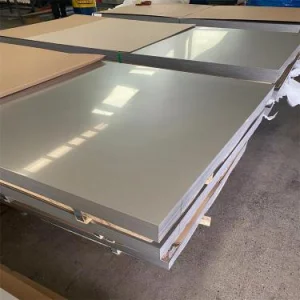
Custom Checker Plate Stainless Steel Sourcing FAQ
1. 5-Bar (Willow Leaf): The standard industrial anti-slip pattern offering multi-directional traction.
2. 1-Bar / Tear-Drop (Diamond): Preferred for easy cleaning in food processing cleanrooms.
3. 2-Bar / T-Pattern: Used frequently in specialized European transportation and transit flooring.
Custom rolls can also be manufactured for proprietary OEM logos or decorative architectural motifs.